
Passion Trumps Popularity

Teen girls at summer camp

A parent mentioned the other day that she is impressed, and so pleased, that her daughter feels “successful” at Rockbrook. That got me thinking about how and why that’s such a common sentiment around here. What is it about life at Rockbrook that makes girls feel comfortable and successful? And in what way is this special, different from ordinary life?

It’s certainly not because everyone here achieves some distinction, wins some kind of contest, or acquires a superior skill (though these can happen). Not every shot hits the target, every stitch is even, or climber makes it to the top. There are plenty of challenges at camp, activities that require practice and skill development, even social challenges… resolving a disagreement between cabin mates, for example …each that may or may not work out perfectly. With these kinds of “failures” (“opportunities to grow” might be a better way to put it) intentionally built into the camp program, with having the best skills of some sort being insignificant, how do girls feel successful at Rockbrook?

It’s also not because the girls here are suddenly popular, that they have succeeded by joining a cool “in crowd.” That phenomenon —social grouping dictated by who is considered most liked or admired— is simply not prevalent at Rockbrook. Instead our camp community is defined by a more inclusive culture driven by kindness, caring and generosity. Everyone has a place here and feels like they can be their true selves. In this way, Rockbrook really is comfortable. It’s a relief from the popularity contests that affect school life. So if success at Rockbrook isn’t about having a social standing, what is it?
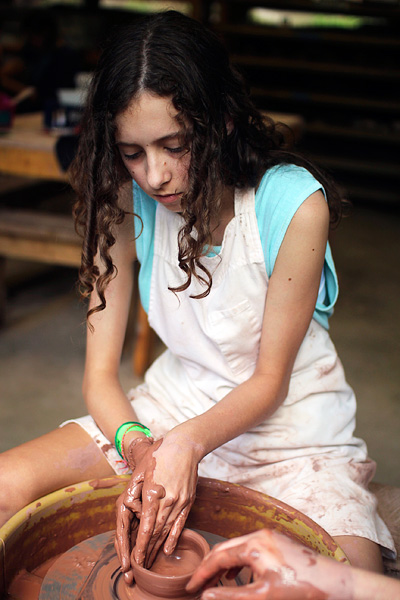
Throwing pottery on the wheel
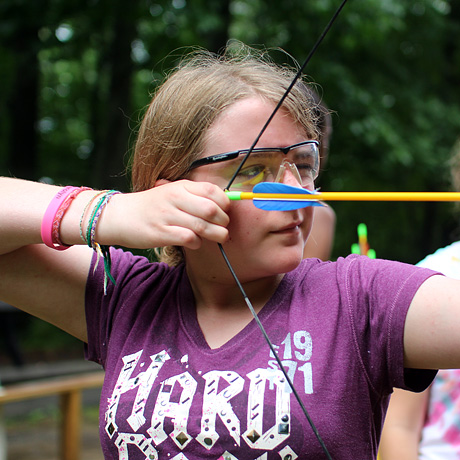
Girl archer aiming her arrow

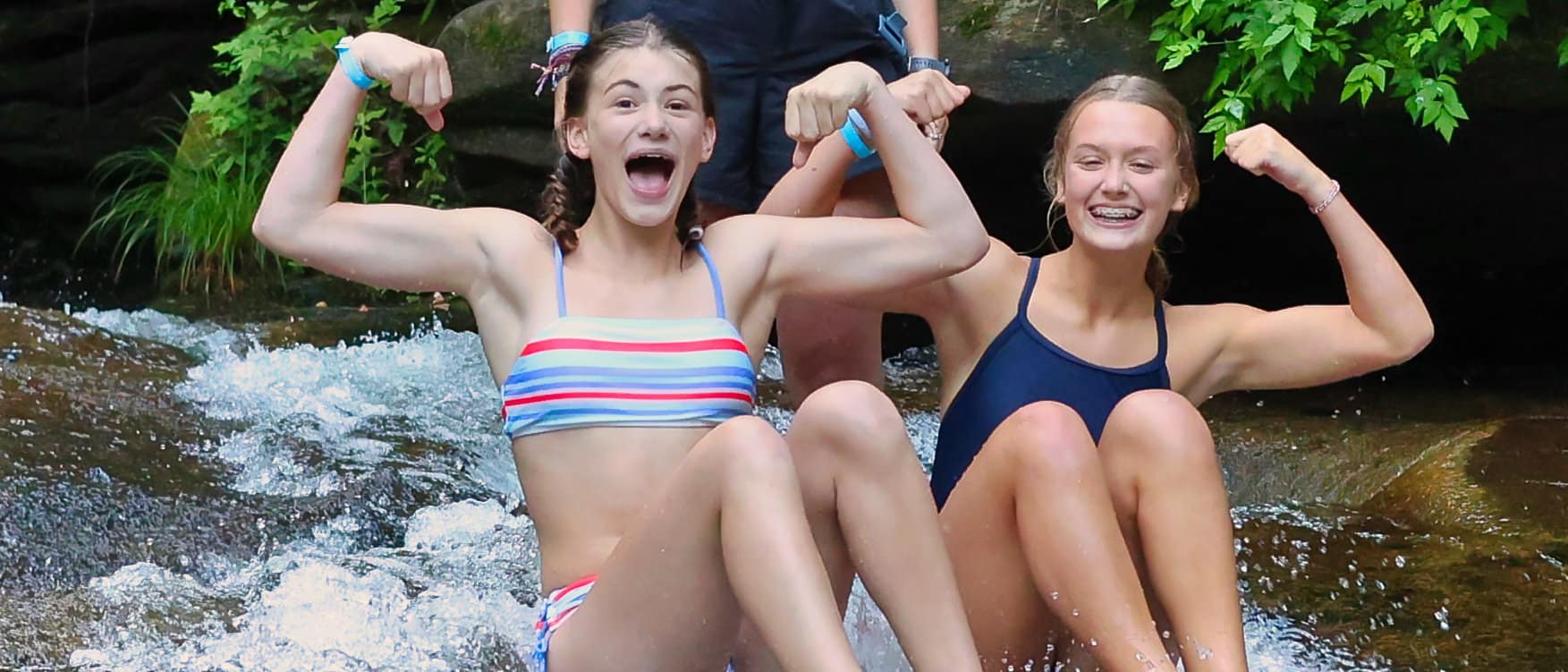
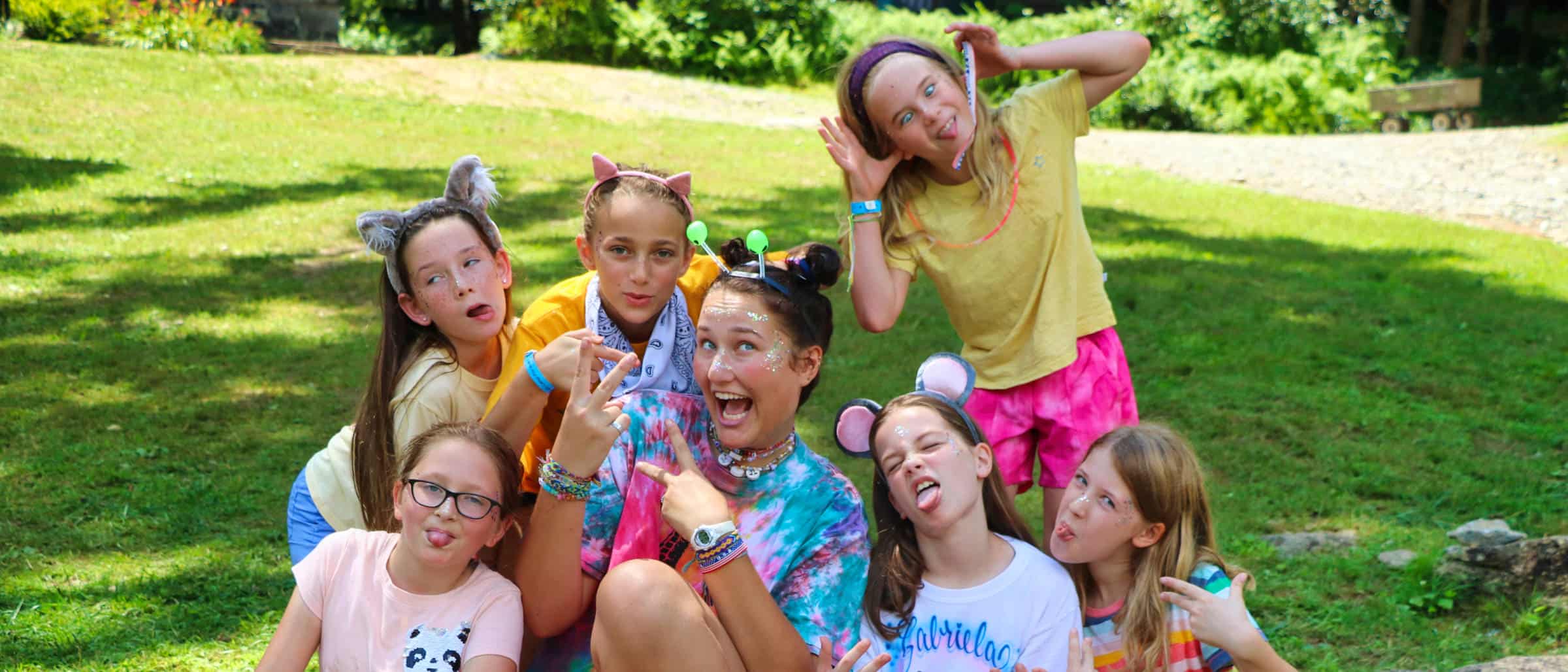
I think success at summer camp is about enthusiasm. It’s about passion for what we do and who we are. At camp we find a spirited attitude infusing just about everything: singing show tunes while setting the tables for meals, skipping arm-and-arm down the path to the bathroom, greeting everyone who passes by, laughing hilariously with friends during evening program, stopping to marvel at a spider spinning a web, and diving into all the creative, adventure and athletic challenges of the many activities offered. In all these ways, and in our close relationships with each other, this joyful, enthusiastic attitude is the secret of success at camp. We all, campers and staff members alike, are “successful” here because we have wholeheartedly joined an positive community, one filled with passionate people ready to support and encourage everyone. We are successful through that infectious attitude. At Rockbrook, we don’t succeed by striving to be popular or by acquiring exemplary skills; those measures carry little weight for us. Instead, passion trumps popularity, and enthusiasm outshines talents.

There are many ways that Rockbrook is a haven for girls. Being a place to live a passionate life is one of the best.
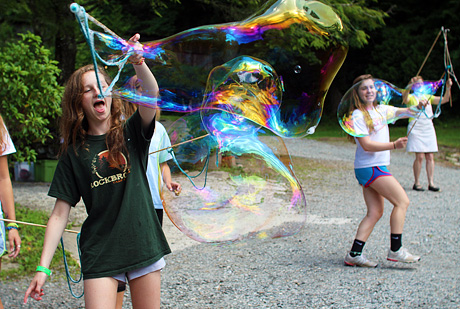

Huge Bubble blowing girls

Raising Happiness

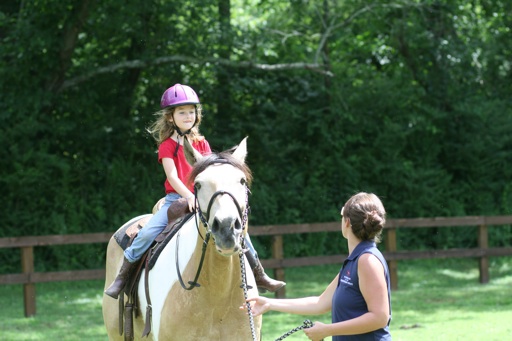
camp girl smiling on a horse

Christine Carter, author of Raising Happiness: 10 Simple Steps for More Joyful Kids and Happier Parents, recently spoke at a summer camp conference about cultivating an environment of happiness at camp. Camp plays a key role in teaching girls how to live a happy, fulfilled life. During her presentation, Carter illustrated three main ways camp grants girls the skills to embrace a life of happiness. All of us parents want our kids to be happy. Here are few ideas about how to help them.

How to Raise More Joyful Kids

  1. Camp celebrates the role that failure plays in success.

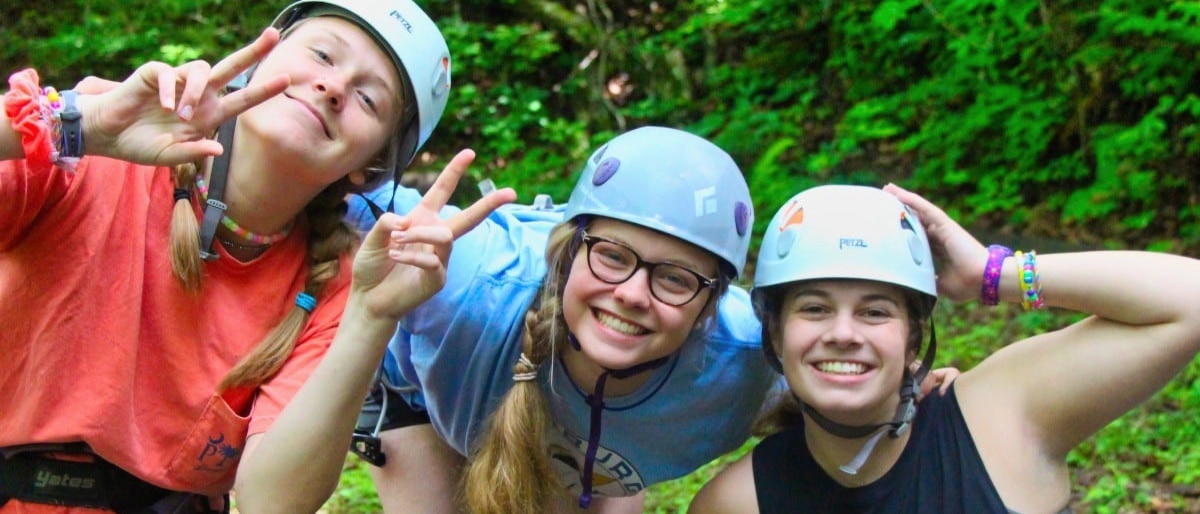
    If a camper doesn’t quite make it to the top of our climbing tower or has trouble folding like a pretzel in yoga class (who doesn’t?) she learns that it’s ok. In fact, it’s better than ok- it’s great! Because camp operates under the mindset that girls grow and learn from mistakes and risk-taking, these so-called “failures” are praised at camp. They are marked as part of the learning process for our campers. So rather than a fixed mindset such as, “I can’t climb” or “I’m bad a Yoga”, our campers think “I’m so glad I didn’t give up!” while the look down at camp after making it all the way to the top.

  2. Camp creates a culture of gratitude.

    Gratitude is a social emotion, acknowledging something that is outside of oneself. Often times we focus so much on the cloudy skies that we never even notice that the sun is trying to peek out. For example, before camp, it’s easy to think something like, “Wow, my trunk is so heavy! What an annoyance!” Then suddenly, at camp, it’s “I am so glad I have a trunk, this is a great place to store things!” In an instant, a girl sees the value of the things in her life, and, more importantly, the people in her life. Camps helps girls realize, understand, and reflect on all the things they have to be thankful for.

  3. Camp models kindness.

    Camp broadens a girl’s “giving vocabulary.” Not only do girls reflect on what others did for them throughout the day, but they consider what they did for someone else. Girls leave camp with an understanding that kindness does not have to be a grand, over-the-top event every time it occurs. There are lots of little things we can do for one another every hour of every day.

So give three cheers, a thumbs up, and a high five for camp because it’s a great place to be! And the perfect place to help raise more joyful kids.

Camp Teaches Resilience

Everyone experiences setbacks now and then, the occasional failed effort or unexpected misfortune. But what happens when you kids trip up or get knocked down? Do they stay down? Sink lower, and let that moment of failure defeat them? Or, do they bounce back, maybe learn from the experience, and gain a new dimension of confidence to face the next challenge? Put differently, how resilient are your kids? What can we as parents do to help them become more resilient?

Girls Resilience at Summer Camp

Dr. Michael Ungar, a Social Worker, Family Therapist, and University Research Professor at Dalhousie University in Halifax, Canada has thought about this question a lot. He is a co-director of the Resilience Research Centre, an organization coordinating experts from around the world in sociology, psychiatry, education and medicine in a broad project to understand the cross-cultural similarities and differences in how resilience is understood, and to explore ways we can help children and young people be more resilient.

Several times before we’ve discussed how summer camp helps kids grow and how becoming more resilient is one of the clear benefits of camp. Now Dr. Ungar weighs in with a nice Psychology Today article entitled, “Summer Camps Make Kids Resilient.”

I encourage you to go read the article, but I wanted to summarize his main points here as well. Perhaps most importantly, Ungar identifies summer camp as a place where kids learn to do things for themselves without the kind of careful orchestration parents ordinarily provide. It’s a place where, instead, they can try challenging activities and take manageable risks, all while being provided encouragement and positive role models to help them learn to cope with disappointments.

Speaking from his research on resilience, Ungar pinpoints 7 important components of the summer camp experience children need to develop these coping strategies. These are seven things camp provides that help kids when they experience setbacks later in their lives.

Seven Things Camp Provides

  1. New friendly relationships
  2. Regular moments of pride and self-confidence
  3. Experiences of competency and self-efficacy
  4. Relief from unfair social treatment
  5. Healthy physical activity and nutrition habits
  6. Belonging to a meaningful community
  7. Opportunities to reflect on cultural values

There’s so much more to each of these, and I suspect interesting mechanisms that make them effective. What’s important to realize is that all of them are core ingredients of the camp experience here at Rockbrook. The program activities, staff training, and overall camp philosophy here work together to insure that our campers enjoy these beneficial experiences. Of course, we’re having a really great time together as well, just as we strengthen our powers of resilience.

Youth Development

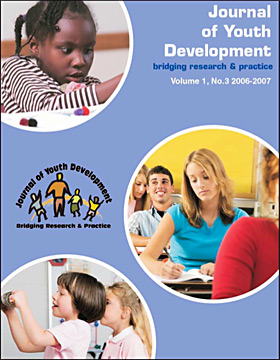
Journal for Youth Development

One phrase camp professionals often use to describe their work is “Youth Development.” Beginning, most likely, with the American Camp Association (ACA), most camp directors are quick to point out the beneficial outcomes children gain from the summer camp experience, the power camp has in developing young people’s character, confidence, and other important life-skills. In this way, summer camps are “youth development organizations.” Just about everyone who knows about camp, and Rockbrook is no exception, will agree.

Did you know that “Youth Development” also refers to a multidisciplinary academic discipline (drawing on psychology, education, sociology, family science, and public health, among others) dedicated to studying the development of school-aged children? Well, it’s true and there’s a peer-reviewed journal published to prove it! The Journal of Youth Development reports original research and focused studies with applied consequences that can make a difference in youth development professional’s work.

One article particularly relevant for camp professionals was published in the Journal back in 2007— “Components of Camp Experiences for Positive Youth Development.” Working with survey data gathered by the ACA from its member camps, the article tries to identify those aspects of camp life that have the greatest positive effect on youth development. Most significantly, the researchers conclude it is the supportive relationships children have with camp staff that are most important, followed by “program structure, elements of accountability, assessment of outcomes, and opportunities for skill building.” The take away lesson here, of course, is the importance of great people working as a camp’s counselors. We certainly know this at Rockbrook. A great staff of caring, attentive, supportive role models really benefits the campers and brings the whole camp together throughout the summer. Our campers make all kinds of strides as a result. We’ve all seen it, but with this research, there’s academic credibility backing it up!

A Teacher in Everything

For quite some time now, we’ve talked about summer camp providing children valuable lessons, unique opportunities to learn that can’t be recreated in traditional educational contexts. If you mention this claim to just about anyone associated with a summer camp, you’ll find full agreement. Summer camps are “Youth Development” organizations. Camps are heaps of fun, but are also something kids need to foster their growing up.

Kids Learning Camp

The American Camp Association has articulated these educational benefits of camp most extensively. Following broad research initiatives and years of collecting data from summer camps across the country, the ACA continually makes a strong case for what children gain from a camp experience. The list of these “outcomes” and “competencies” is now well-known: self-identity, self-worth, self-esteem, leadership, self-respect, compassion, contribution, commitment, caring, honesty, generosity, sharing, resilience, resourcefulness, ethical awareness, responsibility, and communication skills. We have discussed many of these benefits on this blog, here and here for example.

The next question to ask, however, is not “what gains do children make at camp,” but “how does camp provide these benefits?” There is a lot to this, of course, but let me point out one crucial reason summer camp has this unique educational power, and again, power above and beyond what traditional classroom educational settings offer.

Residential summer camps are uniquely educational because they are first and foremost communities dedicated, through first-hand experiences, to broad personal, social and physical well being. Camps are experiential learning communities. Led by admirable, caring adult role models, summer camp communities are tightly-knit groups of people who not only live (eat, play, make) together, but also grow personally by virtue of experiencing so much together. So many of the “outcomes” and “competencies” above, those personal qualities we all recognize as valuable— honesty, compassion, responsibility, generosity, etc., can be traced to what individuals gain from fully participating in a vibrant positive community. Summer camp communities are dedicated to, thrive upon, and thus foster, these kinds of personal traits.

Equally important is the full-time nature of the summer camp community experience. These aren’t lessons taught sitting at a desk in idealized abstract language. This is learning that’s lived. At camp, the “teachable moments” actually happen, involve real people, and carry real personal consequences. Just about every moment at camp is this kind of “teachable moment,” an opportunity to learn from the interaction with others and the natural world. At summer camp, there is a teacher in everything!

Being at summer camp is almost non-stop fun, but it also brings out the best in kids by asking them to pay attention to the people around them, and to build positive relationships of all kinds. It’s this kind of direct experiential community learning that gives camp the power to shape young people so profoundly.

Is Camp a Threatened Tradition?

For quite a while, we’ve been writing on this blog about the benefits of summer camp for children. For more than 100 years now in the United States, sleepaway camps have been organized and generations of children have grown stronger, more confident, become leaders, forged close friendships, and acquired all kinds of physical, personal and social skills as a result. There really is little doubt that the sleep away camp experience of “getting away” for a few weeks is valuable for children in long-lasting and profound ways.

cabin mates girls friendships at summer camp

Modern Pressures on Summer Time

Even while recognizing all of this, however, there is a growing awareness that certain modern forces are threatening this great American tradition. Today, much more than a generation ago, there is competition making claims on our kid’s summer time. A recent article by Mary Beth McCauley in the Christian Science Monitor entitled “Sunset for Summer Camp?” claims as much. Quite correctly, the author observes that demand for shorter camp sessions is increasing, as opposed to longer “all summer” camps. A number of factors are contributing to this trend. School systems are shortening summer vacations. Competitive school sports teams and their coaches driven to win are requiring summer workouts (e.g., soccer “camp”) and scheduled practice days before school opens. Parents are reserving parts of the summer for family travel and vacations. Students are taking summer classes “to get ahead” (SAT prep, for example), and local, short-term day camps abound. With so many options, each claiming to be most important, it’s easy to understand why some parents find it difficult to place longer camp sessions at the top of the heap.

Parents Who Get It

Fortunately, understanding the camp experience, seeing the dramatic positive effects it provides all year round, there are those, and so many Rockbrook parents are among them, who know camp is one of the most important things you can do for your child.  For these parents, camp isn’t just a summertime diversion, some kind of extended amusement park; it’s a core part of their child’s personal development.  It’s a place for kids to grow and discover who they are.  Sure it’s fun, but it’s the kind of fun that means something long afterwords.

We hear it all the time from our parents; camp means the world to their daughters, and they are committed to providing a camp experience for them.  This helps explain why, despite economic pressures and competing summer demands, Rockbrook enjoys strong enrollment, with sessions filling and waiting lists forming each summer.  Camp is important to our families, and to the girls who attend and make Rockbrook their own.  Around here, camp is stronger than all of the forces that may be threatening the traditions we’ve all come to appreciate.

They Need Summer Camp

If you could reform the common education of teenagers, change something about how teenagers today learn, or what they learn, what would you do? Looking around, what do you think teenagers need to understand? How do they need to change if they are to become happy, well-grounded, satisfied adults? Is there a skill, a personal value, some rule of thumb that you wish all teenagers today would adopt? Is there one crucial thing that today’s teens are missing, and as a result has placed them on a path toward trouble later in life?

What's Really Missing for Teenagers

You get the picture; the assumption here is that our young people are already having trouble, and aren’t measuring up to the ideal outcomes our education system, culture, and families define. It might be declining test scores, weak academic competencies (compared with children in other countries), unhealthy eating and exercise habits, poor social skills (e.g., difficulty making friends, disrespecting others), decreased creativity, or a general failure to overcome unexpected challenges. Any of these, or several, might be identified as the core problem facing our teenagers these days.

Summer Camp Teenagers

Why More School Isn't the Answer

So what can we do to help? If your teen is slipping in any of these ways, how can you improve the situation, make a difference in some way? One proposal suggested, and increasingly so it seems, is to lengthen the school year. It’s claimed that organized classroom education provides the best chance to “reach” the youth and “make a difference in their lives.” As we’ve mentioned before, this is a weak, incomplete solution at best, one that fails to understand the complexities of youth development and the many dimensions it demands. It might be easy to understand and simple to measure, but extending the school calendar is not going to help our teenagers navigate their lives better. If your teen can’t make choices for herself, extra math homework isn’t going to help.

Again, what is there to do? How can we complement our current education system, augment what we already do in the classroom with learning that addresses the complete human being? What experiential gaps should we fill, opportunities should we create, models should we provide? What setting would best support these ordinarily neglected aspects of growing up?

One answer, we, and so many other youth development professionals, advocate is the benefits provided by summer camps. Camps are organized settings that encourage young people to reach beyond what they know, interact with others positively, take responsibility for their own decisions, physically engage the natural world, build self-esteem, and experience meaningful success. Summer camps are incredibly effective educational institutions, that camp parents will tell you, make a huge difference in the health and well-being of their children. Summer camps are just very good at helping children grow in these very important ways.

Yes, we should extend the education of our teenagers and children, not by lengthening the school year, but by providing greater experiential opportunities like those found at summer camps. Send your teenager to camp. That’s what you can do.

climbing teenagers

Anxious about camp?

Happy Summer Kid Swimming

Going away to camp, particularly to an overnight or sleepaway camp, is a big step for kid. Being separated from parents, meeting loads of new people, and trying lots of new challenging activities— all these can be a little scary. Imagining it all, it’s easy to worry and find yourself asking “What if…?” kinds of questions. In fact, it’s just as common for parents to be scared and worried too. They also can suffer from a certain amount of “separation anxiety.”

There are a couple of things that can help both parents and kids feel better about this. First, realize that this is perfectly normal and all parents feel nervous about being away from their children for extended periods of time. Likewise, all children see their parents as their basic source of comfort and can at first be reluctant to go without it. Being away from each other requires both parents and children to develop a new sense of trust. Parents must trust the camp (its directors and staff, in particular) to take good care of their children, and each child must learn to trust themselves and their abilities away from home.

Fortunately, summer camps are ideal places for this kind of growth. They offer safe, structured environments where each girl finds plenty of fun things to do, but more importantly, caring adults trained to encourage her to make her own decisions, and to be more independent and self-confident. Camps have a lot of experience in this. They know it can take time, but have seen thousands of children succeed at camp and be better prepared for challenges later in life.

If you are considering summer camp for the first time, it can help to practice the kind of healthy separation camps represent. For example, it’s a good idea to schedule sleepovers at friends’ houses or other long weekends away from home.  Even with something this simple, kids learn they can do things on their own.

Camp is a wonderful experience for everyone.  For both parents and kids, it’s a chance to grow up a little.

What Youth Camps Teach

Youth Camp Girl Educational Activity

As a summer youth camp, Rockbrook’s mission is to be

“a haven for girls, a place of their own, where they can explore the beauty of nature, try new things, enjoy carefree summer living, and make some of their very best friends.”

And of course, camp is all about the fun, the super silliness of it all, too.

But it’s also more than all that, because camp is also a place where you learn a ton. Camp is definitely educational, and in the very best sense of the word. It teaches you how to be more independent, more creative, braver, and more socially adept. Camp helps you learn new ways to get along with others, to trust the people around you, and to feel good about what you do. It’s really true; youth camps help young people learn about themselves.

When you add the sort of caring spirited people that work at Rockbrook, you begin to understand how summer camps can be one of the most valuable educational experiences around.