
Classic Summer Camp Posts

Easy to Get Past

My favorite way to get ideas for this blog is to ask the campers about something. They never fail to come up with interesting answers to questions about camp. Earlier today, it was a quick question. Have you ever been bored at camp? As you might expect, most of them say no before I’d finished asking it. “Camp is never boring because we’re doing so many things,” one girl reassured me. “You can’t be bored with your friends around,” another explained. Camp is fun, and never boring, they seemed to be saying. But one camper, after thinking about it a bit, told me yes, sometimes she is.
summer girls crafting in the forest

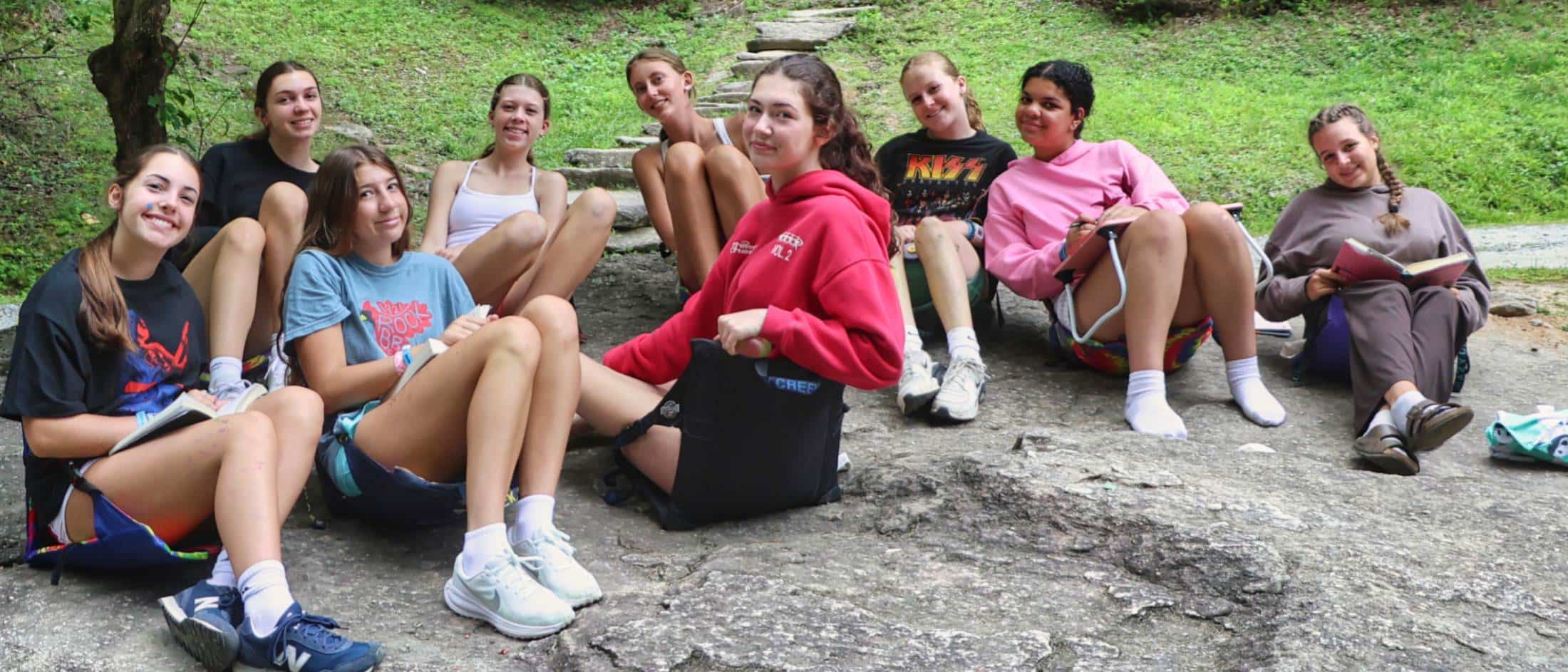
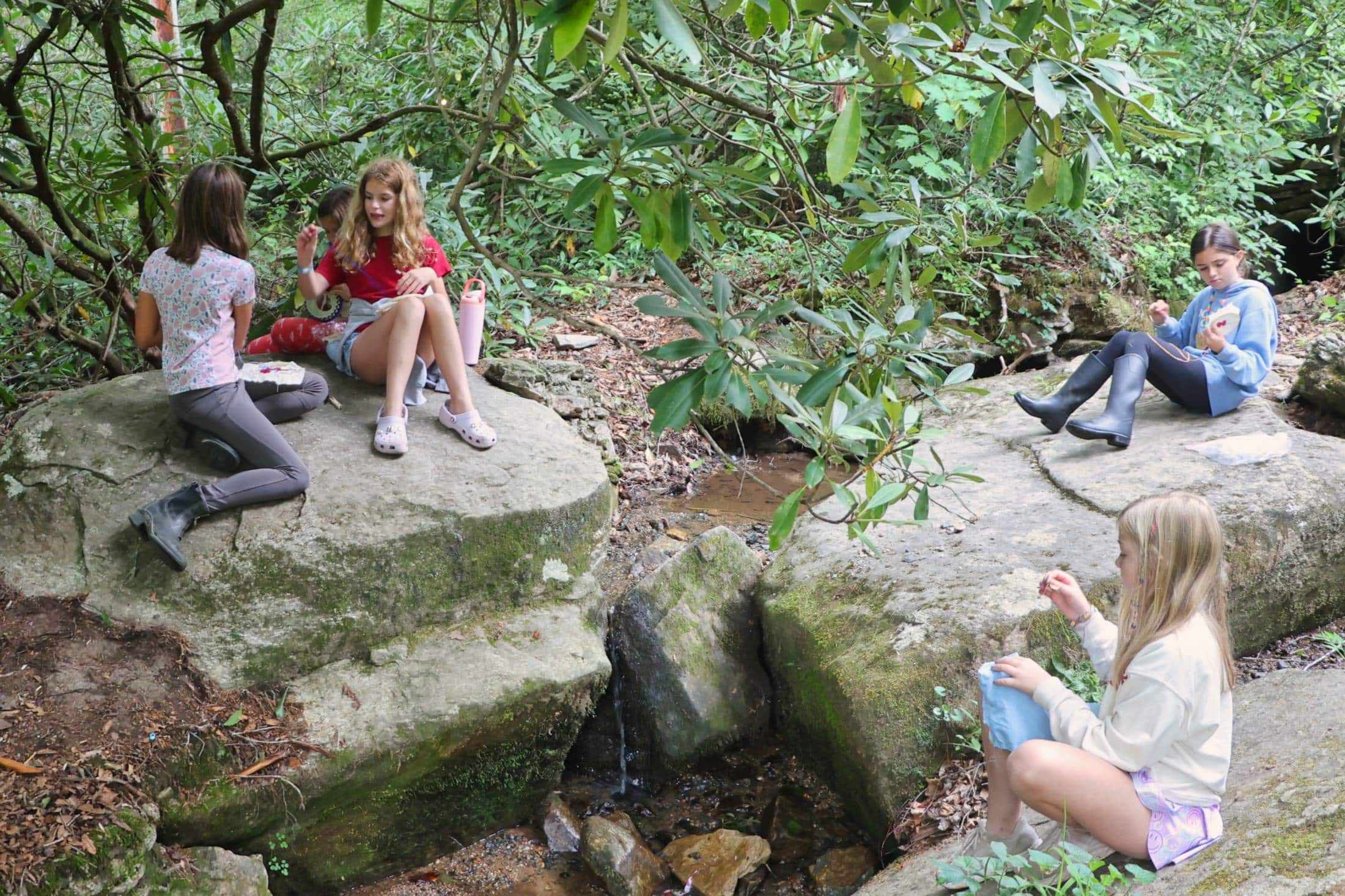
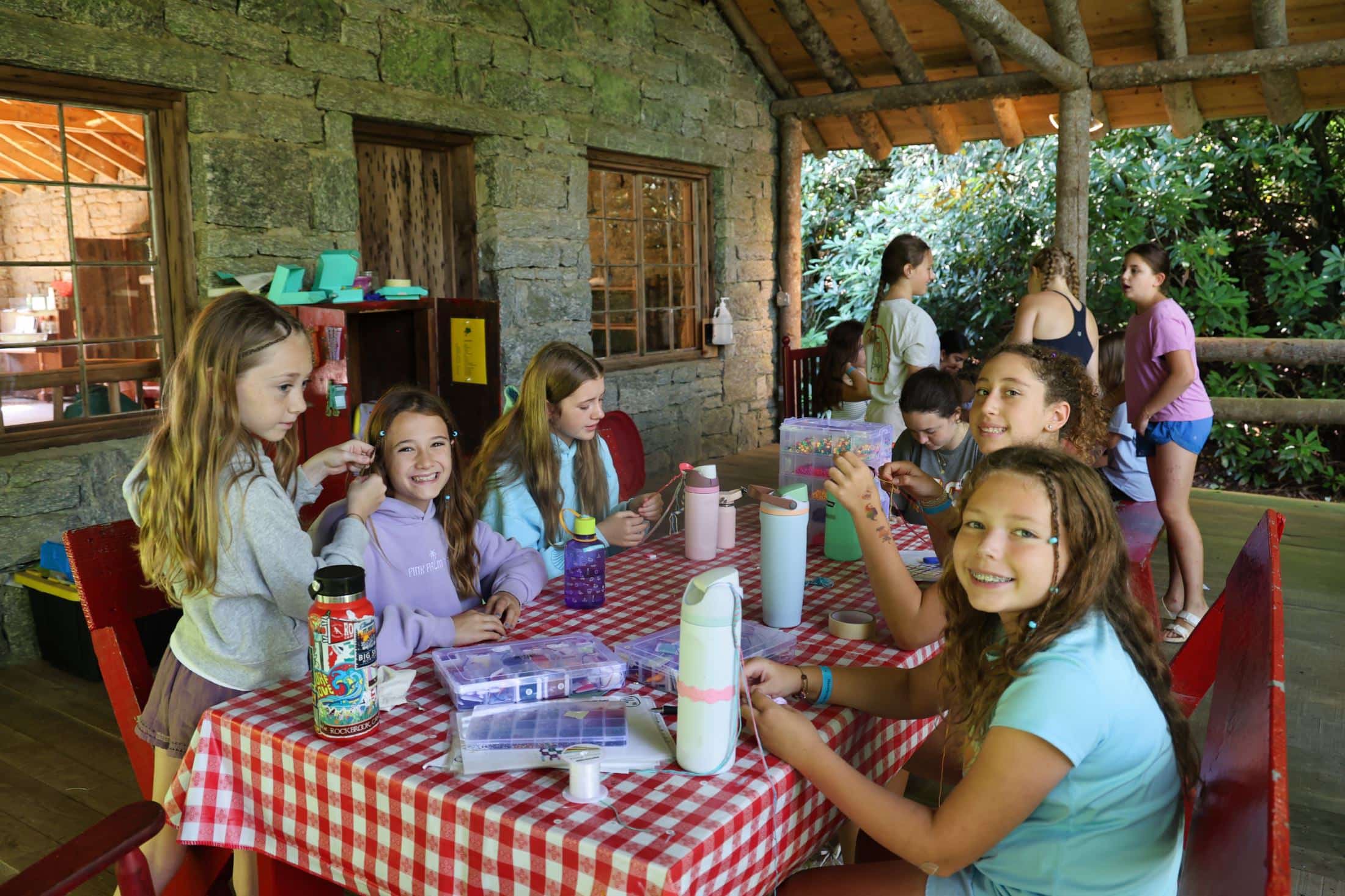
She then told me what she does about it. At home she’d reach for her phone and start “mindlessly scrolling.” But here at camp she’ll make a friendship bracelet, or read a real book, or go sit in one of the many red rocking chairs on the lodge porches. There are down times here at Rockbrook when campers don’t have something scheduled to do, so yes it’s possible for boredom to show up. But here’s what’s interesting: it’s easy to get past. I think that’s why most of the girls hardly notice it.

Boredom ordinarily means being stuck in a situation that’s uninteresting, or not knowing what to do next, feeling unmotivated. It’s a pretty common human experience when there’s no particular task at hand. The real question is “what do you do?” when these feelings show up. This camper seems to be saying that she looks around, and somehow it’s gone. There’s something about camp life that even when there’s nothing particular to do, even when you’re feeling a little tired, you suddenly find yourself engaged with something.
summer camp lodge friends

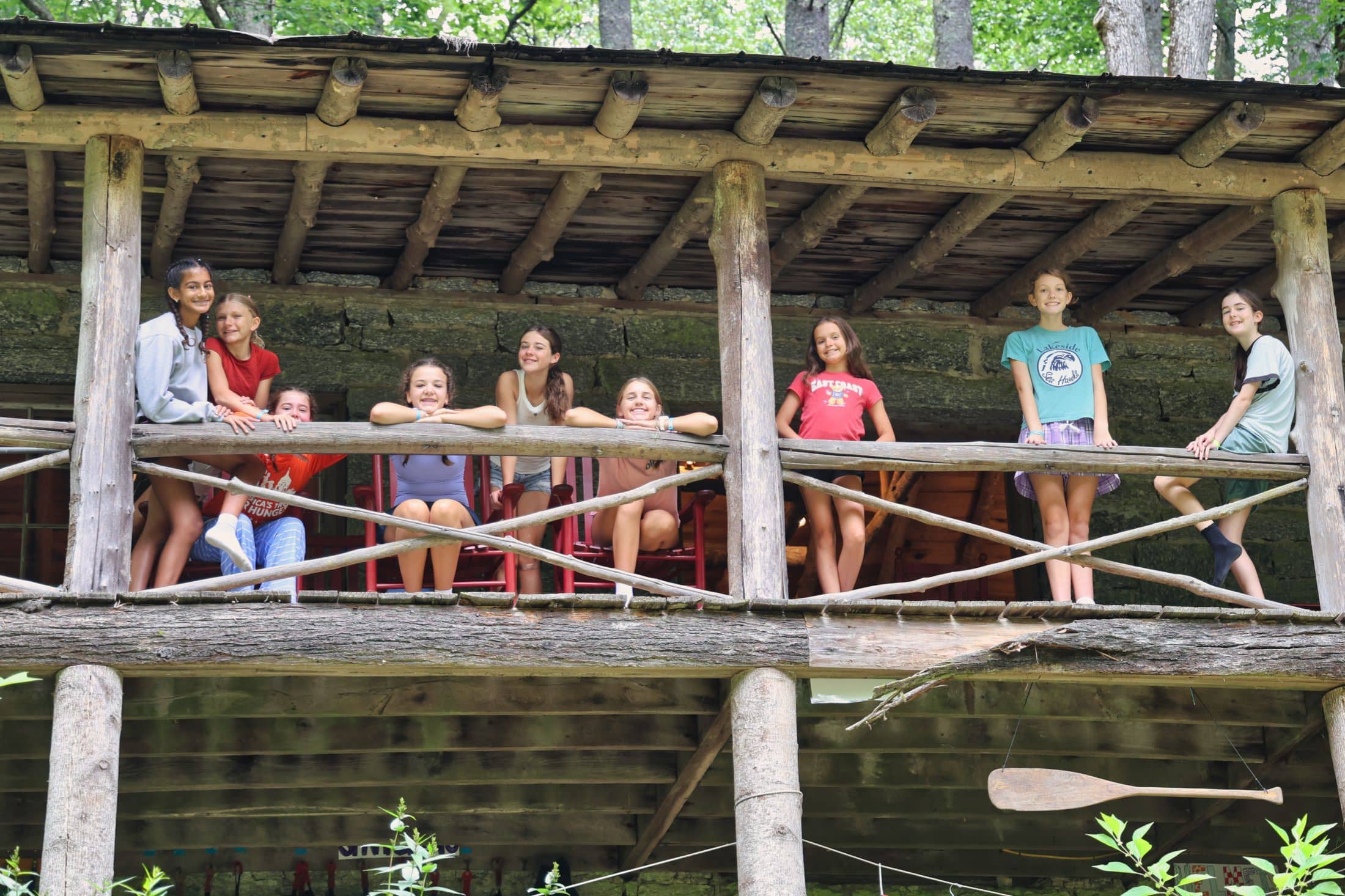
It might be sitting in your Crazy Creek chair watching the sky turn colors during twilight. It might be lying in the sun on your towel stretched across one of the big rocks at the lake. It might be watching one of your shoes float down the creek. It might be wandering over to your mailbox on the dining hall porch to see if you missed a letter after lunch. It might be looking for your flashlight somewhere in your trunk. It might be stopping by the health hut because that bug bite is feeling itchier. It might be joining a game of tetherball or gagaball. It might be going on a mission to the kitchen to grab an apple and some peanut butter for a snack. But more than likely, in your free time at camp, in those moments between things, you’ll be with a friend. You’ll be within arm’s reach of someone you care about and who cares about you, and in the presence of something amazing.

Let’s be careful here. The seemingly magical power of camp life to dispel flashes of boredom isn’t a matter of always staying busy. It’s not a matter of providing constant entertainment, excitement, or thrills, effectively trying to avoid boredom in the first place. “Keep them busy and they won’t get bored” is a strategy that’s guaranteed to fail. After all, real life has pauses, fast and slow moments, experiences that build gradually. The real world makes a taste of boredom inevitable, something built into human psychology.
Remember too that Rockbrook deliberately provides a lot of unstructured time in its daily schedule. In addition to the short breaks between activities (Muffin Break!), each day includes three hour-long blocks of free time, a free swim before lunch, another before dinner, and the playful Twilight time after dinner. Rockbrook wants girls to slow down a bit and relax from the hurried, hyper-scheduled lives they’re used to at home. Even if we could “keep them busy,” which is an impossible and unrealistic goal, we believe something important would be lost. Since moments of downtime and flashes of boredom are a normal and expected part of life, there’s something to be gained from learning to recognize those feelings and responding to them in a positive way. The question of what to do next when you’re feeling restless or bored is always going to come up, and there’s a real skill to knowing how to answer it.

For most people nowadays, there’s one answer. Check your phone, your constant companion that can provide an infinite scroll of entertainment. Curated to your personal taste and interests, algorithmically optimized to keep your attention, a vast array of (social and other) media can be consumed at any and every moment. Every hint of boredom squashed with one device. Pretty soon however, that screen becomes tedious, even exhausting, bringing with it a significant cost of isolation. That’s why a long bout of scrolling leaves you feeling a little gross, lonely, and sometimes newly anxious. Most people will agree that while it first feels good to “check your phone,” it’s ultimately a dissatisfying answer to feeling bored. Empty in the end. We need better answers, better skills.
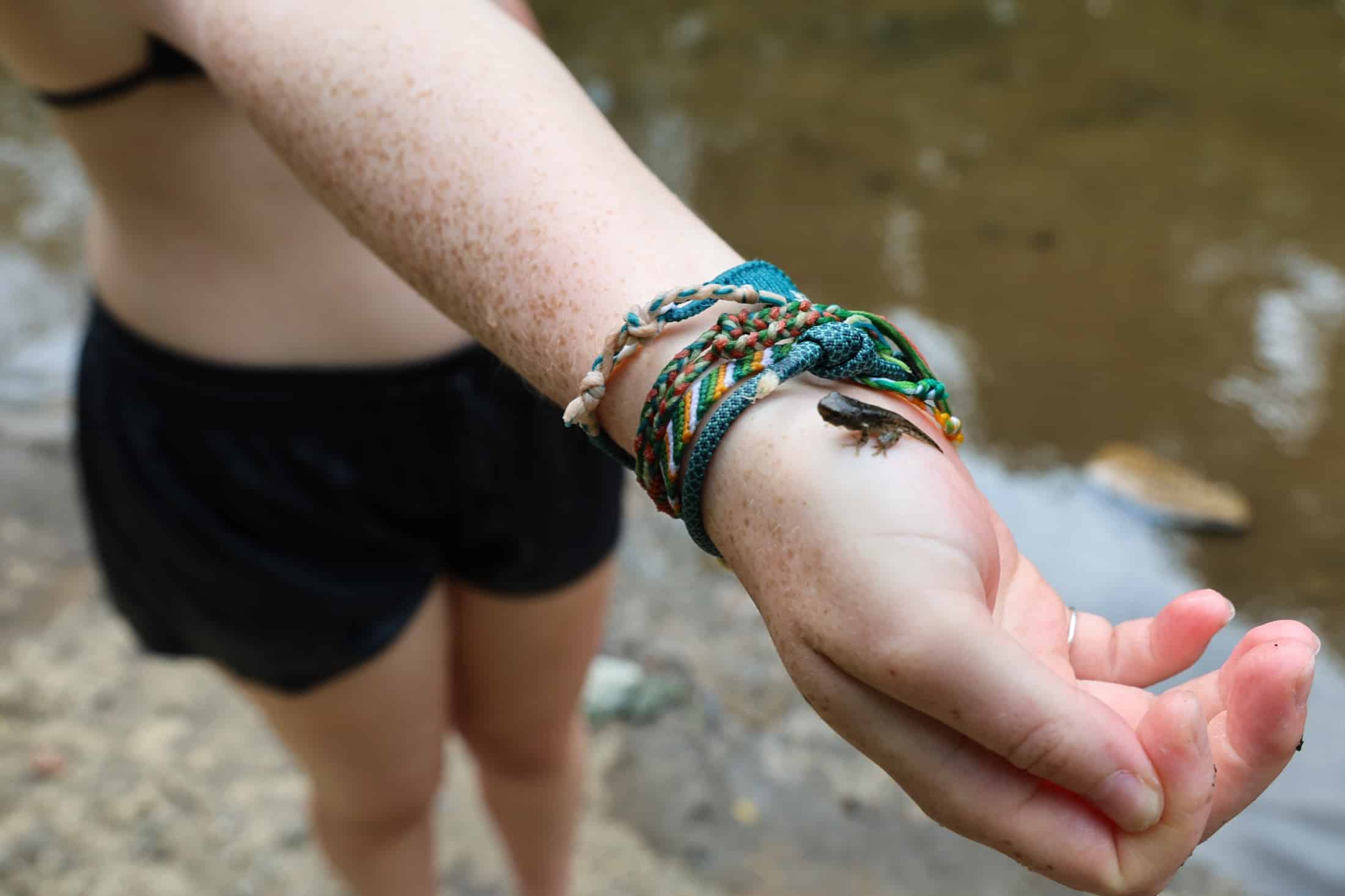
tadpole ona girl's arm

I think that’s what’s happening at camp. With no smartphones to hijack our attention, we suddenly discover a vast array of rewarding responses to moments of downtime. That’s the skill we’re building, the motivation to seek out something more engaging and meaningful, the instinct to explore and create when we can, the confidence to reach outward and connect with the details of the world around us. We discover firsthand vastly better answers, develop a habit of living a richer life, one that’s expanding with wonder and opportunities rather than being flattened to something abstract and electronic. We combat boredom not with entertainment, but with engagement.

Camp girls have these skills; they know these many answers. Every day they practice dozens of times. That’s why they never feel bored at camp, or when they do, they get past it quickly. They develop a habit of looking outward, paying attention to what’s around them. Free time at camp is inherently rewarding because it provides a freedom to experience more and discover new things. It’s a daily exercise in knowing what to do next when picking up your phone is not an option.
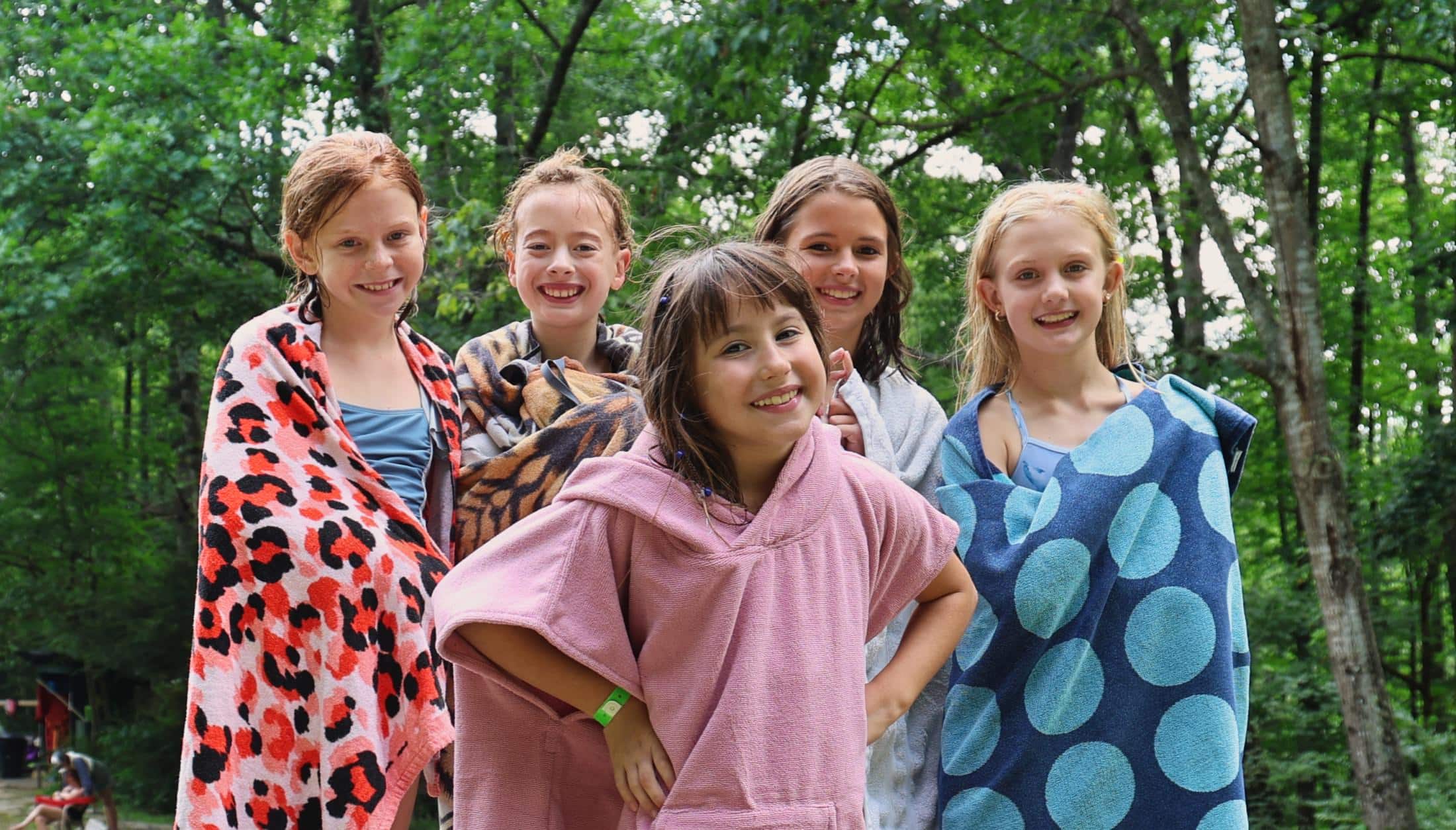
summer camp kids wrapped in towels

These skills are portable too. After leaving camp, a girl can remember the deeper satisfaction of an in-person conversation, the relaxed focus of making something with her hands, the feeling of being amazed by the most ordinary encounter with Nature. There’s no need for a red rocking chair or a friendship bracelet tied to a water bottle. My hope is that she’s developed a seamless habit of engaging with the world, loving what that feels like, and that this new reflex is stronger than the lure of her phone.

Late in the day, during Twilight and before the bell for Evening Program, the porch chairs fill up again, the tetherball makes its swing around the post, and the mountains glow off in the distance. You can hear the creek, and a ukulele on the office porch, and the screen door banging as girls come and go. Two of them are rocking side by side. One has a book she isn’t reading. Nobody out there is bored.
A Long Thread

Camp is like an ogre. Or an onion. Or a chicken coop. Or my outfit on any given January day in Michigan.

What I’m trying to say is: camp has layers.

Not to overcomplicate things, but there are, I think, three distinct but interlocking ways to enjoy camp— each one deeper and more profound than the last.

summer camp community

The first level of enjoyment is available to every camper, counselor, and staff member the moment they drive up the hill on opening day. This level is made up of joy and fun and adventure and laughter and silliness and excitement and whimsy and surprise. It’s the thrill of stepping out of your regular life of sleep-eat-school-sports-eat-homework-sleep, and finding yourself in a world where no two days are alike.

The second level of enjoyment finds you gradually, and sometimes isn’t even noticed until later. It is made up of the personal growth that campers experience here at camp.

This level of enjoyment, oddly enough, doesn’t always feel that enjoyable. Sometimes it feels like butterflies in your stomach as you stand at the edge of the dock and prepare to do your swim demo. Other times like looking up from the bottom of the Alpine Tower, and thinking I can’t possibly do this. Or like taking a bite of that unfamiliar food on the dinner table, even if you really don’t want to. Or like squaring your shoulders and telling the girl in your cabin that she hurt your feelings. Or like swallowing your pride and apologizing when you learn you’ve hurt someone else’s.

deep summer camp friends

While the first level of enjoyment is fleeting, this deeper level accumulates over time. It is a list of risks, failures, and triumphs that every Rockbrooker builds for herself, here in a place where she knows it’s okay to be scared, to be brave, to fail, and to try again. We hope every camper reaches this level of enjoyment, but that’s not entirely within our control. Camp provides the venue, the support, the encouragement, the challenges—but the campers find this growth for themselves.

The third, and deepest, level of enjoyment isn’t talked about as often as these others—in part because it can be hard to describe. But I’ll try.

This level of enjoyment comes from embracing the sacred traditions of camp. The stories, the songs, and the gatherings that connect us to the 105 years of Rockbrook campers who came before us. These things are sacred not in any religious sense, but in the way that they make us feel like a small, but important part of something that is bigger and older than we are. Sometimes this can feel odd for campers raised in a society that shies away from the sacred, that says traditions are tired and stale, and only the new and exciting are worth our attention. That says approaching something with solemnity, respect, and reflection is “cringe” and embarrassing.

I get it. Looked at one way, it’s silly to dress in uniforms and sing around a campfire. Walking silently down the path to chapel from the hill on Sunday mornings serves no practical purpose. And songs like “The Streams and the Mountains” and “How Did We Come to Meet Pal” aren’t nearly as fun to sing as those Dining Hall songs that let us bang on the tables.

But when our campers allow themselves to embrace these sacred, quiet, reflective parts of camp, they find something that can be found in precious few other places in their lives.

When camp asks us all to be quiet together, we can find a thread within ourselves that we are often too busy and too noisy to notice. It’s a thread that connects us to all the other Rockbrookers sitting around us, winding through us and drawing us closer to one another.

But the thread does far more than that. Because it is a long thread, and an old one. It winds back through the years, the decades, and the eras—back to that first summer in 1921, when Nancy Carrier gathered forty or so girls on her family’s wooded mountain and began to craft this community that we all now belong to.

summer camp hands heart

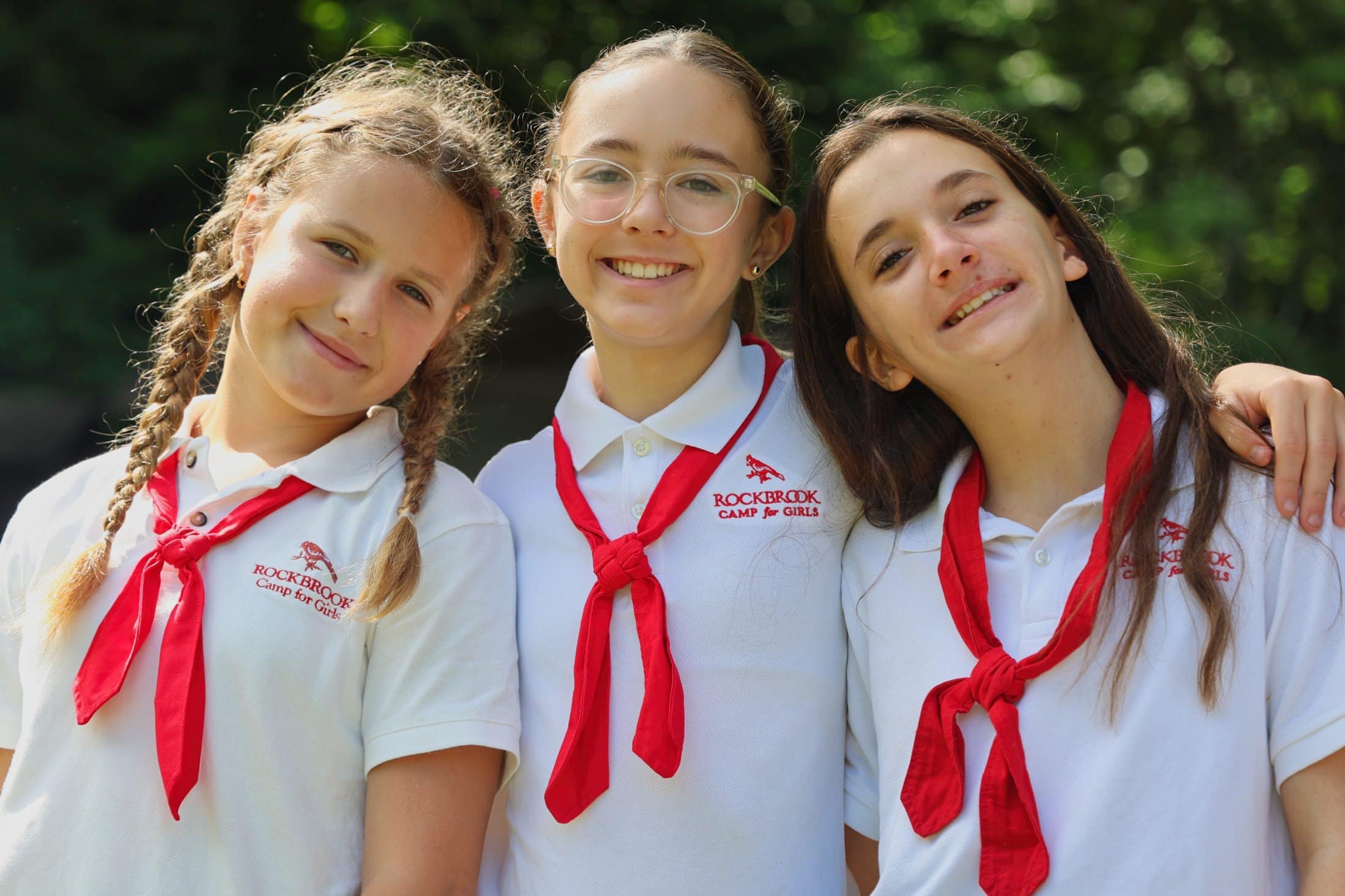
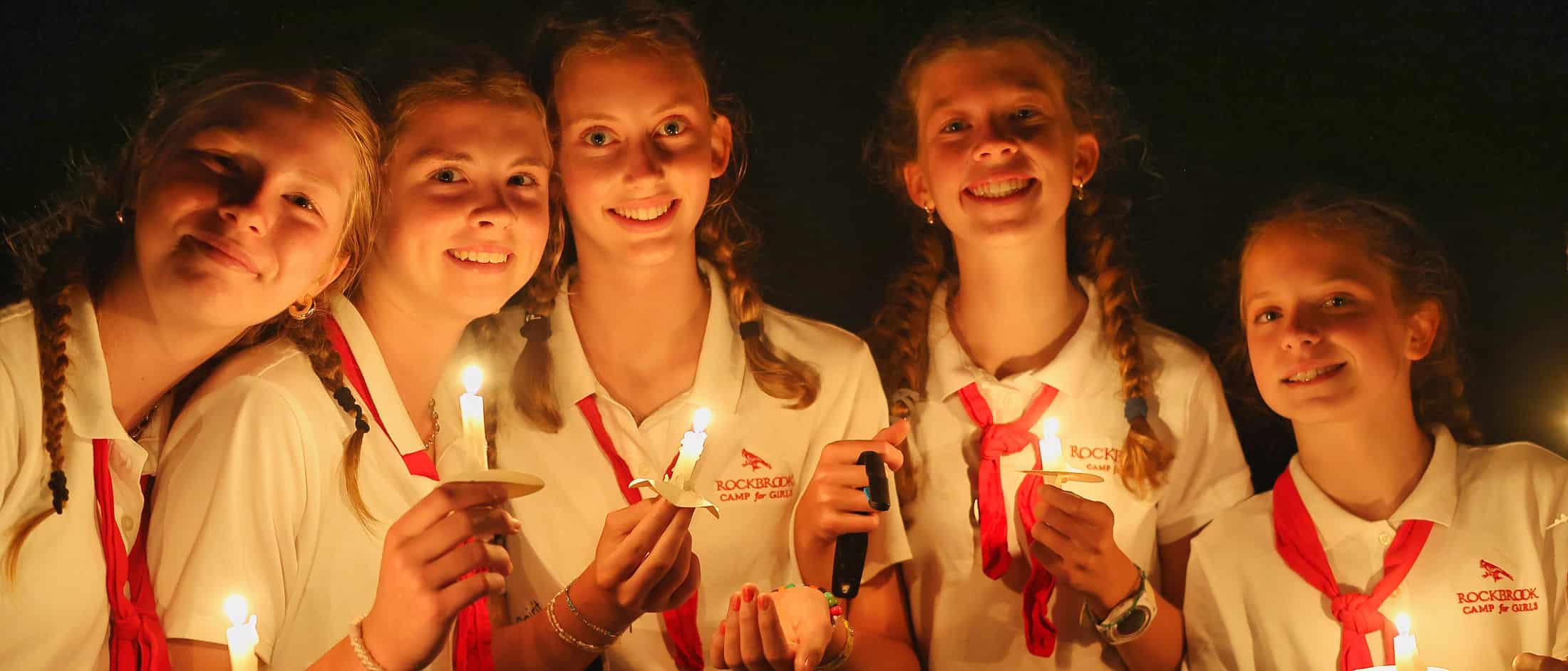
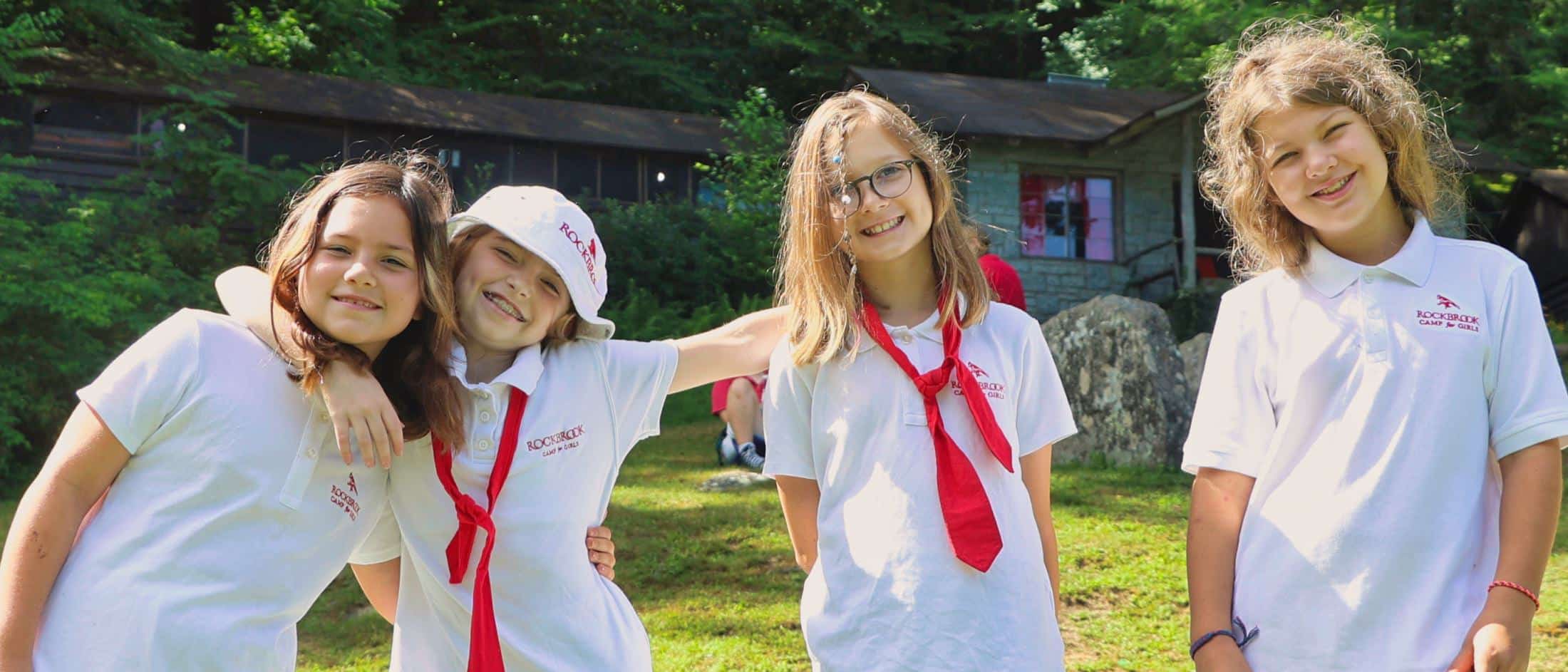
It reminds you that when you put on your red tie, you’re tying it in the same friendship knot that Mrs. Carrier taught her campers to tie that first summer. When you sing “Boom-De-A-Da” around the Spirit Fire, you’re singing the same “mellow harmonies” that campers sang in the days of the Great Depression. When you walk the Path of Silence to chapel, you’re tracing the steps of the thousands of girls who walked it before you. And when you take a quiet moment to breathe in the view from the Junior Lodge porch, your head resting on the shoulder of a best friend you didn’t know existed two weeks ago, you’re joining a love and appreciation for a piece of nature that has been loved by many thousands of women who now remain only in the faint etchings of their names on cabin walls.

When you embrace this part of camp, you become a part of its story. You recognize that one day, long after you are gone, there will be another girl who sits around the Spirit Fire in a red tie like yours, singing the songs that you are singing now. And when she does, though she won’t know your name or where you came from, she will feel a connection to you that is, in that moment, as important as the connection she feels to the girls around her.

She won’t know you, any more than I know Ann Dudley Glenn, a camper from 1924. Or Doris Perryman, who walked these trails in 1939. Or Katie Platter, a Junior in 1955, who wrote in her Carrier Pigeon about the excitement of going down Sliding Rock. But because of these sacred, beautiful, hard-to-describe traditions of camp, she will know, as I do, and as all those other campers did, that we belong to one another, because we belong to Rockbrook.

close summer camp friends

The Voice Does the Work

Here’s a small puzzle. What is something that happens at Rockbrook every single day, more than once, that almost never happens back home? It happens before she’s even fully awake, at breakfast, when a table of bleary-eyed campers gives thanks with “We Have Been Given a New Day.” It happens again at lunch, and again at dinner, in a different key each time. It happens riding the bus to Sliding Rock. It happens at morning assembly, at birthdays, and when a girl swims her way into becoming a “mermaid.” Sometimes it’s sweet and lovely; other times it’s explosively enthusiastic. It can happen while hiking, often while doing skits, and always at our Sunday Chapels. And it happens last thing each night, when the whole camp goes quiet enough to hear “Day Is Done” before lights out. The answer, if you haven’t guessed it, is singing.

At Rockbrook, we sing every day, and throughout the day. Over the 105-year history of the camp, singing has become one of the core traditions of this place, central to its culture. Our printed songbook now holds more than 120 different songs, new and old, silly and serious. You can hear a good number of them for yourself on our website. They are sorted into categories like pep songs, silly songs, traditional songs, and so forth. Here’s one of my favorites.

3 sitting camp friends

For some campers, the lyrics are a big part of why they love certain songs. Of course, many of the tunes are also simply catchy, but certain phrases take on an extra meaning of their own. “‘Twas fate we came to Rockbrook, and you became my friend” and “Like a fairyland of beauty, where friendships so true are born” are good examples. One alum told me she hums the canoeing song under her breath when she’s feeling nervous about something. It goes, “Hold fast, don’t lose your nerve, keep your paddle in your hand going around the curve.” Long after her time at camp, and in moments that have nothing to do with canoeing at all, this Rockbrook song retains its power. These are songs that stick with you.

Why do we sing so much at Rockbrook? The easy answer is that it’s good for you, good for our overall wellbeing, and plenty of research points to that. Likewise, I think we can say more than just “singing is fun,” though it’s that too. A more interesting question is to ask what singing does at camp. Three things come to mind.

summer camp dance group

The first is that singing synchronizes a group, out loud, in a way you can literally hear happening. Watch a table of campers start “Way Up in the Sky” and it’s obvious. In the dining hall, the Hi-Up campers ring their tiny bell that signals to everyone a song is starting, and within a few bars we have almost 300 people, campers and counselors alike, waving their hands the same way at the same moment, raising the pitch of their voices for the high parts and dropping their voices to a rumble for others. It’s phenomenal to see a room full of individual people briefly becoming one thing. Seemingly without any rehearsal, singing creates this mysterious synchrony like a flock of birds turning in the sky. Every chorus tightens that bond. Every harmony deepens it.

The second reason singing matters so much at Rockbrook is that it makes every camper a participant in the camp’s culture, a member of the community here. Singing builds that community through doing— in this case, by willingly joining in with your voice. When a song begins in the dining hall, every camper is helping make Rockbrook happen in that moment, rather than simply sitting back to receive something already finished. Just as the song depends on their voices, camp depends on their genuine, active, embodied, participation. The voice does the work.
This shared participation matters, by the way, because it contrasts so starkly with what Jonathan Haidt calls the “screen-based childhood” he’s identified as common these days. That life asks very little of kids: watch, scroll, like, skip, repeat, all of it steered by whatever an algorithm decides to serve next. What’s left is a subtle loneliness, each kid alone in a private stream of content shaped just for her. Camp singing works in the opposite direction. It asks a girl to be active, to contribute something— her voice, her timing, her courage to join. Singing at camp teaches a girl that she helps create community by leaning in, rather than simply receiving it.

lake summer camp buddies

That’s the third thing singing does at camp. It pulls you in. Singing together is an immediate invitation to the group, an open avenue to belong, to be one of “us.” Camp songs are meant for exactly that, for including everyone, for creating something together. It doesn’t matter if you don’t know all the words, or sing off-key— the goofier the better. The point was always a collective sound, one with room in it for absolutely everyone— not the best singer chasing perfection or mastery. And it works. New campers, protected by the form itself (loud and silly, no solos, no critiques), simply open their mouths to sing, and instantly they’ve joined the group. To sing is almost an instinct at Rockbrook, and as soon as you do, you know you belong.

None of this depends on the songs being polished, sophisticated, or especially impressive in the ordinary sense. It’s the process, not the product, that we care about. The benefits arise simply from the singing. And those benefits— synchronizing a room, encoding a culture, including absolutely everyone— are happening whether or not anyone in the dining hall is thinking about it in those terms. After all, we’re just singing.

An alum once told me about her mother, who had spent years suffering from dementia— names, faces, whole decades fading away. But when prompted with a Rockbrook song, one her mother hadn’t heard in fifty years, she could sing every word. I think about that sometimes, how a song, sung enough times as a girl, gathered around a table with people she loved, can survive underneath all of it. More than just a nice tradition, we sing at Rockbrook because some things are too important to risk forgetting. Things like knowing you belong, knowing you are part of something, knowing you are a valuable friend to someone. A song, sung enough times, is one of the surest ways we know to remember.
small sill summer camp girls

The Thing That’s Hers

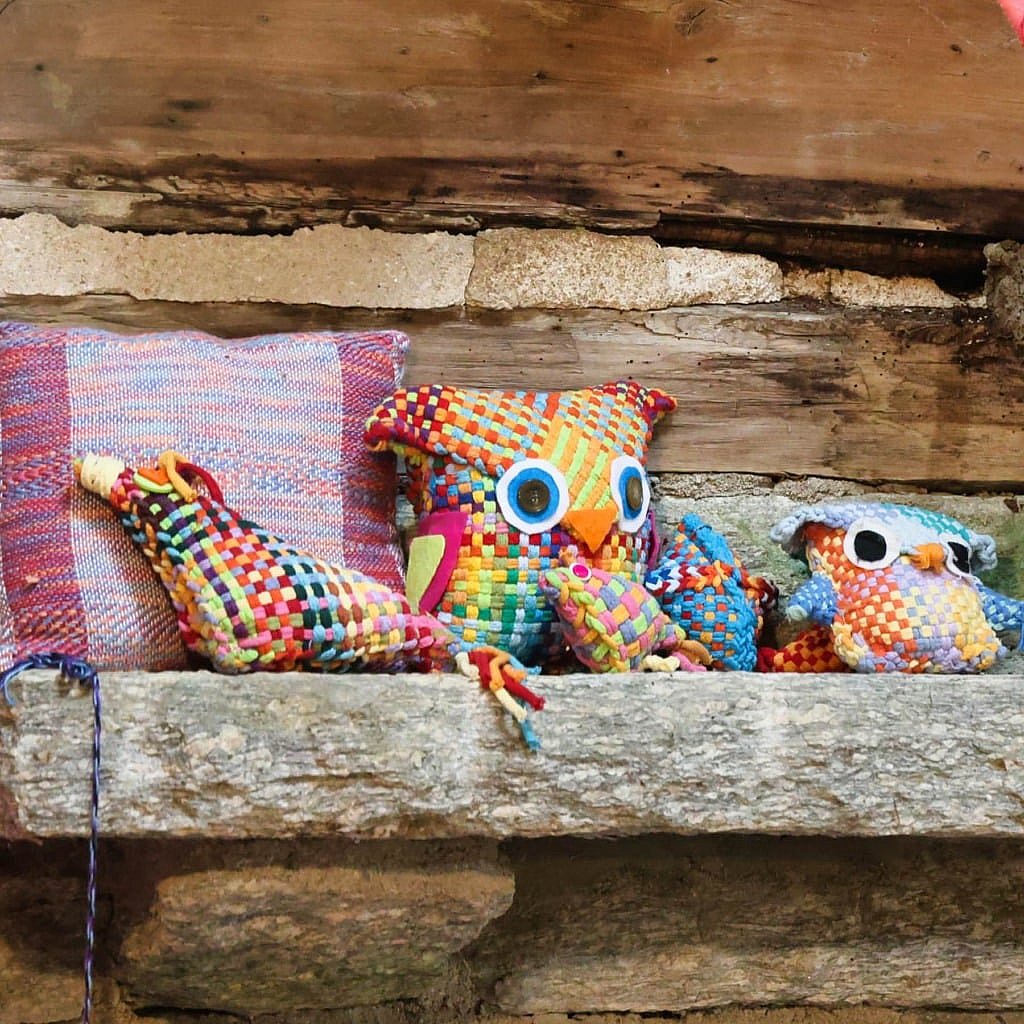
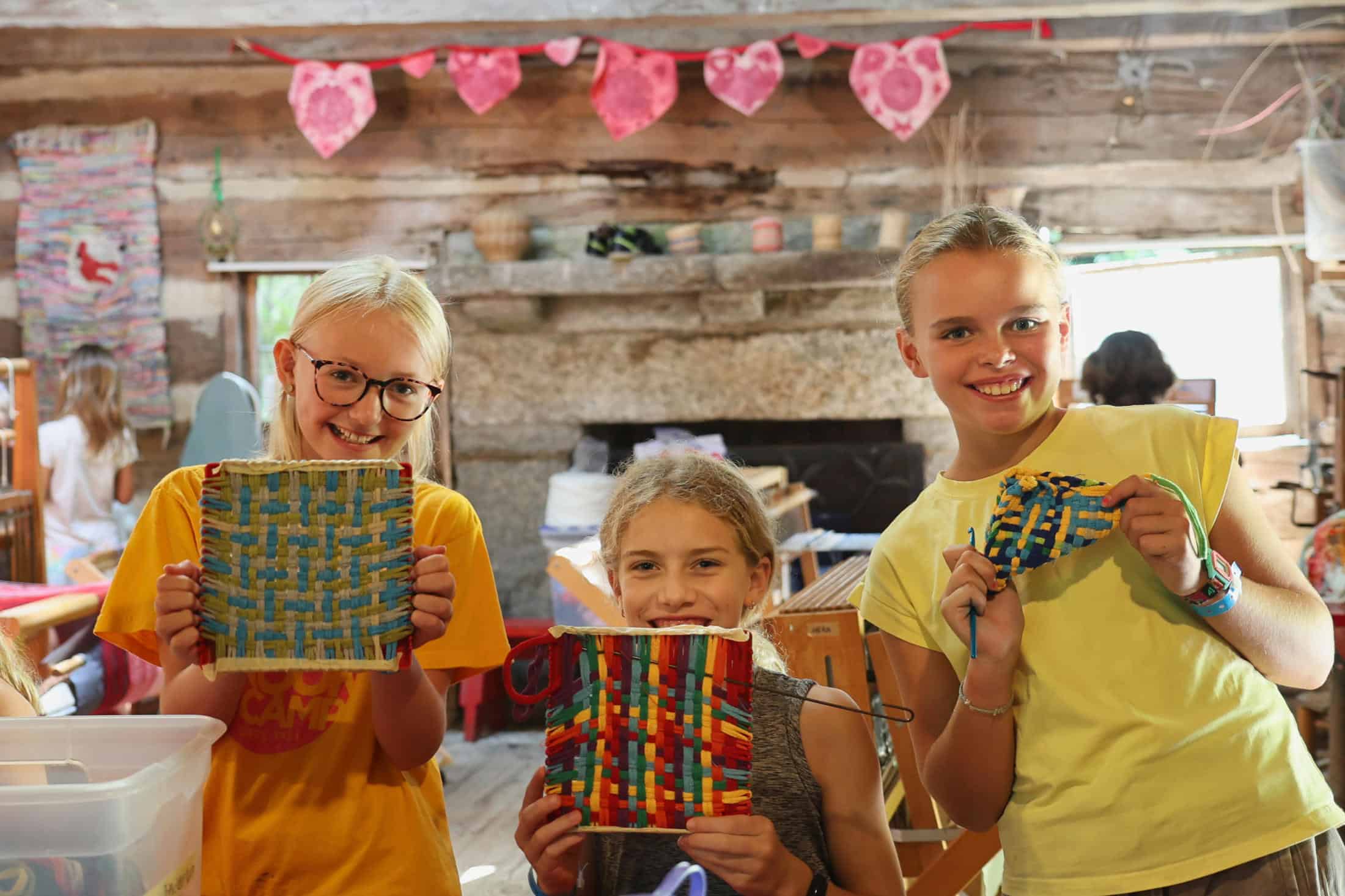
Step into the Curosty cabin this session and you’ll find it populated by colorful owls. Curosty is one of our historic log cabins, home to the weaving and needlecraft activities, and on any afternoon the looms are in motion and a table of girls is turning humble potholder loops into a small menagerie. Little woven owls, and chickens too, roosting on the worktables and the fireplace mantel, each one built from squares a camper wove loop by loop, then folded and stuffed and gave a felt beak and a pair of googly eyes. One girl turned hers into a purse. The chickens are triangular, made by folding corners together. Really ambitious campers are joining multiple potholder squares together and making giant chickens! It started with an owl or two and a few chickens, and now we’ve got a whole flock. This is a great example of what I love about this place. There is always so much going on, and every girl is busy finding the thing that’s hers.

A Different Kind of Making

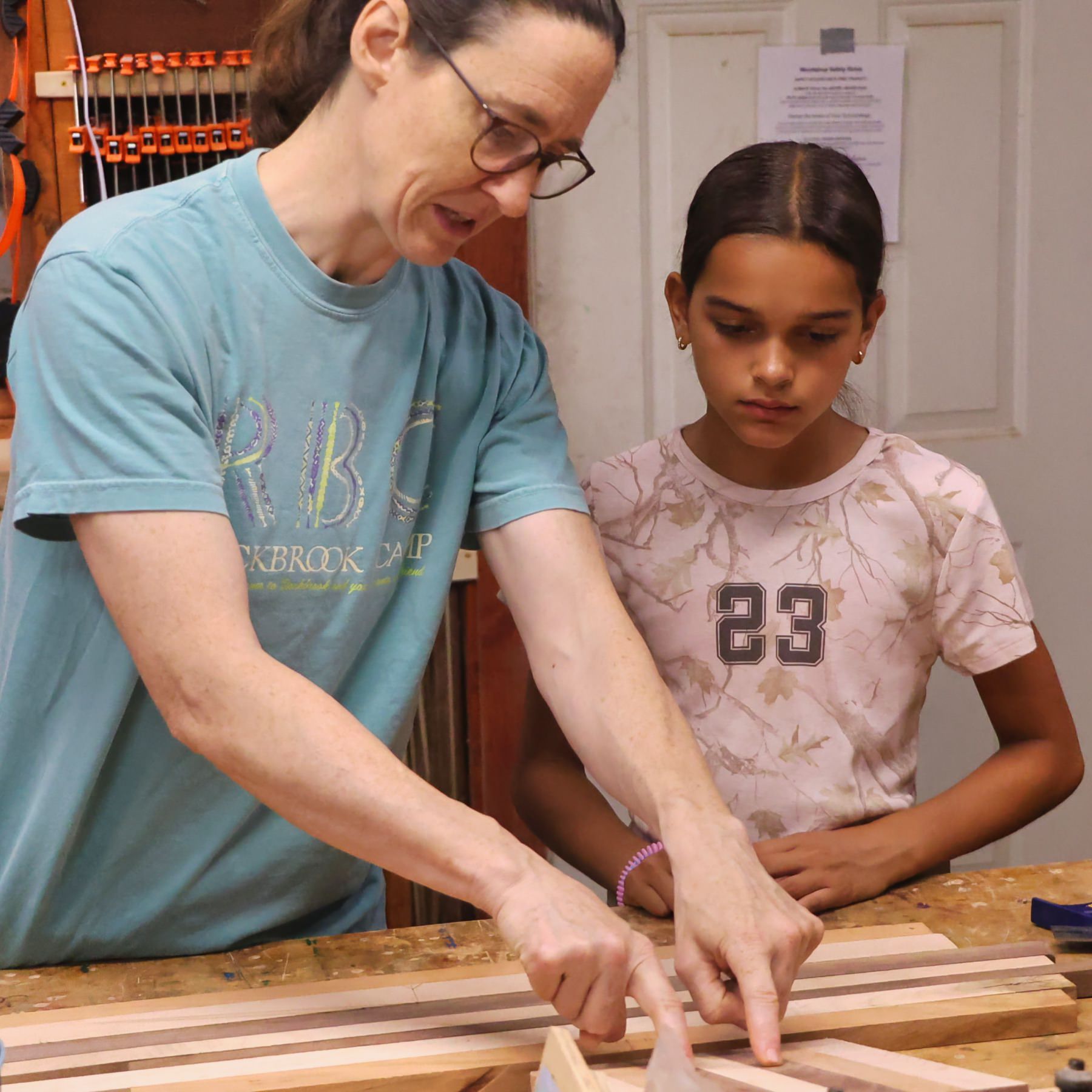
A short walk down the hill, in the wood shop, a different kind of making is underway. Girls have been shaping projects from maple and walnut and oak, and the most popular of the summer is the cutting board. Laura Shay, our woodworking specialist, walks them through the whole arc of it: smoothing and gluing strips of the different woods, working the edges down with block planes, sanding, and finishing with a light coat of food-safe oil. Sometimes they set their boards on the drill press to add a hole for a lanyard. It’s patient work, and it sends a girl home carrying something she can actually use.

A Little Nerve

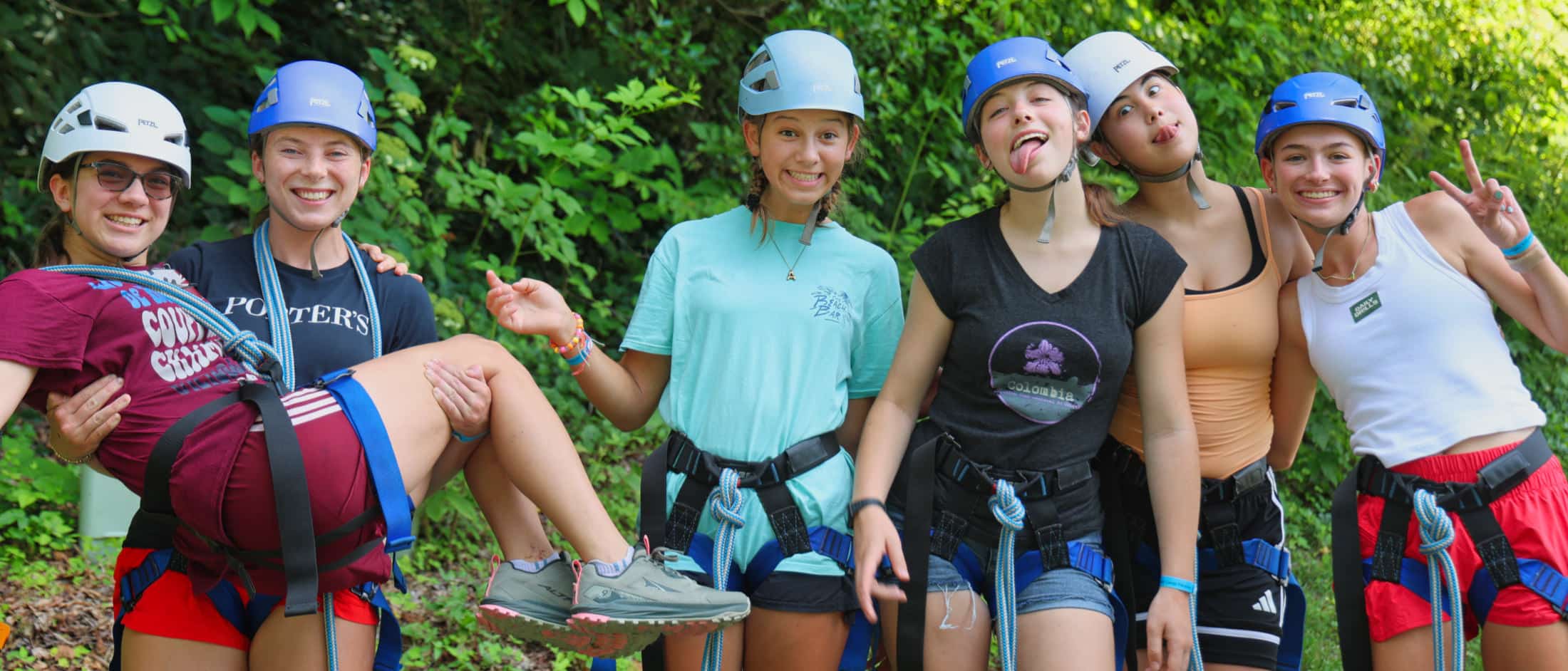
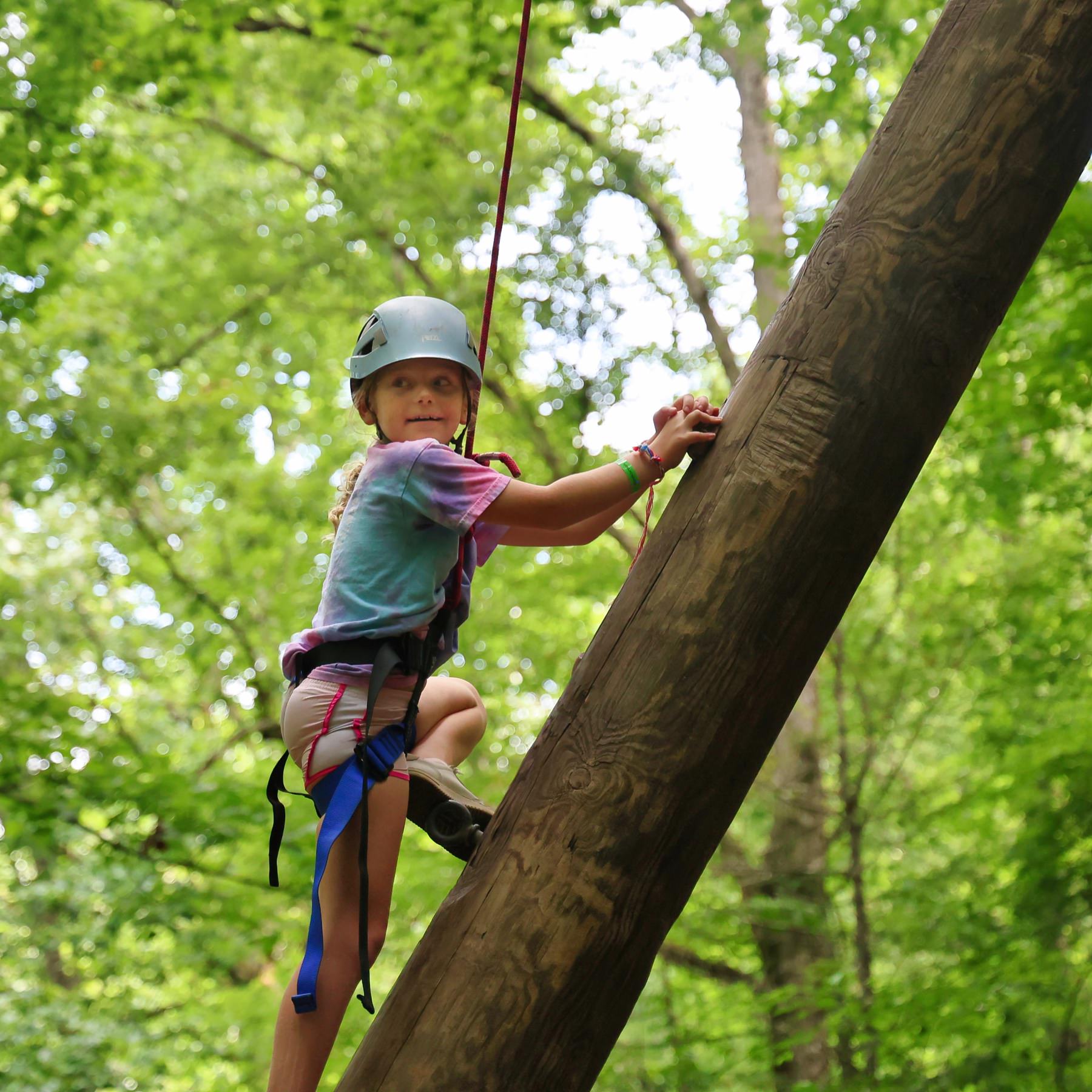
Then there’s the Alpine Tower, which seems to hold an endless supply of interest this session. Our high-ropes tower stands 50 feet tall in the woods behind the gym, a system of logs and cables and ropes bolted into a pyramid shape, with each of its three sides offering a different set of climbing elements: swinging logs, a cargo net, an overhanging wall. Holds are bolted to the poles, and a girl works her way up by reading the puzzle of what to grab and where to step next. She wears a harness and ties into a strong rope that will hold her if she slips. After only a few steps she’s already high in the air, focusing, stepping carefully, and pulling herself up. Climbing the tower takes strength, balance and flexibility, plus a little nerve. These girls make it look almost easy, most of them reaching the platform at the top to enjoy the tree-top view of the forest up there. Some of them climb it blindfolded, just for the added challenge, feeling for the next hold they can’t see. And after every climb comes the best part, the swing out on the belay rope, sometimes intentionally flipping upside down, on the smooth ride being lowered back down to the ground.

The Whole Operation Is Humming

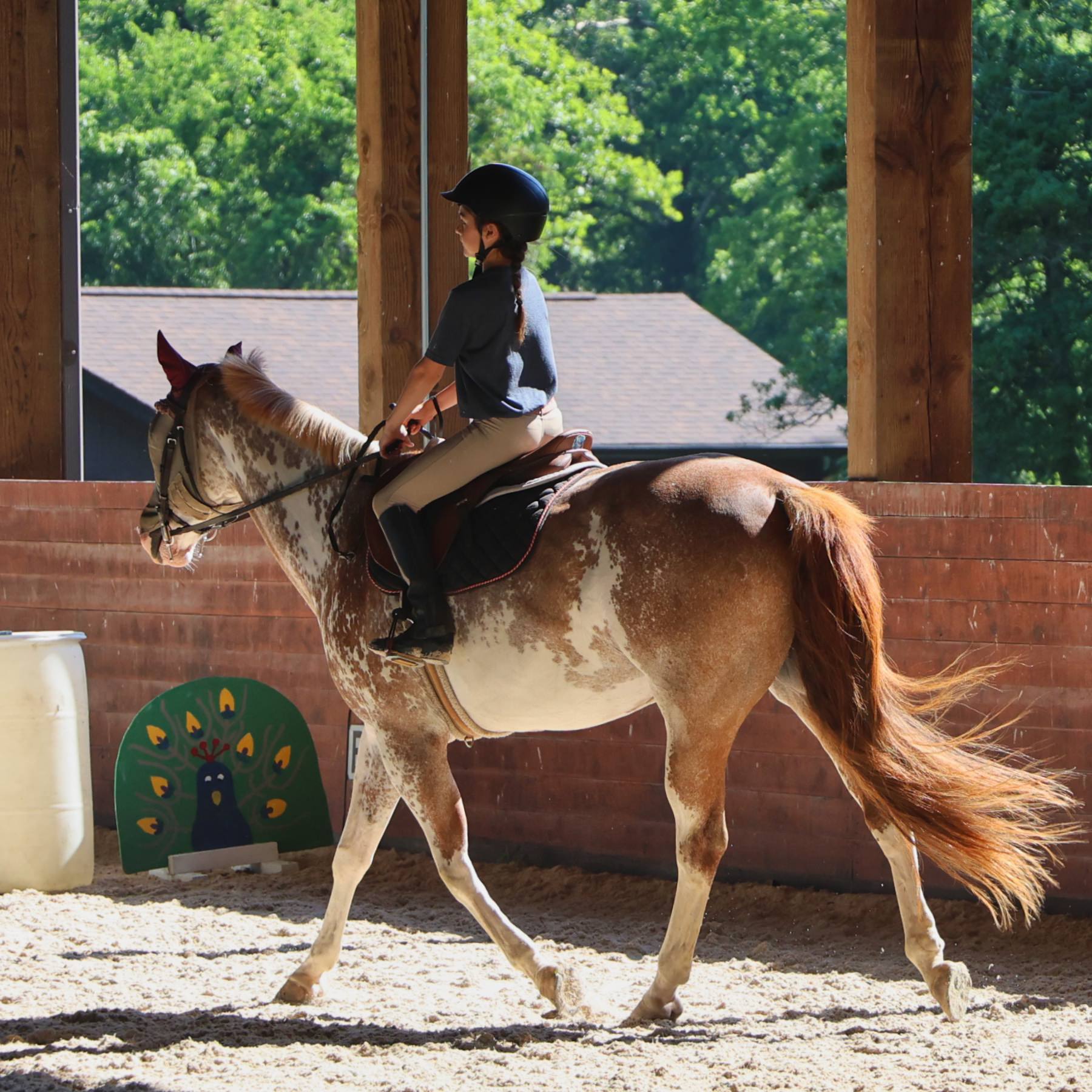
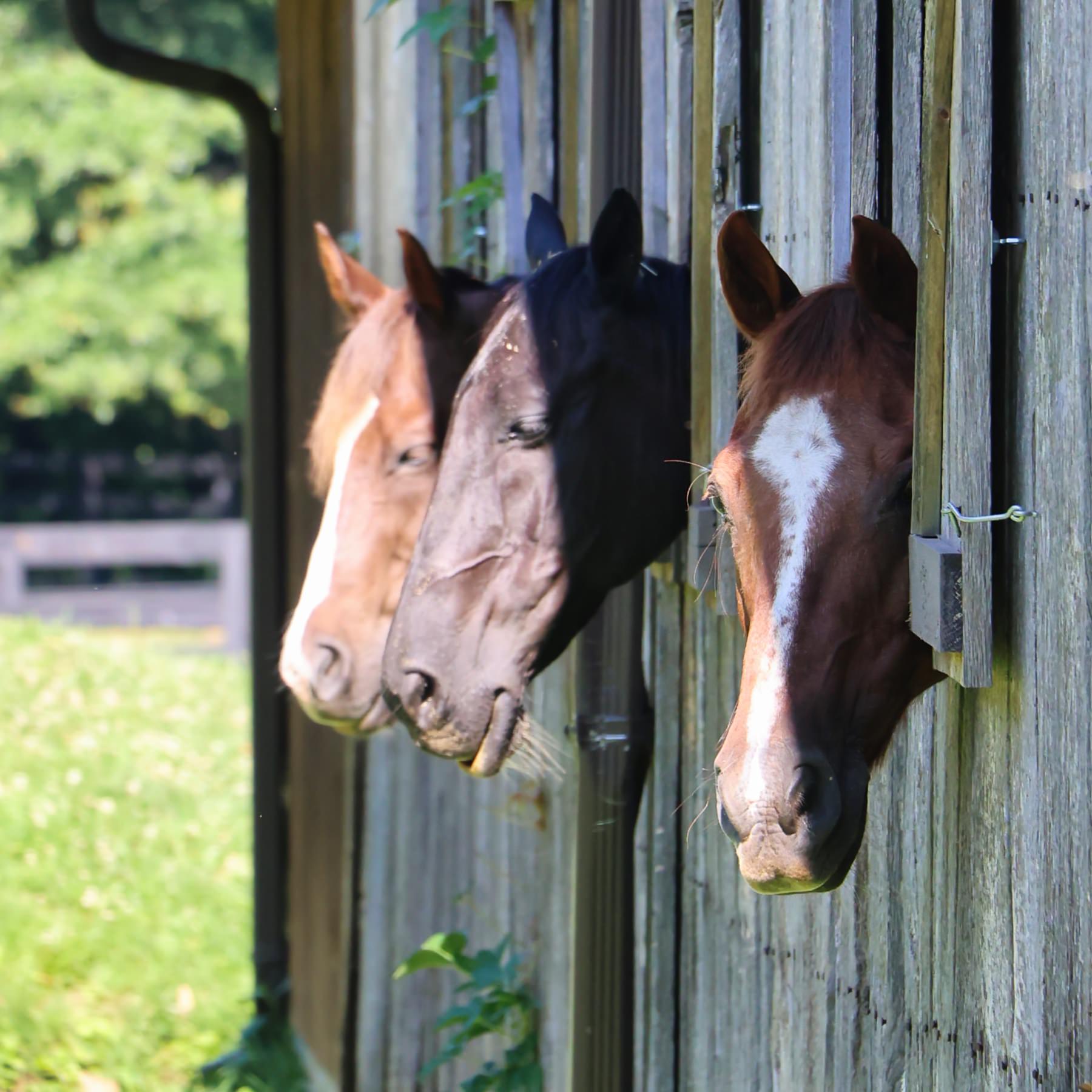
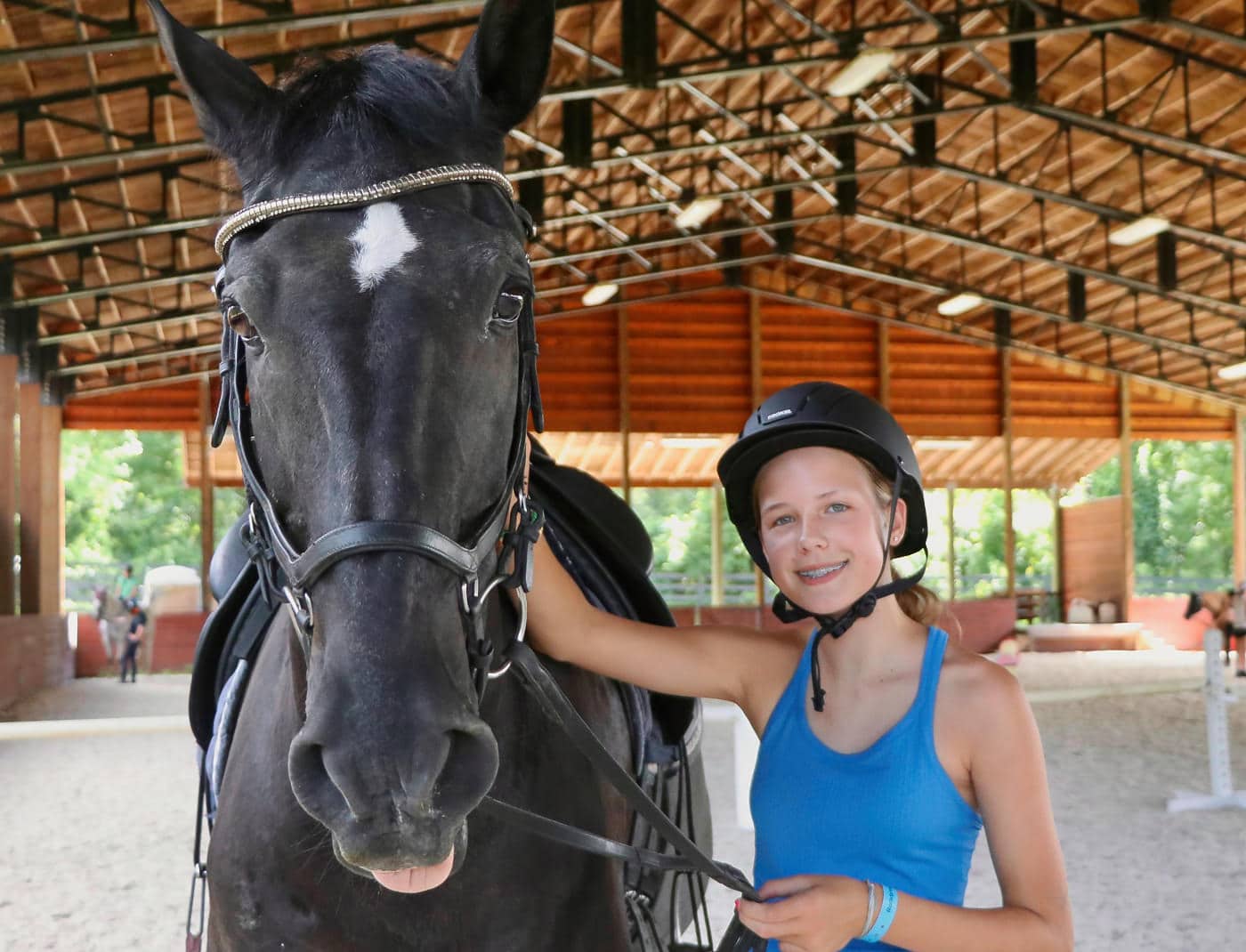
Meanwhile, down at the barn, the whole operation is humming. All 32 of our horses are working each day, carrying 81 riders through their lessons, which requires 4-5 lesson groups each activity period for a total of 16 lessons a day. You can see that the two riding directors, plus six instructors, and six grooms, have a great deal to look after. There are lessons for absolute beginners still learning to sit a walk, and lessons for girls skilled enough to jump, and in between there’s the Stable Club, popular again this session, where girls pitch in with the grooming and the daily care of the horses. Brittany McCathern, our horseback riding director, keeps the whole show running with remarkable calm.

You can see a good deal of this yourself. I hope you’ve been enjoying the daily photos in our gallery, and if you haven’t found your way in yet, give the office a call for access. It’s password protected, with a handy facial-recognition feature and free high-resolution downloads. The version you download is the full-resolution file, and it will look considerably better than the preview in the gallery.

One last thing about sending mail to camp. It’s genuinely a big deal around here, and sometimes parents appreciate some tips about what makes a great camp letter. Late last summer we published an article on how to write to your camper, with a few ideas for what to include and a few traps worth avoiding. I hope you’ll check it out. Generally, your letters should express your optimism about the whole camp experience and your pride about how your daughter is handling being away.

There’s far more going on here than a photo gallery or an occasional blog post could ever hold. An owl here, a cutting board there, a girl 50 feet up in the trees and another learning to post at a trot. That’s the shape of an ordinary day at Rockbrook, and every one of these girls is right in the middle of it, finding herself surrounded by great friends and absorbed in something she loves.

summer camp rafting girls

The Spirit Deepens

relaxed friends at summer camp

It can take some time after camp ends to reflect on the experience. Camp life is so completely absorbing, it helps to have a little distance from it to really understand what it meant. Back home, we can see our time at camp differently, perhaps see more clearly how it was special, how it was more than just fun.

My first thought is to be incredibly thankful for the summer, for the joy of being together at Rockbrook. It’s hard to imagine a more incredible community of friendly caring people, all contributing to the lovely spirit that defines Rockbrook. From the cabin counselors and activity instructors to the kitchen, nursing, and maintenance staff, I’m so grateful for everyone’s kind attention to making camp this summer great. I also want to celebrate our amazing campers, the bright enthusiastic kiddos that enliven everything we do. Every day, I was impressed by their love of camp, their full embrace of the many adventures to be found here. We always say it; it’s the people that make Rockbrook. Thank you everyone!

Carrying Camp Into Ordinary Life

Next, I’d say it was remarkable how both the campers and counselors grew personally from their Rockbrook experience this summer. Camp provides exactly the kind of refuge (It’s a haven!) young people need to relax and be themselves, explore new experiences, and develop all kinds of real-world skills. We watched shy campers find their voices during evening programs, saw new friendships form through simple face-to-face conversations, and newfound confidence and independence blossom beautifully. Along with all the laughter, alongside all the muffins, and dressed in the silliest costumes, girls discovered their own resilience, creativity, and capacity for kindness. Camp life simply fosters our best selves each and every day.

Now back at home, as the rhythms of regular life return, my hope is that our best selves can still shine. Let’s be the sort of friend we were at camp— caring and curious. Let’s look past what’s obvious and find the magic in even the simplest things. Let’s remember that who we are is strengthened through our relationships with others. We all know that being at camp feels really good, and we can certainly look forward to returning next summer. But in the meantime, our camp experience can inspire and guide us to connect and enjoy life more.

Thank you again to everyone who made this summer such an unforgettable success. Every summer the Spirit of Rockbrook deepens. Thank you for being a part of that.

summer camp candle ceremony

An Ubuntu Camp

This past summer, teenage campers introduced me to “Internet Brain Rot,” a term for how excessive social media use fragments attention, reduces thinking to hashtags, and leaves them feeling mentally drained. But the real damage goes deeper than cognition. Online life erodes something fundamental: our capacity for authentic human connection.

Despite promising to connect us, digital environments separate us physically and emotionally. They fragment our shared reality into algorithm-driven feeds, promote zero-sum competition, and reduce relationships to transactions. Young people are losing practice in the face-to-face work of navigating differences and finding identity through community contribution— suffering from too much “me” and not enough “we.”

The African concept of Ubuntu— which recognizes that we become fully human only through relationships with others— helps us understand what’s being lost. Ubuntu places compassion, mutual care, and relational identity at the center of human flourishing. That interdependence is exactly what gets eroded when we live online.

What Camp Teaches That Screens Cannot

Summer camp offers an antidote. As a lived example of Ubuntu principles, camp provides essential practice in relational skills that digital environments can’t teach. This reframes camp as crucial developmental work, and suggests that youth development programs focused solely on individual achievement may be missing opportunities to cultivate the “Ubuntu consciousness” that helps communities, and individuals within them, truly thrive.

Read the full article

summer camp weaving children

Cool in the Summer Sun

Summertime can be hot, as I’m sure most of you are experiencing firsthand these last few days. The same is true here at Rockbrook where the daytime high temperatures have been in the upper 80s, even hitting 91 Monday and Tuesday (which is unseasonably warm). The great news about camp is that we have plenty of ways to stay cool even through the hottest summer days.

camp diving board jump trick
camper weaving basket with feet in the creek

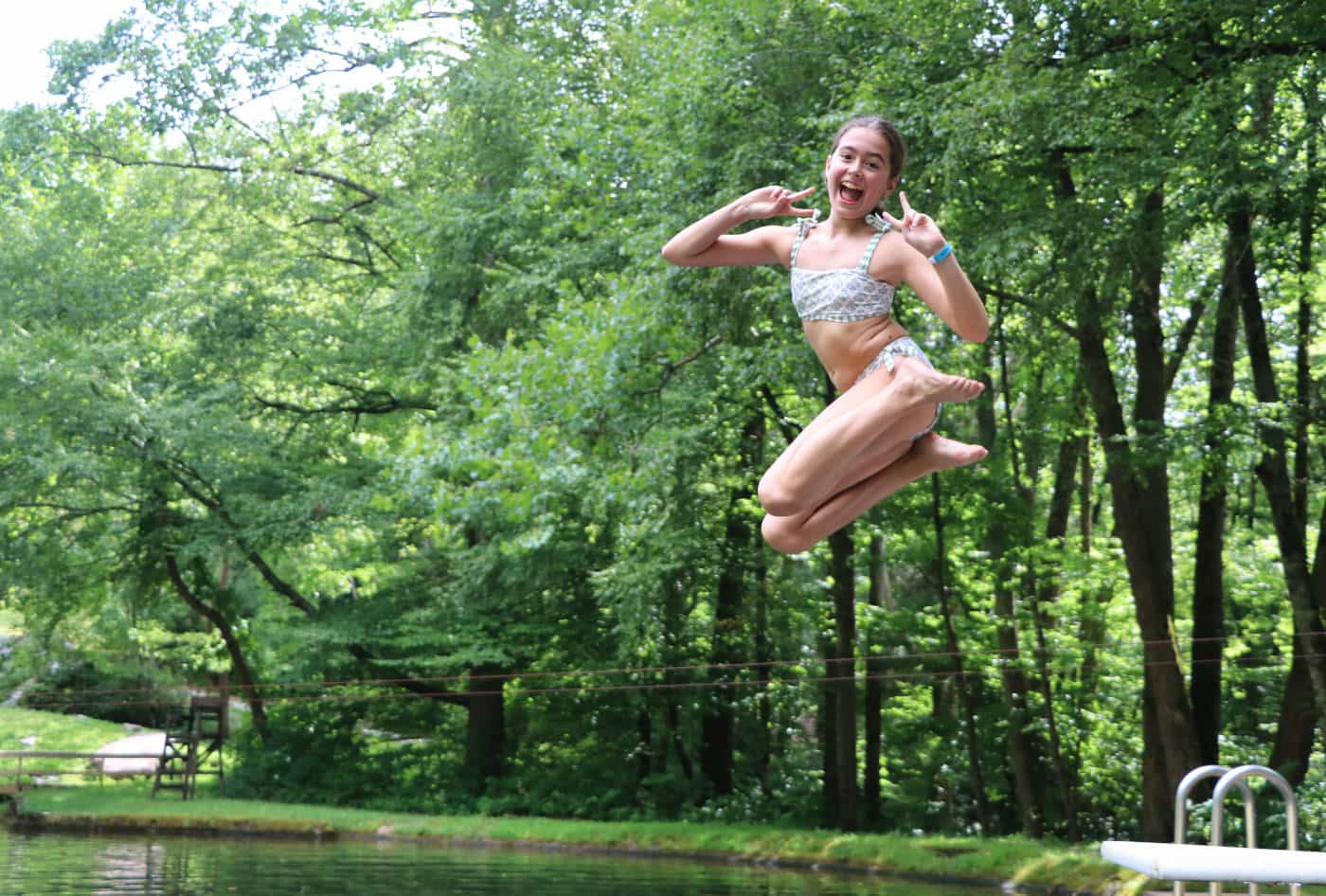
For example, our swimming lake is always a popular place to be. A mountain stream constantly refreshes the water keeping it delightfully chilly. The girls love doing tricks off the diving board, zooming down the 60-foot waterslide, swimming “mermaid laps,” and just goofing around in one of the many floats. In addition to the swimming activity periods during the day, there are two “free swim” times (one before lunch and the other before dinner) when anyone can head down to the lake for a dip.

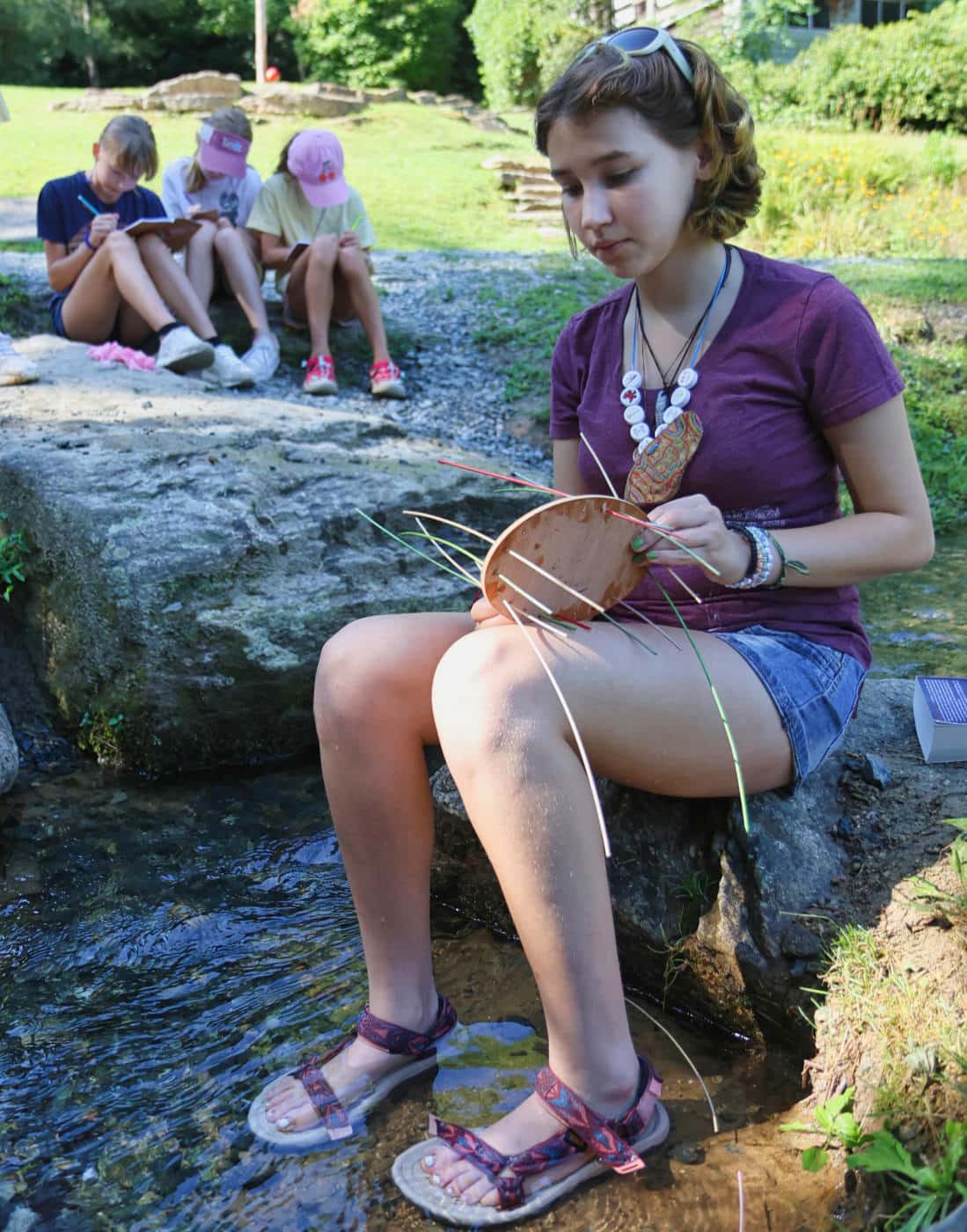
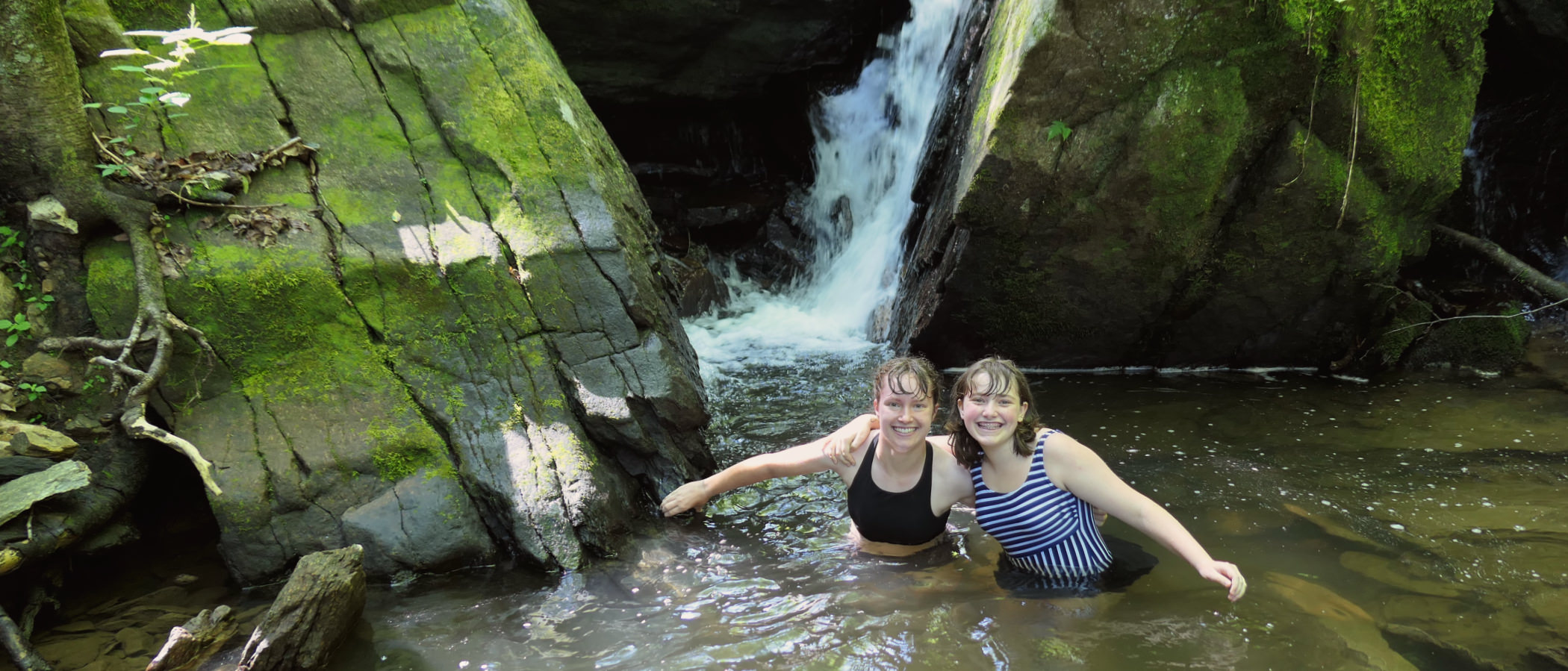
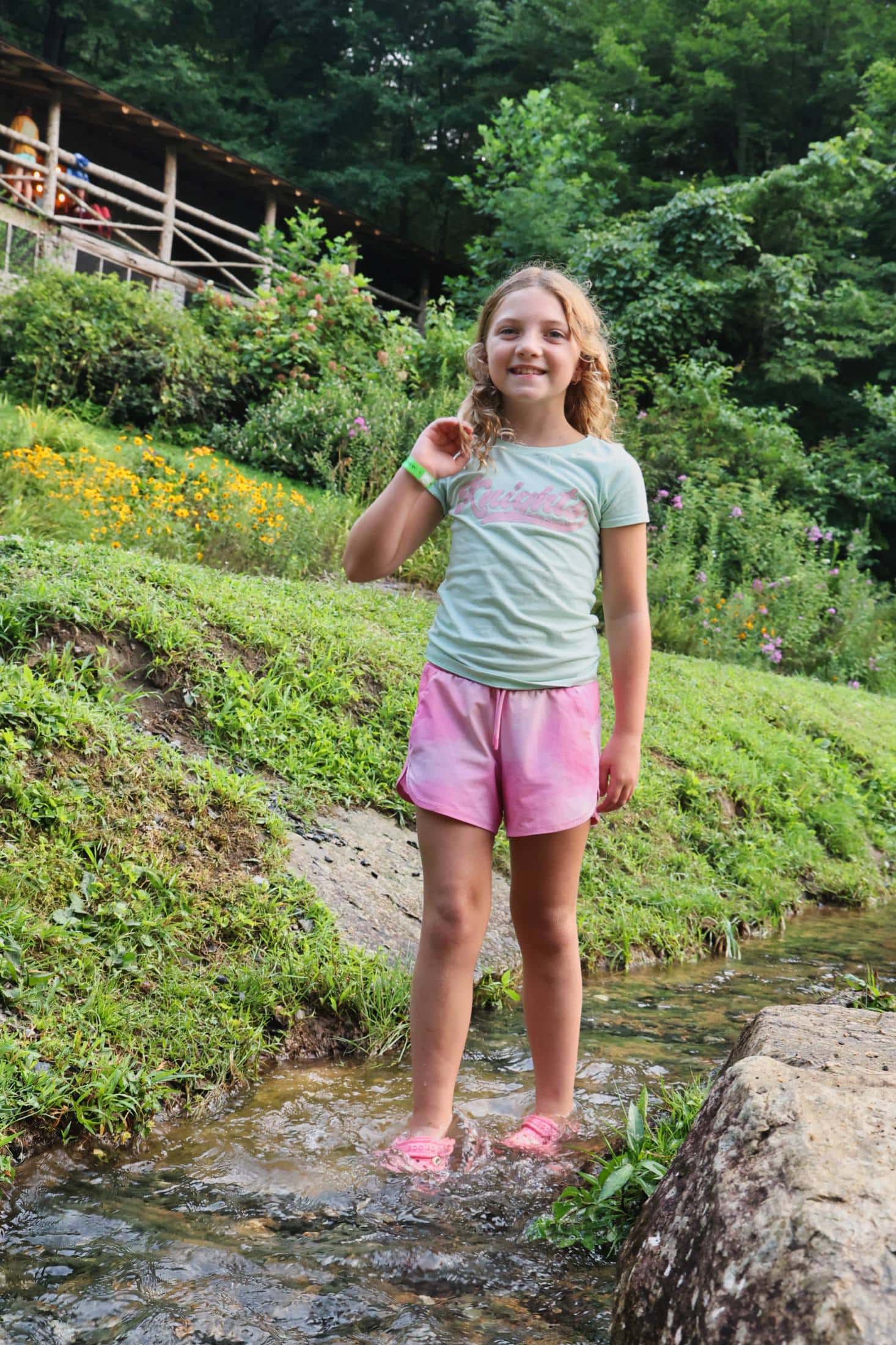
Another place to cool off at camp is in the creek that runs through the center of camp, in front of the Goodwill cabin and behind the Curosty cabin. This creek, along with Dunns Creek that feeds our lake, is another favorite spot. You’re bound to find campers with their feet in these creeks. They might be weaving a basket, working on a painting or drawing, or looking for salamanders in the WHOA activity. Some girls just like to sit near the creek when they have free time, reading or tying knots in a friendship bracelet.

Whitewater Rafting on the Nantahala

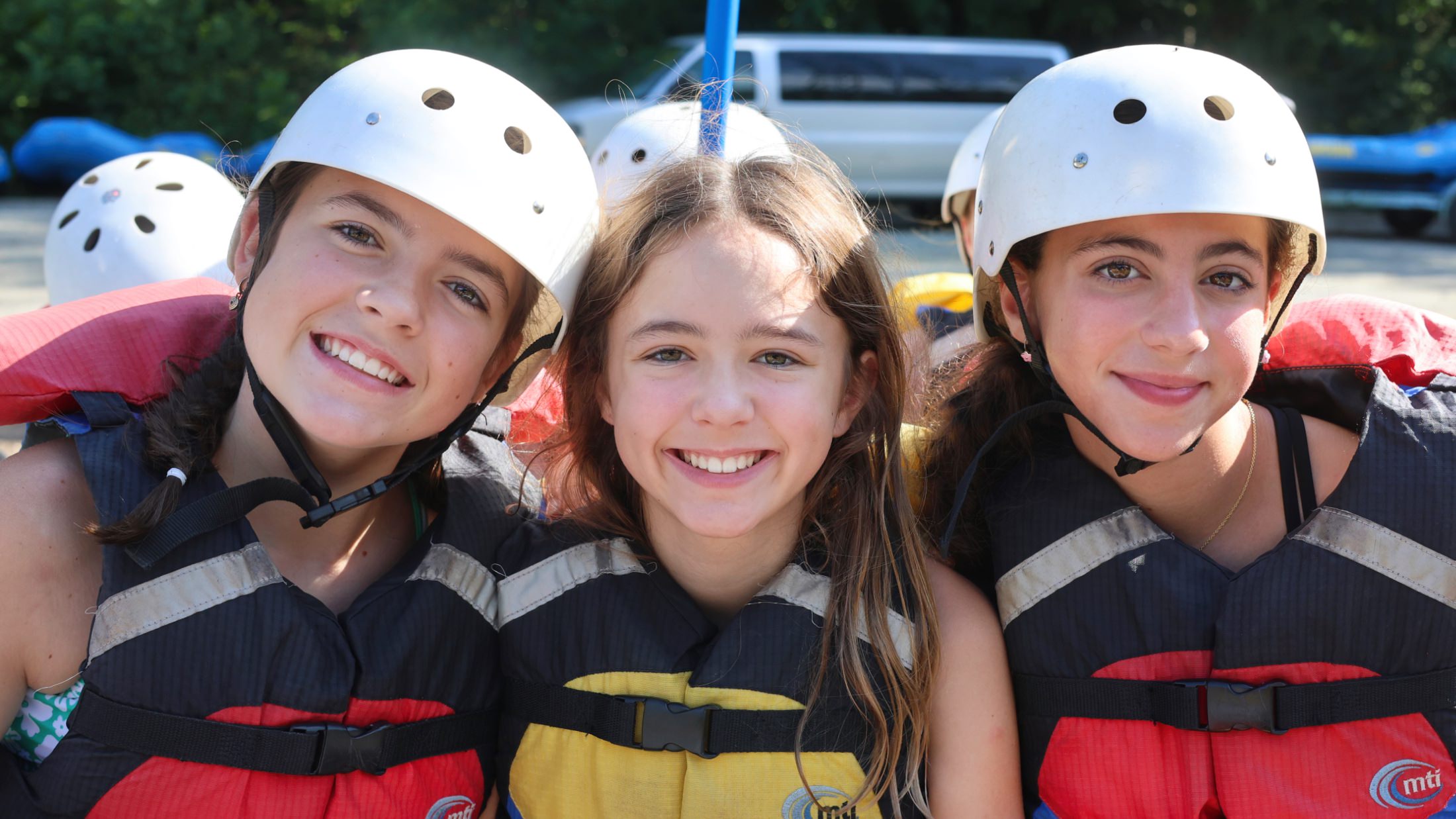
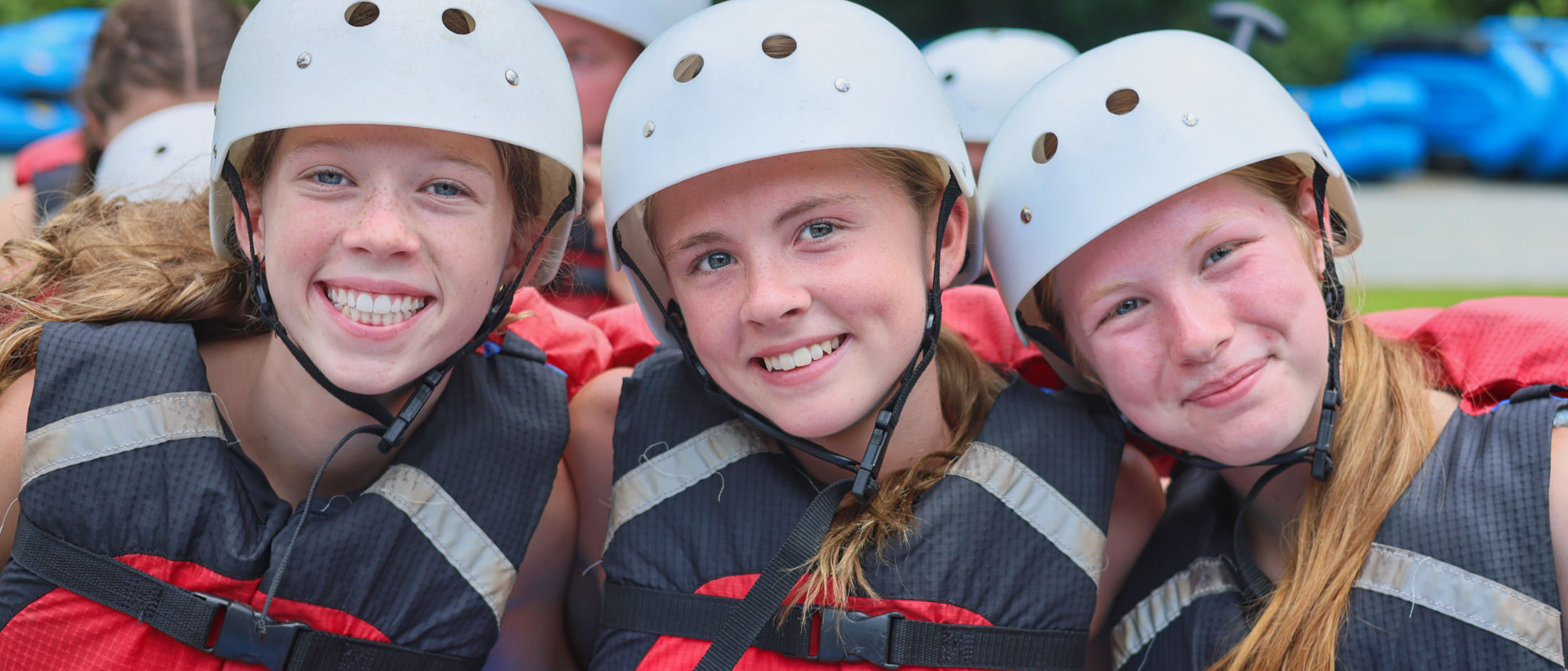
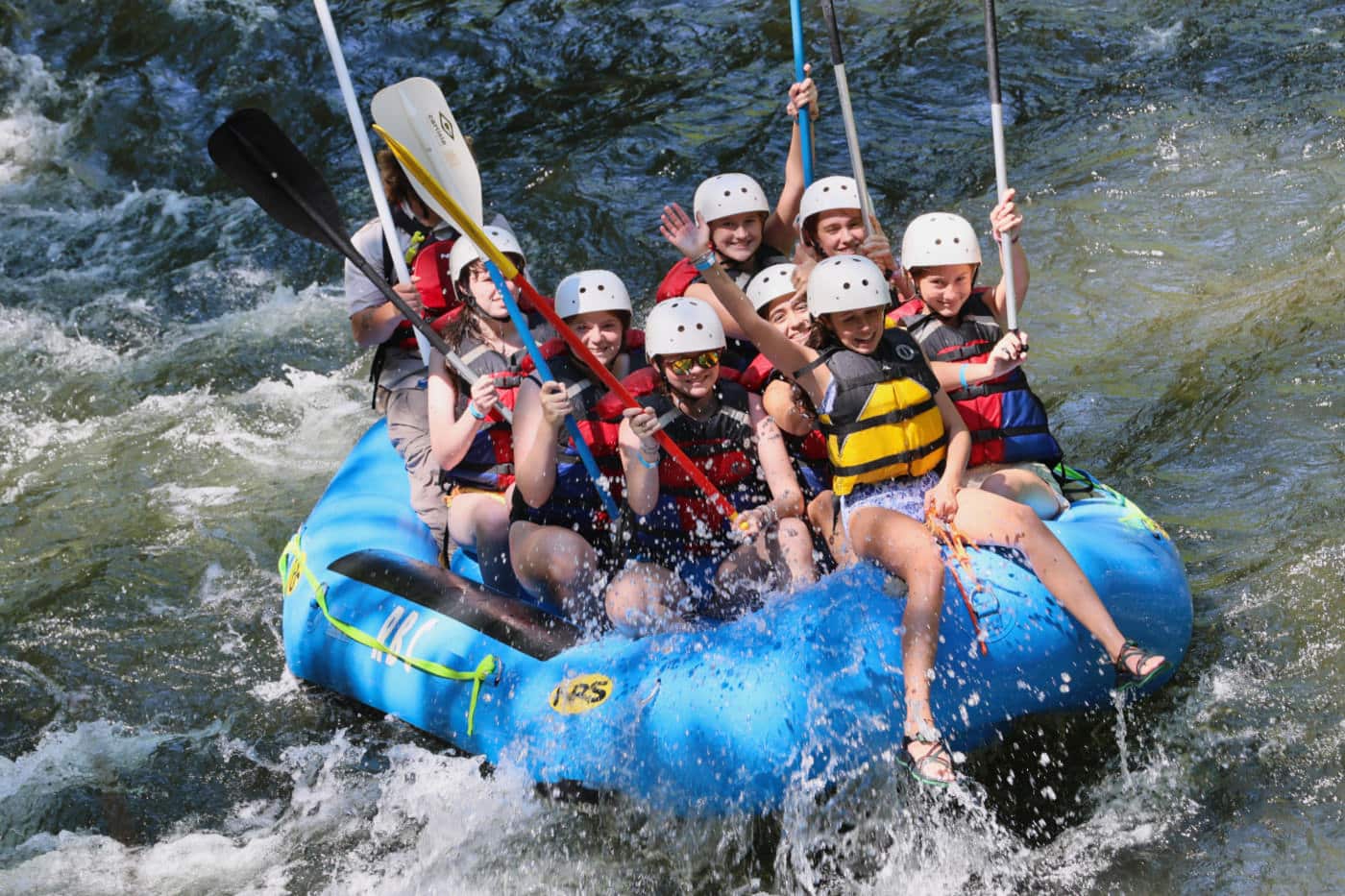
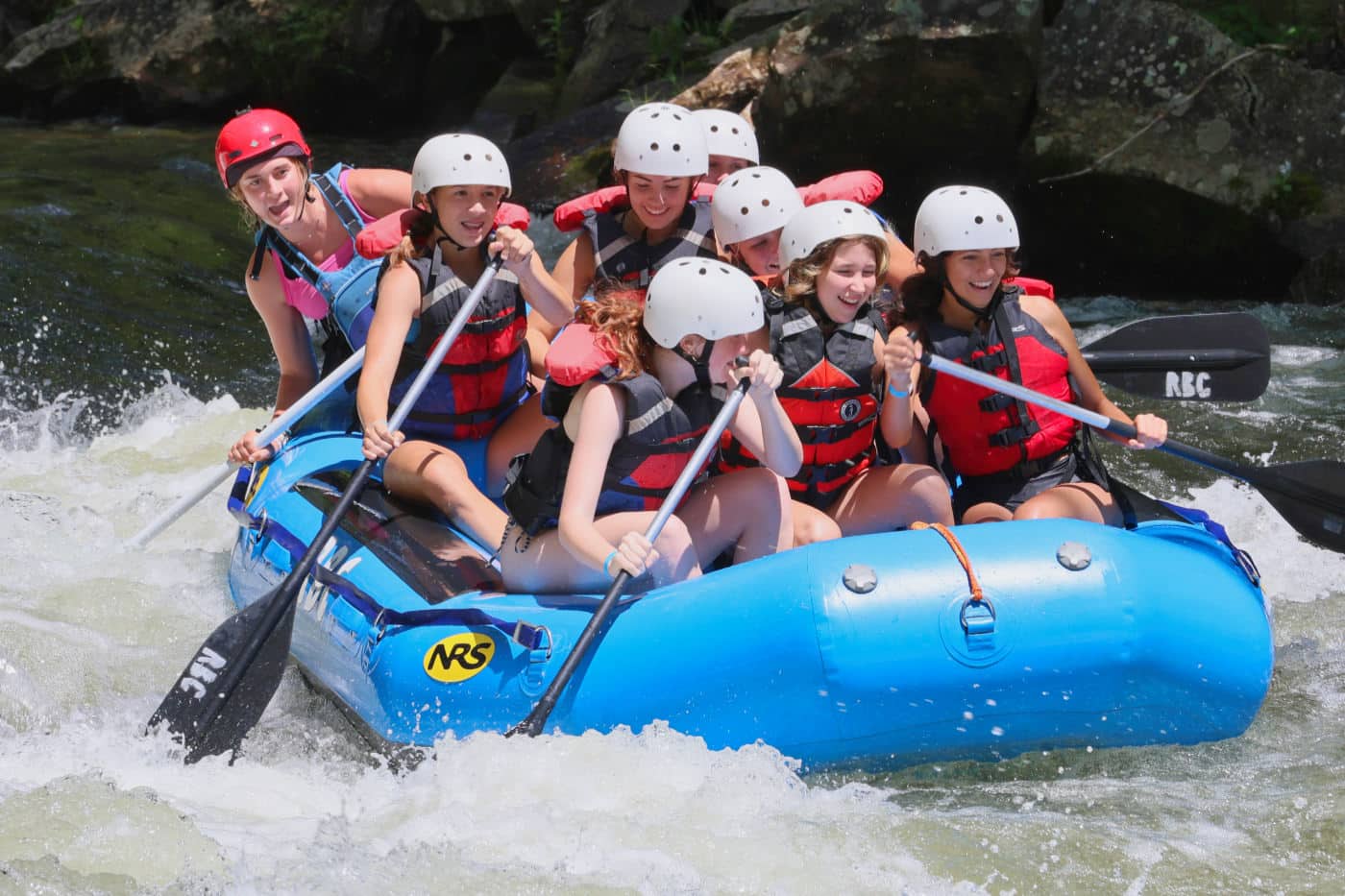
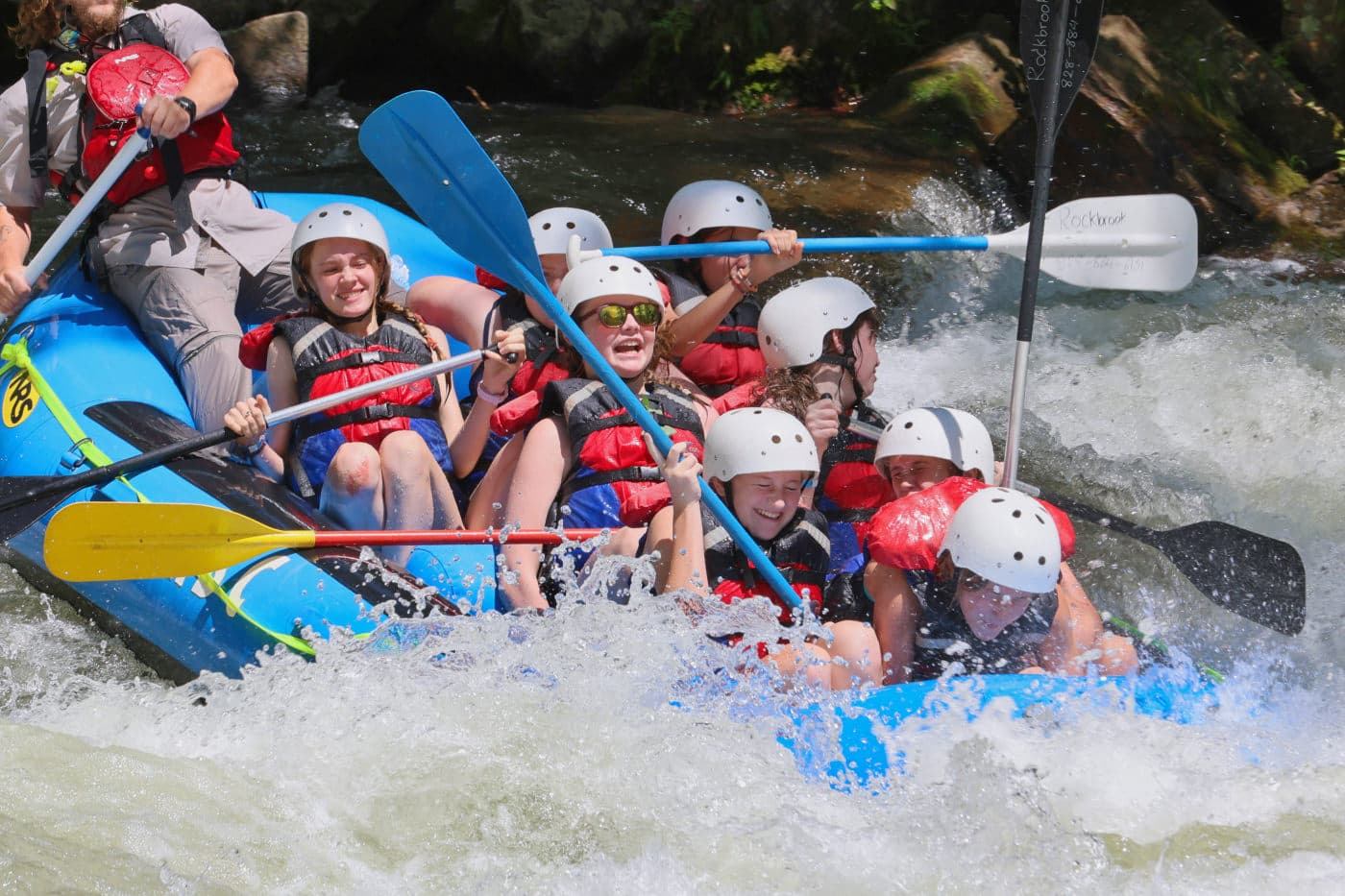
Whitewater rafting is a more adventurous way to cool off at camp. Any Middler or Senior who is interested (and who earned a blue swim band) can take a whitewater rafting trip on the Nantahala River. Rockbrook is known as a rafting camp since we take so many girls down the Nantahala. We have a special permit to use our own equipment and guides allowing us to easily take everyone who wants to go. And just about everyone does! It’s a splashy whitewater experience, full of laughing and goofing around. There are plenty of chances to pose for the camera between the rapids stretching along the nine mile section we run. With the water temperature of about 50 degrees, the girls are definitely staying cool!

A Break from Outside Pressure

There’s one more way that I think camp helps the girls here cool off. It’s a bit more abstract, but in some ways more lasting. It’s the cooling off they find from the pressure and stress they often experience at school. Of course this varies from person to person, and is more prevalent in older children, but it seems that kids these days endure a lot. They are subject to a vast array of expectations to perform, thrown into all sorts of competitions, and fed flashy idealized versions of what it means to be successful. Think of what online media is teaching. It might be easy to forget, but it takes work to be a kid, to measure up in these ways. It takes a lot, and our girls can feel that heat.

summer camp horse kid

Fortunately, camp provides a release from all that. Life at Rockbrook is an unburdening for kids. Living mostly outside, away from the lure of technology, as members of an accepting, encouraging community of caring people, being active and engaged in the real world, free to explore, discover and meander with friends —camp is a relief. That’s why the girls will tell you they “feel really good” at Rockbrook, all while having a really great time. That’s what I call pretty cool.

A quick note about mail. Your girls love receiving cards and letters in their mailboxes, but there’s a balance to be found. When it comes to letters to camp, quality beats quantity. Read this article for tips about how to write to your camper. It spells out a few ideas about what to write, and what to avoid writing about. I think you’ll find it helpful.

summer camp friends

Even More

With the second session of camp now closed for the summer, I want to thank everyone who helped make it so wonderful. After all, it’s the people of camp— the counselors and supporting staff, and of course our amazing enthusiastic campers —who create the special experience we all enjoy. It’s the people who are kind and caring, supportive and encouraging. It’s their friendly attitudes, their “happy relaxed” approach to just about everything, that colors our camp days. Together we found a spirit that propels this community to do more, experience more, and enjoy more.

Reflections from the Spirit Fire

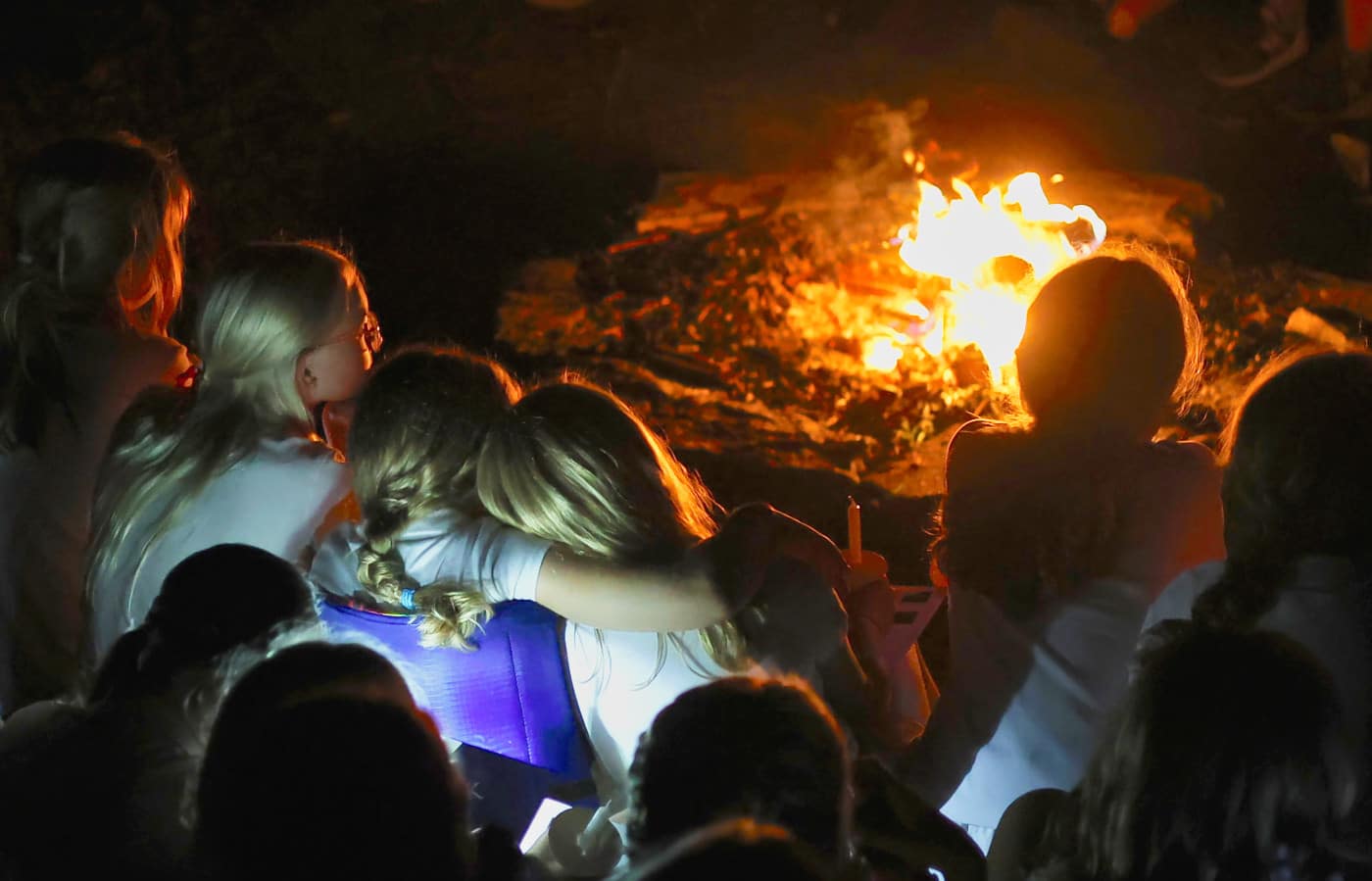
At our closing campfire of the session, the “Spirit Fire,” we were reminded of how life at camp means this much. Campers talked about discovering new interests, making their very best friends, and feeling completely at home at Rockbrook. Staff members expressed their gratitude for being at camp, and for having the opportunity to know so many great people. One girl simply said, “I love everything about camp, and I love all of you even more.” It’s remarkable how close we’ve all become over these last few weeks.

Camp reminds us of the good stuff. It helps us see the magic in most things. It encourages us to explore and discover the incredible beauty of the real world, to trust each other, and be courageous even when something may be uncertain. Most clearly, we now know how incredible camp life feels.

Yes, it’s sad that something good is ending… for now. But I believe we carry camp with us. We can remember that being kind, and being a little silly, will help us. We can sing a favorite Rockbrook song anytime we want. We can stay in touch with camp friends. And we can look forward to returning next summer.

To all our Rockbrook girls: we miss you already. We’re thinking of you fondly, holding tight the memories of our great camp session together. Thank you!

Until next summer, be kind, stay curious, and remember: the Spirit of Rockbrook is with you always.

closing ceremony of summer camp

Happy Relaxed

Sarah made a comment today that seems to sum up the vibe of camp right now. She said, “Everybody here seems so ‘happy relaxed.'” It makes perfect sense if you just look around. You see plenty of smiles, girls laughing and playing, and appearing really at ease. The two are related of course. With camp being a place where girls can be themselves without the pressures and worries of school, where they know instinctively the people around them are genuinely kind and caring, it’s natural to relax into the experience. There’s no need to guard against anything or to maintain any kind of facade, so camp provides a release of sorts. That feeling alone is enough to lift a child’s spirits, but combine it with all of the fun activity at camp, along with all the enthusiastic energy of a zany community, and you have a beautiful recipe for happiness as well.

Relaxation in Activities

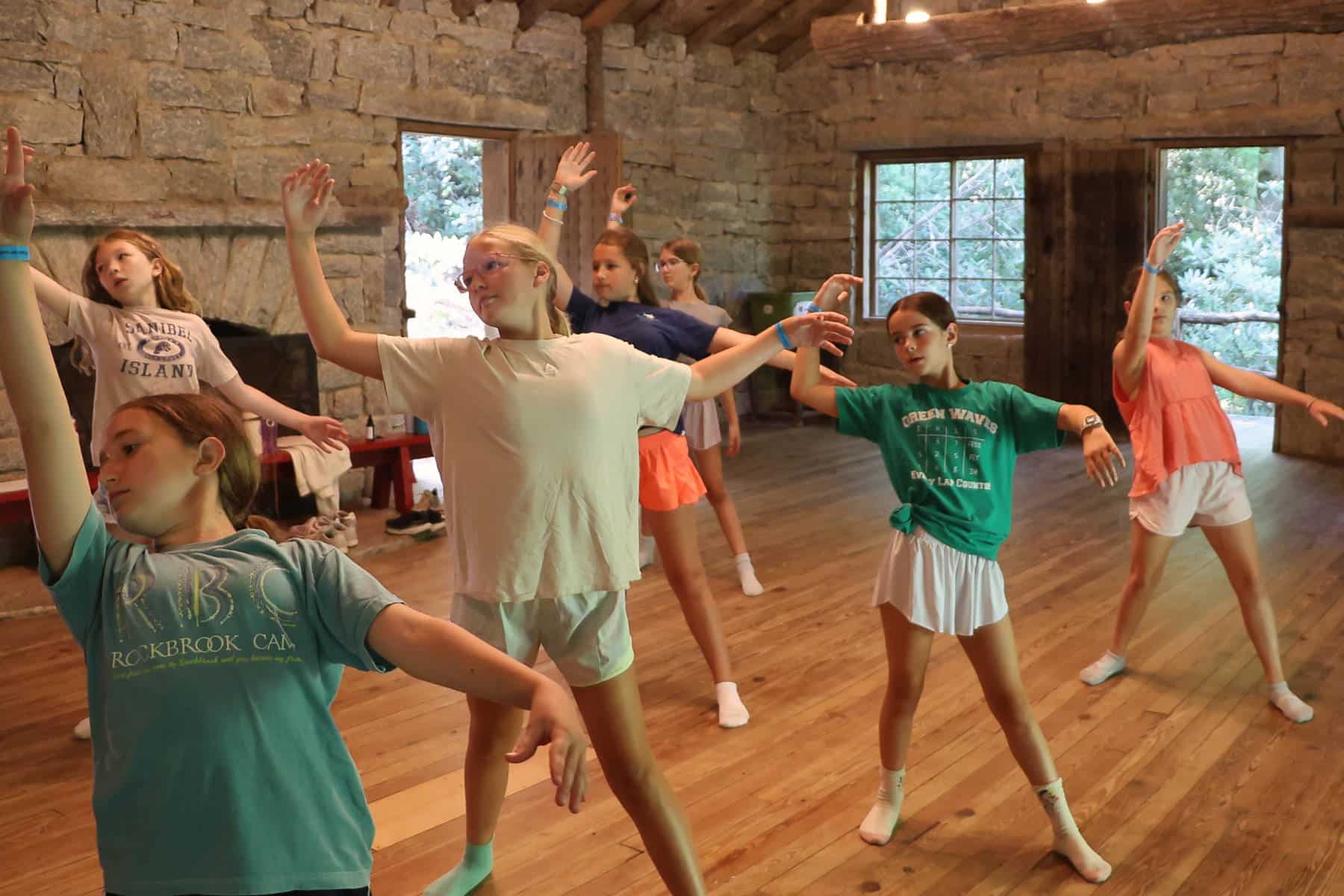
This feeling shows in many of the activities. For example, in the yoga class, which meets in the hillside lodge, the girls are definitely relaxing. Spread out on their yoga mats, they’re peacefully stretching, listening to soft music, and trying different poses. There’s also plenty of giggling now and then, especially when they try an awkward position. And anything that involves two people in the pose is bound to be a laugh out loud moment.

Floating at the Lake

Swimming at the lake is another great example of being relaxed and happy at the same time. Often instead of swimming, floating is more popular. It’s a way to cool off in the refreshing water of the lake, while at the same time lounging comfortably in one of the many colorful floats available. Even more fun is when friends pile into the floats making them a little unsteady and easy to end up in a splash.

The Focus of Horseback Riding

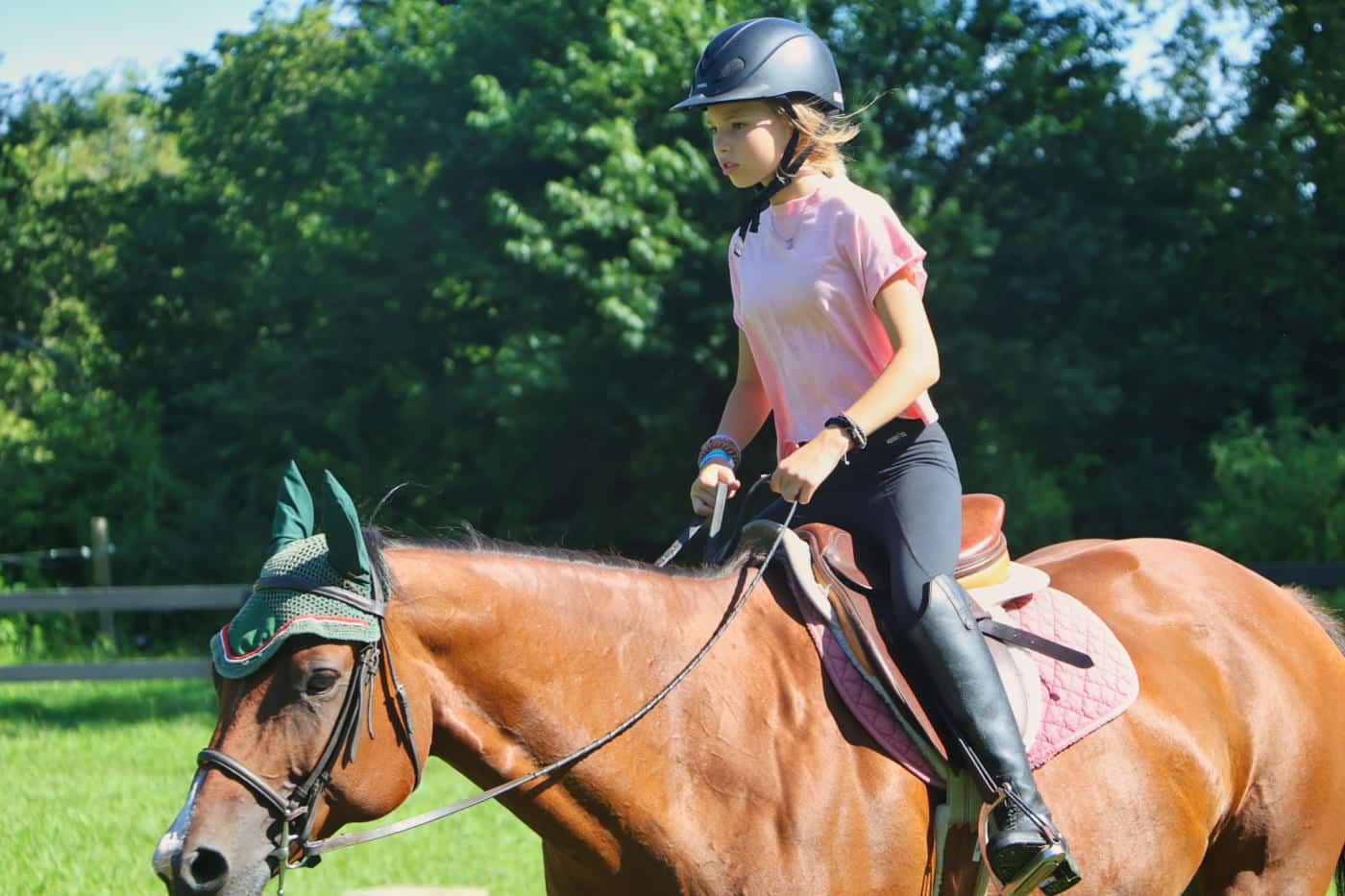
Sometimes, this feeling arises from concentrating on something, from being completely immersed in whatever we’re doing. For example, the girls have to really focus when riding a horse, being careful with the position of their legs, their posture in the saddle, and how they are controlling the reins. This gentle coordination between the horse and rider makes horseback riding rewarding and fun.

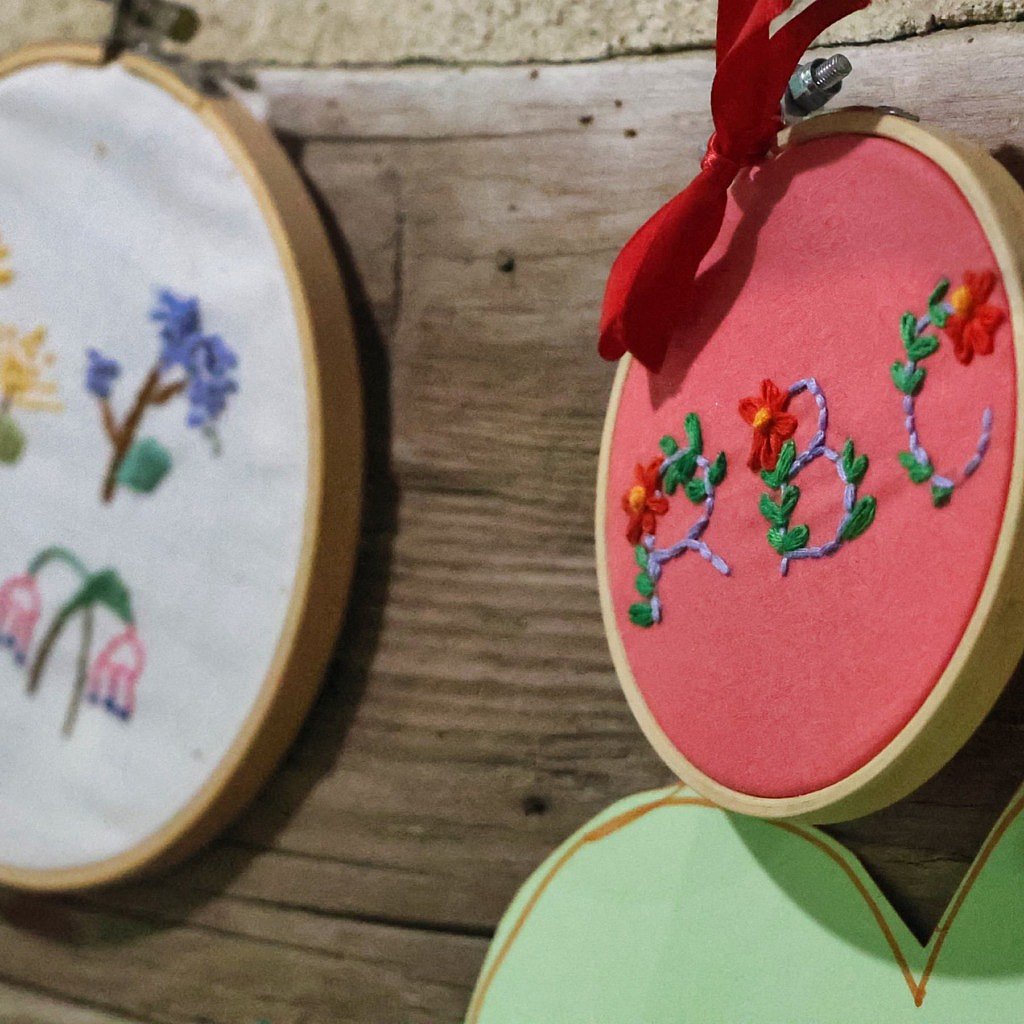
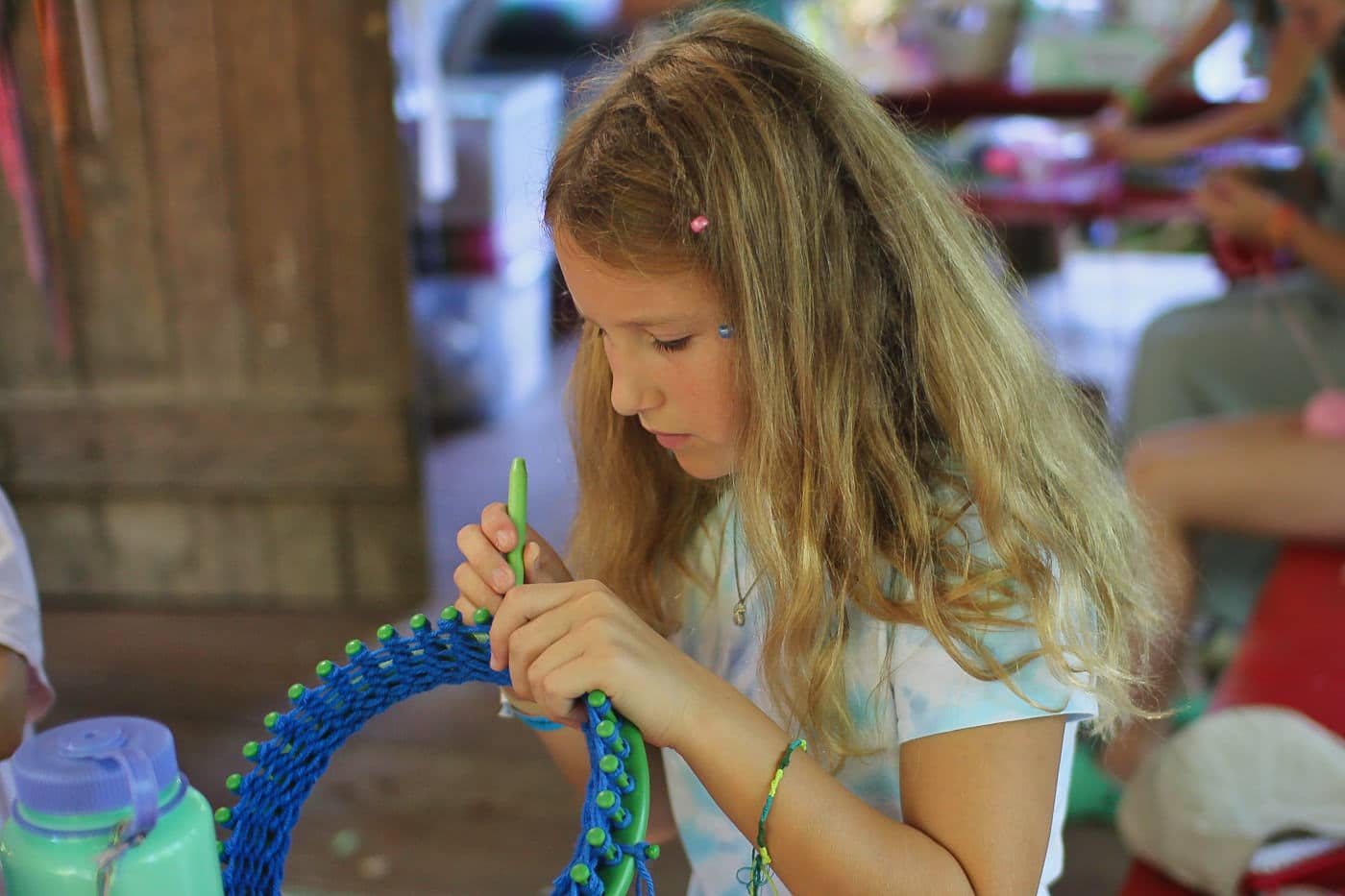
Most craft activities at camp offer a similar opportunity to lose yourself in the moment. Working with their hands, whether shaping a slab of cool clay or weaving colorful yarn through a “nifty knitter,” campers easily become deeply engaged. There’s a strange immersive quality to many craft activities at camp, each providing another way to relax and at the same time enjoy the satisfaction of making something. It’s amazing how easily the campers are happily immersed in weaving, painting, pottery, needlecraft, and so on.

Compared to the daily lives of most kids, living the “happy relaxed” life of camp is a great gift. It proves to them it’s fun and rewarding to be active, and to really dig into creative pursuits. Most importantly, it reveals the special happiness that follows from simply being yourself in a relaxed way. The beauty of camp, and surely a big reason why girls love it, is how quickly and easily the community here evokes these feelings.

NC mountain swimming hole