
Plenty of Nothing

Saturday night our gym was loud enough to feel it in your belly. Sunday afternoon the landsports field had music going, a sprinkler spinning, and the whole camp in team jerseys running between game stations. In between those two, on Sunday morning, everyone walked down to the chapel clearing and sat quietly on log benches, and one girl after another stood up to talk about a breeze on her cheek at bedtime, or the sound of the birds at dawn, or the way it feels when a friend hands you something small. Three all-camp events, each with its own rhythm and feeling of togetherness, punctuating the last few days. And in the middle of them, a story about a gift that was supposed to be nothing at all.

So Hot in There

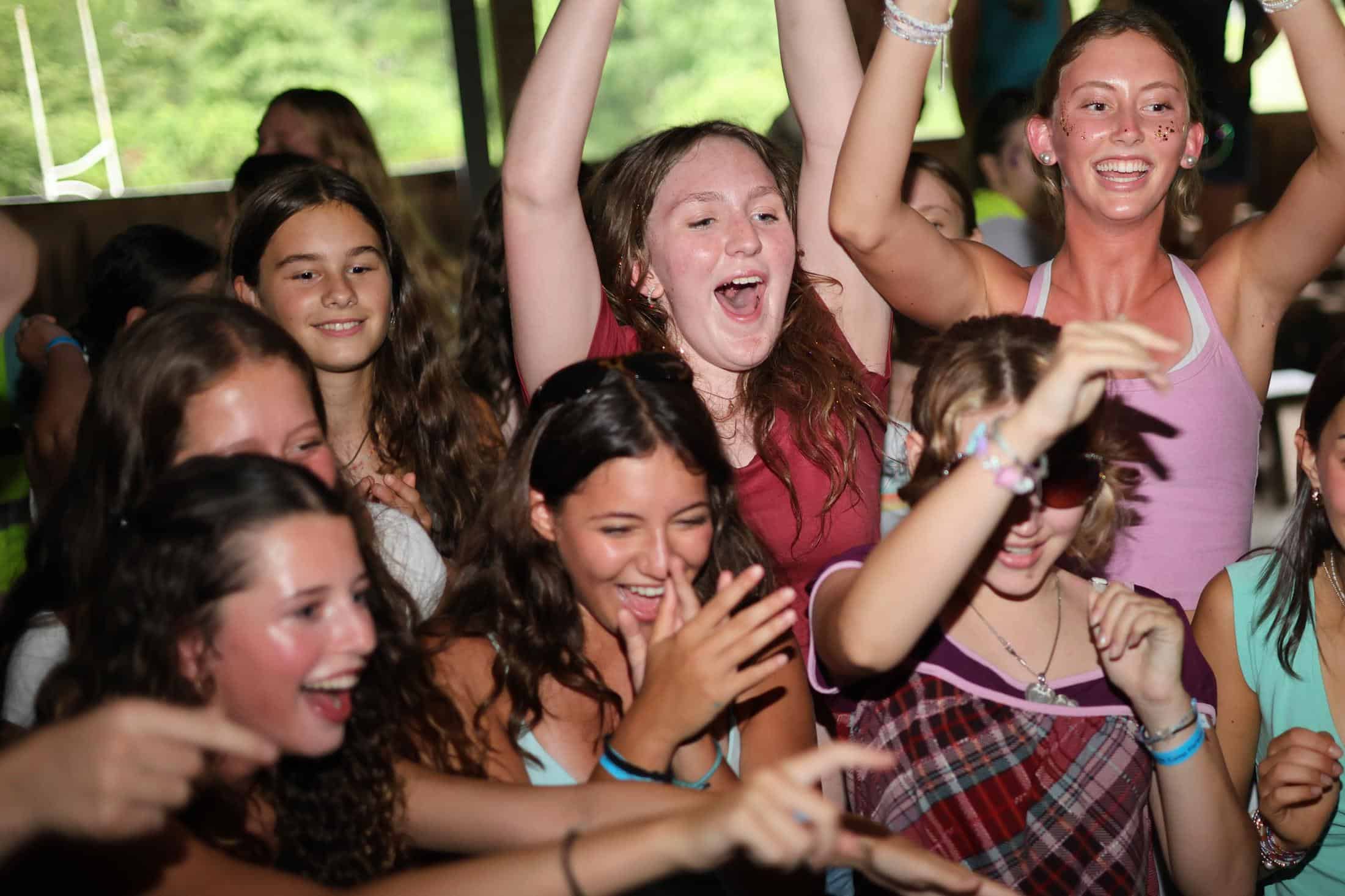
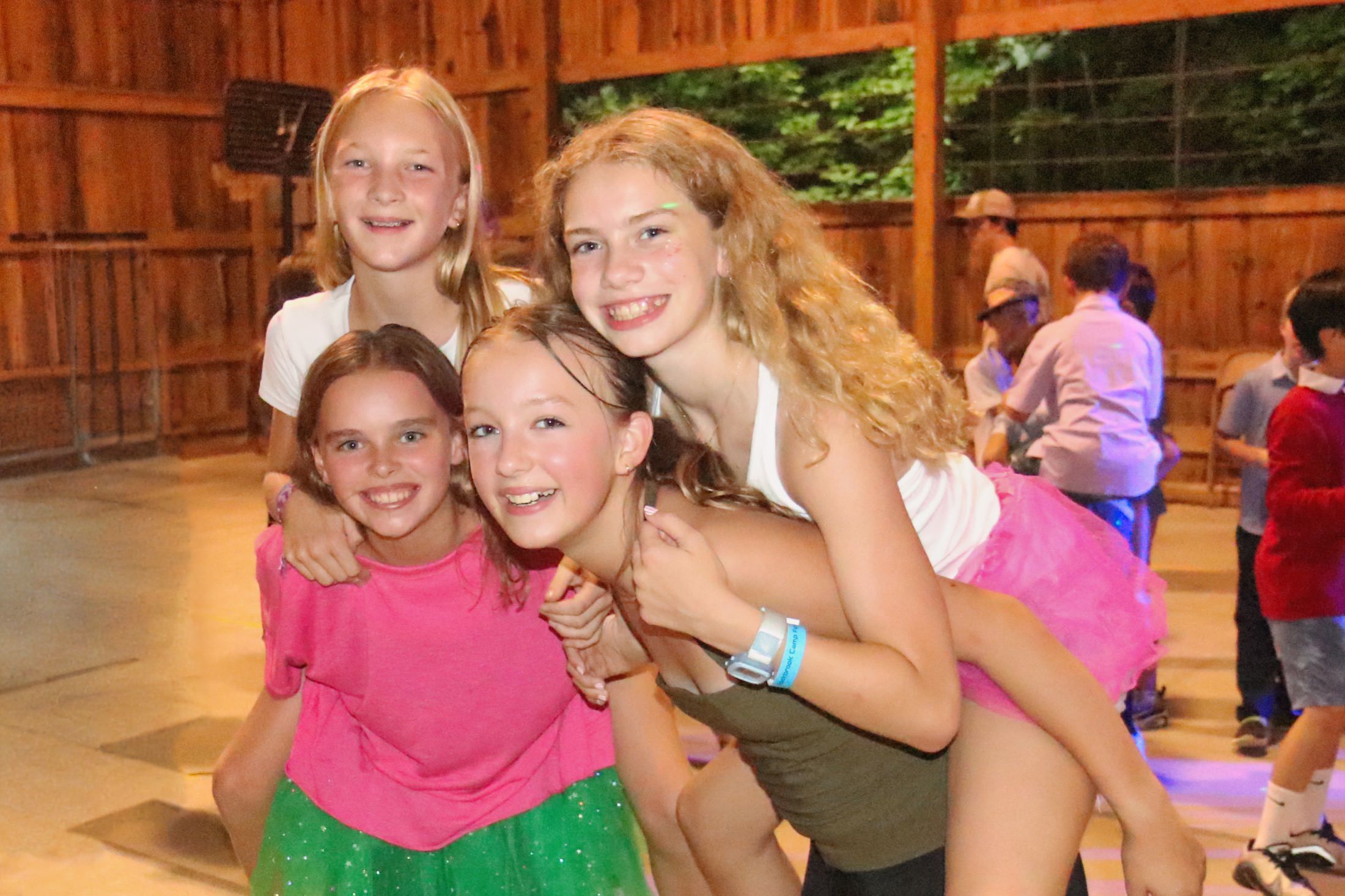
Saturday night we had a dance with Camp Carolina, or I should say, “dances” because we ran two at the same time, so that the girls could be with boys their own age. Our Juniors and Middlers stayed home and welcomed the younger CCB boys into our gym, where our friend Marcus, DJ Dawg, had his sound and light system ready. The kids jumped and bopped through familiar pop songs and the line dances everybody knows, Cotton Eyed Joe, the Macarena, and such. When the gym got too hot, girls spilled outside for gaga ball or tetherball, hula hooping and jumping rope, until they’d cooled off enough to go back in. Partway through Sarah and Lauren passed out chocolate chip cookies. More fuel for the dancing fun.

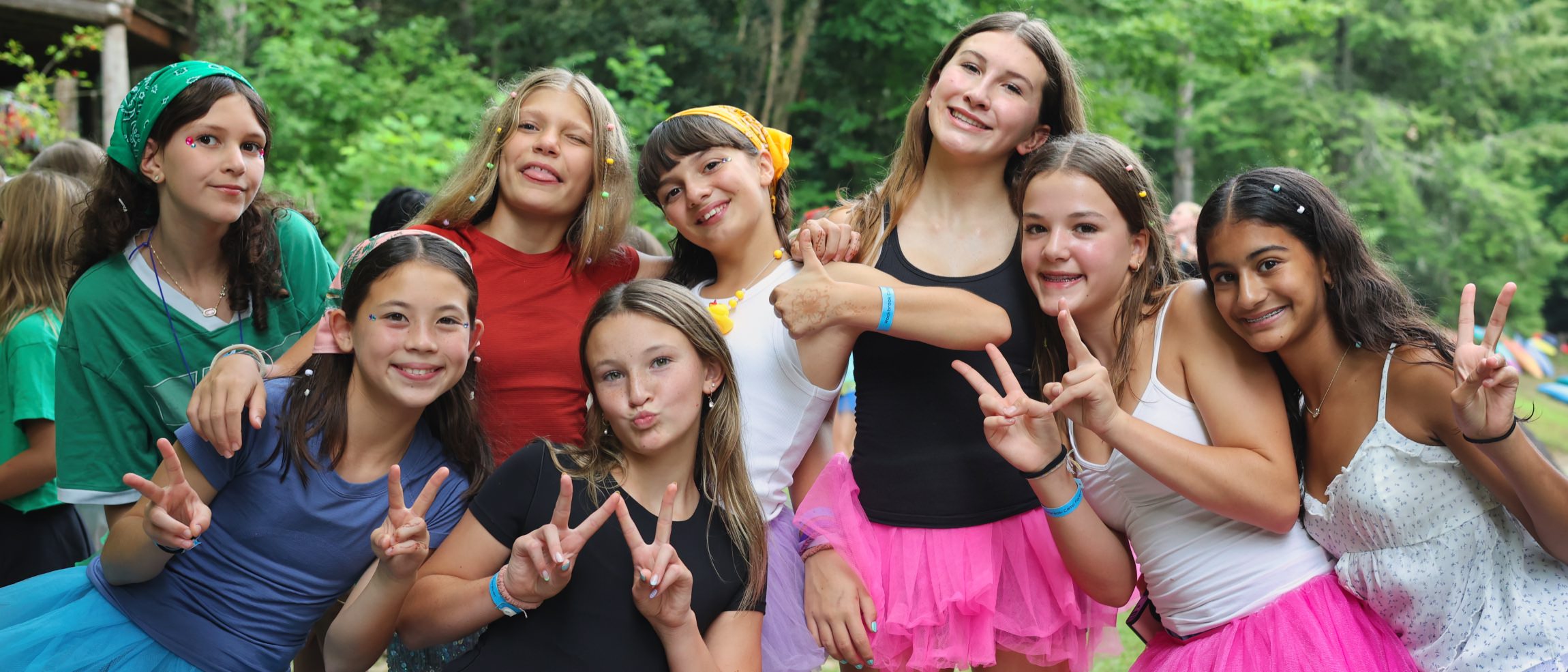
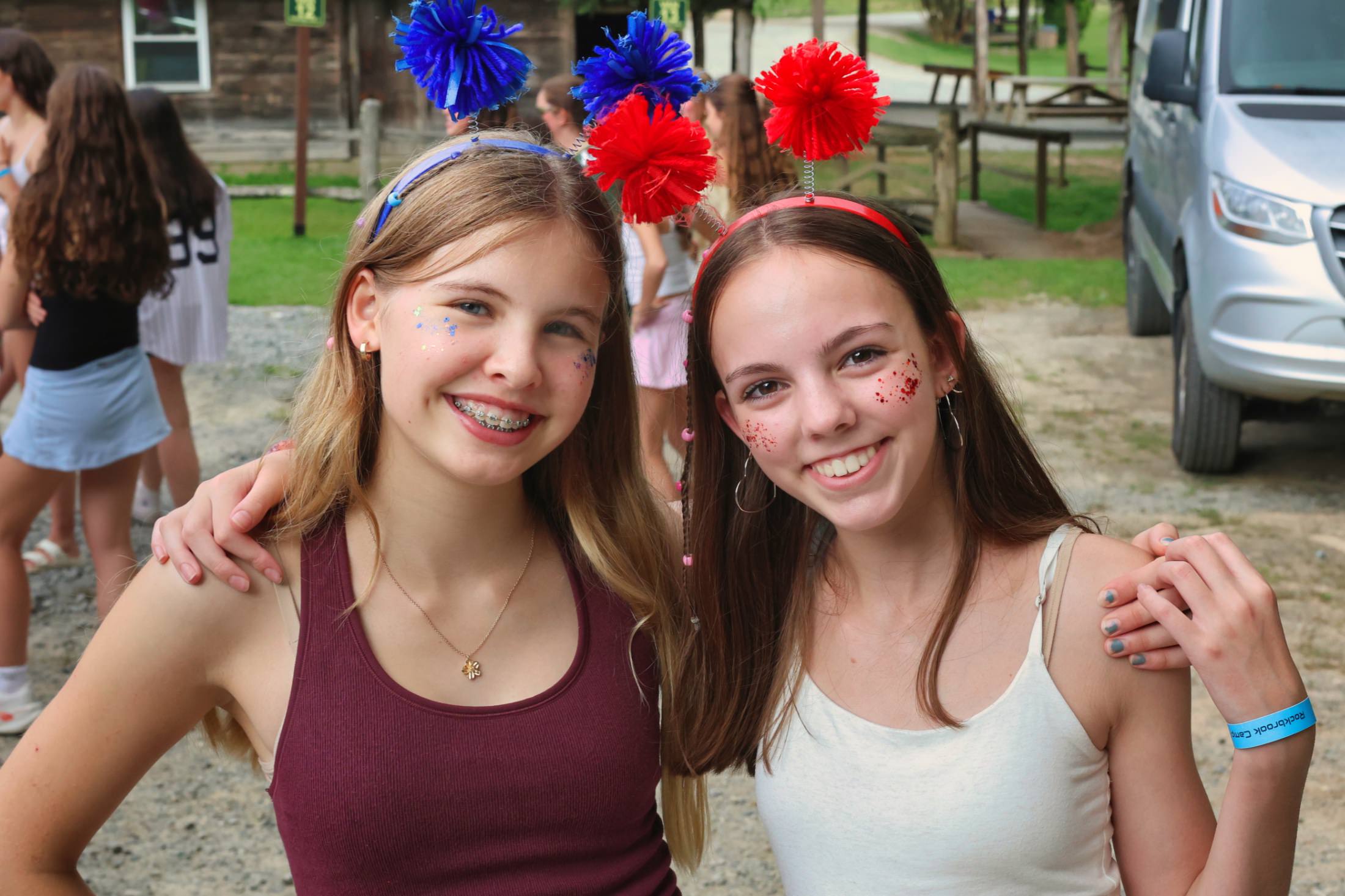
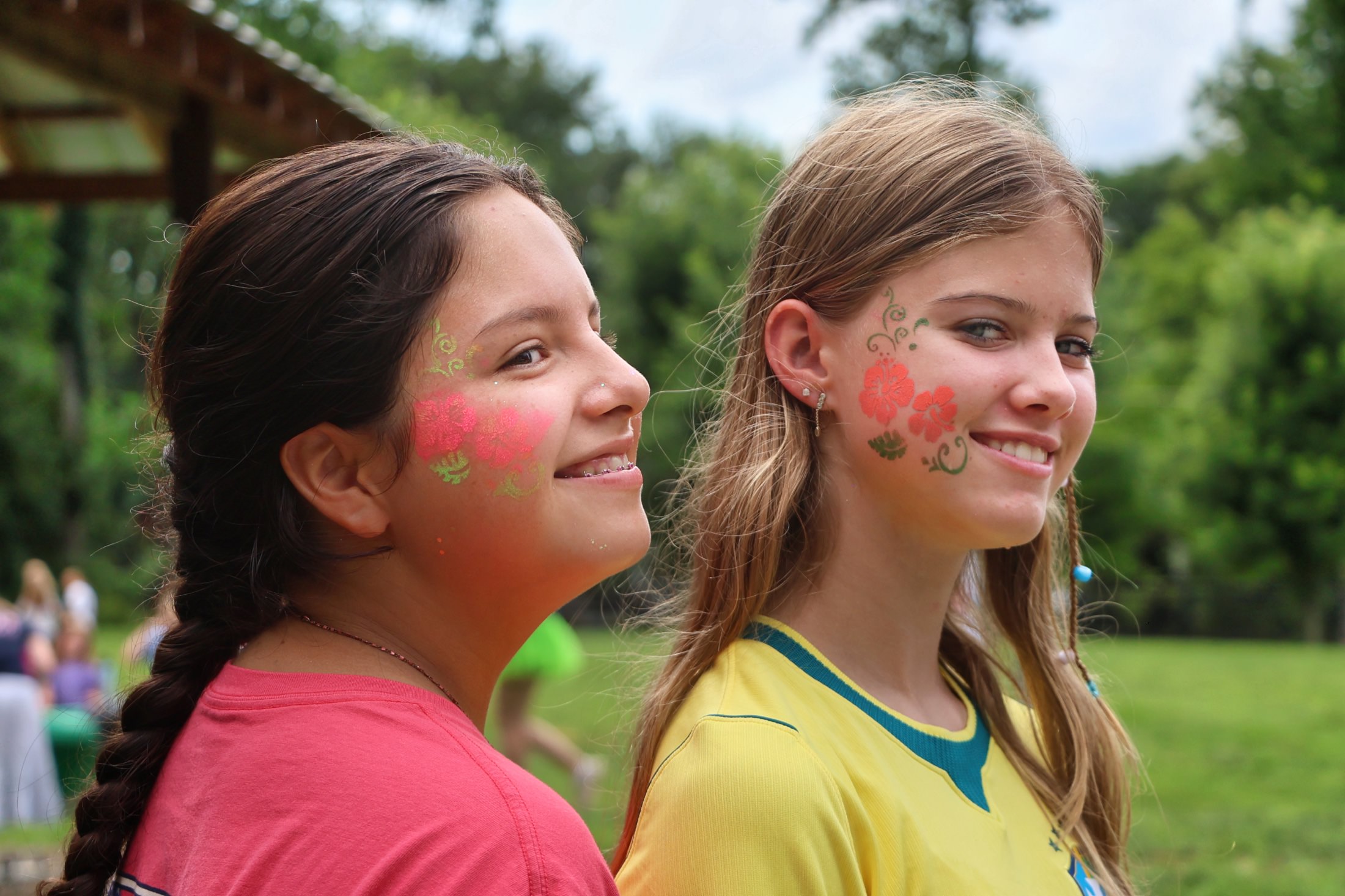
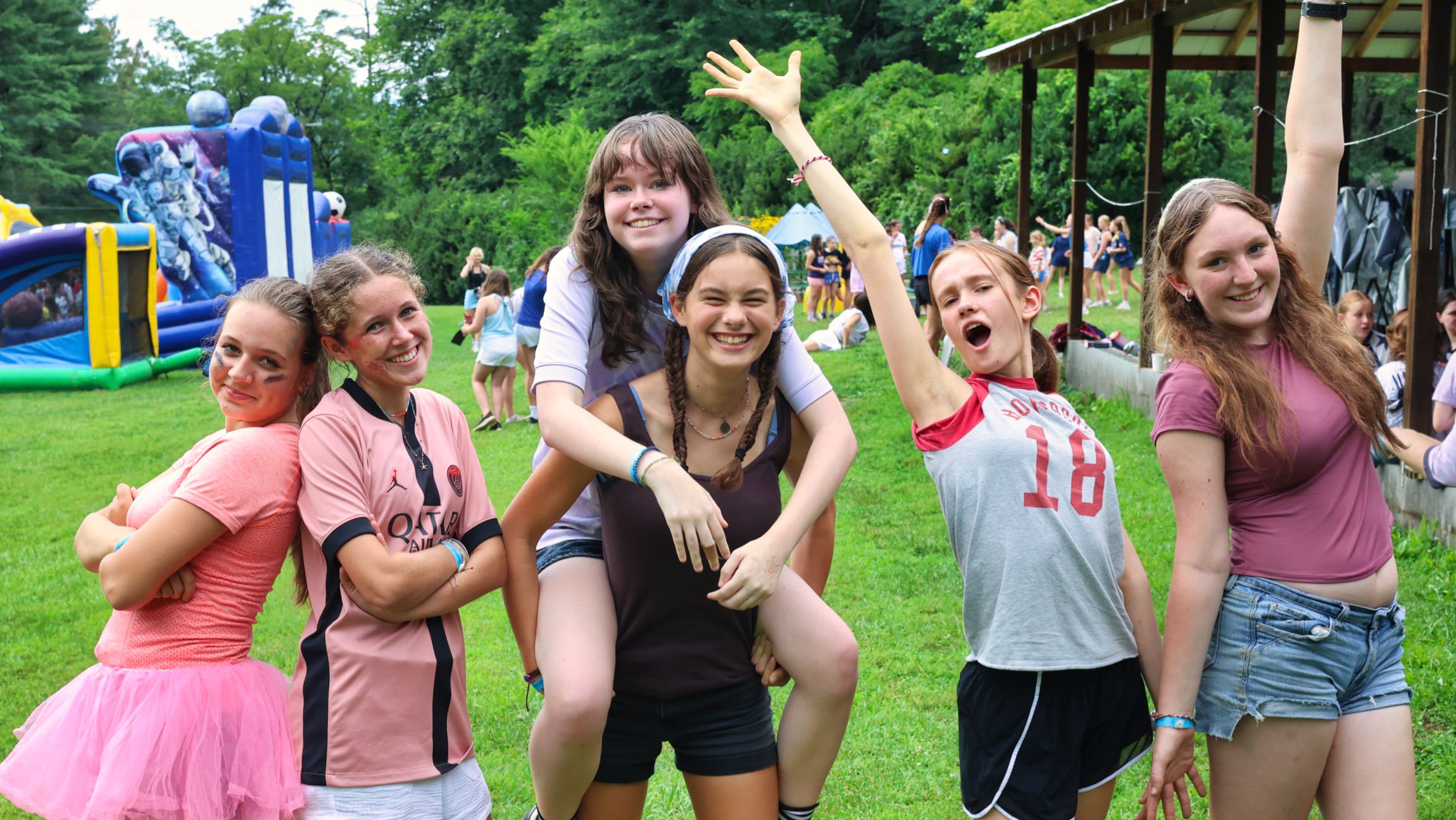
Meanwhile the Seniors and Hi-Ups loaded onto buses and vans for the trip to the Camp Carolina gym. Some with glitter on their faces, a few in costumes, for the silly fun of it all, they arrived with true girl-power energy that I think surprised the boys a little. Setting loose a group of 100 teenage girls, dressed and ready to dance, is quite a force. A solid hour of dancing, stopping only for water, sweaty and thrilled the whole way through. On the ride home I heard “so hot in there,” (It was!) and from more than one girl, “still really fun!”

Tiny Threads

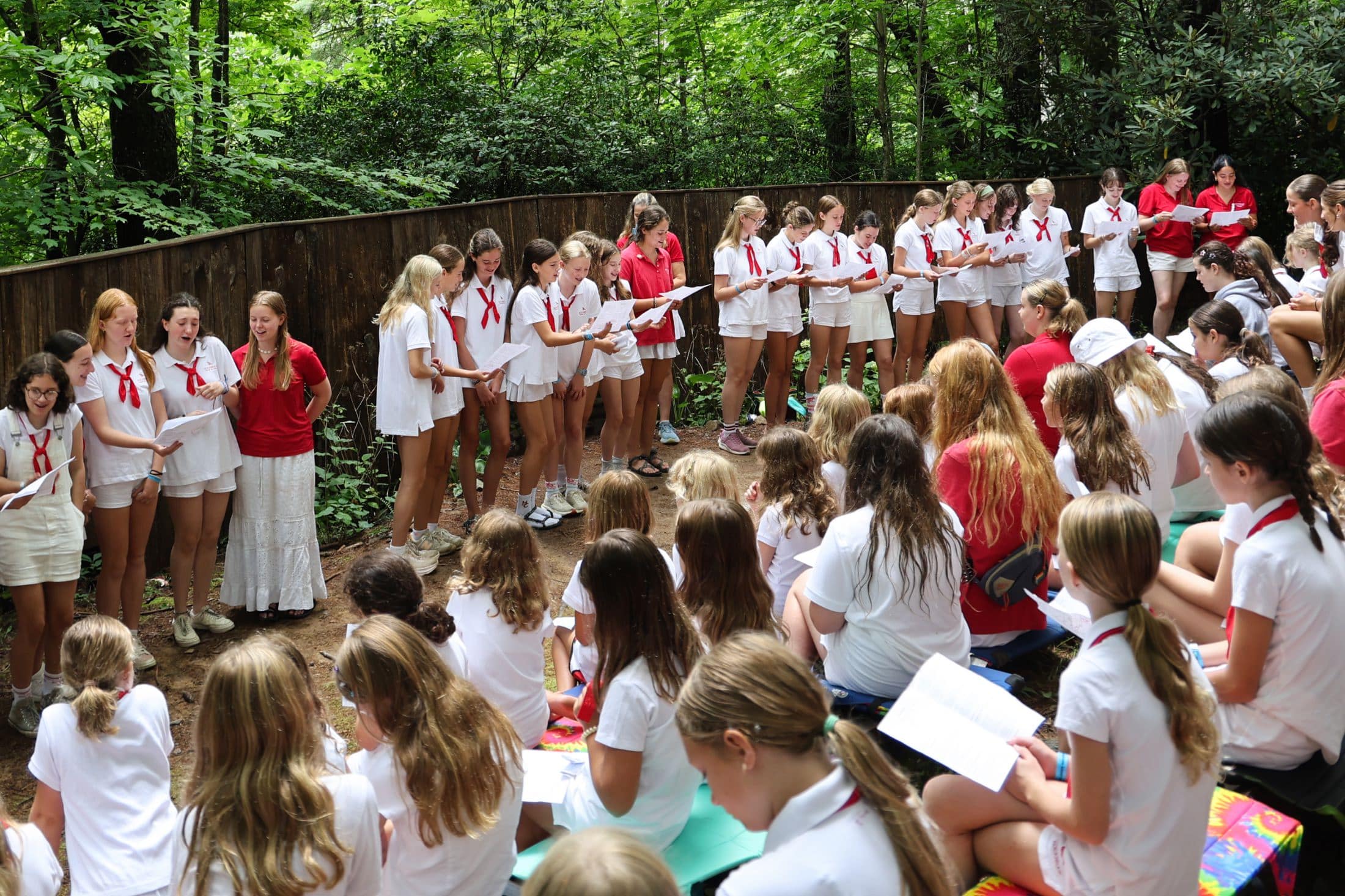
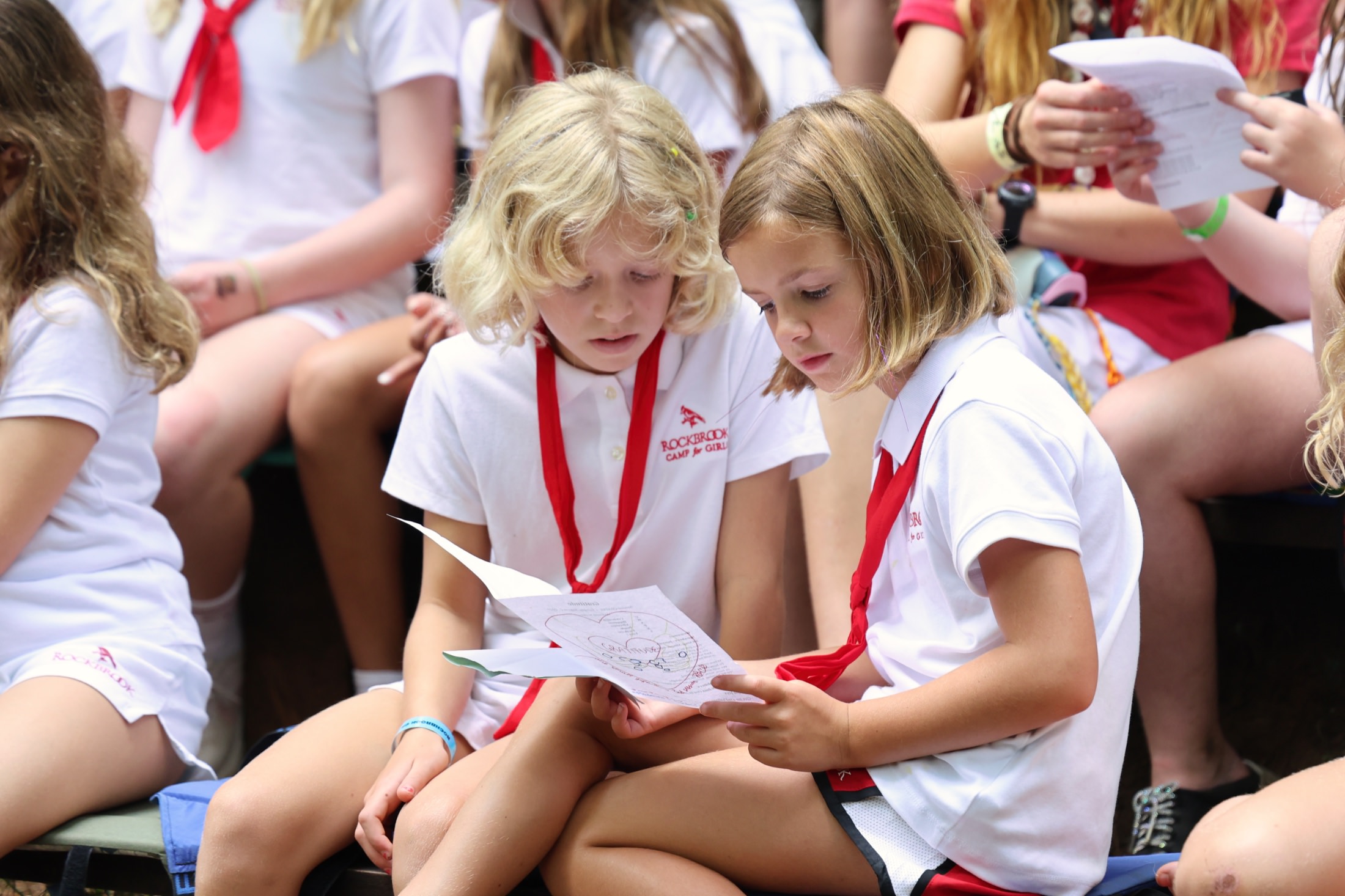
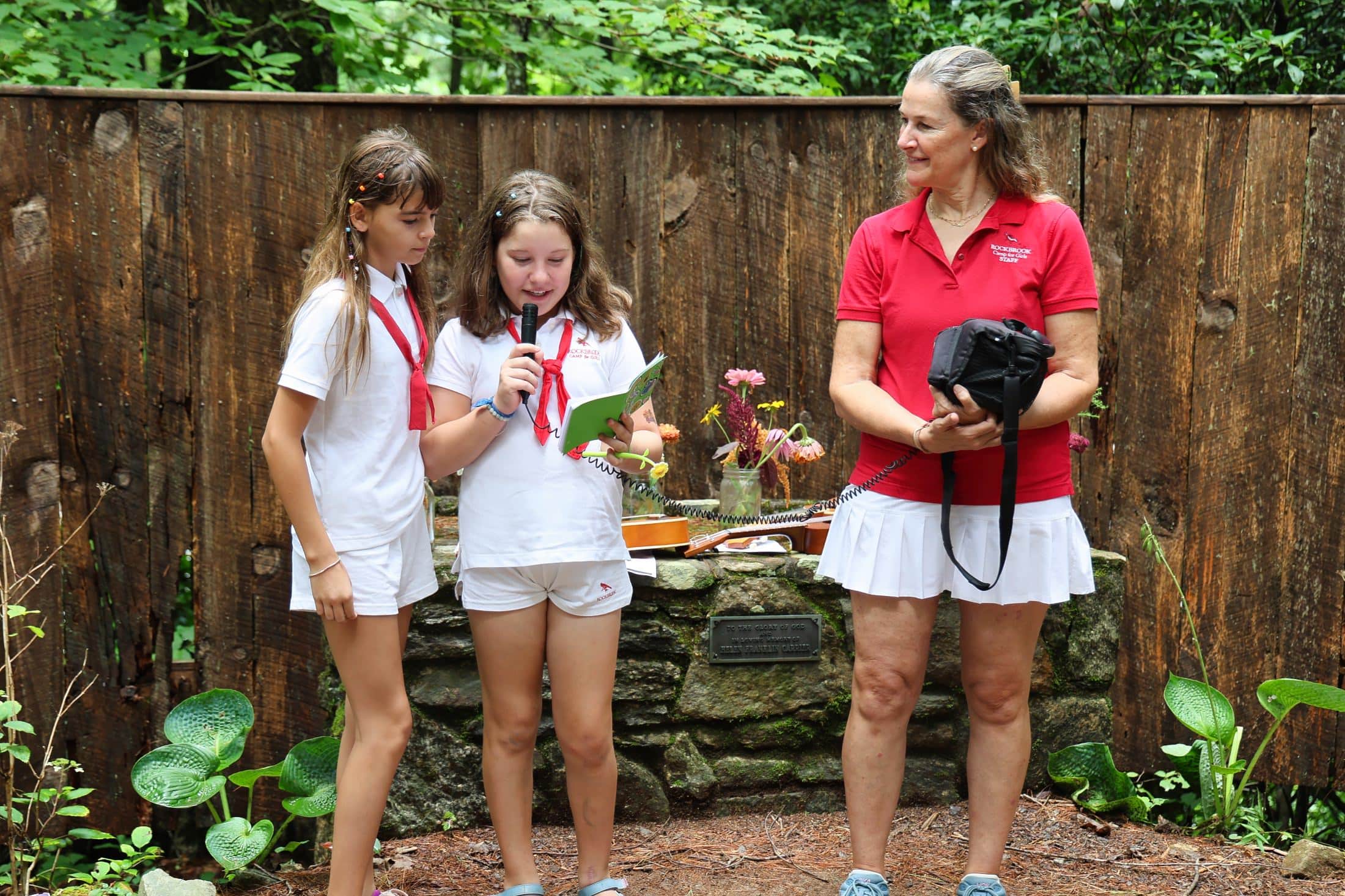
Sunday mornings run slower here on purpose. We sleep in a little, eat breakfast in pajamas, clean the cabins, put on uniforms, and walk down to the chapel clearing for our weekly gathering, a time to slow down and reflect together on one shared idea. Over the years the name has grown into an acronym we’re fond of: a Celebration of Happiness, Adventure, Peace, Earth, and Love. Campers do the speaking. They volunteer, they write their own remarks, and the adults mostly sit and listen. This week the theme was gifts and gratitude. Each age group took turns stepping up, one camper or pair of campers at a time to speak about what they were grateful for. Between groups we sang songs about gratitude, like the old Shaker song, “Simple Gifts.”

camp chapel song

Camper after camper mentioned little things about life at camp that made them feel grateful. The kitchen staff that makes our delicious meals, the strong bonds of friendship they’ve found at camp, small acts of kindness from people they don’t really know well, wonderful moments in nature, the fun of the activities, and the sense of belonging they feel while at Rockbrook were all mentioned.

A senior camper stood up and told everyone she sometimes struggles with anxiety. She described sitting with a friend on the hill and opening up about this. That friend said she had it too, then wrote down the name of her therapist and handed it over. That was the gift she chose to talk about. A name on a piece of paper. A small thing, but also a really big moment where she felt the love and support of camp deeply.

One senior reached all the way back to the night before, and described being grateful for the cars whizzing past the bus on the ride home from the dance, harmonizing with her friends, and just chatting. Then for the katydids that sing everyone to sleep, and the birds that wake her just before the bell so she has time to say good morning to her cabin mates. Tiny threads in a bracelet, she called them. “Gratitude,” she said, “means caring about the small things in life.”

We finished with Sarah reading The Gift of Nothing, by Patrick McDonnell, a lovely short story about true gifts not always being something material. It describes Mooch, who wants to give his best friend Earl a present, but Earl already has what he needs, so Mooch settles on giving him nothing. The trouble is finding it. He walks every aisle at the store and learns that “nothing” is not for sale. So he goes home, puts nothing in a box, then decides Earl deserves a bigger box. “Now that’s plenty of nothing,” he says. When Earl opens it he says, “there’s nothing here.” “Yeah,” says Mooch. “Nothing but me and you.”

One Step Back

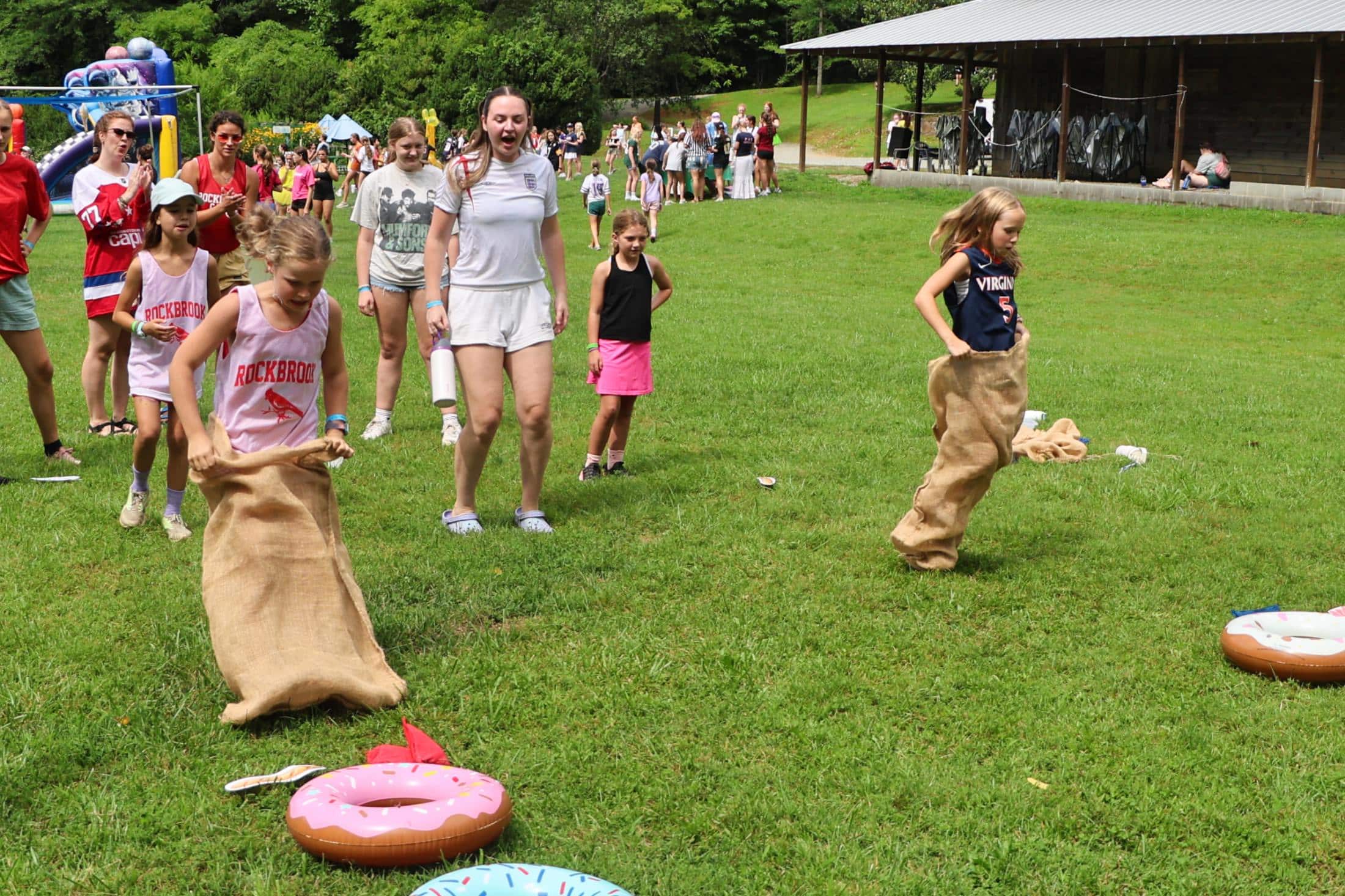
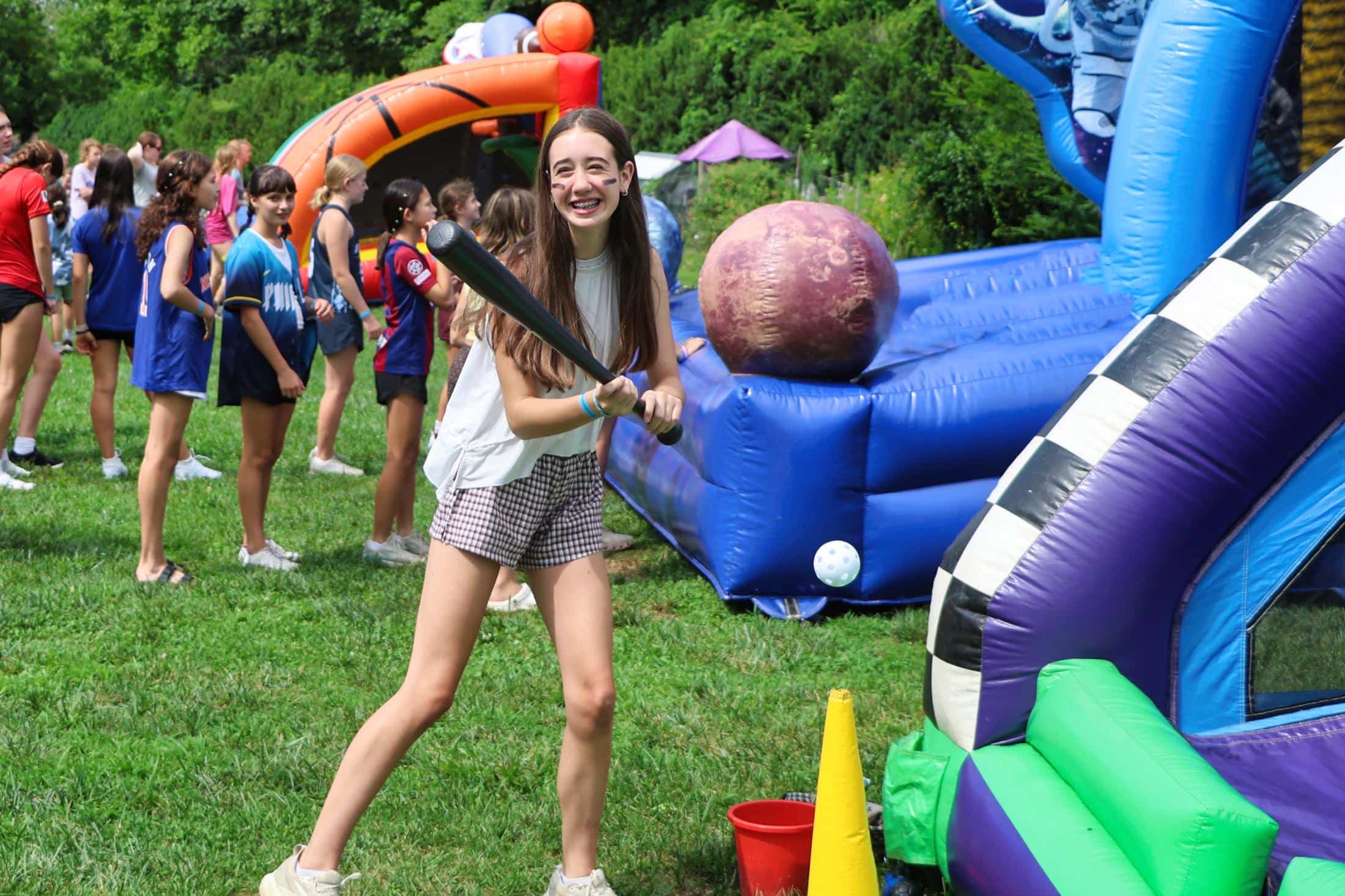
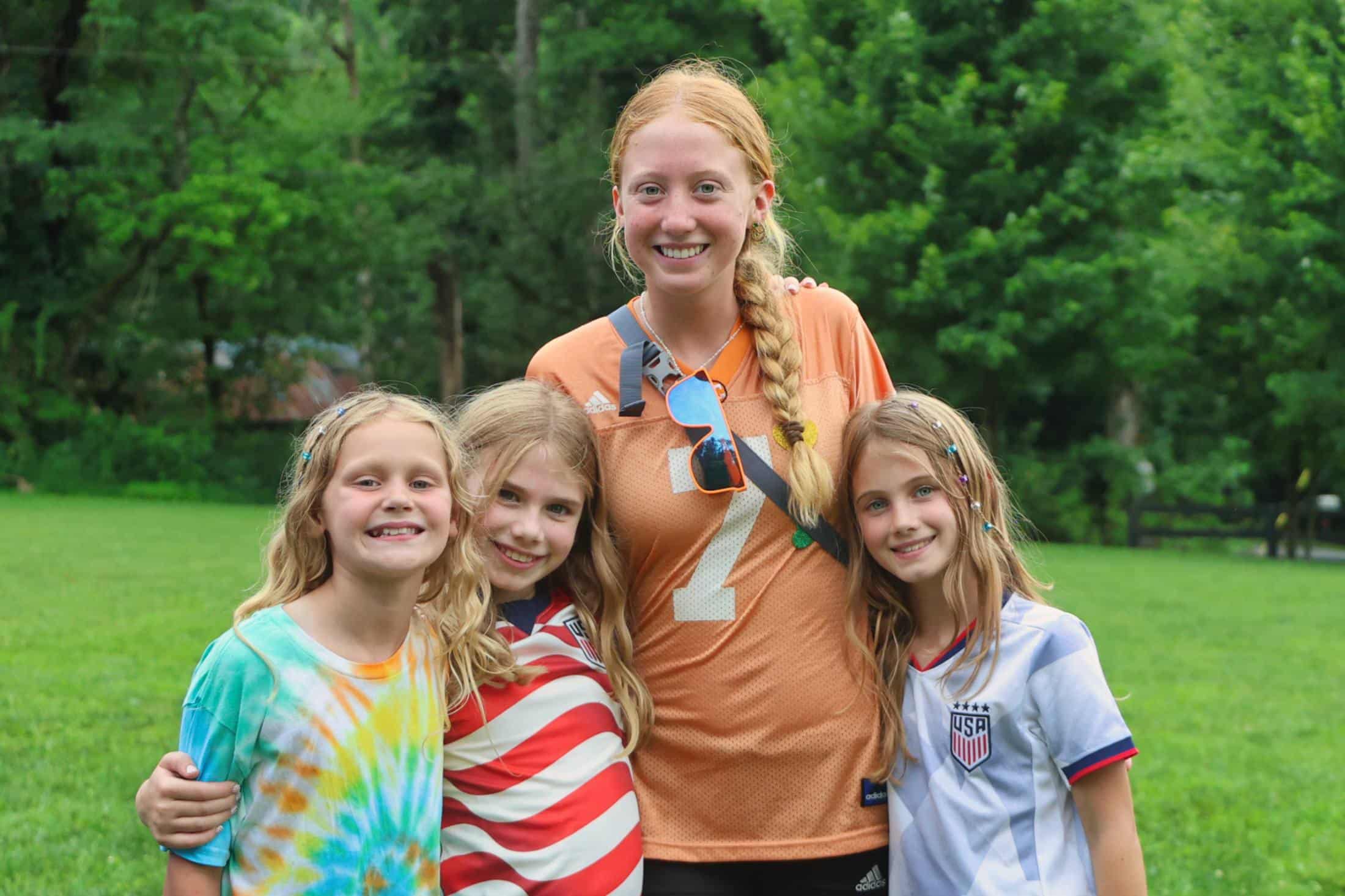
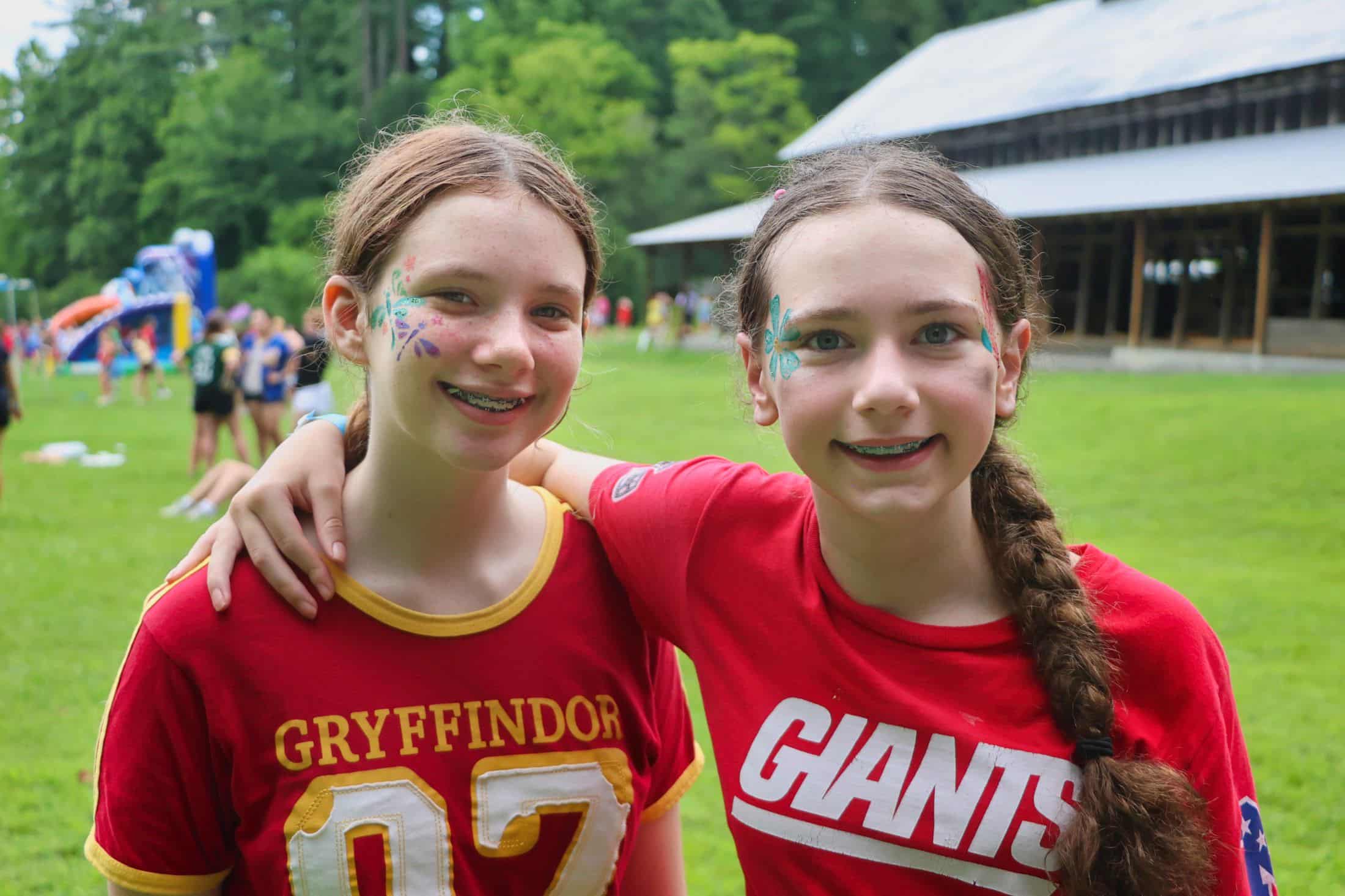
After rest hour the landsports field turned into a festival. The girls had been told to pack a jersey and most had taken it seriously, so the field filled with basketball and soccer and football colors and numbers from every team you can think of. The inflatable skill games drew the longest interest, each one a different challenge: kicking a soccer ball through a hole, threading a frisbee through a slot, hitting a wiffle ball at a target. The two space-themed basketball goals were the hardest of the bunch, with the hoops set about fourteen feet up, which turns a free throw with a regulation ball into a full body effort for most of us. The “sandwich relay” run stacked up hula hoops, a sack race, “ingredients” to gather, and a sprint to the finish.

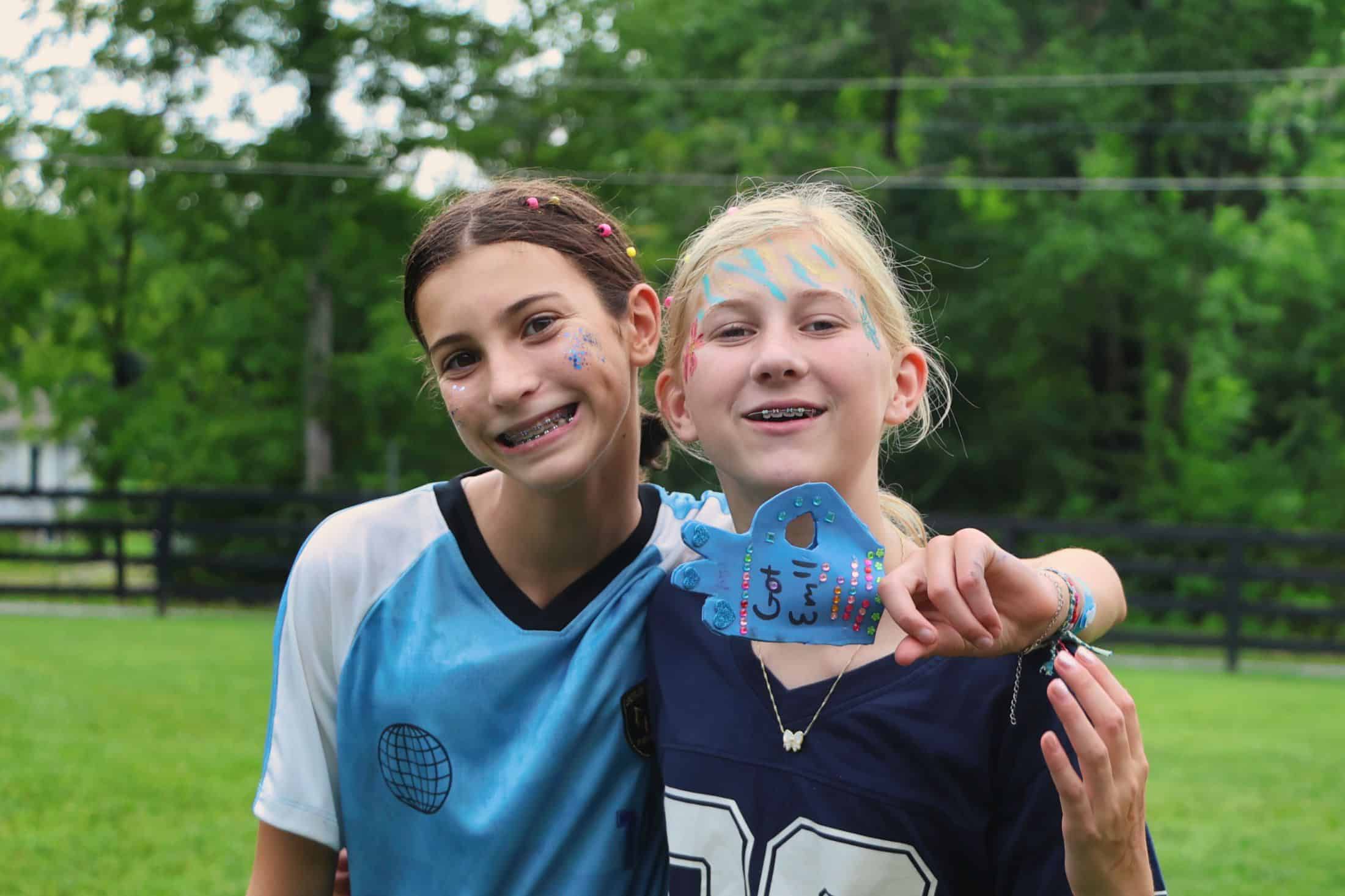
The water balloon toss perhaps pulled the biggest crowd, partly because it moves fast and partly because everybody knows how it ends. A pair of girls toss, both take a step back, toss again, step back again, and the balloon holds and holds until it doesn’t, usually right in the hands of whoever was reaching out to catch it. At the face painting table the stencils were out, and girls walked away with elaborate geometric designs in three and four colors running across their cheeks and down their arms.

What the girls like best about an afternoon like this is being able to wander. Nine square in the air for a while, then over to the craft table to make a foam finger, then back out to something loud. Plus stopping to pose whenever a camera came by, which is its own event at this point.

By evening the field was packed up and the light was going long across the hill. Somewhere in a cabin tonight a girl will lie down and count the day backwards, and the list will be short and specific. A cookie. A breeze. A friend’s smile. The katydids helping her drift off. Gratitude all the way down.

summer camp silly fun

Third Session Video Snapshot

Third Session is beautifully unfolding, and now we have our first highlights video to share. Once again, we’re so glad to have Robbie Francis of FrancisFilmworks here with us, capturing the small moments and easy fun that fill our days.

Robbie has been part of Rockbrook summers since 2015, and his videos always bring camp to life wonderfully— girls laughing with friends, diving into activities, and settling into the happy rhythm of camp.

We hope this first look at Third Session brings you a little closer to what your daughter is living right now. Enjoy.

Deciding to Try

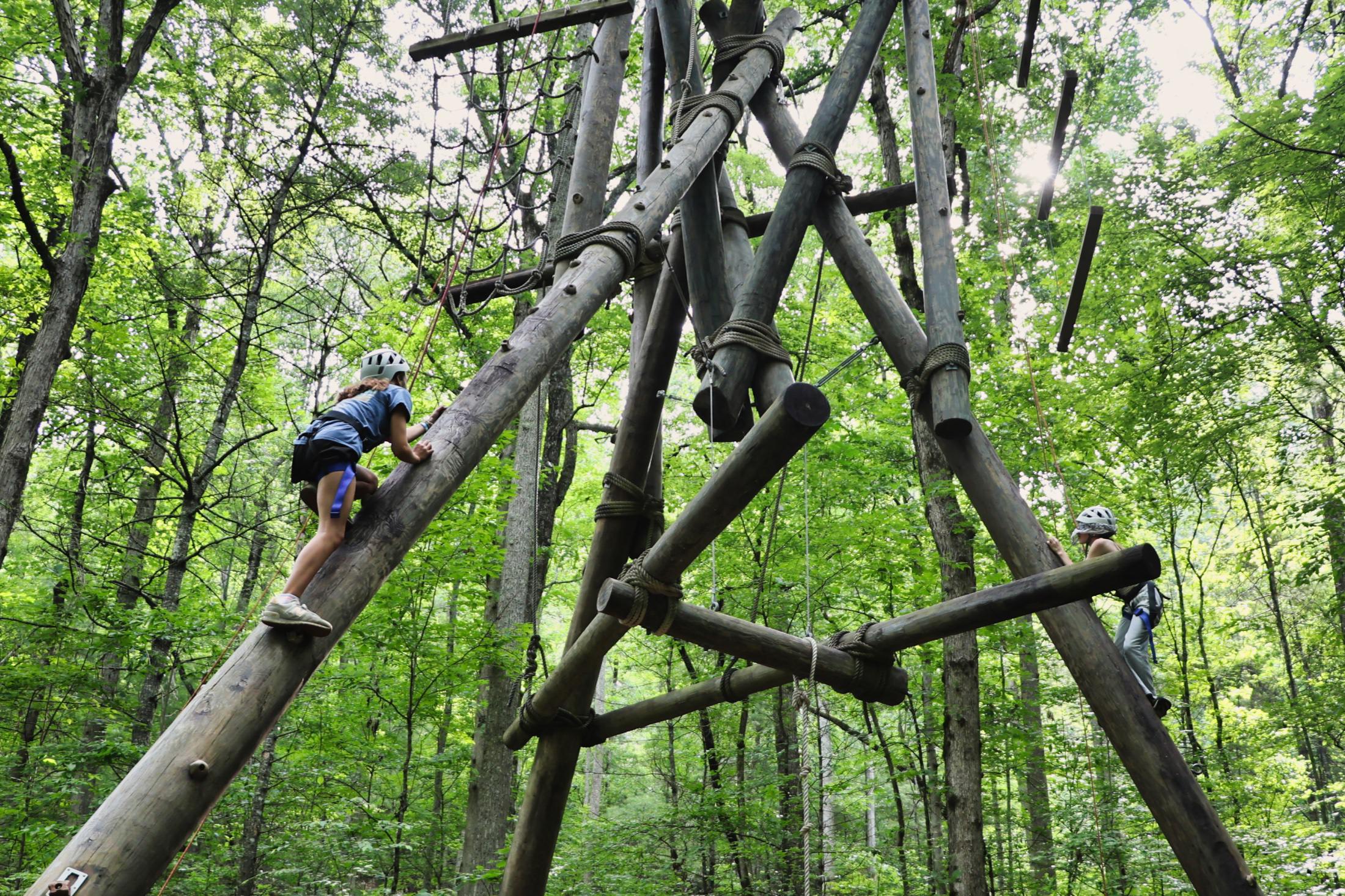
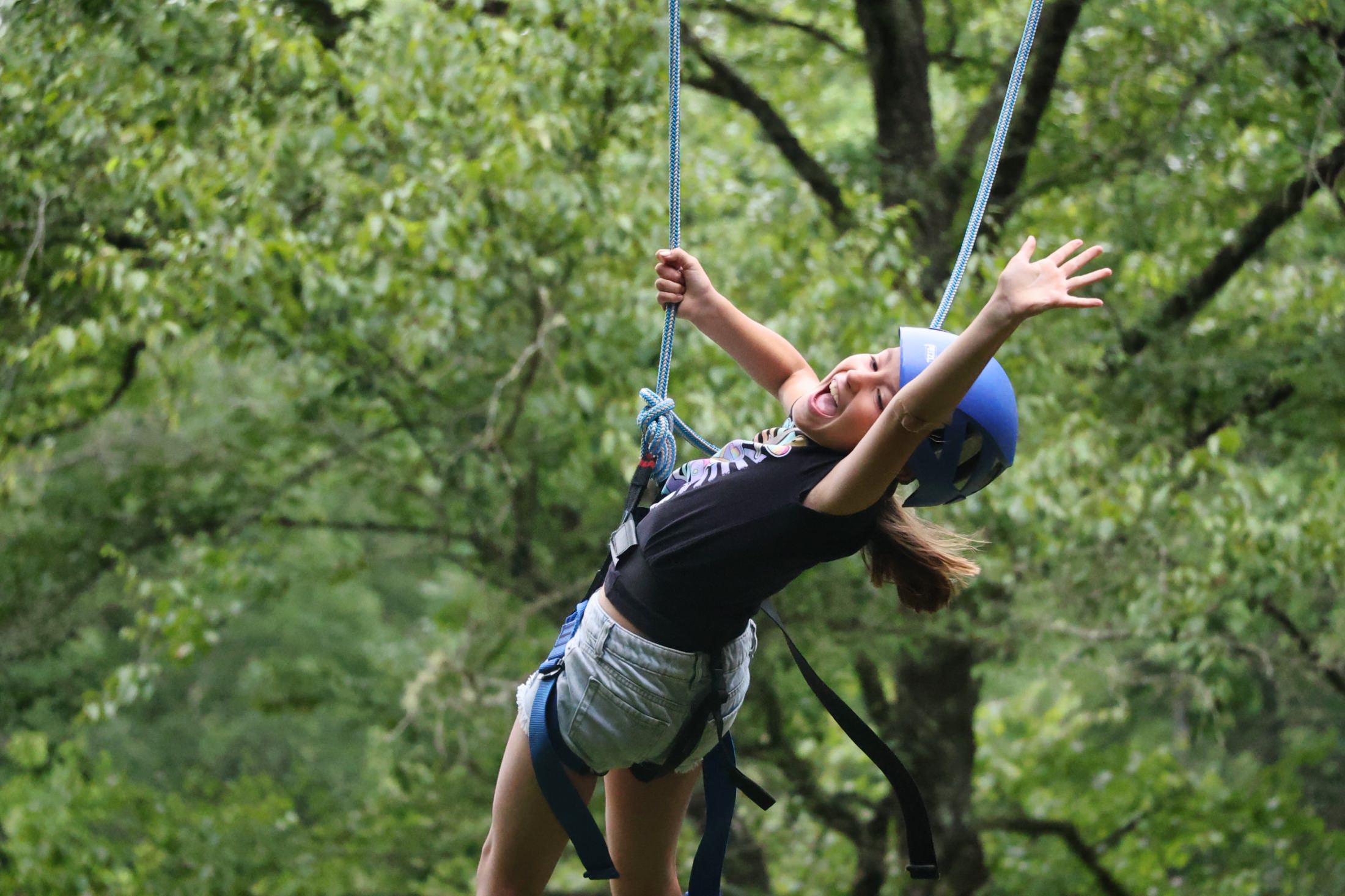
A very small Junior stood at the base of the Alpine Tower this week, tipped her head all the way back to take in the whole thing, and announced to nobody in particular, “This looks hard!” Then she watched her belayer tie a figure-eight knot to her harness, and surprised everyone, probably even herself, by climbing all the way to the top. She was right about it being hard, and she went anyway. Whatever hesitation she felt in the moment, she moved through it, and she quickly found herself looking down from fifty feet in the air. All over camp these first few days of the session, this has been true. We’ve seen how making the decision to try is the most important step when encountering something new. It’s remarkable, really. And if you think about it, trying is the first step of courage.

Give It a Go

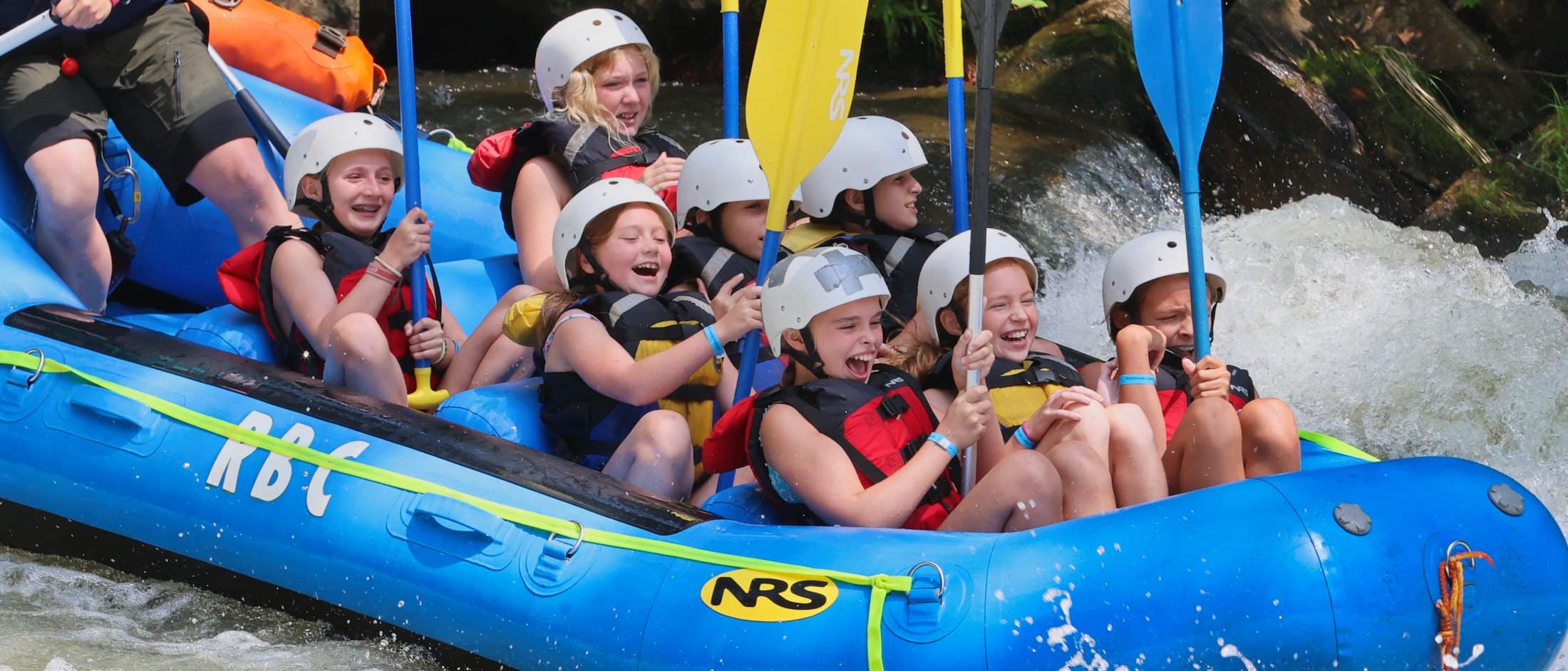
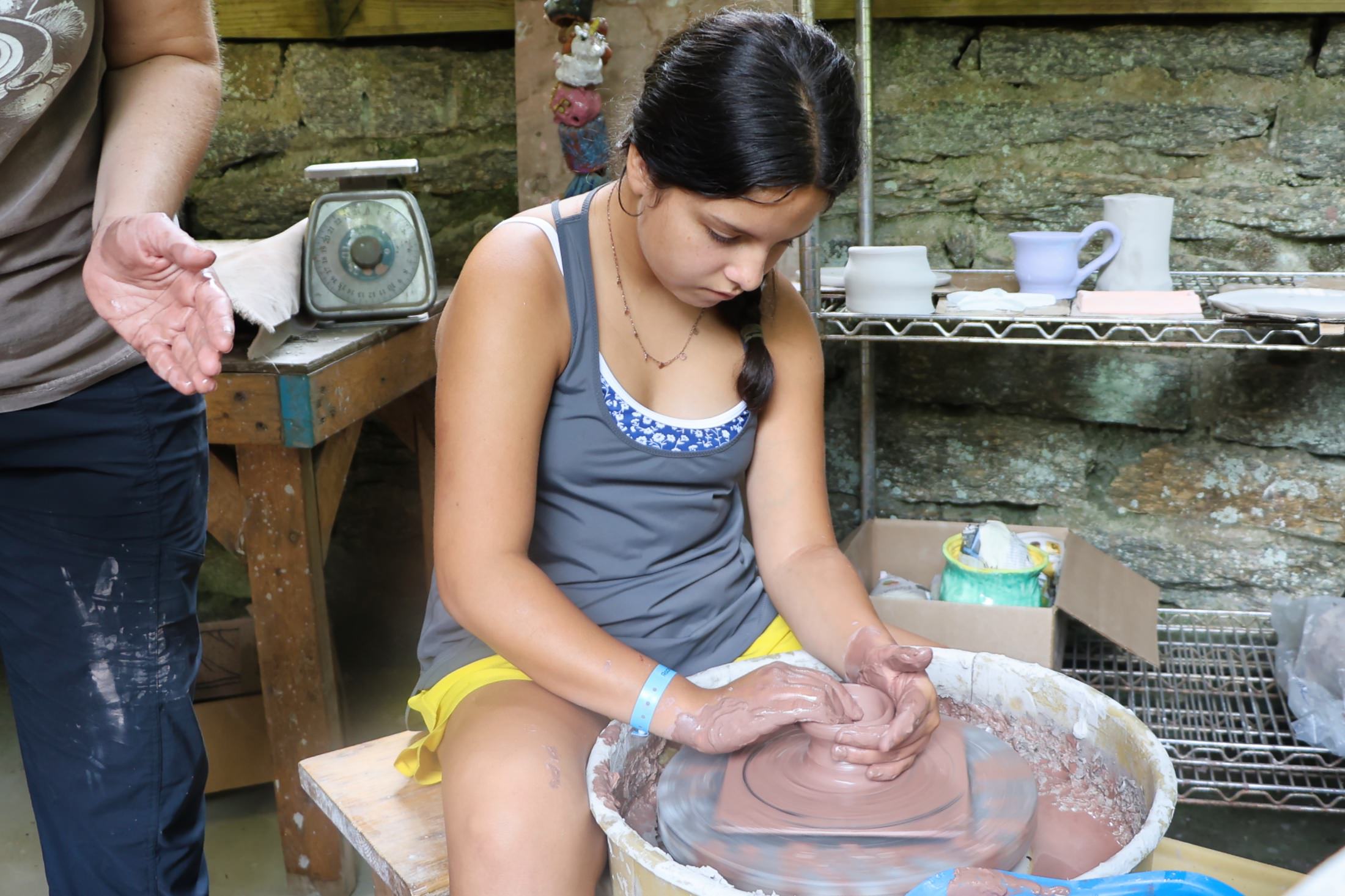
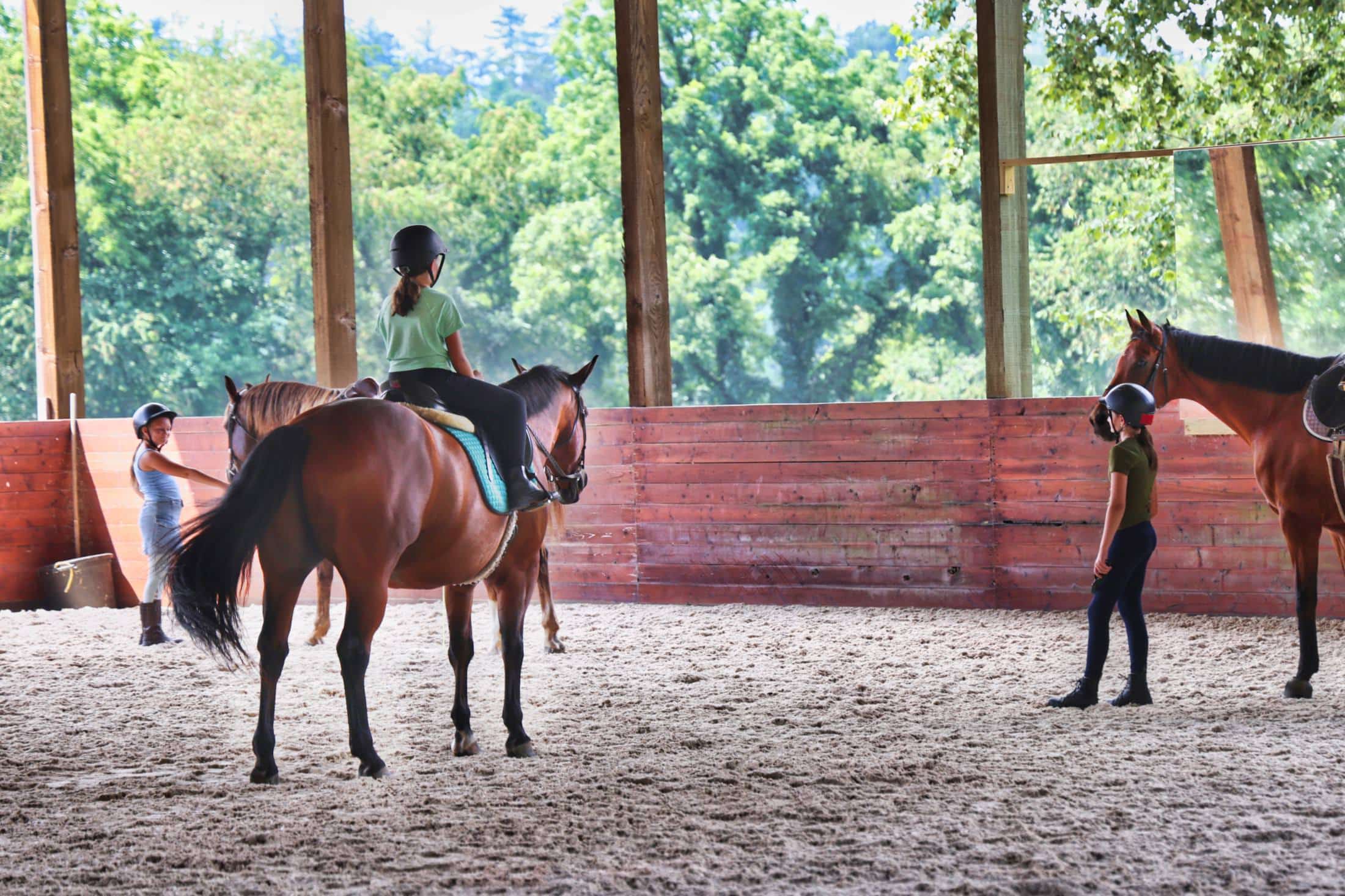
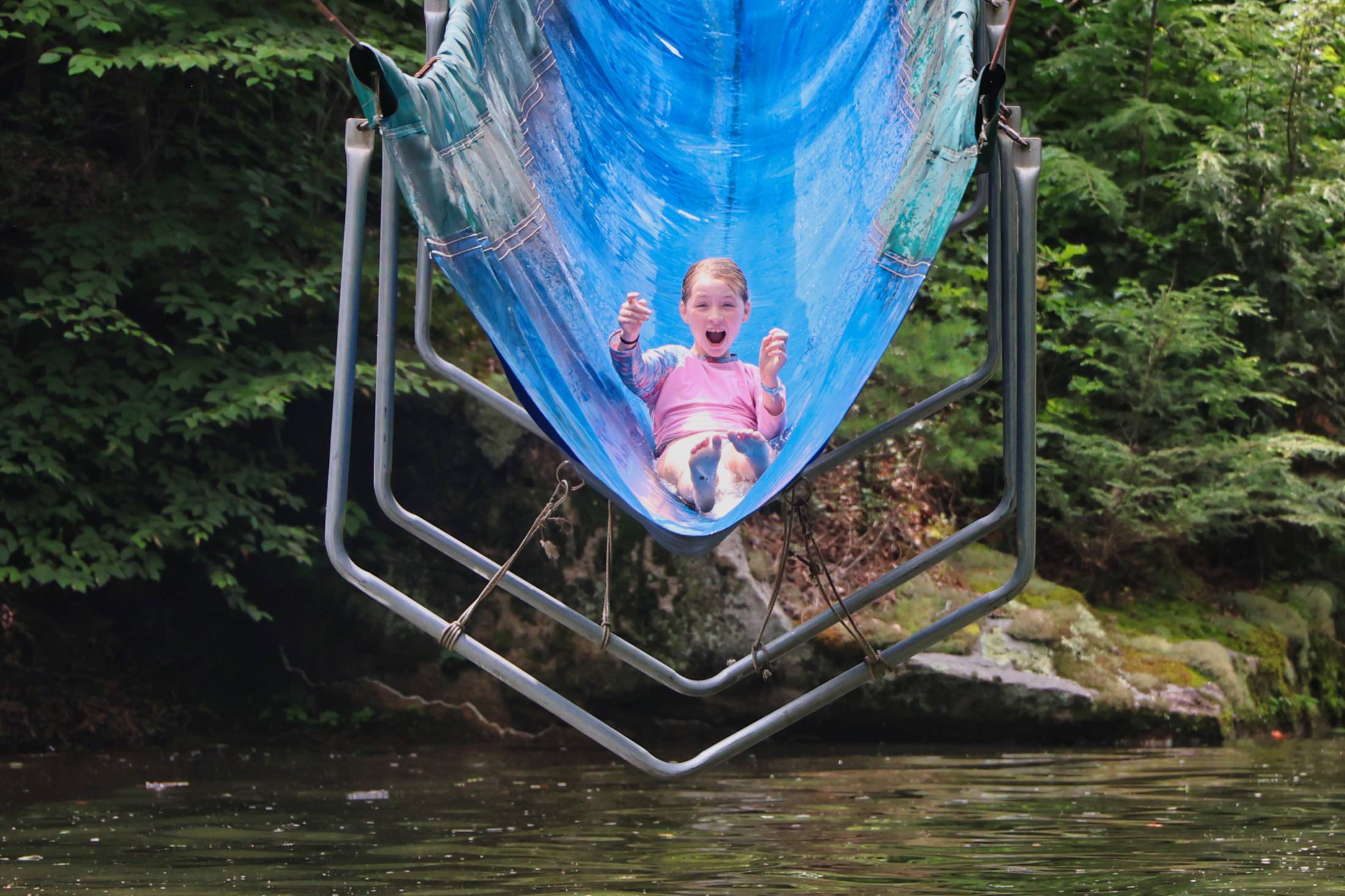
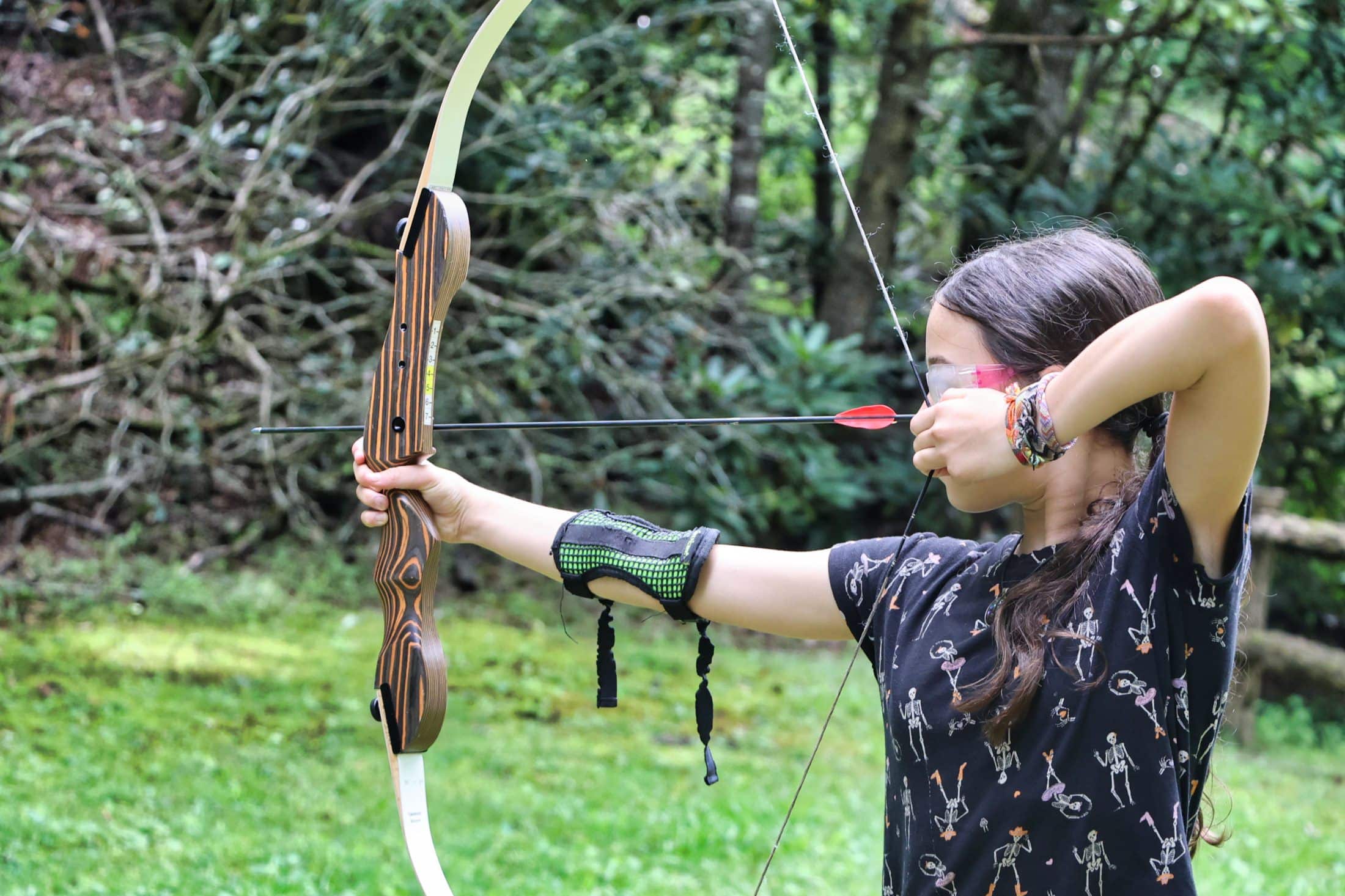
“Giving it a go” is a phrase that covers a lot of ground on the first days of activities. It means tying into a belay rope that stretches up toward the top of the Tower. It means sitting down behind the pottery wheel with nothing but a ball of clay and only a vague idea what’s about to happen to it. It means hoisting yourself up onto a thousand-pound animal and taking the reins, or perching on the edge of a raft as it bounces and splashes down a chilly river, or drawing back a bowstring for the first time and watching the arrow sail somewhere a bit short of the target.

The zip line course puts the whole thing on display right away. The very first zip asks a girl to leap off a rock, out into open air, trusting a harness and a pulley she met roughly ten minutes ago. It just about always elicits a scream. It also, just about always, produces an enormous grin somewhere in the middle of the ride, the two arriving so close together that you can watch a girl change her mind about herself in real time. Almost none of these girls arrived with much experience. Several of them, if you asked, would tell you flatly that they’re not strong enough, or coordinated enough, or artistic enough for the thing they just signed up for. Despite the uncertainty, the fear of “what might happen,” they try. They do it anyway.

The Deciding Is Hers

This can be quite different from trying something new at home. With parents (or siblings, or teachers, or coaches) in the mix, the path is often smoothed first. But at camp, no one is here to talk her into it or talk her out of it, to check the weather, to hold her place in line, to choreograph any aspect of the experience. Rockbrook campers look at the list of activity options, make their selections, and show up. A great many children today grow up in households where the adults handle nearly everything, and one honest consequence is that a kid can reach ten or twelve years old without much firsthand evidence of what she can manage on her own. Camp hands that evidence back to her a dozen times a day.

Yes, trying all of the activities is part of it. But there’s so much more. She tries the homemade chickpea salad at lunch, and it turns out to be pretty good. She sits down at the jewelry-making table where she doesn’t know anybody and starts a conversation. She finds out that an afternoon can be entertaining without a smartphone, that she can share a room with nine other people and help sweep up in the mornings, that she can stand up in front of a hundred girls and be ridiculous in a skit. By bedtime she has tried more new things that day than she might in a month at home. This is camp life, a mosaic of trying new things. She almost certainly hasn’t noticed, because it’s also really fun.

Safe, Expected, and Rewarded

Quite intentionally at camp, we’re doing whatever we can to encourage this sort of trying. We do that by organizing our days so that trying feels safe, so that it’s routine rather than exceptional, and so that it gets noticed. Our daily routines are rehearsed until they’re practically invisible: where your activity meets, the rhythm of Muffin Break in the morning, what to do when you feel sick, who to find when you need help with just about anything at all. When deciding things and trying things are routine, the feeling of uncertainty and the pangs of self-doubt fade, making it easier to begin.

camp girls friends

We also let girls start small. A camper takes two steps up the Tower before she takes twenty. A first friendship bracelet is four strings and one pattern. A tennis forehand begins with a ball tossed so slowly it seems like a joke. Each of those is a rung, and a girl who has climbed a few of them meets the next one with moments of clear accomplishment behind her.

And when she does try, what we praise is the attempt, the thinking behind it, the willingness to come back and try again. Even if the pot collapses on the wheel, or the dive into the lake is off balance, there’s a joy in trying at camp. When girls are surrounded by genuine encouragement, “I can’t” becomes “I haven’t yet.” Trying becomes something that’s always possible.

two summer camp girls

And then there are the other girls. Around here, trying brings cheers from friends nearby, cabins pulling for each other at every move. At the end of the day, when the girls go around for “Rose, Bud, and Thorn” (something good, something you’re looking forward to, and something challenging from your day), somebody always mentions trying something new. Rockbrook’s culture puts our relationships with each other first, which means no girl here tries anything alone.

Later tonight, after evening program, when the cabins go quiet and the creek behind the Curosty cabin is the loudest thing in camp, none of these girls will be thinking about courage. At camp today, they tried some things, and a few went well. That’s the whole report. They decided to try.

For One Another

The dining hall windows went dark behind hanging sheets, and everyone knew what that meant. Down in the gym, the cast was running through the second act again. Up on the HUP Palace porch, a Hi-Up was working out what she wanted to say at the fire. The final days of a Rockbrook session bring three big gatherings. There’s the Banquet, then the Play, then the Spirit Fire, and what ties them together is that the girls create all three entirely for one another. There are no parents in the seats, no tickets sold, no one to impress who is not already part of this life. Camp spends a month quietly counting toward all three. These are community events, a camp celebrating itself, its friendships, its shared efforts, and the deep bonds formed over weeks together.

RBC in Wonderland

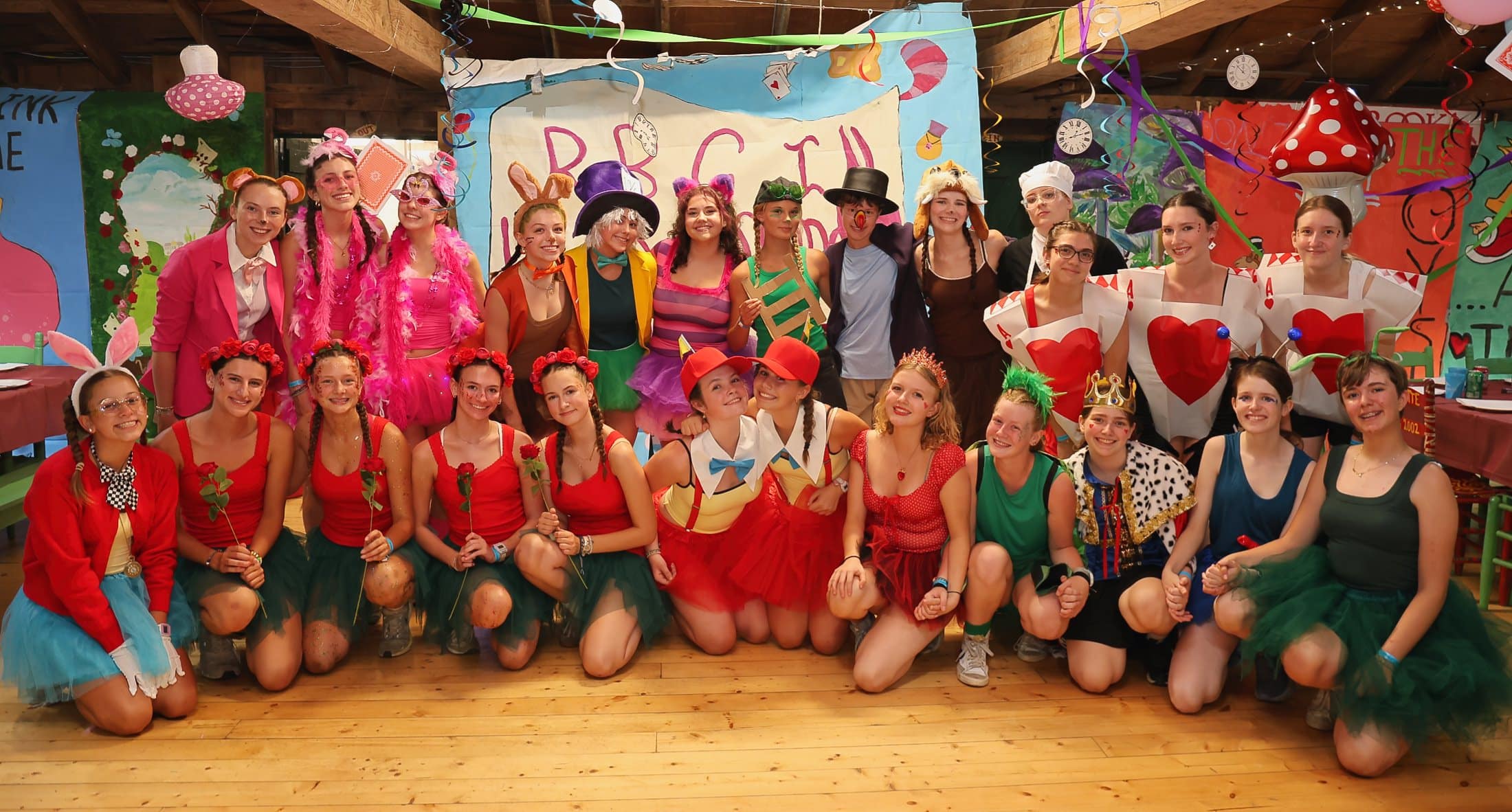
The banquet theme is a secret every time, guarded jealously by the CAs, our ninth graders, who dream it up early and then spend the session quietly unfolding it inside the mysterious “Cabin 9” at the end of the lower line. This time they took us into Lewis Carroll’s Alice in Wonderland, and they made one lovely decision at the outset: there was no Alice. The idea was that every camper walking through the door would fall into Wonderland herself, the way Alice did in the book. They called it “RBC in Wonderland.”

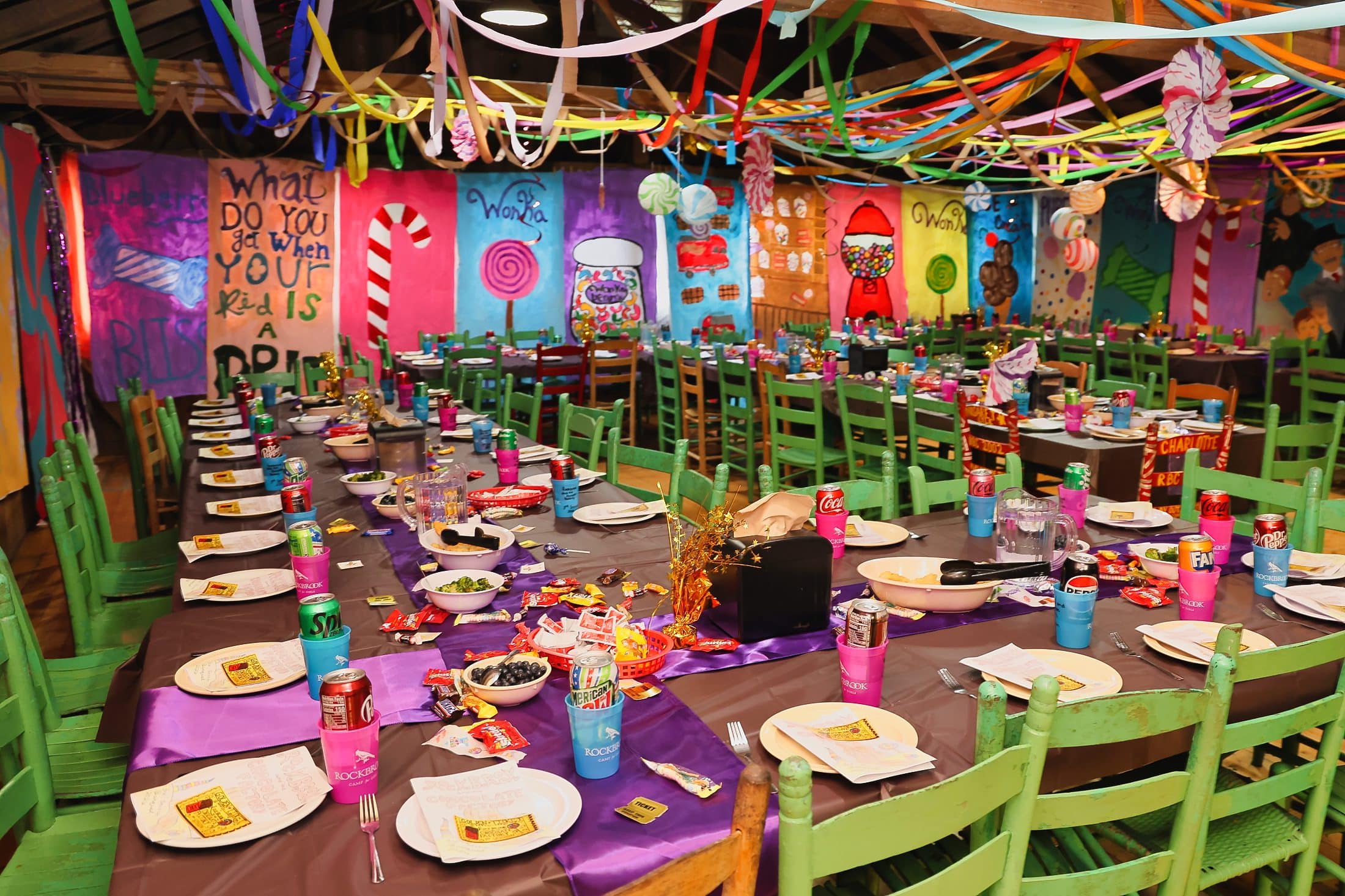
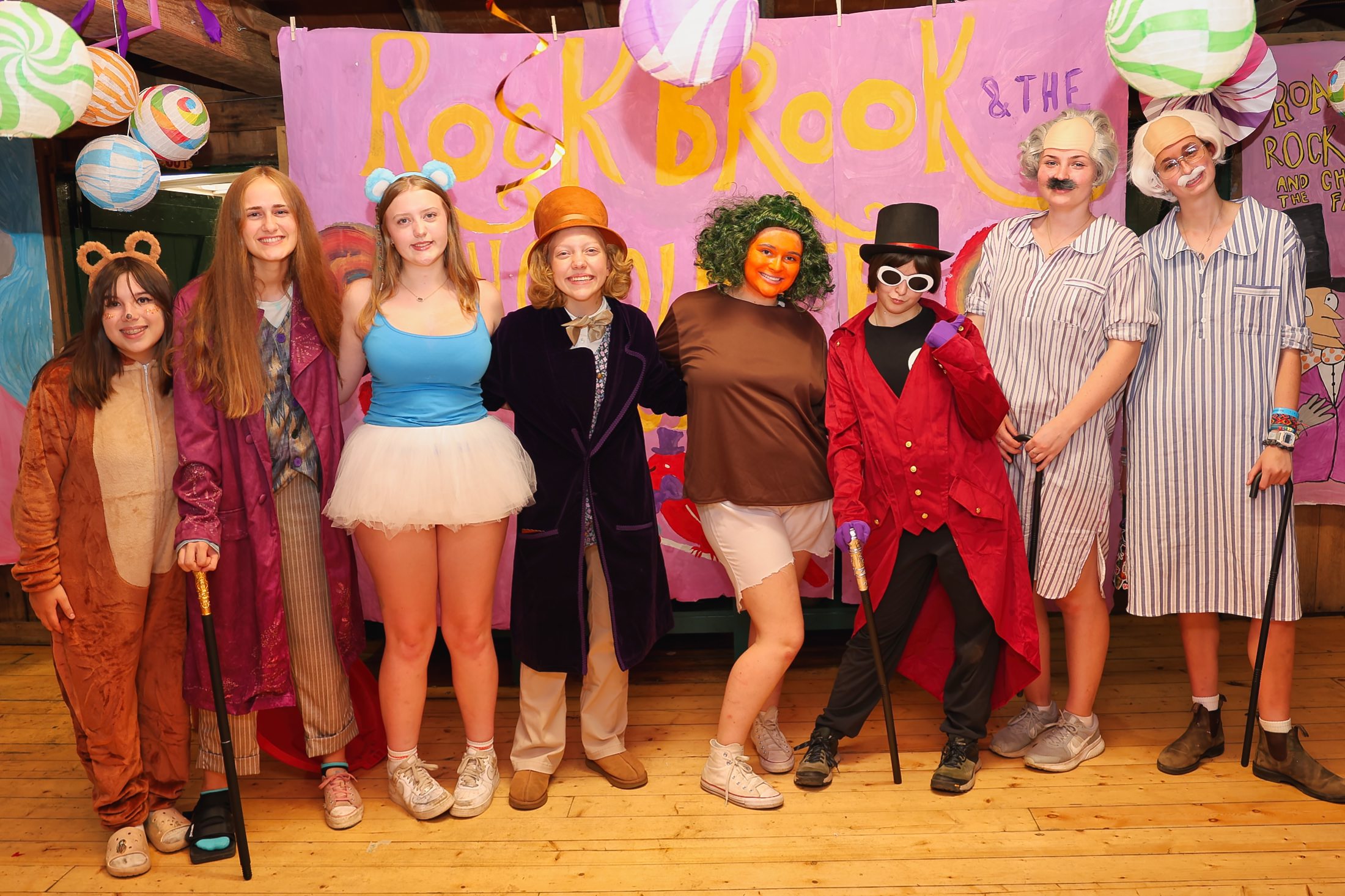
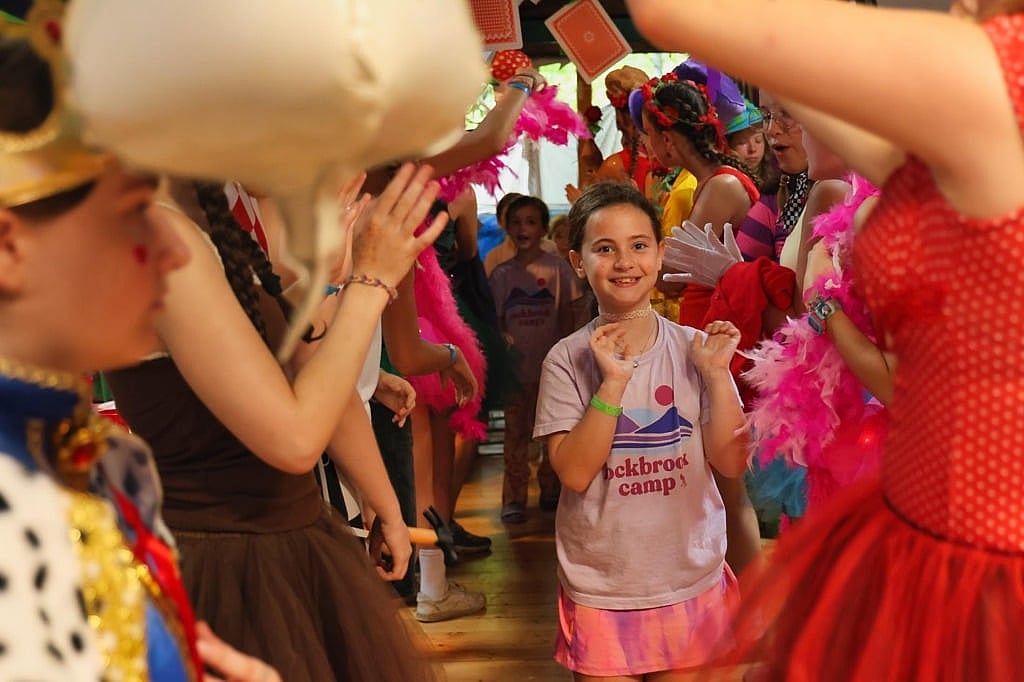
The dining hall came apart into color. Tweedledee and Tweedledum in red hats topped with little yellow flags, white collars, blue bow ties, yellow shirts and red skirts. A row of playing cards, all of them the Ace of Hearts. Flowers in red tops with roses in their hair and more roses in their hands. A lizard, a dodo bird, a green bird, a caterpillar, a dormouse, a walrus and a carpenter, a Mad Hatter and a March Hare, a Cheshire Cat, two flamingos, and of course a white rabbit, with the King and Queen of Hearts presiding over all of it. The counselors came as Mome Raths, those imaginary creatures from “Jabberwocky” that seem to be mostly hair, eyes, and two brightly colored legs.

The program was a run of group dances, each one belonging to a set of characters: The Tea Party, then The Forest, then a number by the Mome Raths, then a croquet game, and finally everyone together in a dance called Lost in Wonderland. Costumes, food, decorations, music, choreography, and skits, all of it wrapped around this delightfully colorful theme.

rockbrook 2nd session banquet 2026

The Play

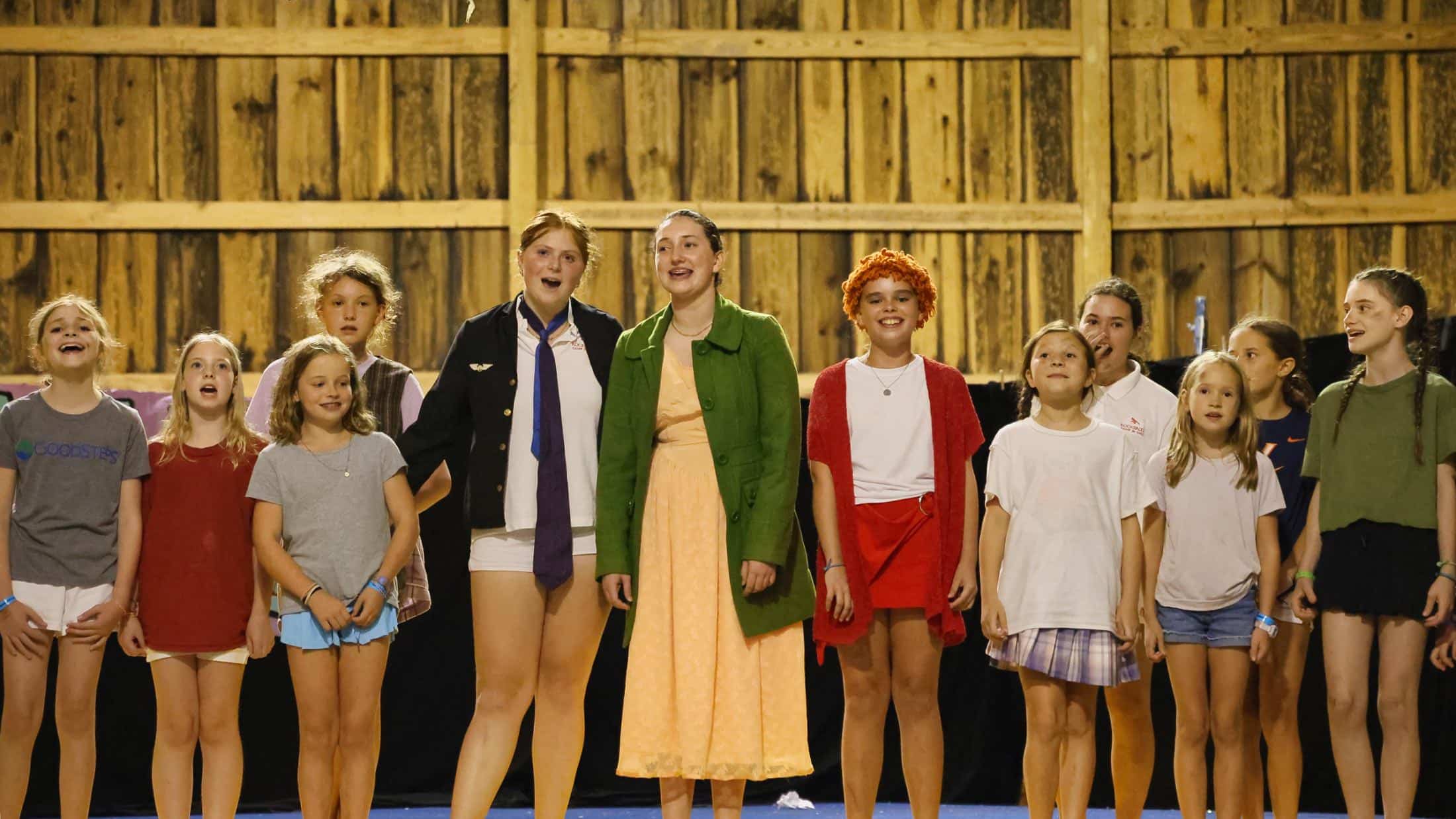
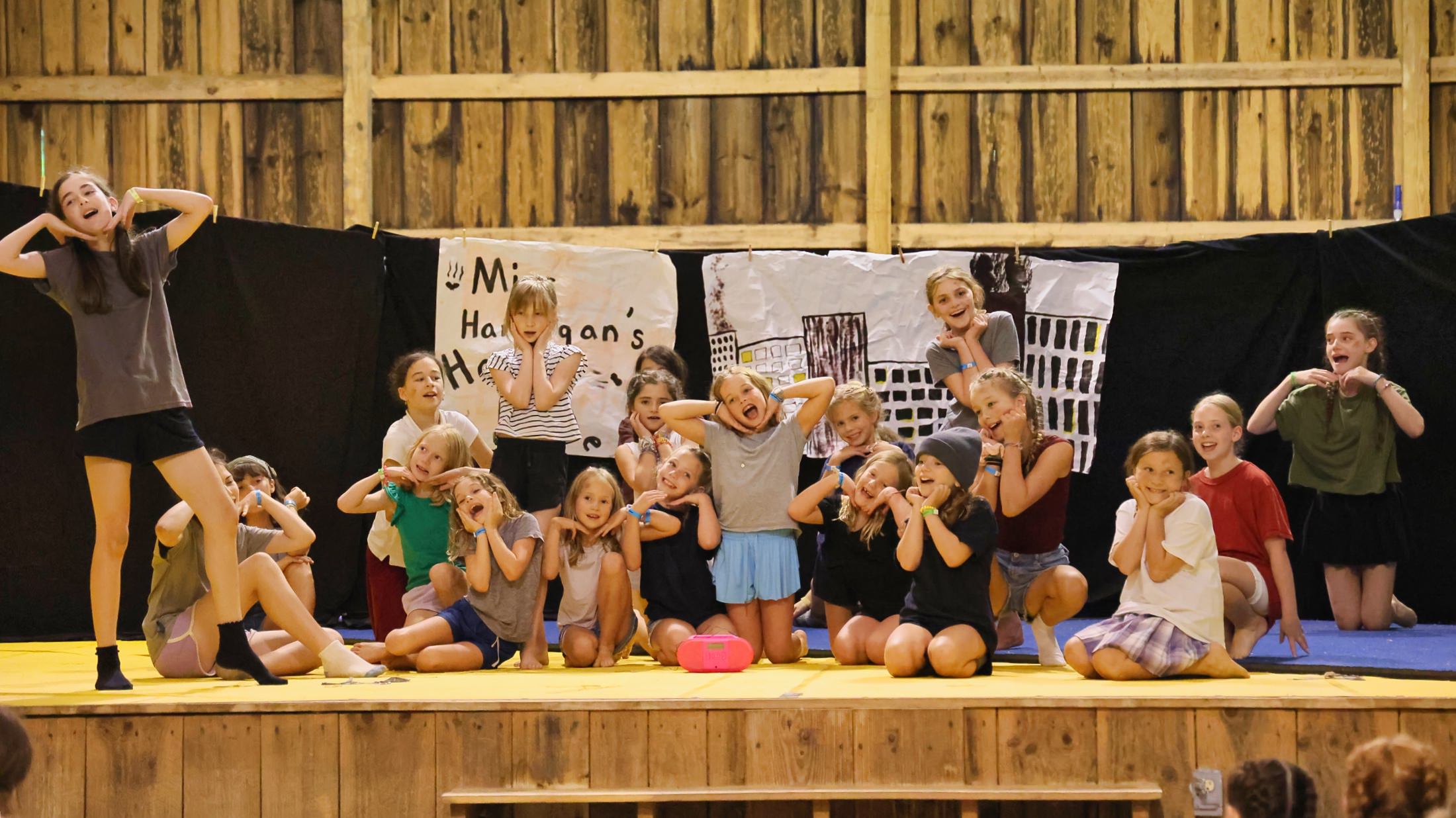
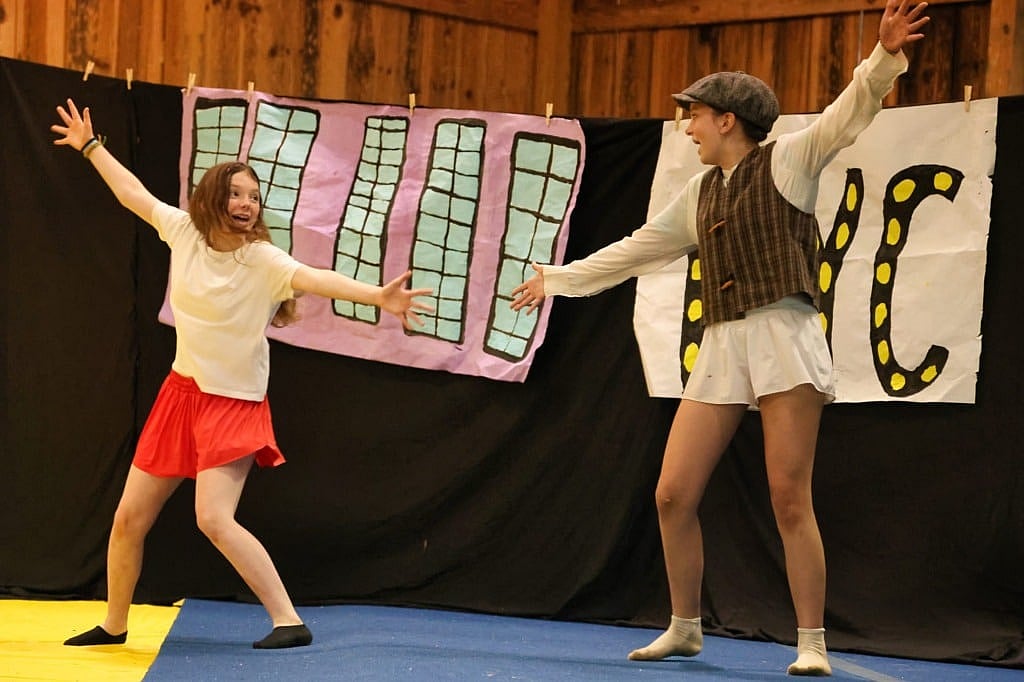
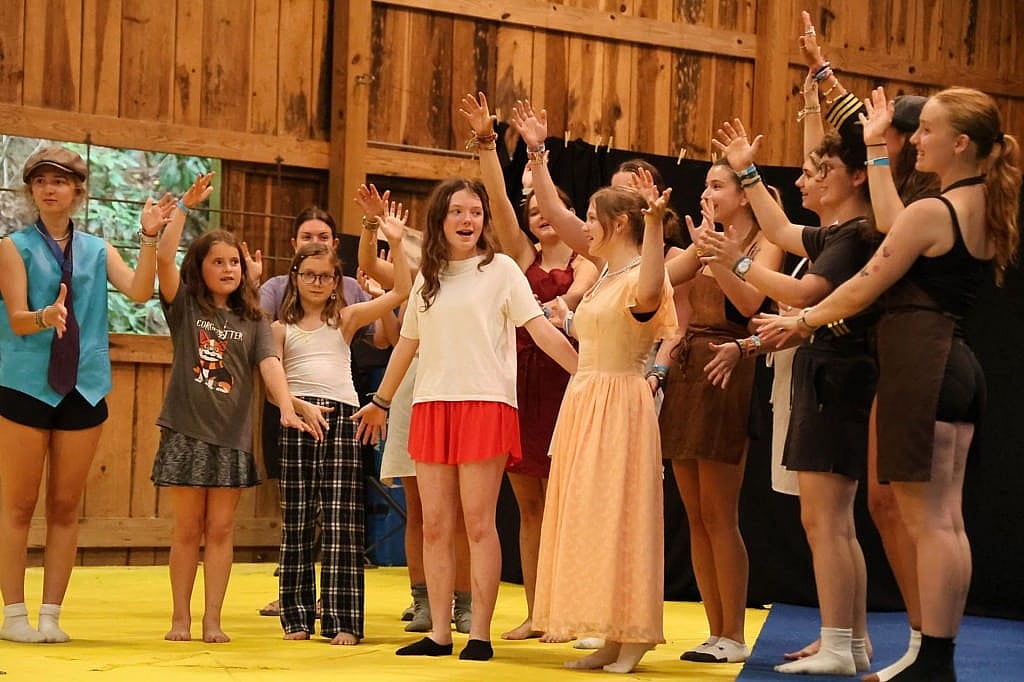
The next day brought Annie, the Broadway musical that debuted in 1977 and has been winning people over ever since. Zoe played Annie. Margo took on Daddy Warbucks, and our counselor Blair made a sharp Miss Hannigan. Campers and counselors filled out all of the other parts, with some songs sung by the whole company and some handed to a single girl standing out front on the edge of the stage. When the cast list went up earlier in the session, the thing worth noticing was that everyone who auditioned got a part, which is how it always goes here. Casting works as an invitation rather than a contest for the best voices, and the girls who accept it spend good chunks of their free time in rehearsal, learning lines and harmonies from each other.
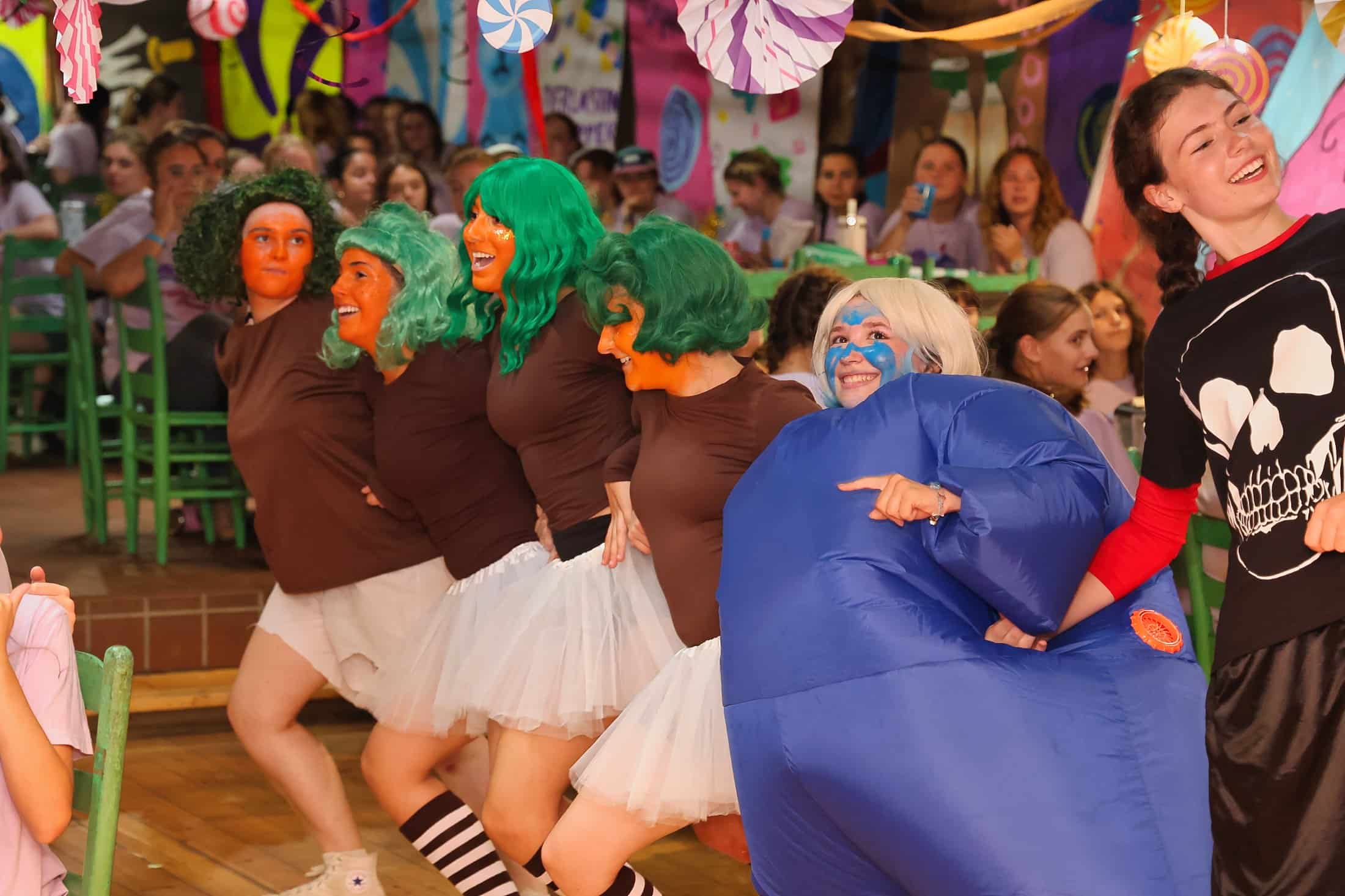
Between the acts came the dances. The Juniors, the Middlers, and the Seniors each took the stage with a performance of their own, which meant that a good portion of camp was either in the show or waiting in the wings to be, and the rest of us sat out front cheering for our friends. One number quieted the room. Three pairs of dancers took the floor to Fleetwood Mac’s “Landslide,” each pair an older girl or a counselor moving alongside a younger camper. “Well, I’ve been ‘fraid of changin’,” the song goes, “’cause I’ve built my life around you.” And then the line that got everybody. “Even children get older, and I’m gettin’ older, too.”

The Spirit Fire

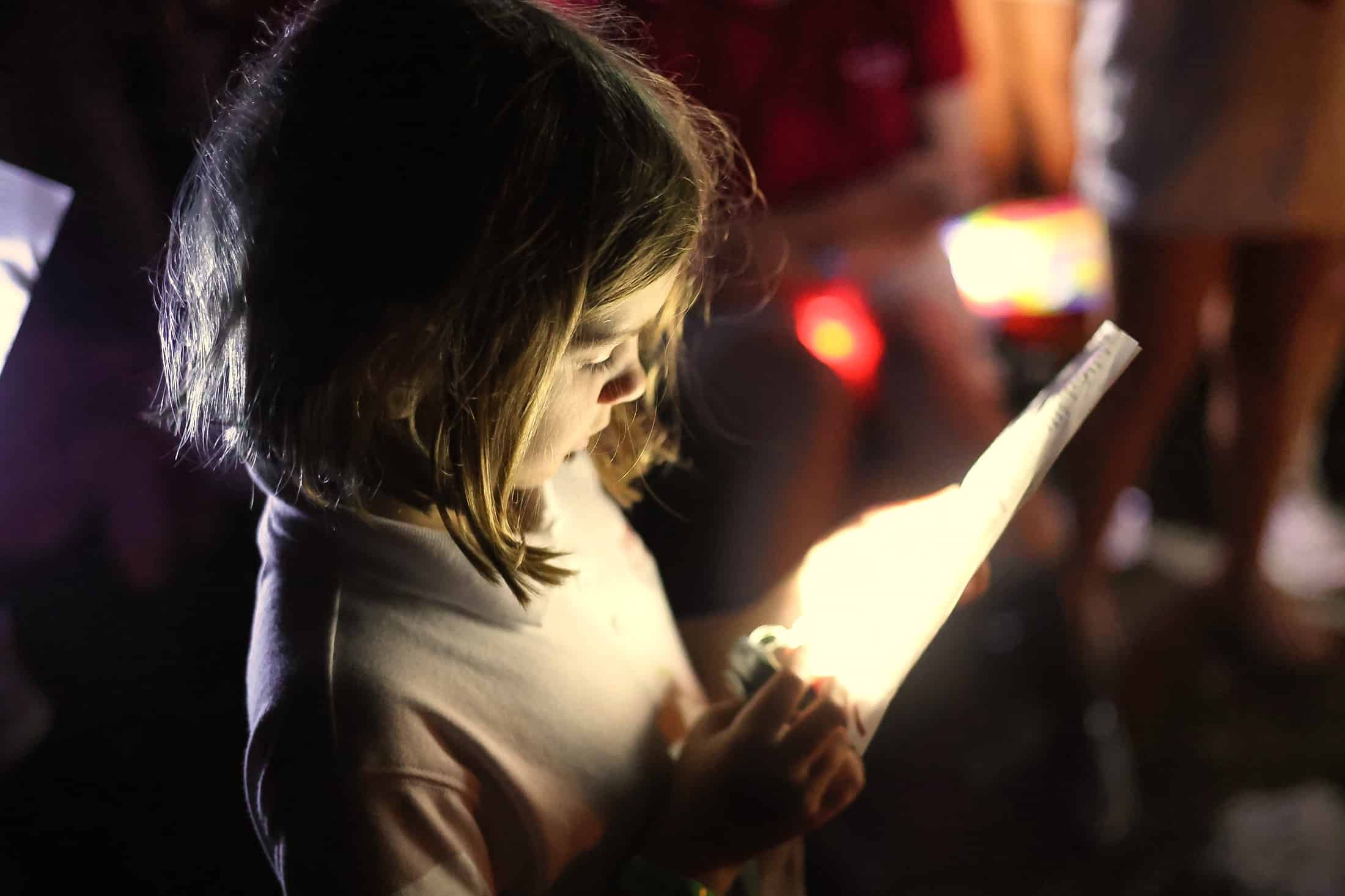
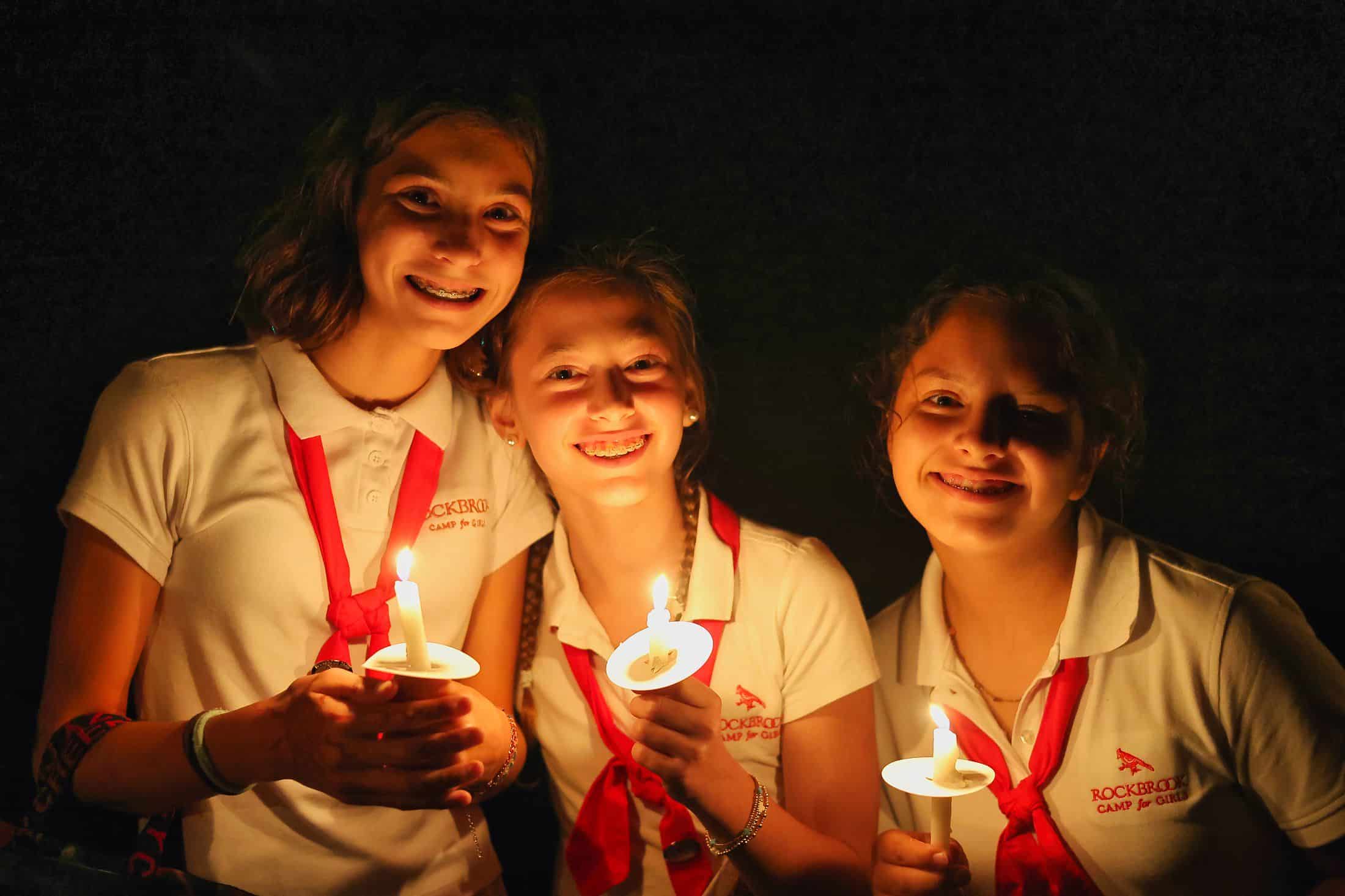
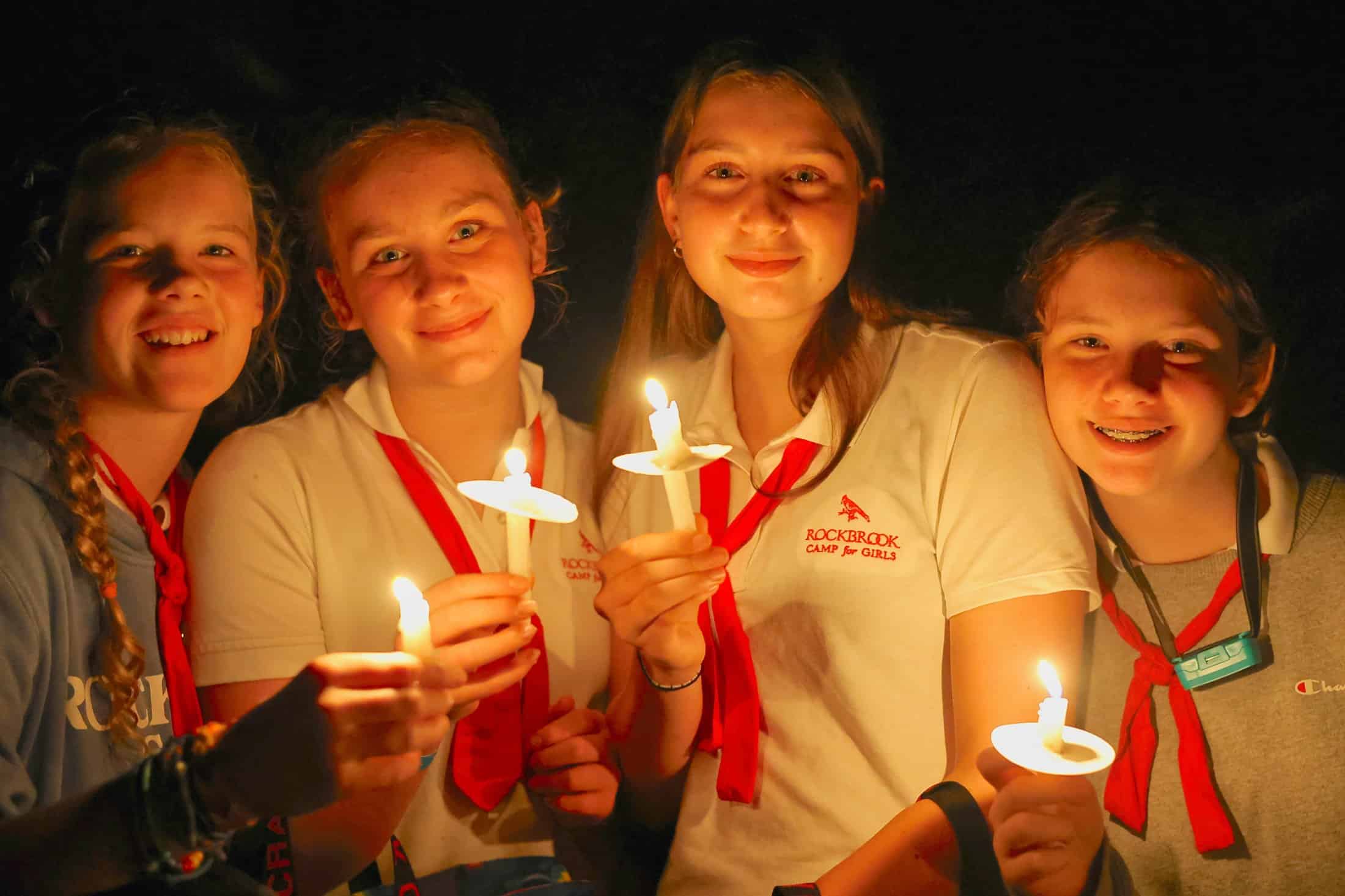
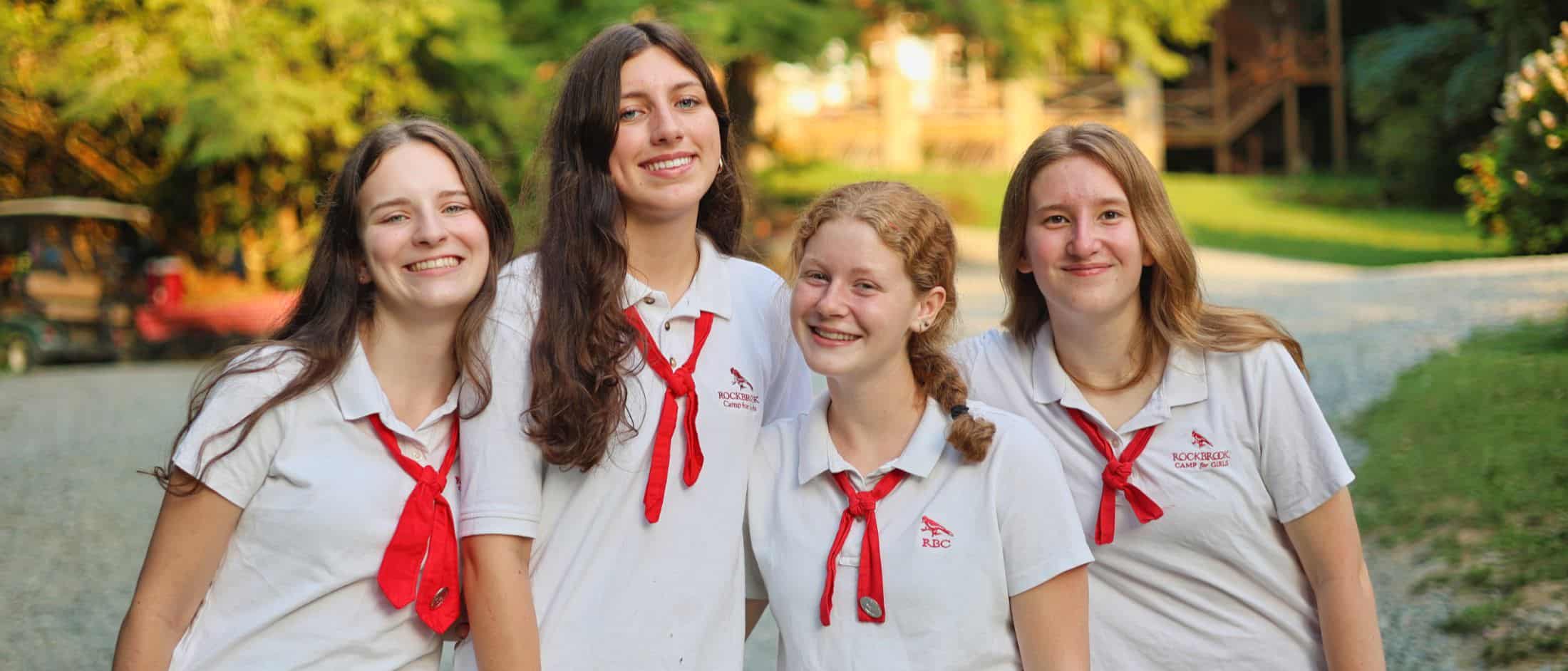
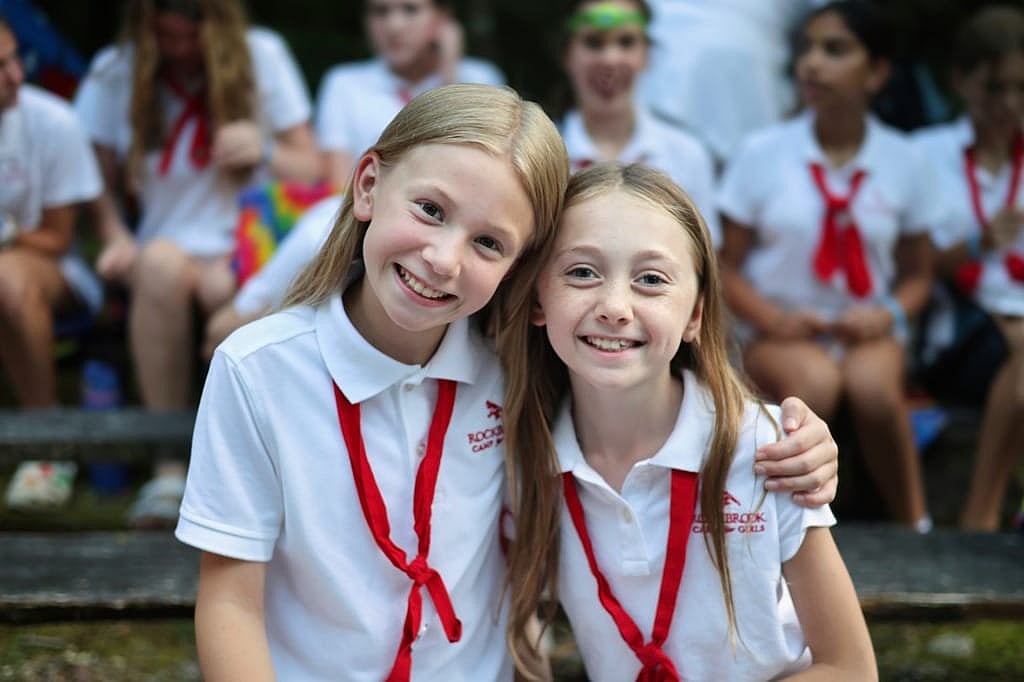
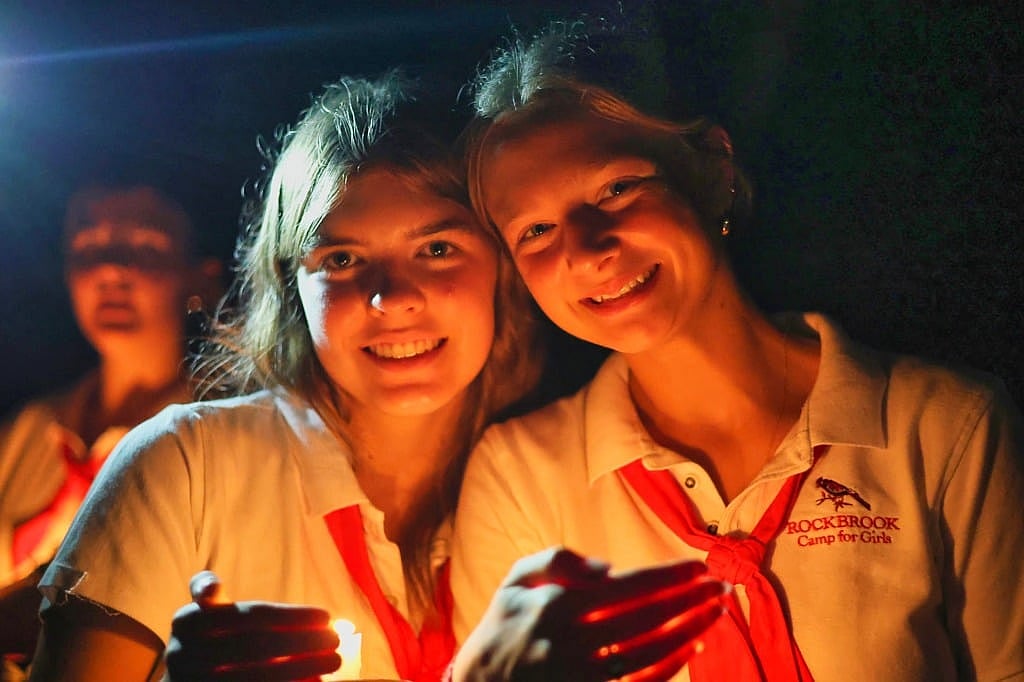
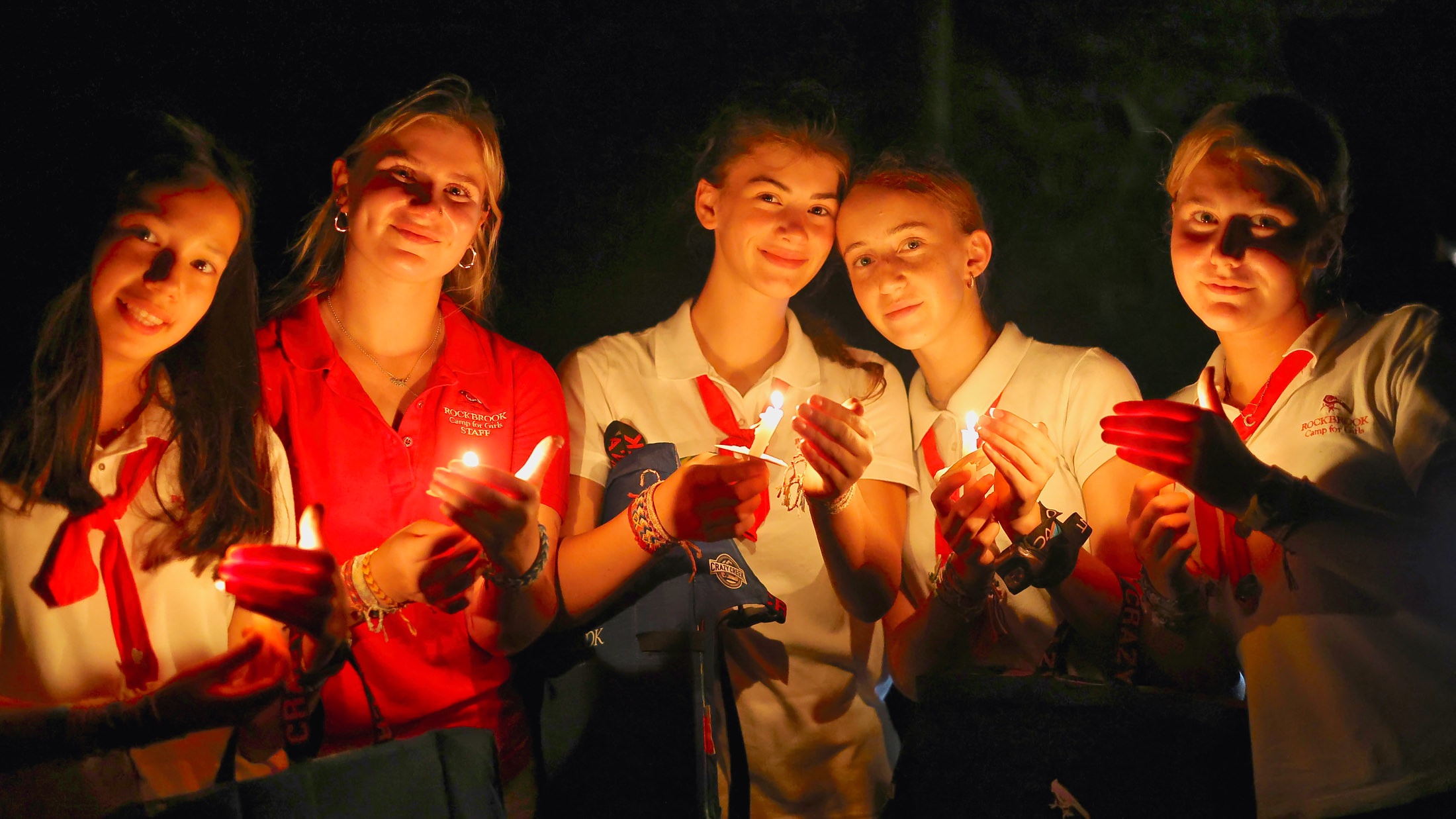
The Spirit Fire gathers us together again, this time at Vesper Rock dressed in our red and white uniforms. It’s a closing campfire of songs and speeches with a candlelight procession around the lake. The name points to the “Spirit of Rockbrook” and the sense of kindness, caring and community that defines camp life. Campers and staff members alike take turns giving short speeches reflecting on their experience over the course of the session. A striking number of them described how they arrived shy, or a little nervous, or unsure they would fit in, and somewhere in the weeks that followed they relaxed and found themselves connected to more people than they could count. Arm in arm and shoulder to shoulder on the benches, we were reminded about how much we’ve grown at camp and how much Rockbrook has become an important part of our lives.

There’s some sadness mixed in, particularly among the girls old enough to know that this has been their last summer as a camper. Rebecca, in her ninth year, told us that before writing her speech she signed her name in big red letters on the wall of the Hi-Up cabin, then walked down to the J1 cabin to find the signature she left there almost a decade ago. It’s still legible, in slightly sloppier handwriting, across from the names of two girls who are still her best friends. She talked about her journals, and about wanting to read them again in twenty years when her memory has gone fuzzy. What she wants back most is the small stuff. “More importantly,” she said, “we’ll read about the little things, the small moments, and the memories made in between the lines.” Late-night dining hall chats. A spontaneous evening at Castle Rock watching the sun go down in a sea of orange fog. Birthday cake eaten in the walk-in until their stomachs ached. “Sometimes I wish camp wasn’t as meaningful or memorable,” she admitted, “because maybe it wouldn’t hurt so bad saying goodbye.”

Long after the fire burned down and we sang “Day is Done” for the last time this session, the girls, back in their cabins, seemed noisier than you’d expect for a sad night. Screen doors banging, somebody still humming a song, a burst of almost quiet laughing from a dark cabin, a counselor asking without much conviction for everyone to settle down. With the sounds of the forest, the gurgle of the creek, and the chirping of nighttime frogs and crickets, we ended our day. We’ve spent good solid weeks building to these three gatherings, each one a celebration of the community these girls have created together.

rockbrook camp closing ceremony

The Voice Does the Work

Here’s a small puzzle. What is something that happens at Rockbrook every single day, more than once, that almost never happens back home? It happens before she’s even fully awake, at breakfast, when a table of bleary-eyed campers gives thanks with “We Have Been Given a New Day.” It happens again at lunch, and again at dinner, in a different key each time. It happens riding the bus to Sliding Rock. It happens at morning assembly, at birthdays, and when a girl swims her way into becoming a “mermaid.” Sometimes it’s sweet and lovely; other times it’s explosively enthusiastic. It can happen while hiking, often while doing skits, and always at our Sunday Chapels. And it happens last thing each night, when the whole camp goes quiet enough to hear “Day Is Done” before lights out. The answer, if you haven’t guessed it, is singing.

At Rockbrook, we sing every day, and throughout the day. Over the 105-year history of the camp, singing has become one of the core traditions of this place, central to its culture. Our printed songbook now holds more than 120 different songs, new and old, silly and serious. You can hear a good number of them for yourself on our website. They are sorted into categories like pep songs, silly songs, traditional songs, and so forth. Here’s one of my favorites.

3 sitting camp friends

For some campers, the lyrics are a big part of why they love certain songs. Of course, many of the tunes are also simply catchy, but certain phrases take on an extra meaning of their own. “‘Twas fate we came to Rockbrook, and you became my friend” and “Like a fairyland of beauty, where friendships so true are born” are good examples. One alum told me she hums the canoeing song under her breath when she’s feeling nervous about something. It goes, “Hold fast, don’t lose your nerve, keep your paddle in your hand going around the curve.” Long after her time at camp, and in moments that have nothing to do with canoeing at all, this Rockbrook song retains its power. These are songs that stick with you.

Why do we sing so much at Rockbrook? The easy answer is that it’s good for you, good for our overall wellbeing, and plenty of research points to that. Likewise, I think we can say more than just “singing is fun,” though it’s that too. A more interesting question is to ask what singing does at camp. Three things come to mind.

summer camp dance group

The first is that singing synchronizes a group, out loud, in a way you can literally hear happening. Watch a table of campers start “Way Up in the Sky” and it’s obvious. In the dining hall, the Hi-Up campers ring their tiny bell that signals to everyone a song is starting, and within a few bars we have almost 300 people, campers and counselors alike, waving their hands the same way at the same moment, raising the pitch of their voices for the high parts and dropping their voices to a rumble for others. It’s phenomenal to see a room full of individual people briefly becoming one thing. Seemingly without any rehearsal, singing creates this mysterious synchrony like a flock of birds turning in the sky. Every chorus tightens that bond. Every harmony deepens it.

The second reason singing matters so much at Rockbrook is that it makes every camper a participant in the camp’s culture, a member of the community here. Singing builds that community through doing— in this case, by willingly joining in with your voice. When a song begins in the dining hall, every camper is helping make Rockbrook happen in that moment, rather than simply sitting back to receive something already finished. Just as the song depends on their voices, camp depends on their genuine, active, embodied, participation. The voice does the work.
This shared participation matters, by the way, because it contrasts so starkly with what Jonathan Haidt calls the “screen-based childhood” he’s identified as common these days. That life asks very little of kids: watch, scroll, like, skip, repeat, all of it steered by whatever an algorithm decides to serve next. What’s left is a subtle loneliness, each kid alone in a private stream of content shaped just for her. Camp singing works in the opposite direction. It asks a girl to be active, to contribute something— her voice, her timing, her courage to join. Singing at camp teaches a girl that she helps create community by leaning in, rather than simply receiving it.

lake summer camp buddies

That’s the third thing singing does at camp. It pulls you in. Singing together is an immediate invitation to the group, an open avenue to belong, to be one of “us.” Camp songs are meant for exactly that, for including everyone, for creating something together. It doesn’t matter if you don’t know all the words, or sing off-key— the goofier the better. The point was always a collective sound, one with room in it for absolutely everyone— not the best singer chasing perfection or mastery. And it works. New campers, protected by the form itself (loud and silly, no solos, no critiques), simply open their mouths to sing, and instantly they’ve joined the group. To sing is almost an instinct at Rockbrook, and as soon as you do, you know you belong.

None of this depends on the songs being polished, sophisticated, or especially impressive in the ordinary sense. It’s the process, not the product, that we care about. The benefits arise simply from the singing. And those benefits— synchronizing a room, encoding a culture, including absolutely everyone— are happening whether or not anyone in the dining hall is thinking about it in those terms. After all, we’re just singing.

An alum once told me about her mother, who had spent years suffering from dementia— names, faces, whole decades fading away. But when prompted with a Rockbrook song, one her mother hadn’t heard in fifty years, she could sing every word. I think about that sometimes, how a song, sung enough times as a girl, gathered around a table with people she loved, can survive underneath all of it. More than just a nice tradition, we sing at Rockbrook because some things are too important to risk forgetting. Things like knowing you belong, knowing you are part of something, knowing you are a valuable friend to someone. A song, sung enough times, is one of the surest ways we know to remember.

small sill summer camp girls

More Than it Shows

If you take the time to scroll through the whole photo gallery each day, rather than relying only on the facial recognition feature to find your daughter, you will eventually come across a photo that’s puzzling. Girls tangled together in some contorted pose. A swimming spot you don’t recognize. A kid in unfamiliar gear, or standing next to a pony, or grinning in front of a rock face that’s clearly nowhere near her cabin. “What is going on?” is the natural question. A photo catches a single second, and most of these snapshots belong to a longer story you can’t easily see. So let me take a handful of this week’s photos and fill in what’s around them.

Start with the featured photo at the top of this post: five girls, ice cream cones in hand, all smiles, with the Dolly’s trolley parked behind them and the hillside lodge farther in the background. Nobody saw that one coming. After lunch on Friday, the trolley from Dolly’s, the beloved ice cream stand at the entrance to the Pisgah Forest, rolled into camp as a surprise for everyone. It was a welcome sweet treat on a warm afternoon, and a happy jolt of surprise on an ordinary Friday.

teens hoop game
rockbrook camp swimming hole

Then there’s the circle of senior girls holding hands on the Landsports field, one of them halfway through a hula hoop. That was cabin day, when each cabin group dreams up its own adventure for the afternoon, and the Seniors settled on a slate of relay games. In this one, the girls hold hands in a circle and race a hula hoop all the way around it, which means each girl has to step, wiggle, and fold her whole body through the hoop without ever grasping it. The contortions this requires are hilarious, and the photo catches one mid-wiggle. They ran a three-legged race too, plus a sponge-and-bucket water relay and an egg and spoon relay. The photo shows the twist. The laughing you’ll have to imagine.

The unfamiliar swimming spot is a place we call Mermaid Cove, and the girls wading in it are a junior cabin that hiked out to it for their cabin day adventure. It sits along Dunn’s Creek below Rockbrook Falls, and offers a little waterfall dropping into a sandy-bottomed pool, a giant rock face with an overhang rising on one side and the deep forest leading back to camp on the other. Dappled sunlight comes through the trees in the midafternoon, and the water stays cool enough to feel perfect on a warm summer day. The girls can wade right in and play. Some spots at camp feel found rather than built, almost magical really, and this cove is one of them.

Other photos come from farther afield, so it’s worth explaining how trips work at Rockbrook. Beyond the in-camp activities each camper has as part of her regular day, the outdoor adventure staff announces special optional trips most days at breakfast and lunch, trips like rock climbing, kayaking, rafting, hiking, backpacking, and canoeing. One might be a half-day hike or a full day of rock climbing. It could mean hiking to a view, romping through a creek, visiting a nearby swimming hole, or a trip up to the cave under Dunn’s Rock (the “Nest”) for some hammock time. You just never know what will be announced. And because these trips are extra, they present each girl with a real choice: is she willing to skip riflery and tennis tomorrow morning to go rock climbing instead? There always seem to be girls ready to say yes, especially this session.

camp girls canoe trip overnight
kids sunset view

That’s how a group of senior girls ended up canoeing the French Broad on a two-day, fifteen-mile paddle from Mills River to Asheville. This section is quite wide, and a long stretch runs through the Biltmore Estate, with no houses or development visible from the river. You can even spy the mansion itself from the water in a couple of places. We have accounts of Rockbrook campers paddling this stretch of river back in the 1930s! The girls reported perfect sunny weather the whole way, and the trip ended with a celebration late lunch at a food truck in Asheville. Fifteen miles of paddling earns a good lunch.

The girls in another photo are Middlers who were on a backpacking trip this week. They carried everything themselves, tents and food and water, and hiked about a mile and a half into the forest to set up their campsite not far from the Davidson River. Then they packed a dinner and kept climbing, up to the top of John Rock to eat it while the sun went down. The light gets better and better as it sets up there, shining across the valley onto Looking Glass Rock. It’s easily one of the best hiking views in the Pisgah National Forest.

girl riding small welsh pony

And the pony carrying that young rider is Zoey. All of our horses have names, of course, and each has a distinct personality, but Zoey is something of a princess at the barn and one of the most popular animals at camp. She’s a Welsh cross pony who has been part of Rockbrook, and of Free Rein, the therapeutic riding program we host during the school year, since about 2018. She loves working with kids and teaching them how to ride, and when a skilled higher-level rider is small enough to ride her, she can even do a little jumping. Zoey has been teaching girls to ride for more summers than many of our campers have been coming to Rockbrook.

Every one of these photos holds more than it shows. Behind the silly pose is a cabin adventure, behind the unfamiliar river is a choice a girl made at lunch, behind the ice cream cones is a surprise the whole camp shared, and behind the pony is eight years of patient teaching. I wish we could somehow capture even more. So when a photo in the gallery leaves you wondering what’s going on, take it as a good sign. It means your Rockbrook girl is in the middle of something that only happens thanks to the richness of camp life. Tonight the girls who paddled past the Biltmore and the girls who wiggled through hula hoops are back on their cabin porches, trading these stories while the creek runs by in the dark. The photos give you a glimpse. The stories are coming home with her.

three camp horse girls wearing helmets

Second Session Video Snapshot – Part Three

We have another fun highlights video to share from Second Session— the third so far, but the first to include our newly arrived July Mini 2 campers.

Once again, Robbie Francis of FrancisFilmworks has captured the feeling of life at Rockbrook. It’s wonderful to see camp friends laughing together, girls throwing themselves into new activities, quiet smiles, and all the colorful energy moving through camp each day.

This video is pure delight. Take a look, and enjoy seeing Rockbrook in motion!

Three Letters

One of the best places to sit at camp is on the dining hall porch. The red rocking chairs on one side are arranged to take in the whole view, there’s usually a little breeze moving through, and enough people wander past that a conversation is never far away. That’s where I found two of our Hi-Ups this morning, just after muffin break, enjoying a pocket of free time. One is spending her ninth summer at Rockbrook, the other her tenth. One was sitting with a book, the other was knotting a friendship bracelet tied to her water bottle. I sat down in the chair beside them and asked a question I already knew the answer to, but I wanted to hear how they would put it. I asked, “What is RBA?”

summer camp kind girls

They had a lot to say.

If you spend even a day at Rockbrook, you’ll hear it. A counselor gathering her cabin for a skit rehearsal might say, “let’s keep it RBA.” A camper weighing a joke might pause and admit, “that sounds a little RBI.” RBA stands for “Rockbrook Appropriate,” and its opposite, RBI, for “Rockbrook Inappropriate.” Nobody seems to know who coined the terms, and you won’t find them well defined in any handbook. Yet everyone here understands them, and they carry real weight. Three letters, invoked on the fly, and a whole shared ethic snaps into focus.

The first Hi-Up put it this way: “RBA is all about community. It’s anything that keeps our community together.” Her friend looked up from her bracelet and added the definition that seems both spot-on and insightful: “RBI is something that happens out in the real world. RBI is a lot more selfish, while RBA takes into account other people all the time. The difference is in how we treat each other.”

I love these responses! These two sixteen-year-old girls, with nearly a decade of Rockbrook experience, were drawing the boundary of camp along a moral line. Out there, in their experience, selfishness is the default setting, the thing you can expect. Most people in the “real” world are positioning themselves, in their heads comparing themselves to others, likely taking the last cookie. In here, at camp by contrast, what’s normal is first considering other people, being supportive, offering to share the last cookie. They drew this contrast the way you’d state a fact about the weather. Obvious if you’re there experiencing it. They have lived in both places long enough to notice the difference.

This is why I think the notion of “RBA” has stuck at Rockbrook. It condenses everything we hope camp will be… the kindness, the caring, the generosity, the habit of noticing how your choices affect the people around you… into a three-letter shorthand quick enough to use in the middle of ordinary life. It gives girls a ready way to recognize the culture they are helping create and to protect it when something begins to pull in another direction. Instead of a complicated set of rules listing what is not allowed, a joke, a prank, or a comment made to a cabin mate can be measured by one familiar question: Is this RBA?

The girls told me one more thing worth passing along. “Sometimes people slip up and might say something that is RBI, like making a mean comment,” one of them said, “but everyone here, counselors and even campers, is quick to shut it down and remind people that we’re at camp.” We’re at camp. I love that the correction they described comes from everywhere at once, from campers as readily as from staff, and that it arrives as a reminder rather than a punishment. Everyone here has a hand in caring for the culture at Rockbrook. Slip-ups still happen, of course, because camp is full of real children exploring the complexities of the world. The difference is what happens next. Someone leans in, gently, and the community rights itself. RBA shows the direction to steer.

Their free period ended the way free periods do here, with the bell echoing from up in the tree. Both girls gathered their things without hurry, the book closed around a scrap of paper, the bracelet left for later. They thanked me for the conversation and headed off toward whatever came next. The rocking chairs kept moving a little while after they left, and I sat there thinking that I had asked a question I already knew the answer to, and just as I expected, they had answered it better than I could have.

camp girls whitewater rafting pals

No Hurry in It

Looking through yesterday’s photos from Curosty, I kept noticing the same thing. Different girls, different projects, different corners of the cabin, but in picture after picture, the identical expression: head bent a bit, eyes focused, hands mid-motion, the whole face settled into a kind of calm attention you don’t see every day. Nobody was posing. Nobody even seemed aware of the camera. Whatever these girls were experiencing, it was clearly something worth paying attention to.

kids crochet projects

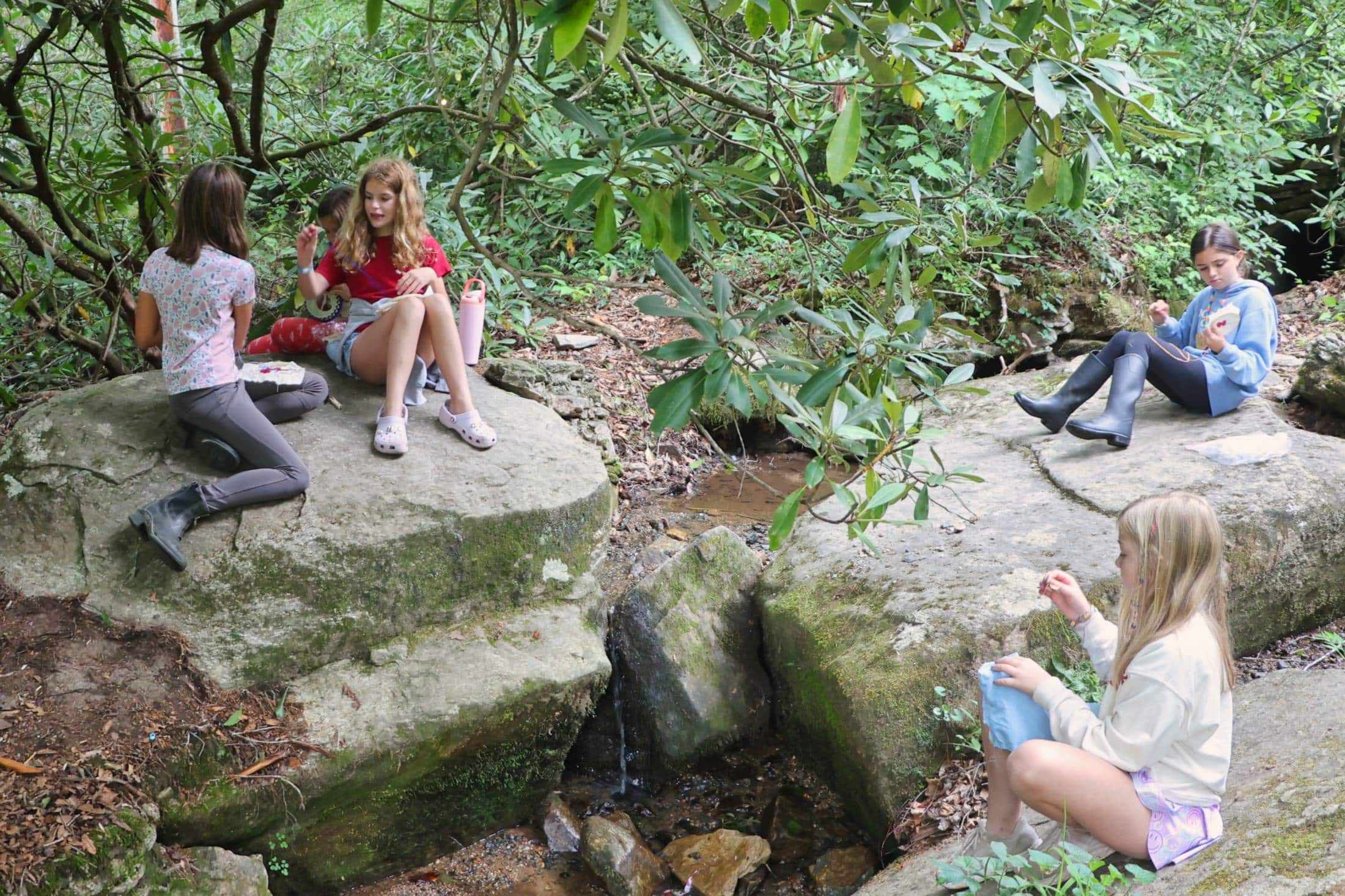
Curosty is our fiber arts cabin, a snug traditional log building where girls come to weave, knit, crochet, sew, and stitch. This week, the quiet stretch between our two July mini sessions when only our four-week campers are here, the pace of camp has relaxed, and Curosty may be where that slower rhythm shows itself best. Girls are working the round “nifty knitters,” looping yarn peg by peg until a long knitted cylinder grows down through the middle. Others are hemming stuffed pillows with a needle and thread, adding a decorative edge one small stitch at a time. There’s needlepoint lettering taking shape on hats and cloth, crochet hooks turning yarn into plump three-dimensional balls, potholder squares being joined into something bigger. And there’s the weaving, on the big floor looms and the table-top looms beside them, shuttles sliding back and forth as narrow straps and wide cloth slowly appear.

Notice how all of these crafts involve a form of repetition? Loop after loop, stitch after stitch, pass after pass of the shuttle. Watch the girls at work, though, and the repetition reveals itself as rhythm, the same motion returning again and again like the beat of a song, each repeated phrase carrying the piece somewhere. Every loop advances the knitted cylinder another fraction of an inch. Every pass of the shuttle lays down one more thread of cloth. There is something deeply calming about handwork like this, each small motion focusing and occupying the mind without straining it. Worries can’t get much of a foothold when your hands are building stitches. A row of knitting cannot be rushed, and the girls seem to sense that the process itself is what matters most. There’s no hurry in it.
young girl weaving on loom

Years ago I wrote about slowing down at camp, about camp as a haven from the hectic, a place where the whirlwind of an over-scheduled life loosens its grip and kids regain the freedom to meander, to catch beauty in a sideways glance. That’s still true, and this quieter week certainly proves it. What’s happening in Curosty, though, is slightly different. These girls are slowing down by paying closer attention: noticing the tension of the yarn, the size of a stitch, the pattern gathering row by row, all the nuance and detail you’ll miss by rushing about. The relaxed schedule lets the craft tell the time. Slowing down, it turns out, helps you bring more of yourself to the moment, to the process at hand.

This sounds an awful lot like mindfulness, something we adults might be hoping to find by taking a class or reading a book about it. The girls in Curosty at Rockbrook are getting it the old-fashioned way, through their fingers. A few summers ago, in fact, it was a camper working on an embroidery project who handed me the best description of this I’ve heard. Being at camp, she told me, made her more mindful of things. With more time to slow down and no phone in her pocket, she noticed more and appreciated more. She was describing the whole of camp life, and she was right. Needlecraft gathers that camp-wide invitation to notice and concentrates it, stitch by stitch, into hand-made colorful patterns.

Summer camp girl with needle and thread

Like so many things at camp, the benefit reveals itself in the doing. Nobody has to explain to a girl at a loom that this kind of attention feels good. The loom teaches her directly, in a hands-on, experiential way self-help books can’t match. She signs up for Needlecraft thinking she’s making a pillow. She leaves having practiced patience, sustained focus, and the settled feeling of being fully present with one thing. We might even call the pillow a bonus.

These are age-old crafts, after all. Girls at Rockbrook have been weaving and stitching since the camp’s earliest days, and the crafts themselves reach back generations further, to grandmothers and great-grandmothers who knew this same rhythm in their hands. When a camper threads a needle in Curosty, she joins that long line. At the same time, her own creativity guides the direction. She picks the yarn colors, chooses the pattern, decides what letters to stitch onto her hat. Each finished piece is tied to tradition yet entirely her own creation.

There’s something special about that. Unlike so many childhood activities, needlecraft doesn’t have to end when you grow up. A girl who learns to knit or crochet at camp holds a skill she can practice for the rest of her life, a way of slowing down that fits in a small bag and travels anywhere. Decades from now, some of these girls will pick up a crochet hook and find that same calm attention waiting for them, right where they left it. It will have started here, in a log cabin at Rockbrook, in the unhurried middle of a summer.
mindful camp girl crochet on rock