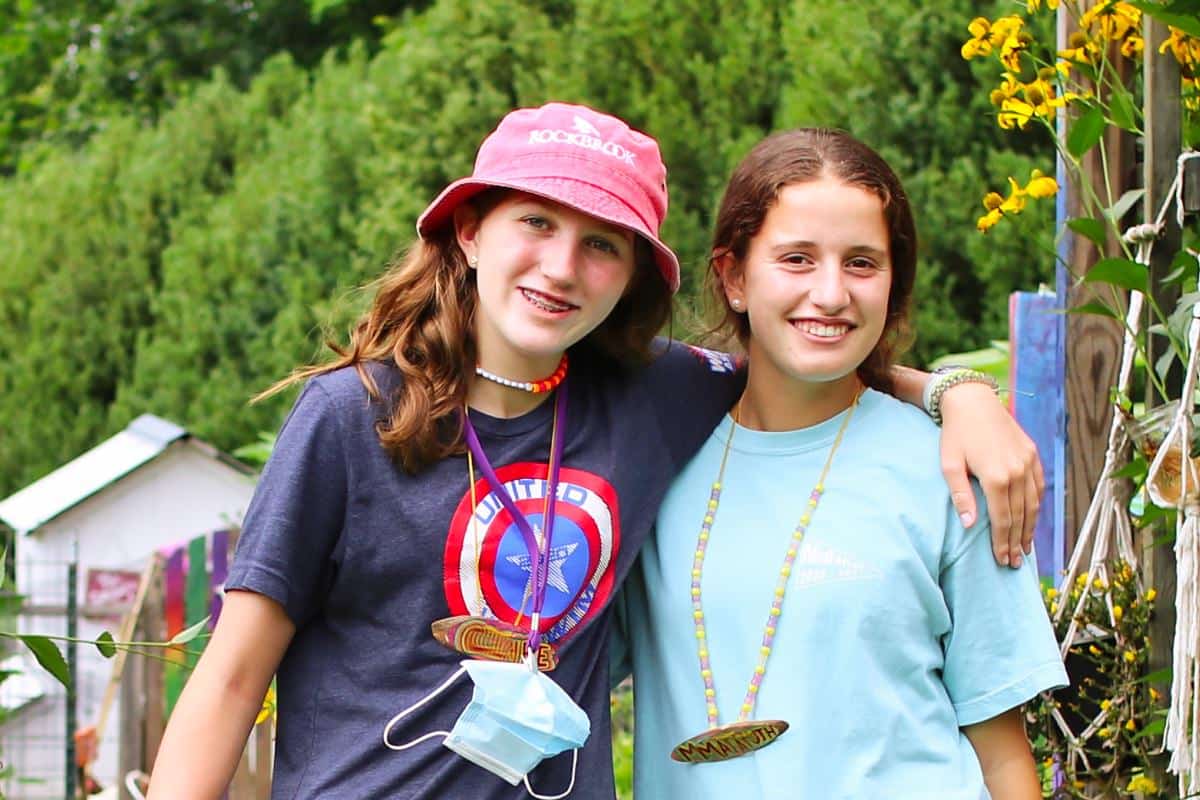
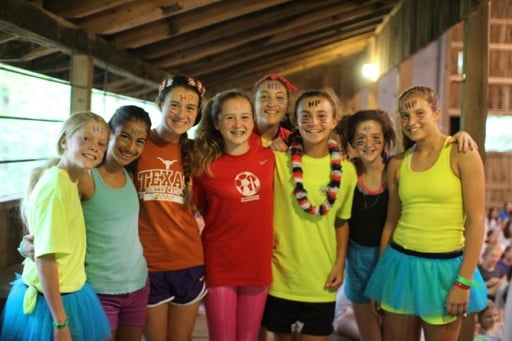
With the summer now behind us, and our attention focused on the new school year, I wanted to think back about camp and thank everyone who helped make this one of the best Rockbrook summers ever.
Back in May, we weren’t 100% certain how it would go when we opened camp. There were still plenty of unanswered questions looming about how the pandemic would affect camp life. But working with guidance from the American Camp Association, we rethought everything in terms of the coronavirus. We took great pains to consider how we might keep infections out of camp and how we could minimize its spread if it did, despite those efforts, sneak in. We changed how we organized our in-camp activities, doubled our health care team, spread out our food service onto new outdoor dining areas, and created a plan for pre-camp testing, quarantining, and a reasonable system of mask wearing for campers and staff members.
Thank You Parents and Campers
But all of this wouldn’t have been enough if our campers and their parents hadn’t been so supportive of these new safety protocols. Thank you parents! Thank you for placing your confidence in Rockbrook and for believing in the benefits of a camp experience for your girls, even if that experience would be different in some ways from years past. Thank you campers for your enthusiasm and love of camp. Thank you for sticking with us through 2020 when we had to close camp. And thank you for your trust in 2021!
The success of the summer wouldn’t have been possible without the extra hard work of our leadership team, incredible staff of cabin counselors, adventure guides, activity specialists, housekeeping, maintenance and kitchen teams. While some camps struggled to fill positions, Rockbroook was fortunate to have every role filled with excellent folks who showed real dedication and commitment to doing their best work, even under more challenging conditions. To everyone who worked at Rockbrook this summer (all 172 of you!), thank you! Each of you contributed something special to this camp community.
Thanks to this good planning, to families doing their part, and to an incredibly hard-working camp staff— plus a dose of good luck —this past summer was COVID-free. We had no positive cases of the coronavirus at Rockbrook. Despite the ongoing pandemic, Rockbrook had a fantastic camp season— refreshing everyone at camp, rebuilding our connections to what really matters, and reviving that camp spirit we’ve all yearned for. We are all grateful beyond words.
We’re already looking forward to next summer when we can welcome everyone back to Rockbrook and recreate that great feeling of camp— the relief that comes from being surrounded by a supportive community, the joy of being utterly silly just for fun, and the pride that blossoms after accomplishing new things. We’re looking forward to seeing again all of the great people that make up the uniquely caring camp culture of Rockbrook.
Ordinarily during this part of the summer we are giving lots of tours. It’s quite common for families who have somehow heard of Rockbrook to stop by when they are in the area and get a first-hand glimpse into life at camp. For someone who hasn’t seen Rockbrook girls in their element, a tour is marvelous. This summer, however, as we think about precautions against the coronavirus, we are not offering tours. We are trying to minimize our contact with people outside of camp, and unfortunately, this means camp tours have been restricted.
OK, no tours this summer, but what are they usually like?
The Beautiful Facilities
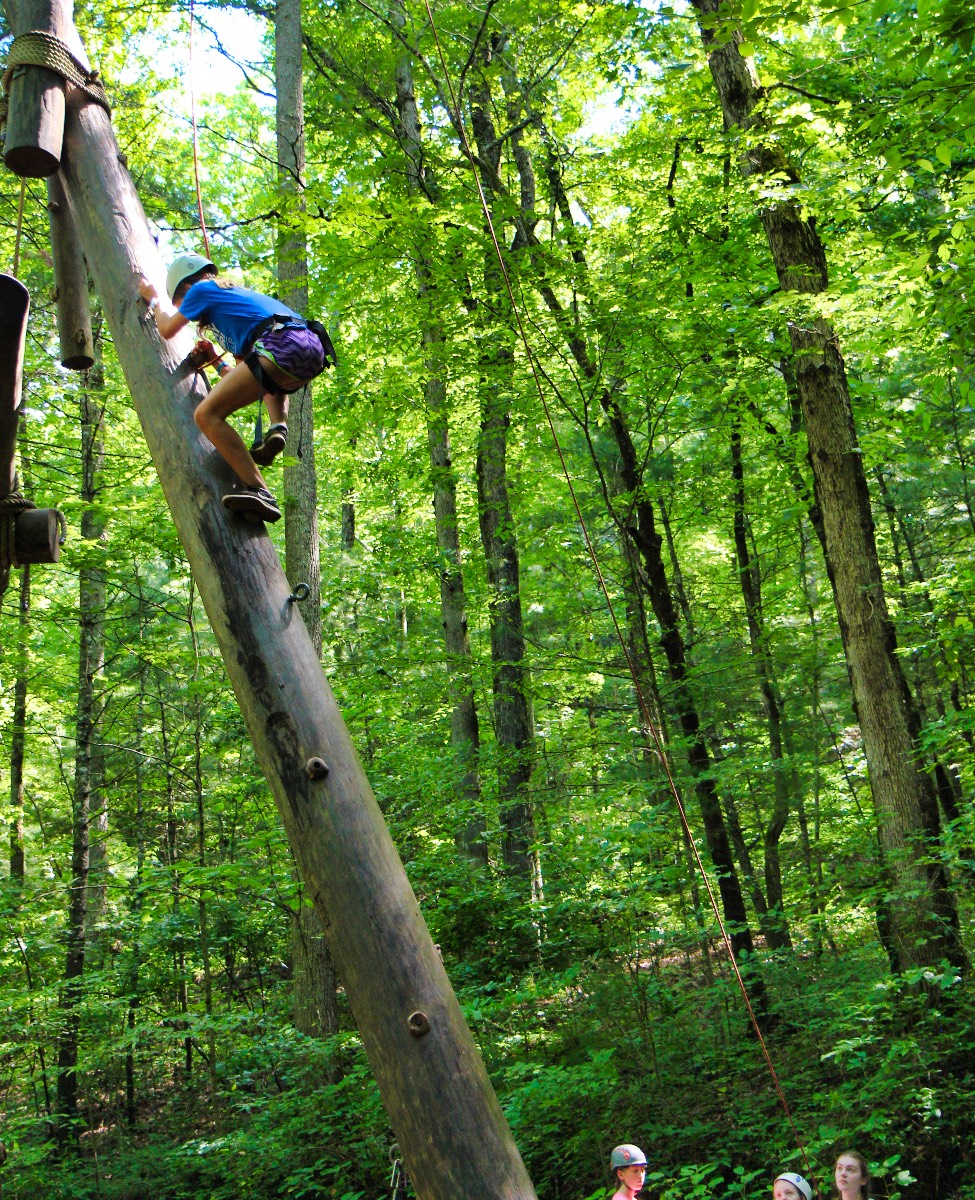
A tour of Rockbrook will certainly showcase the facilities— our renovated bathrooms and showers with unlimited hot water, our covered horseback riding arena that’s the biggest of any camp in NC, our 2 19th-century log cabins used for craft activities, our stone meeting lodges, the waterfalls and rock faces on the property, climbing tower, unique lake, dining hall and rustic sleeping cabins. Visitors to Rockbrook are often struck by the organic beauty of the place. With its large trees, creeks and thick forest setting, and really not much “lawn,” it’s immediately apparent that this 100-year old camp has a special depth. Different from the overly landscaped environments common elsewhere, you can feel the close relationship Rockbrook has with nature. That’s all good stuff but being enamored with a camp’s facilities, while interesting, is only part of the story.
Activities in Motion
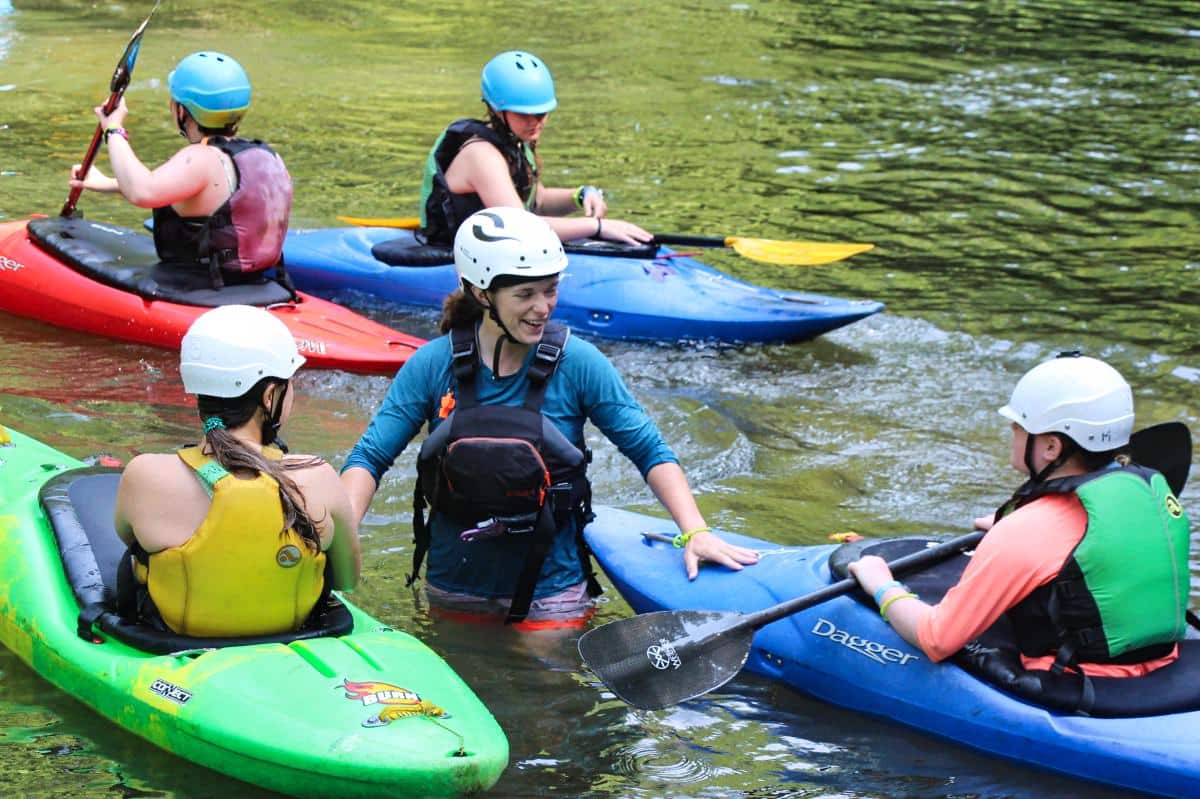
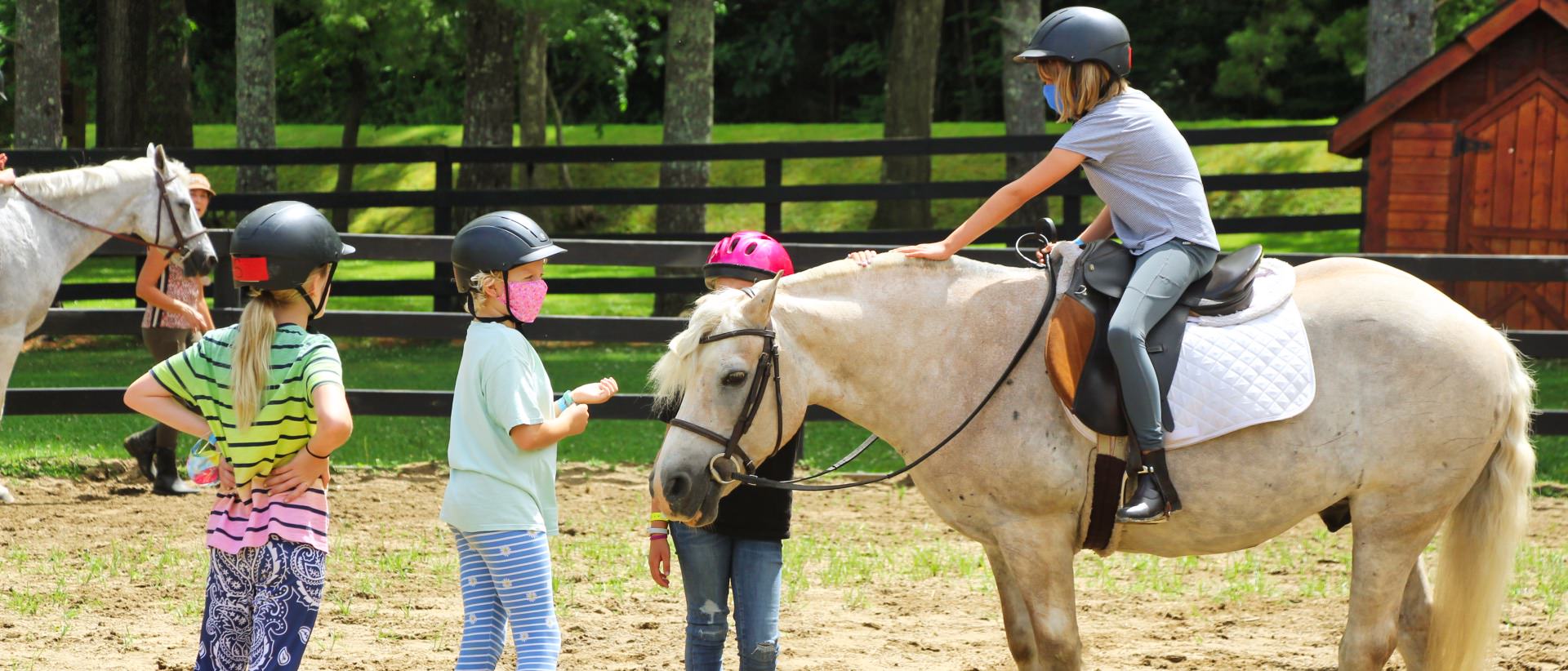
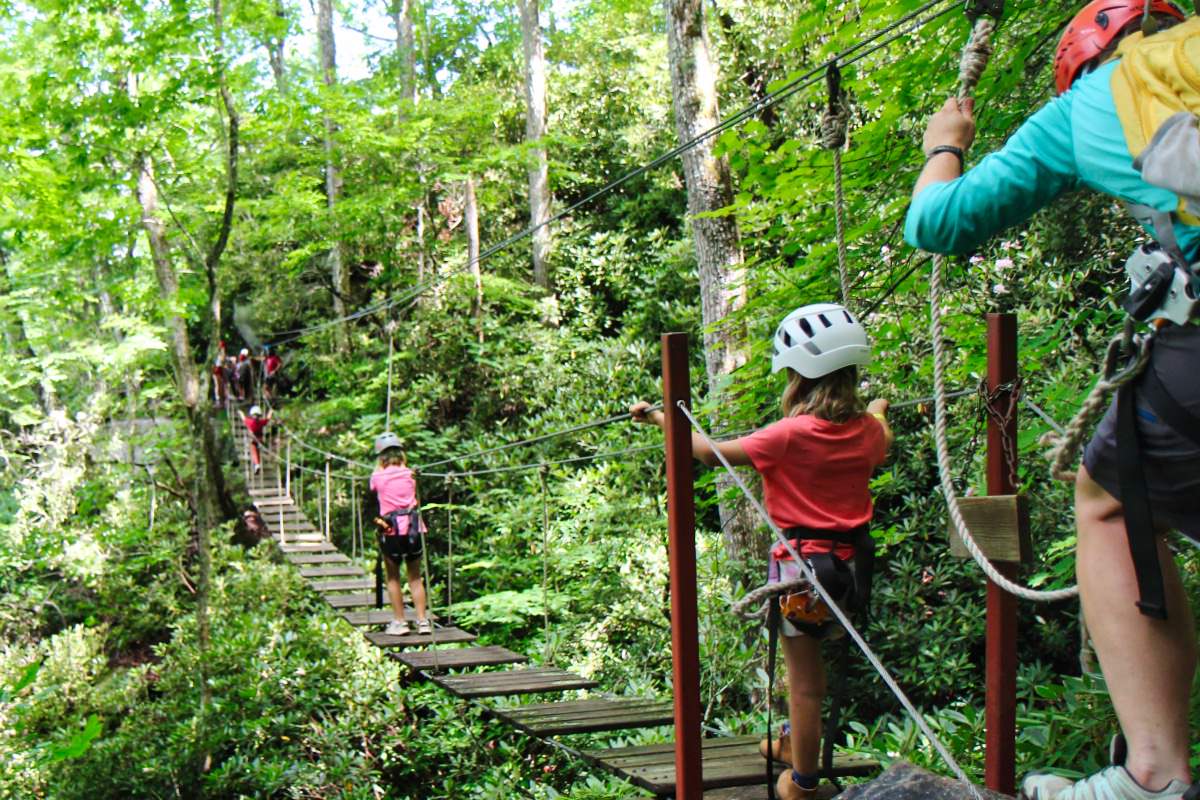
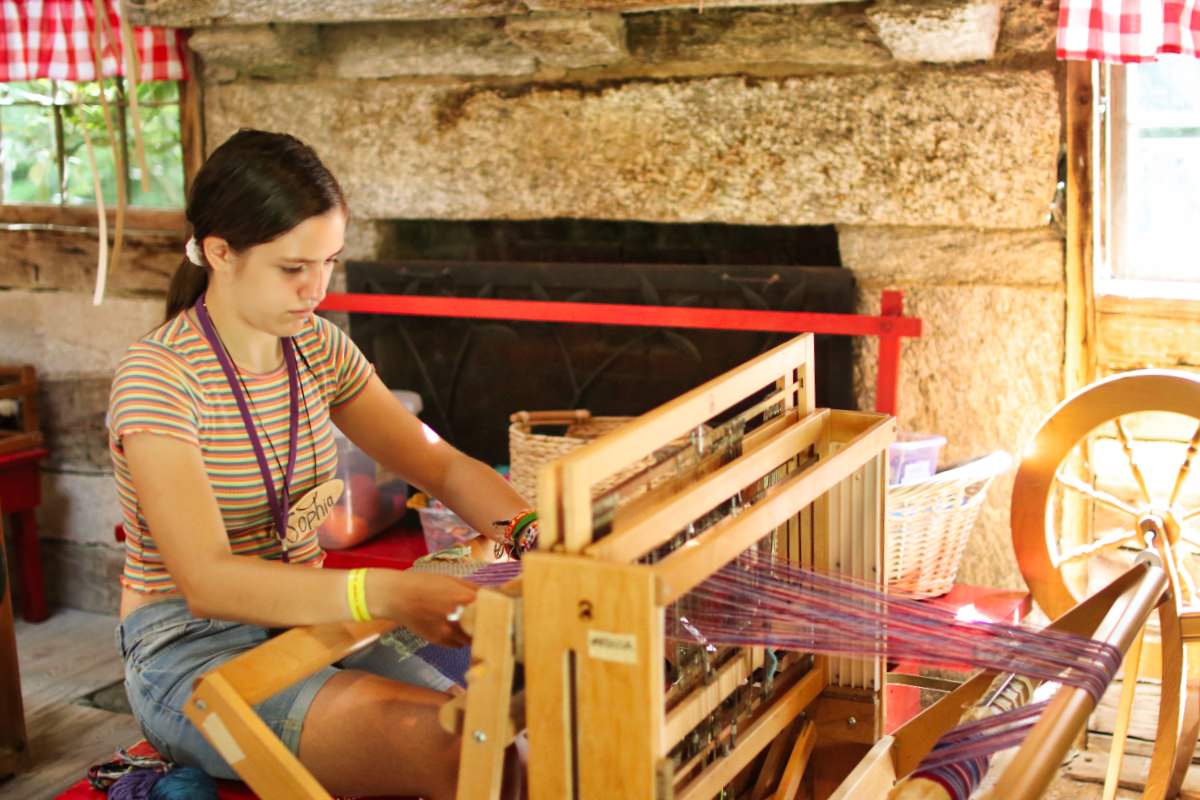
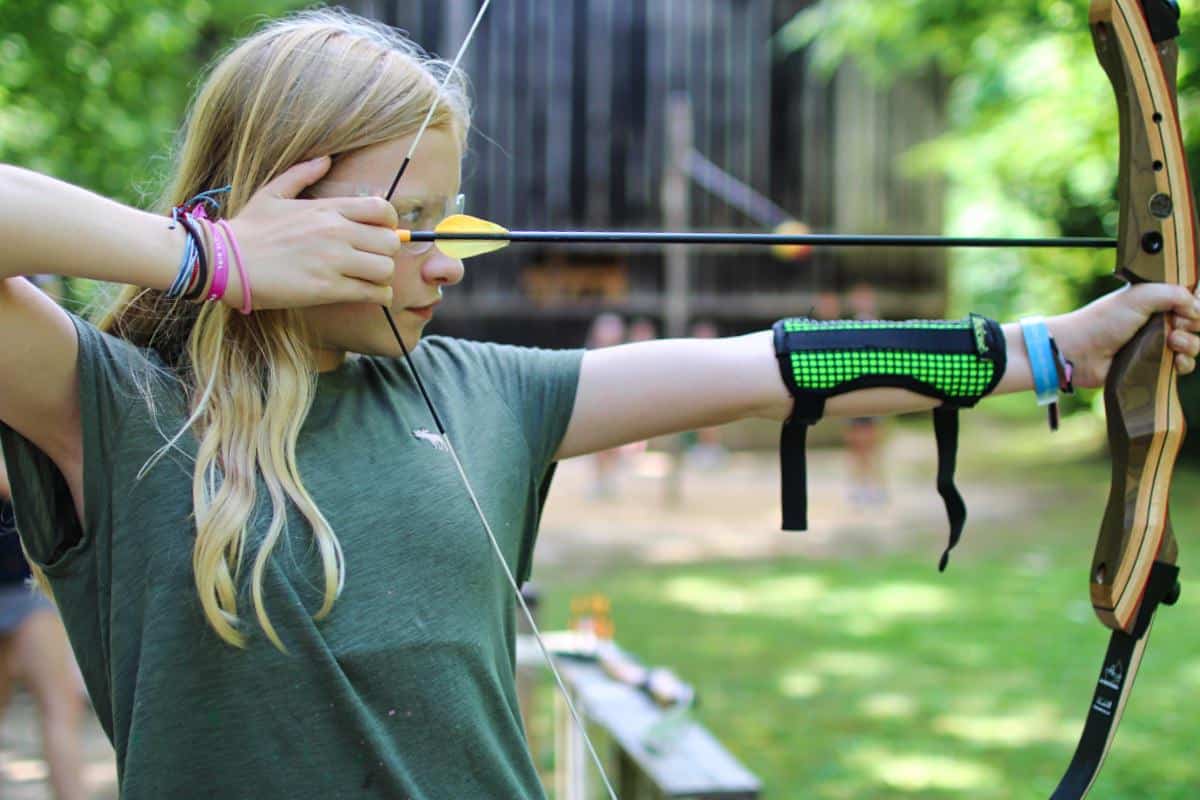
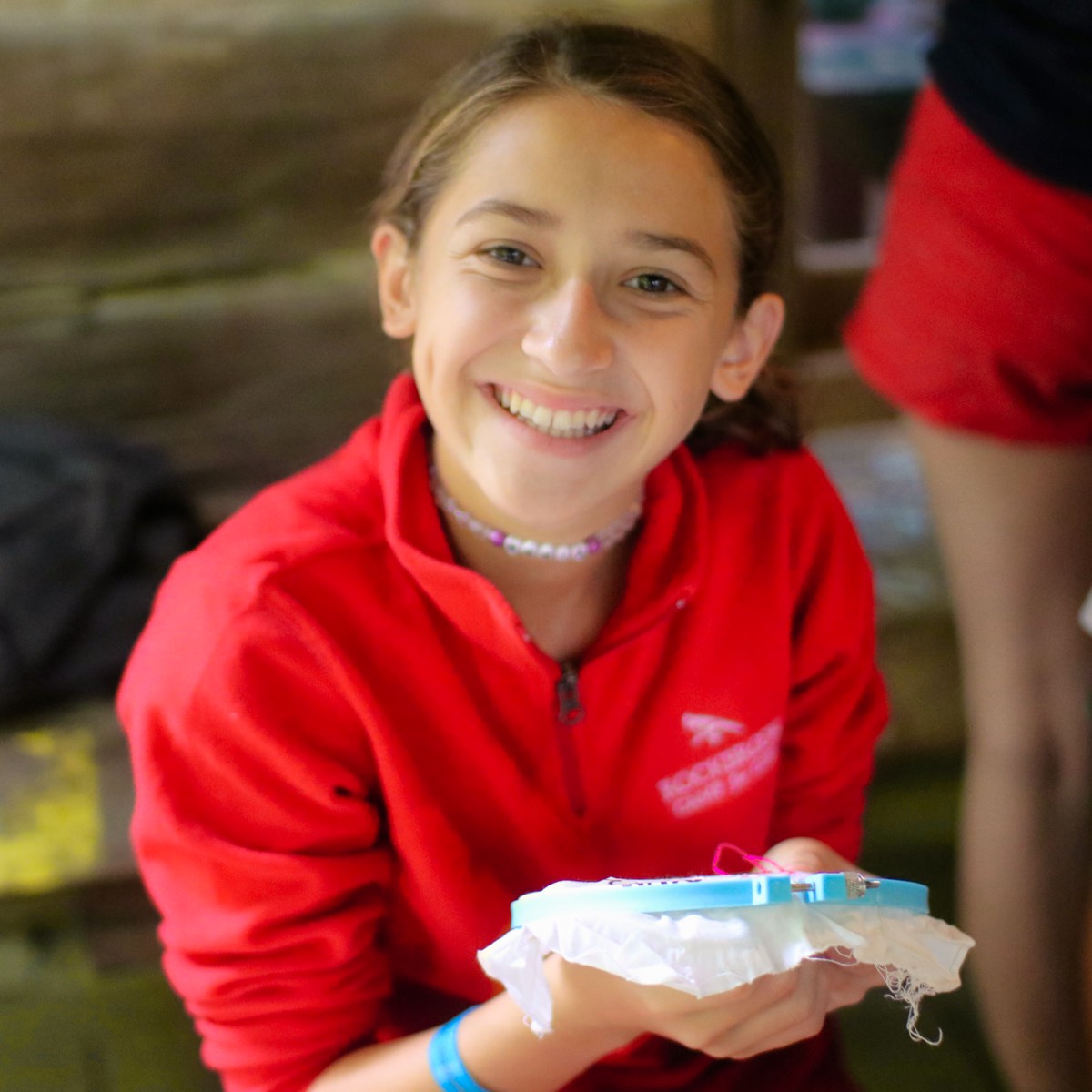
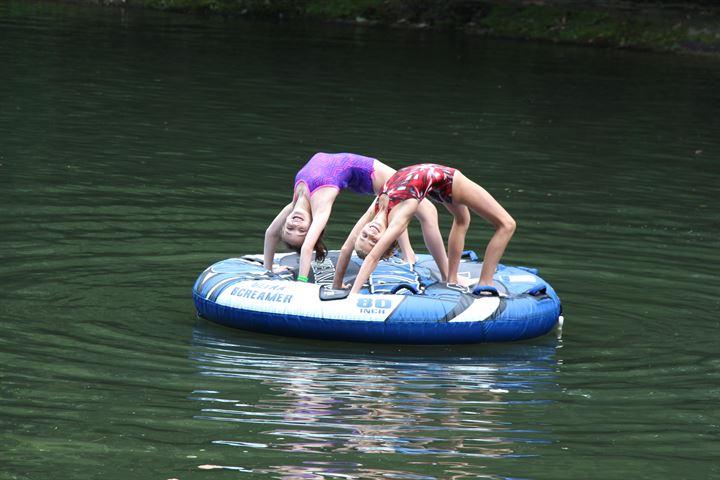
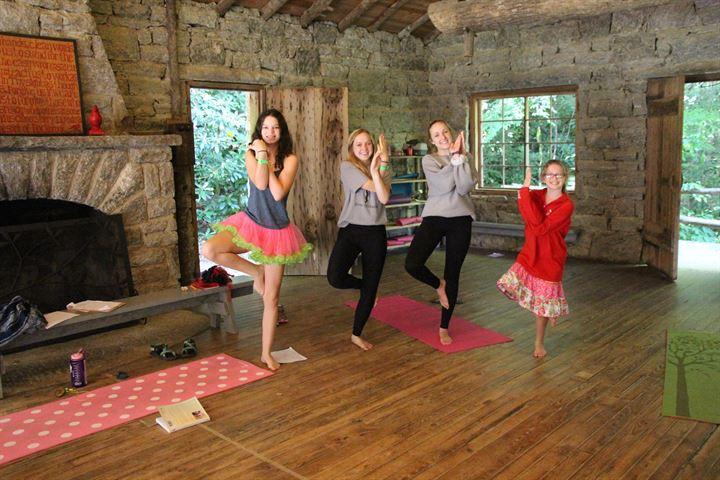
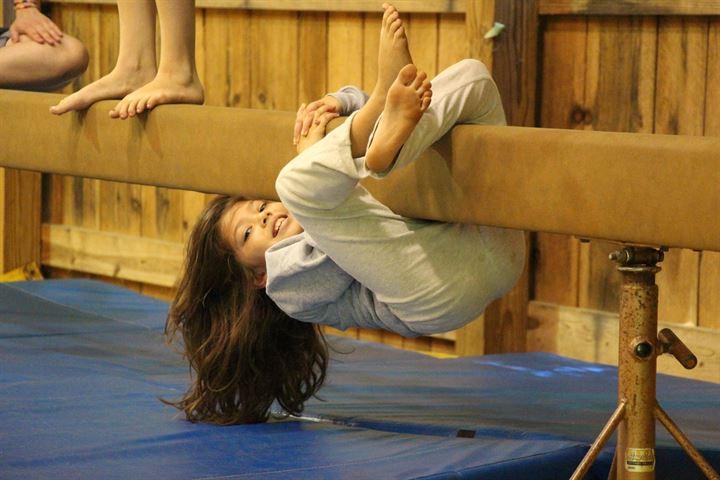
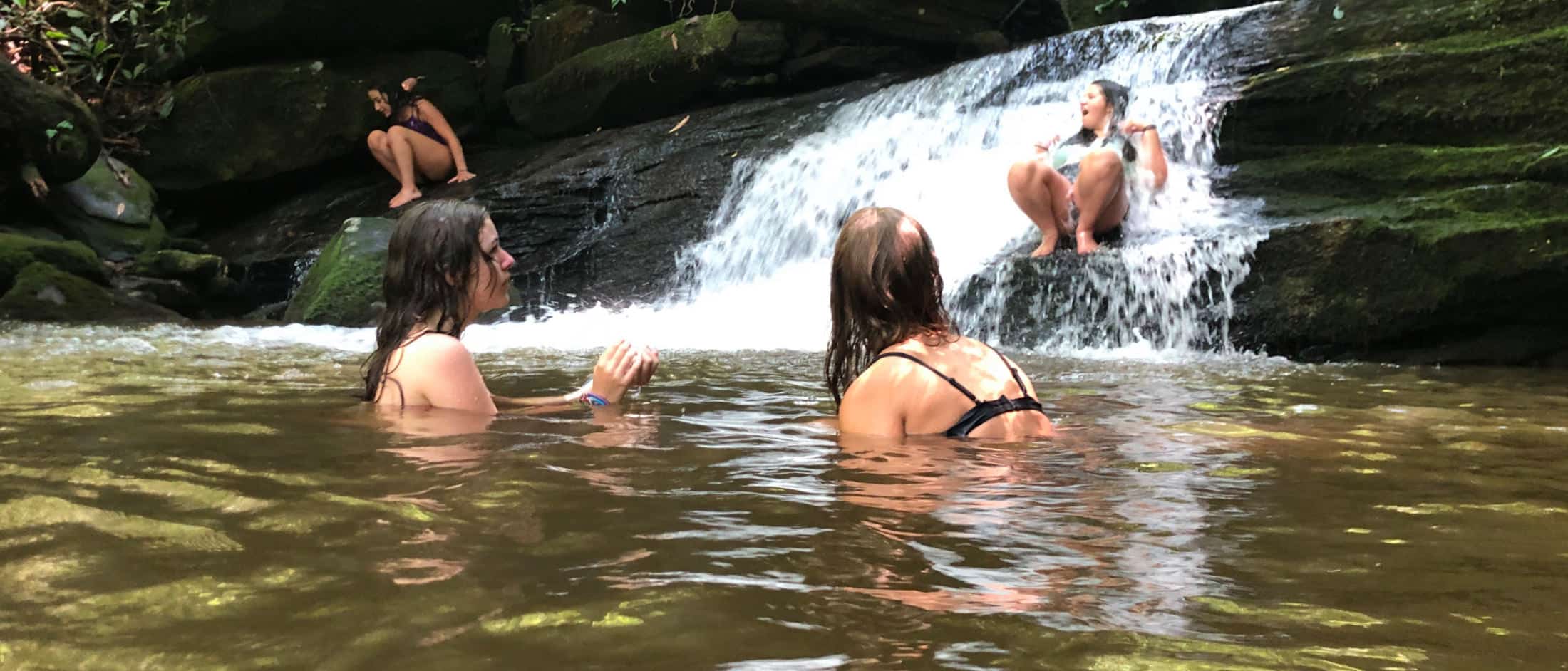
Touring during the summer is also a great way to see many of the camp activities in motion, see actual campers clicking their looms, firing their guns, and rolling their kayaks, for example. Being here in the morning, means witnessing the joyful rush toward the dining hall for muffin break. You’ll probably catch a glimpse of a girl flying past the office on the final zipline of the course. You’re bound to see many examples of artistic creativity as girls work with clay, colorful bottles of dye, yarns, paints, wood and wax. You’ll probably spend a little time at the Rockbrook Riding Center watching girls walk, trot, canter and jump, and at the Rockbrook lake marveling at the range of water activity, from screaming down the waterslide to relaxing in a floating tube. Girls are having a lot of fun at camp, clearly, but realizing that is still not the best reason to take a tour of Rockbrook.
The People of Rockbrook
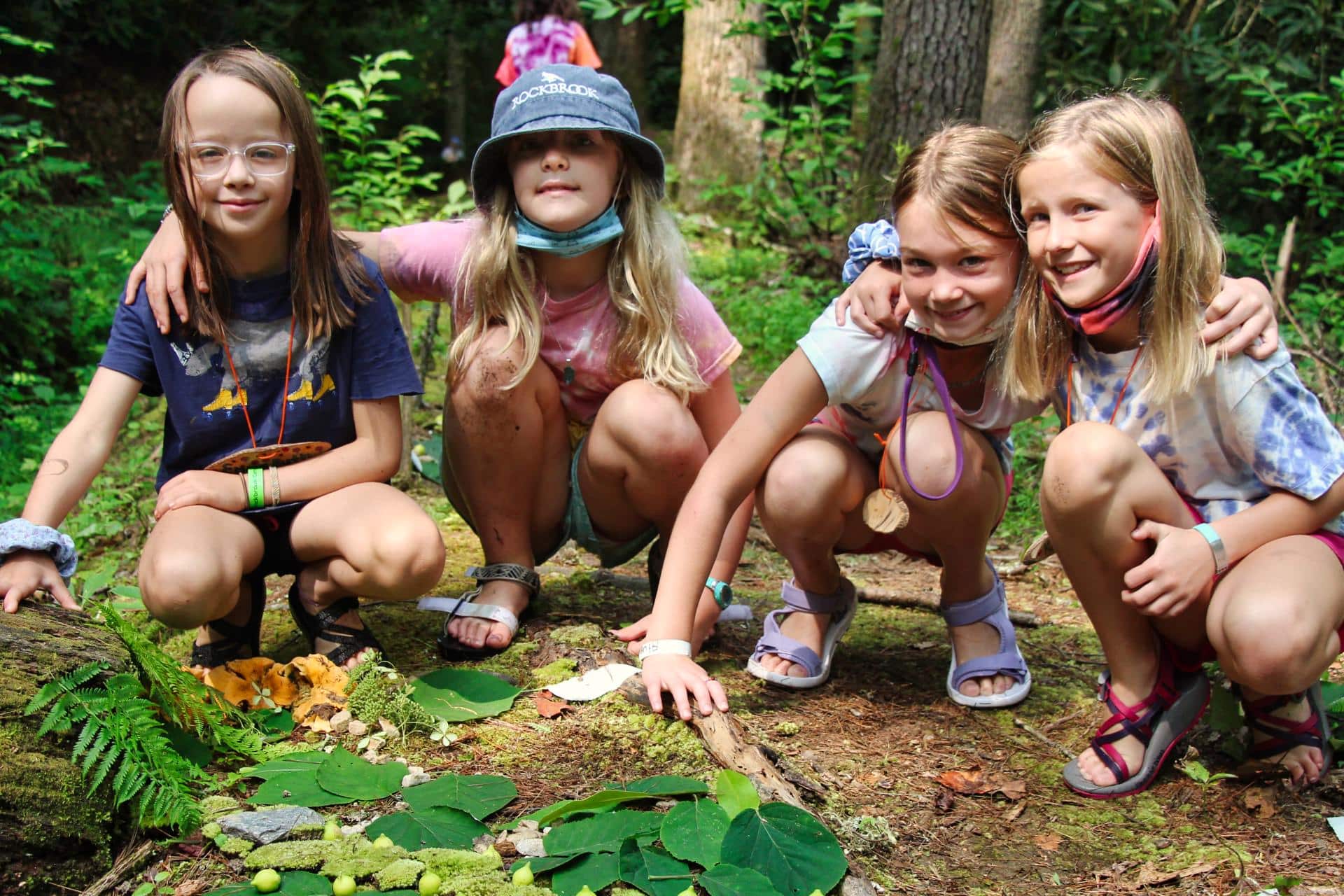
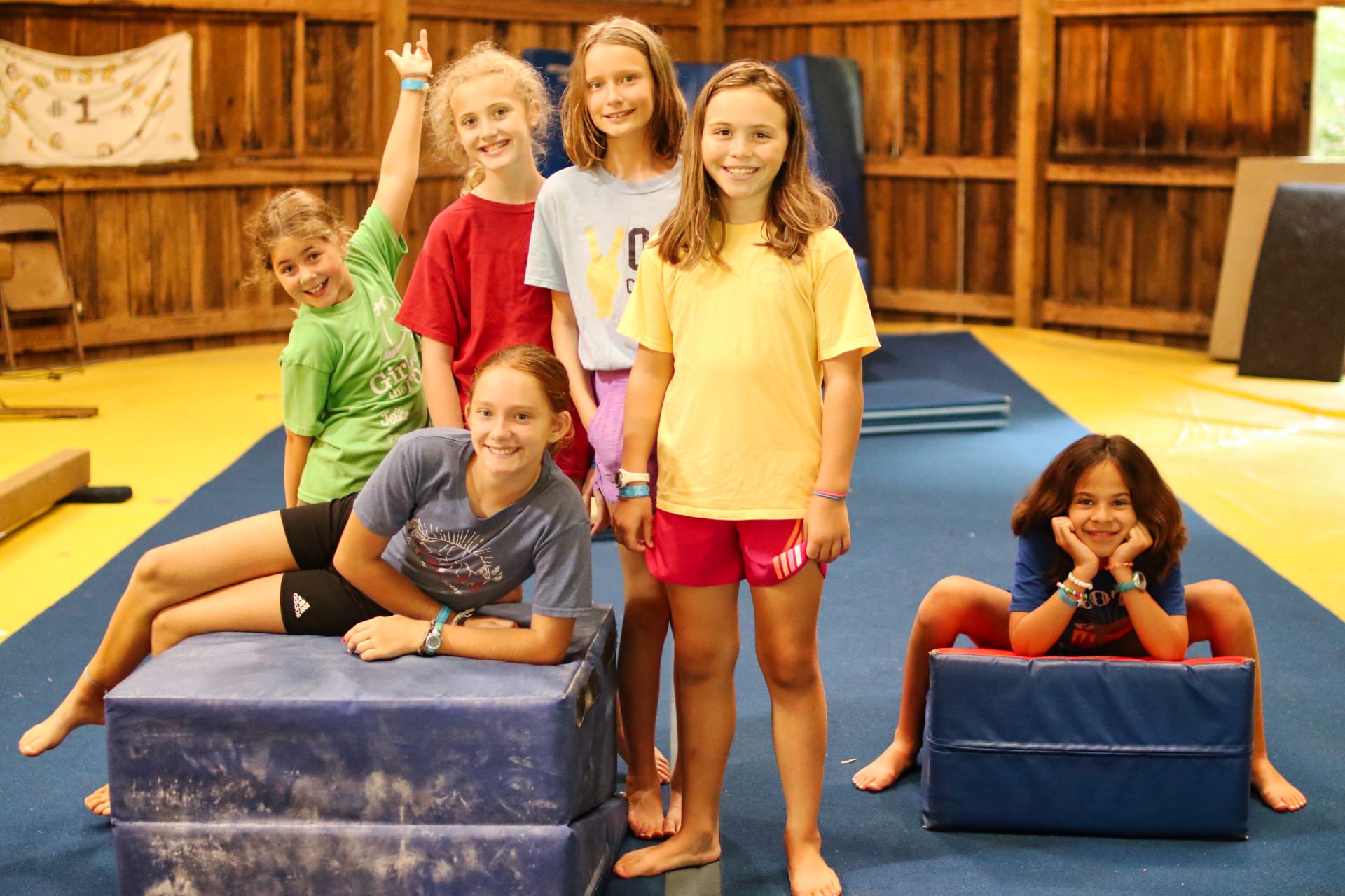
The best part of taking a camp tour is meeting the people of Rockbrook, both the campers and the staff members. There are just really great folks here, friendly caring people, all enthusiastic about camp. You can spot these qualities when you see how the girls treat each other so nicely. They’re paying attention to each other, smiling at each other, showing that they care. Meeting girls at Rockbrook is marvelous because they’re so refreshingly silly, genuinely comfortable and happy. Immersed in the Rockbrook camp culture, you can tell that they love camp. Most will tell you that there’s no other place they’d rather be. It feels that good to be at camp. Once again, it’s the people that make the camp, and hence are the most delightful part of every tour.
If you already send your daughter to Rockbrook, you probably know all this. You’ve seen hints of it in the photo gallery, maybe even read something about it in a letter home. You don’t need a tour to appreciate the beauty, the fun, and the people of Rockbrook. For others, we hope our Web site —its photography, videos, and written descriptions— can help, at least until that time when we can offer tours again. Meanwhile, you can also enjoy a virtual tour of camp.
There’s probably no need to discuss the concept of “helicopter parenting” with camp families. Odds are good they already know how some parents can be “overprotective” or have an “excessive interest” in what their children are doing. Like a helicopter constantly hovering above, parenting can become excessive if children aren’t allowed to branch out on their own to try things without mom or dad always quick to swoop in to the rescue. It can be difficult for parents to “let go” like this. Camp parents, though, are presumably different. After all, they are choosing to “let go,” to send their children away into an environment where they will make many decisions for themselves, confront regular challenges on their own, probably struggle, and perhaps even fail at times. The independence gained, along with the feelings of confidence on competence that come with it, are valuable assets as a child grows up. I’d recommend reading How to Raise an Adult by Julie Lythcott-Haims to better understand this modern phenomenon. I can also recommend her 14-minute TED talk if you are really interested.
This is not to say camp parents are completely immune to helicoptering influences. We can’t really help but wonder how our girls are doing when they’re away at camp. Are they eating right? Are they remembering to take a shower? Brush their hair? Wear a clean shirt everyday? Are they having a good time? That’s the big one, right? Camps like Rockbrook understand this impulse and realize that all parents, to one degree or another, need some kind of reassurance that their kids are OK when they are away. That’s why, for example, we have our cabin counselors write letters to parents updating them. It’s also why we maintain a daily photo gallery, and post the occasional videos during each camp session.
The Photo Gallery Trap
At the same time, checking the photo gallery can become an obsession for some parents, multiple times a day, combing through every photo for even a glimpse of their child. From afar, this form of helicoptering interest seems harmless enough as long as the child at camp is unaware of it, and the parent can resist the instinct to reach out and help in some way. We don’t want the photo gallery to energize the parental snowplow, so to speak.
Why Signal Gestures Hurt Your Camper
One form of this helicoptering goes too far, however, and when parents fall into this trap, their child’s experience at camp often suffers. So let me warn you so you can, I hope, resist the urge to over-parent your child’s camp experience like this. The trap is to establish some hand gesture, like a “thumbs up,” that you tell your child to flash when their photo is being taken as a coded signal home about how camp is going. Akin to a “pick up deal” where a parent promises to “come get you if you’re homesick,” this kind of messaging might seem innocuous, but can be a real burden for the camper. It effectively is removing her from the moment, distracting her from the people and activity around her with thoughts of evaluation rather than true participation. When sending your daughter to camp, it’s simply best not to tether her to home in this way, and instead to send her off by reassuring her that you are confident in her ability to handle life at camp independently.
I’m sure you know that camp is the ideal place to practice this independent self-efficacy, and this is one of its main benefits. Oddly if we’re not careful, our parental instincts can undermine the opportunity for our girls to grow while away at camp. Some camps are so concerned by this signal phenomenon, they have banned campers from making signalling gestures and instructed their photographers to delete photos that appear to have them. My hope is that Rockbrook parents will see the problems associated with all of this, park their helicopter for a few weeks, and trust that their children and our staff at camp can work through any problems that may arise, and together ultimately create a rich, rewarding, and enjoyable camp experience.
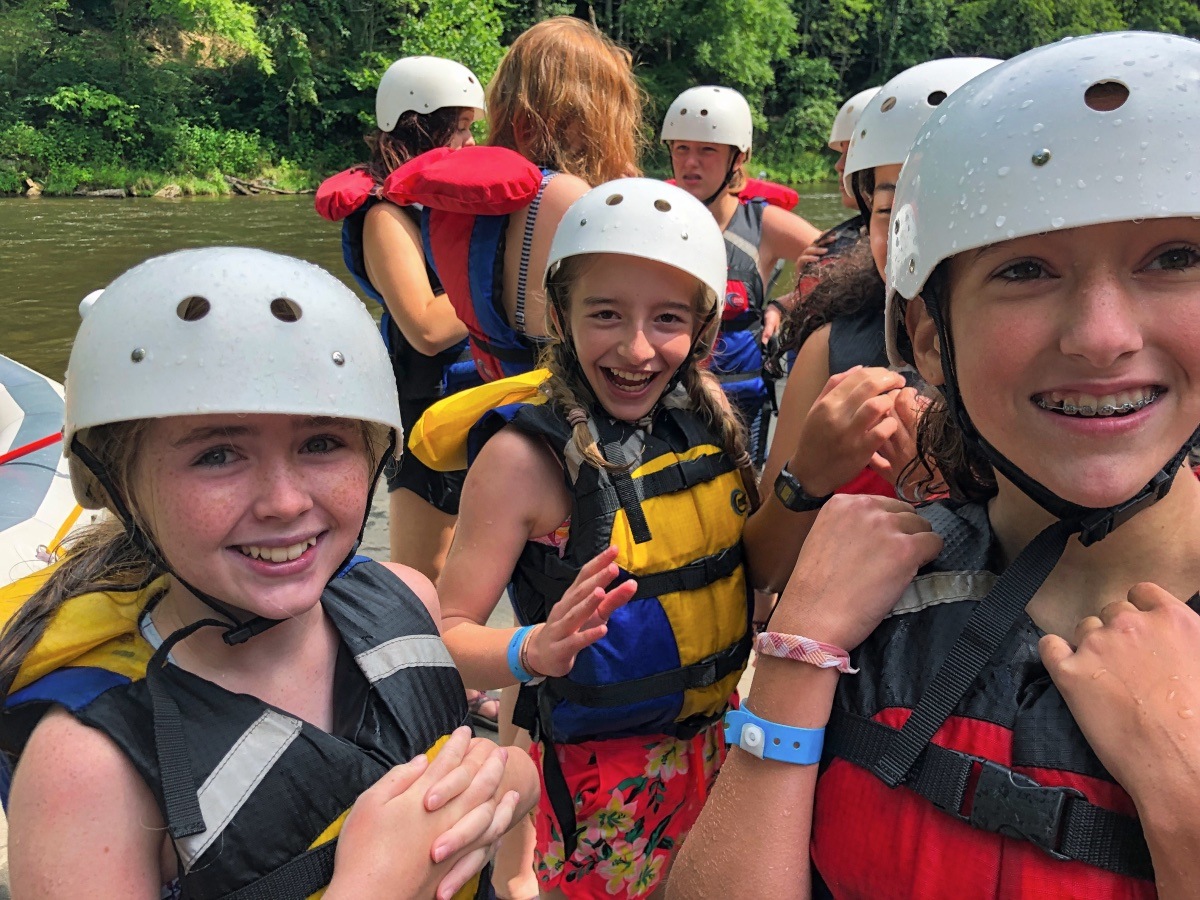
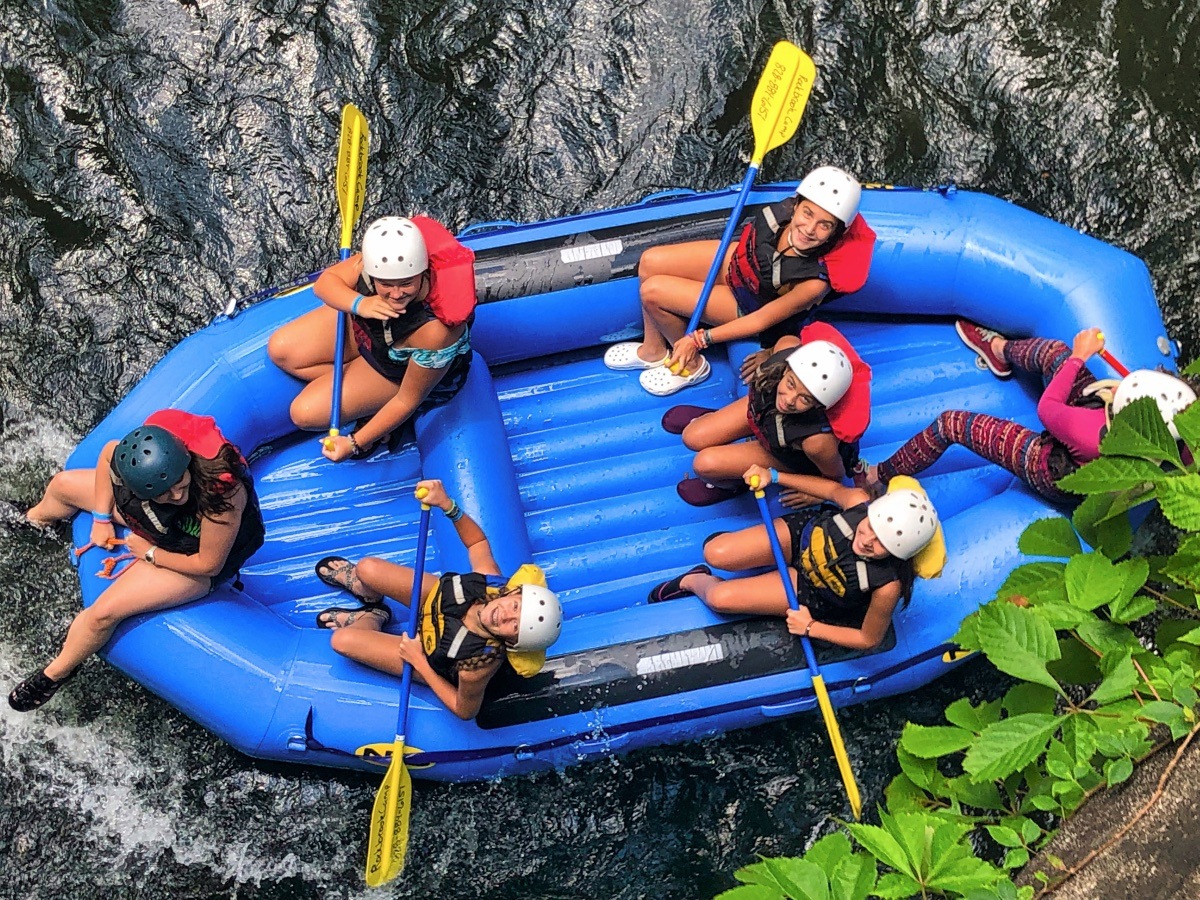
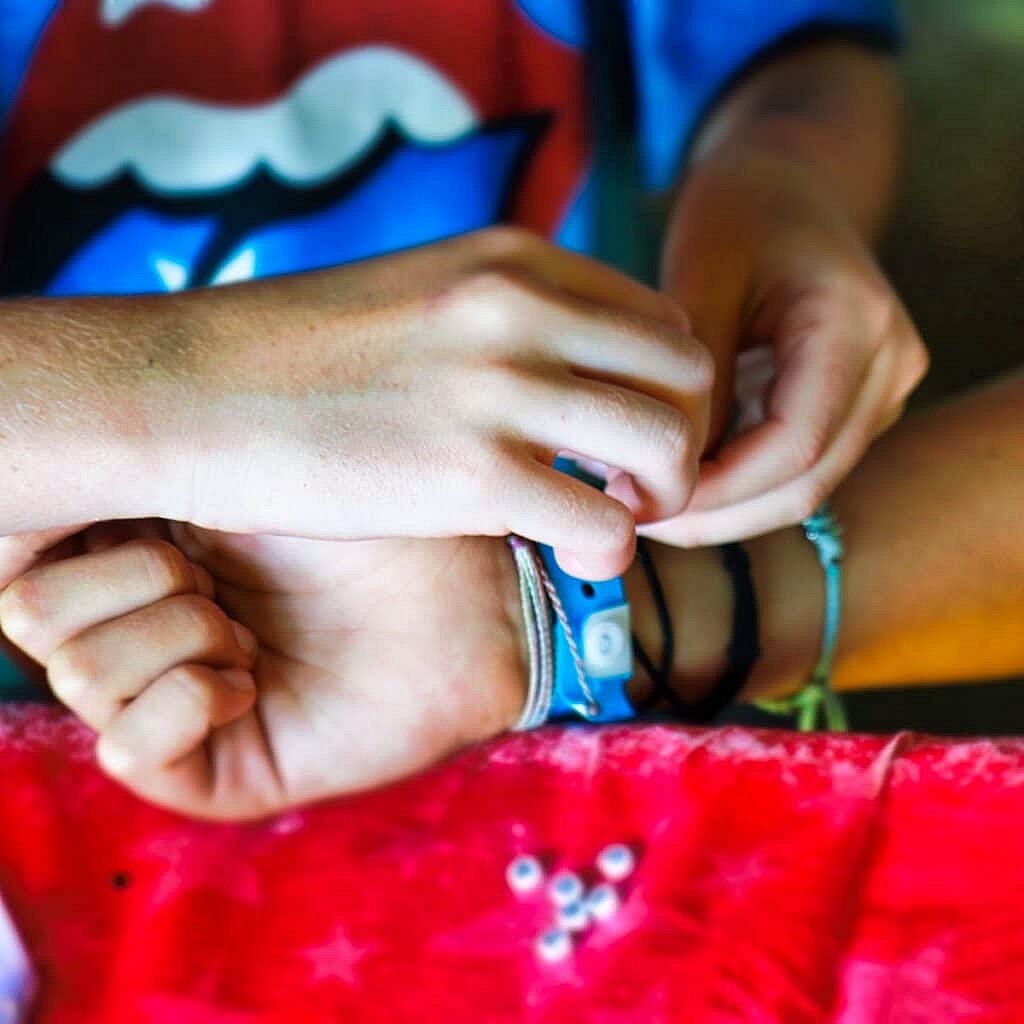
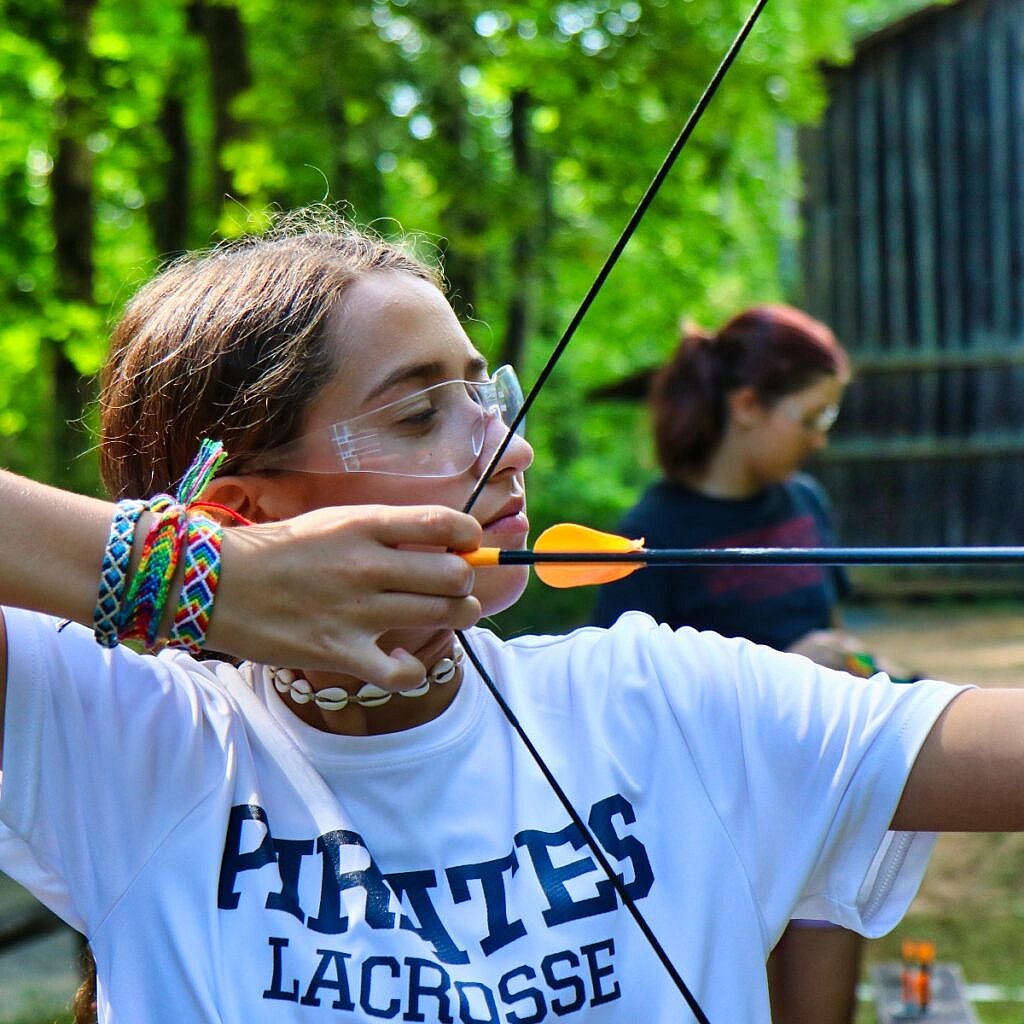
Meanwhile, we’ll continue to enjoy camp! Your girls and their friends will splash and scream with delight rafting the Nantahala River. They’ll climb the Alpine Tower and Castle Rock. They’ll swim and float in the Rockbrook lake, tie increasingly elaborate friendship bracelets, shoot more arrows, and sing even louder songs. They’ll be surprised by hidden talents and creativity. They’ll find kindness and caring permeating their days, a refreshing tech-free, authenticity to what they’re doing and with whom they’re doing it. Surrounded by the beauty of these wooded mountains, they’ll explore and be amazed by what they find in the natural world. They’ll laugh harder than they have ever laughed before. They’ll learn a lot about themselves, and be proud of who they are and what they can do. They’ll make more fond memories and best friends than you can count. They’ll be at camp.
You may have heard the term “snowplow parent” by now, for example in the wake of the recent college admissions scandal that revealed certain parents were essentially bribing colleges and universities to admit their children. The term refers to well-meaning moms and dads taking too far their desire to help and guide their kids, and, like a snow plow, clearing away obstacles that might impede their path to success. This impulse to protect kids from struggle, to shield them from failure, to rescue them from anything frustrating or uncomfortable is apparently increasingly common, especially among more affluent parents who have the means to accomplish these goals. After all, parents “want the best” for their kids. We want to “give them every advantage” we can. Since the moment they were born, we parents have felt it’s our duty to assist and guide our children.
In their 2018 book, “The Coddling of the American Mind: How Good Intentions and Bad Ideas Are Setting Up a Generation for Failure,” Greg Lukianoff and Jonathan Haidt address what they describe as an increasingly prevalent “culture of safetyism” that leads to “fearful parenting” and stymied educational settings. While mostly concerned with events on college campuses, the book traces problems back to parenting and assumptions we parents hold regarding the experience of hardship, the infallibility of personal feelings, and the belief that “life is a battle between good people and evil people,” between us and them. Lukianoff and Haidt suggest these ideas lead to our coddling of kids, and yes to us becoming snowplows eagerly removing all forms of adversity for them.
The Danger of Safety-Driven Parenting
The danger is that this form of safety-driven parenting, especially when established by these three ideas, ultimately hampers our kids’ development. Solving every problem for them (in some cases far into adulthood), swooping in to the rescue, “infantilizes them, emotionalizes them, and tribalizes them,” as Andrew Sullivan put it. It robs them of opportunities to learn from experience, creating fragile, nervous, helpless young people who never grow up to be strong and independent.
I bring all of this up not to sling parent-shaming mud around, but rather to bring our attention to the dangers of being too focused on making our kids’ lives perfectly comfortable, safe, convenient, and entertaining. This may sound strange coming from a summer camp director since we regularly work to create exactly this kind of experience for kids. We make sure camp is super fun. At the same time though, life at camp is so different from everything at home— different food, activities, relationships, and the general outdoor environment —it inevitably includes regular moments of challenge, struggle and adversity. And there are bound to be disagreements, even hurt feelings, in this kind of close-knit community. Like life in the outside world, for both children and adults, we occasionally experience setbacks, at times feel frustrated, and perhaps wish things were different than they are.
Camp as the Opposite of Coddling
Most importantly though, there are no parents at camp, nobody to plow the road, to coddle, or smooth all the bumps from the path. Instead we have a supportive community of people that encourages girls to try things on their own, that allows a measured degree of freedom to explore, and that carefully guides us without fear of failure. Camp girls learn that they can handle these moments. They don’t have to wait for help. They don’t need someone to “pave the jungle.” On their own and away from mom and dad, camp girls cultivate a greater ability to tolerate discomfort. Without worrying, they grow more confident, build a sense of grit, and a habit of resilience.
In this way, I think life at camp is both incredibly fun and powerfully educational. Camp girls have daily experiences that prove they are competent and capable. They learn that they can address moments of hardship, confidently move beyond what’s comfortable, and make strides despite challenges. Sending your daughter to camp is the opposite of coddling. It’s trusting that she’ll be able, with perseverance and the support of the caring camp community, to meet the occasional challenge, tolerate moments of discomfort, and grow in the process. No plow necessary!
The other day a father said to me that the break from technology use, particularly the break from “being on a smartphone,” that camp provides is “one of the best things about it.” While I was sympathetic, as I think most parents are these days —all of us wishing our kids weren’t so tightly tethered to their phones— I was surprised this dad had singled out this camp policy as a benefit. It’s odd that there’s something many of our kids use everyday during the school year, that when taken away, it’s considered a good thing.
Why Rockbrook prohibits smartphones at camp is obvious in some ways. We want girls to focus on camp, not be concerned about what’s going on otherwise. For example, being able to communicate with friends and family “back home” could lead to more severe bouts of homesickness. For many, the allure of their smartphone would be a distraction from, if not a serious impediment to, all that camp has to offer. Camp life means bodily inter-action with real friends, stimulating exploration of the natural world, the challenges and rewards of living in a close-knit community. It doesn’t take much imagination to see how this is the opposite of the virtual, filtered and idealized world portrayed on our tiny screens.
But I think this dad was implying something more serious. Perhaps he was expressing the hunch many of us share, namely that our smartphone use is causing personal damage, something like smoking was for a previous generation. There are consequences lurking among the conveniences.
We’ve already seen this argument being made, that smartphone use, particularly among adolescents, is a public health concern. For example, Professor Jean M. Twenge has attributed the high rate of teenage depression and suicide, anxiety, unhappiness and loneliness to current smartphone trends— particularly as social media has become a substitute for face-to-face socializing. I wrote about this last summer.
The Insidious Consequence
OK, but there’s something else, another reason why putting down their smartphones, taking a break from the flicker of social media and Internet entertainment, is a good thing. And it’s because there’s another more subtle, and therefore more insidious, consequence to their use. It’s this:
a significant weakening of self confidence.
I believe too much time residing in the virtual world of the Internet, ingesting the narrowness of social media posts, relying exclusively on passive electronic entertainment, and limiting one’s knowledge of the world to what’s been edited, photoshopped, or curated according to unspoken biases, are habits that sow feelings of doubt, inadequacy, and often anxiety. There’s an inherent distortion to what is learned from these sources that make one’s personal abilities, possessions, even appearance seemed flawed or deficient. I think there’s real power here, and over time, who we are can be shaken and our confidence undermined.
What This Means for Young People
For young people who are at a critical time in their lives when they are developing a sense of self, I think the negative effects can be even more severe. Using your phone can too easily be a crutch, an escape from challenges, a constant lifeline effectively crippling one’s sense of independence. You can see why using this technology can become a habit; it’s what comforts you when things get tough, and while that may satisfy, it can likewise create further anxiety that deep down you aren’t capable. This seems to me to be a dreadful consequence.
So yes, it is an important benefit to camp life. Ditching technology not only allows our campers to focus on camp, to boost their independence living away from home, and to engage the real world and real friends, it also gives them a break from the confidence killing forces that come with smartphone use. Camp life boosts girls’ confidence, and excluding technology is an important part of that process.
All of this makes me wonder what we should be doing the rest of the year when the communication benefits of smartphones are too important to give up. There seems to be no choice but to accept the negative consequences that come with the technology. At the very least, if we recognize those consequences, we might protect our children when they are most vulnerable by limiting their access to smartphones, and providing them more camp-like experiences. We know why camp is great. Let’s do more of that.
There’s a comment I hear fairly often, I’d say several times a year— “I wish Rockbrook had a summer camp for adults.” Sometimes moms, and more rarely dads, look fondly on the camp experience their daughters are having, and can imagine themselves enjoying it too. It’s remarkable that this adult desire to experience camp can arise simply by witnessing camp life from afar. The photo gallery, occasional highlights videos, our social media posts, and this blog all paint an attractive picture, one that proves camp is great for the girls themselves, but also somehow is evocative for adults too. So how about it mom and dad? Do you want to go to camp?
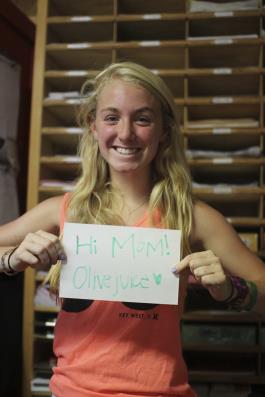
On one level, I suspect most adults would say no. No thanks! Living at camp is too difficult and requires too many compromises we grown ups have come to happily avoid. Sleeping in a room with nine or more people, having the weather as a constant personal companion, relinquishing all technology (no smart phones, television, or news updates!), accepting limited food options, and being physically active most of the day, all sound like “roughing it,” and would most likely be unpleasant for the average adult. In these ways and others, camp is fun for kids, but most adults won’t get a kick out of bug juice, so to speak.
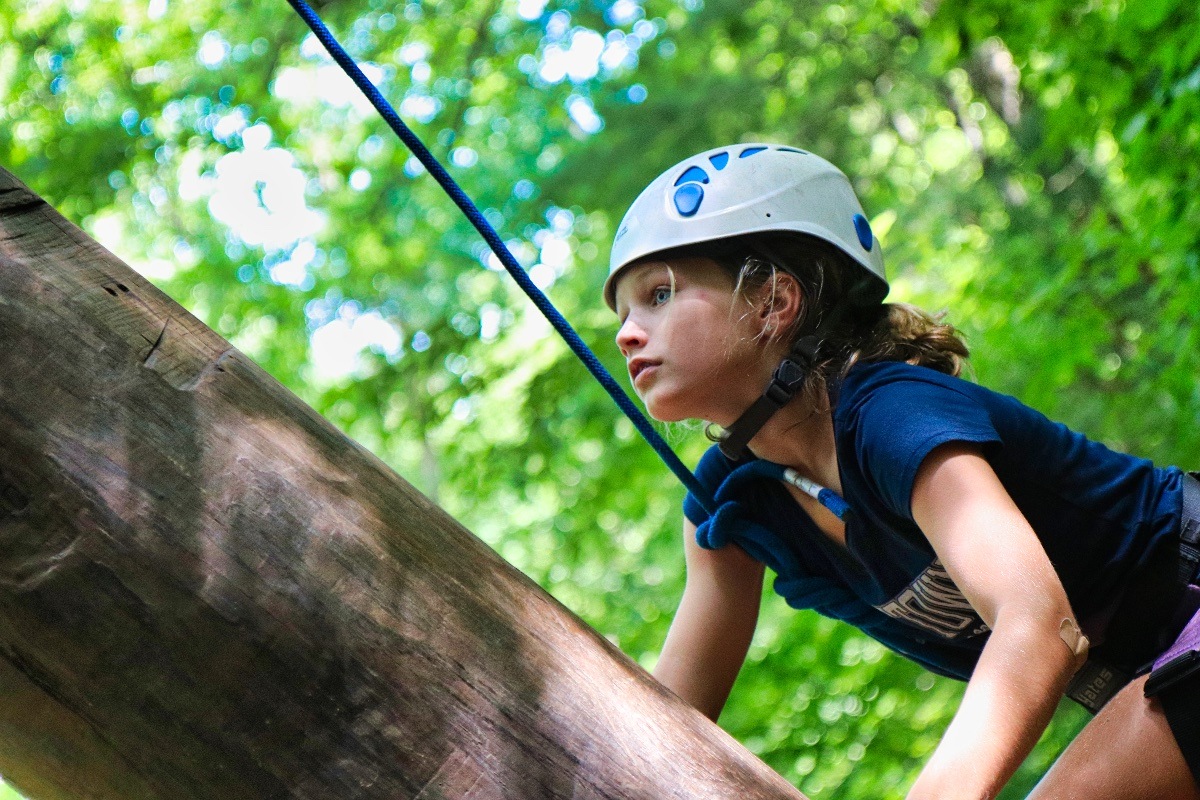
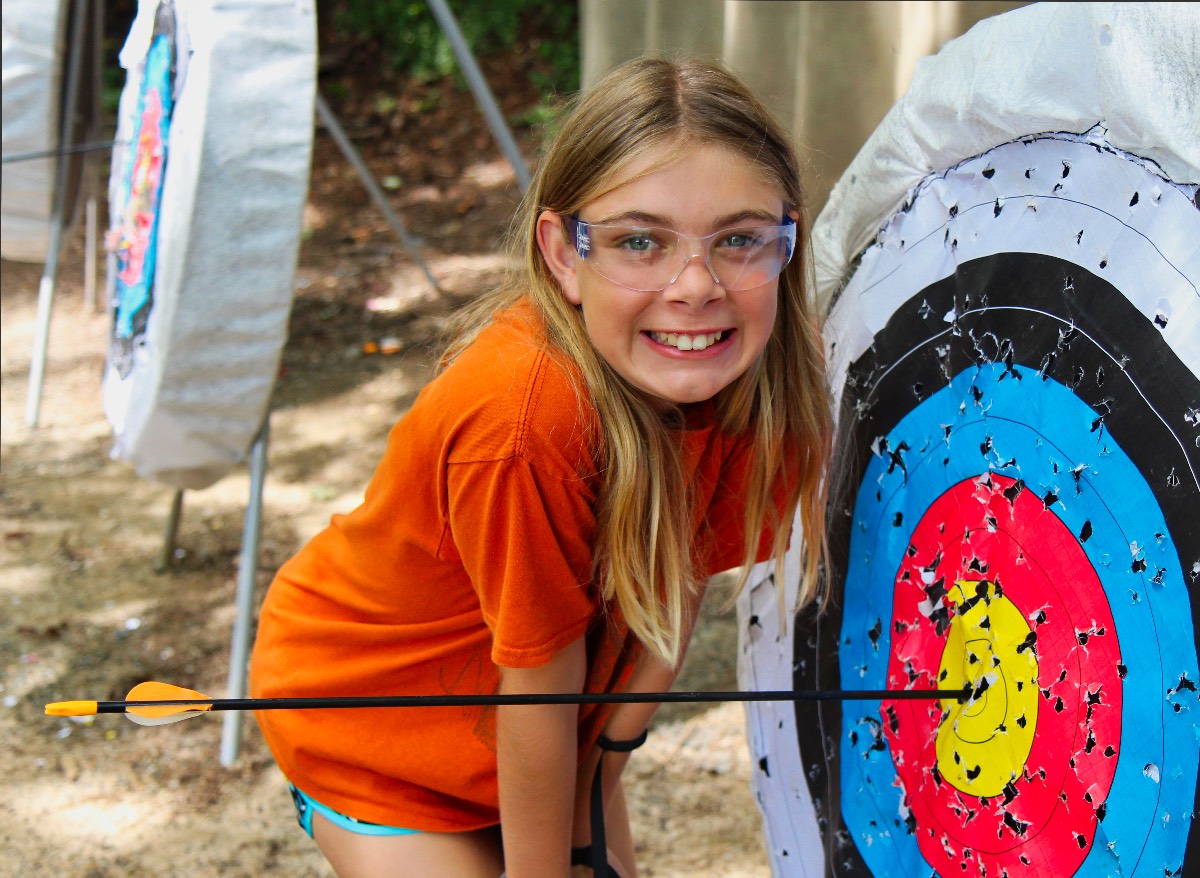
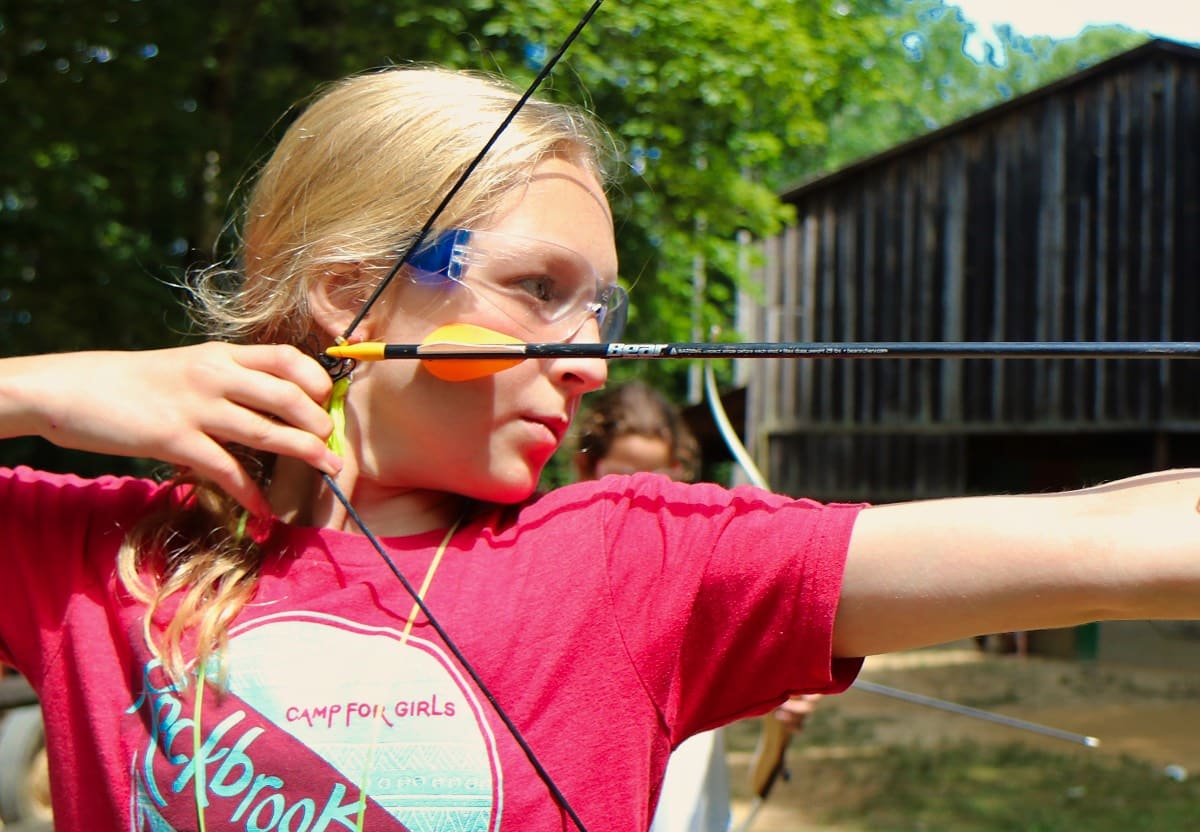
Perhaps the activities are what make some adults yearn for camp. They too want to shoot an arrow and a real gun, climb the high ropes course tower and a real rock, swim in the chilly lake and fly high in the trees on the zipline course. Many of the activities at Rockbrook look intrinsically rewarding— throwing a pot on the potter’s wheel, finding a weaving rhythm on one of the vintage floor looms, tying and dying a t-shirt, for example. What a nice change it would be from our mundane 9-5, to raft the Nantahala River, backpack and camp in the Pisgah Forest, or simply enjoy the mountain view high up on Castle Rock. For some adults, camp looks enjoyable because they could try all these activities that are ordinarily difficult to experience otherwise.
It’s Not Really About the Activities
That seems too simple though, too much like an amusing holiday. Rockbrook parents know that camp isn’t just entertainment. In fact, some of what we do here isn’t fun at all, and yet the girls will tell you they love camp despite the chores, the bugs, and the challenges of being away from the comforts of home. As we’ve said before, campers embrace the difficult aspects of camp life because they are strengthened by the positive community culture of Rockbrook. Being included in a community of kind, caring and generous people helps ignite confidence and nurture resilience in everyone. The scary stuff just gets easier when you are so constantly and genuinely supported for who you really are.
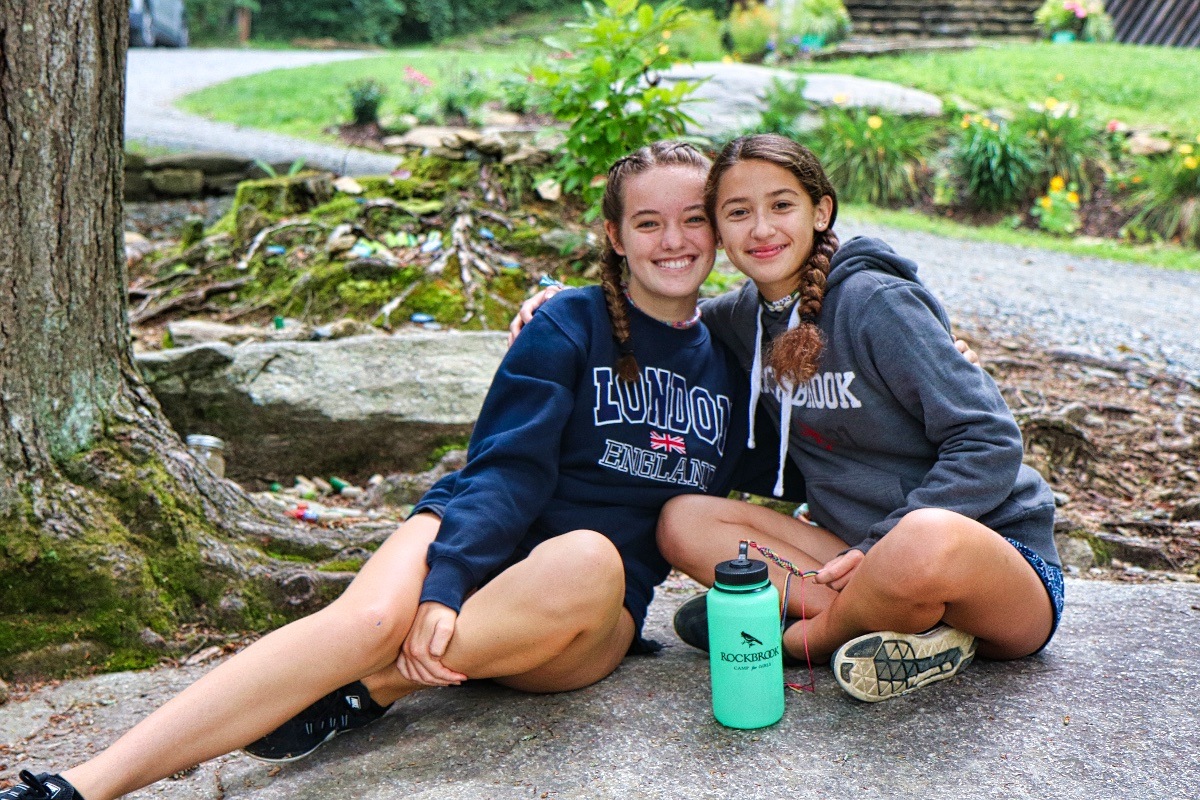
Again, I believe it’s the special community here that explains why the girls at Rockbrook tend to feel so happy and relaxed throughout the day, breezily chatting and comfortably enjoying each other’s company. That’s why they make their best friends at camp. When you start with a collective spirit of positivity, and include regular moments of silliness and celebration, almost every day becomes a chance to laugh together, sing together, and grow closer no matter what the activities. There’s a certain presence that springs from all of this throughout the day. Life at camp feels somehow more real and more meaningful, rich with opportunities. At Rockbrook, we spend our days in ways that are simply very, very good.
The Real Reason Adults Long for Camp
In some ways then, we adults long for camp days because we recognize their inherent good. As the routine working world demands we maximize productivity and efficiency, camp represents a place where we can put our relationships with people first, a cultural haven defined by values that foster wonderful details and beautiful surprises. Just as it is for our children, we’d like to experience these same sorts of camp days. After all, we know there’s a life well-lived to be found among camp days. A camp like this… for adults… that would be nice.
It had never crossed my mind that new situations involving unfamiliar people or circumstances could be uncomfortable for some, especially friends I knew well. I thought this was a skill acquired by adulthood, one that came with age. I had obviously taken for granted these social skills that I acquired at camp, where I’ve been coming since I was 7, which required me to meet new people and try new things every summer.
I’ve realized I have been mistaken in assuming situations like this were easy for all, as I have often purposely met other moms outside of school, meetings, and sporting events to prevent them from feeling uncomfortable by walking in alone. I’ve recognized that the inexplicable confidence and laughter still comes naturally for me, as I was the only mom who stuck to the dress up plan and showed up to the premier of Hunger Games with pink hair. I’ve come to better understand that the unfamiliarity of people and situations surpasses the comfort zones of many, making the prospect of walking into a room with strangers and making a friend seem impossible.
I’ve now developed an even better appreciation of how these skills are developed as I’ve gotten the privilege to watch your children cultivate friendships and give birth to these character traits here at RBC. I recognize the confidence they develop when they come to camp not knowing anyone and yet leave with lifelong friends. As a mom of 3 girls, these are skills I can’t teach my children. These are skills that I’m grateful they have had the opportunity to gain here at Rockbrook.
Skills I Can’t Teach My Children
I’ve also come to the realization that some of the tightest bonds I’ve formed have been with friends who were “camp girls,” long after our camper days were over. They were instantaneous friendships, because we immediately knew we were alike in so many ways. We had survived screened cabins, appreciated nature, respected various personalities, experienced new things, desired leadership, and possessed camp silliness.
If you are a parent of a camper reading this, let me assure you that you are providing a lasting legacy for your daughter. This opportunity is equipping her with a skill set that may seem invisible at first but that she will utilize throughout her lifetime. There are no words to adequately describe the bond camp creates or the traits acquired here, but the experience speaks for itself. She will continually reap the benefits of her camper experience throughout her life, and it will shape the person she becomes as a grown woman.
Camp birds are of one type of feather, and the bonds of the flock will always keep them together!
“How did we come to meet pal? What caused our paths to blend? ‘Twas fate we came to Rockbrook, and you became my friend.”
The first time I ever saw Rockbrook was in July of 1999. I was eight-years-old, and my two-week session was to be the longest I had ever been away from my parents. I was so nervous that I could hardly sit still in the car ride up the mountain. Whenever anybody asked me, of course, I’d tell them that I couldn’t wait for camp to start. I had memorized the activities listed in the catalogue, and picked out exactly which ones I was going to sign up for first (Riflery, Archery, Sports and Games, and Tennis, if you were wondering). I was excited. But I was also scared to death.
I vividly remember standing halfway up the hill that day, with my counselor’s hand on my shoulder, watching as my parents got into their car to leave.
It’s not too late, I remember thinking to myself. I can still call to them, or just jump in the car and let them take me home.
But I stayed quiet, and I stayed put (I was much too stubborn, even then, to admit that I might have been scared), and it wasn’t long after I saw their car disappear down the driveway that I forgot all about those butterflies that had been giving me second thoughts. That moment on the hill was the only instant of homesickness that I ever remember feeling at camp. Of course, thinking about it logically, fifteen years later, I know that there must have been other moments in which I felt lost and overwhelmed in this new environment—but those moments are so fully overshadowed by the memories of my first camp friends, the first time I ever held a bow, and my first time stepping into the most wonderfully boisterous Dining Hall my eight-year-old eyes had ever beheld, that only that first instant of uncertainty has managed to stick in my memory.
There are plenty of campers, new and returning, who come to camp every year and don’t look back, just as I did. They are too excited and too busy to have any time for homesickness. But there are just as many, if not more, who don’t find it so easy to be away from home for the first time.
Homesickness Takes Many Forms
I have seen campers deal with homesickness every year that I have been at camp, each in her own way. There are those who hold it in, keeping a stiff upper lip with the understanding that it’ll get easier if they don’t think about it. There are those who become sad and listless, and can’t bring themselves to fully partake in their activities. There are those who throw temper tantrums. And then there are those who are simply scared, terrified to be away from the safety net that they know and trust for the first time.
As a parent sending your child into someone else’s care for the first time, I know that the thought of which of these reactions your own daughter will have must be at the forefront of your mind. The truth is, there’s no way to tell what form her homesickness will take—if any at all—until the day comes. It may be that your daughter takes to the camp lifestyle like a duck to water, and will beg you on closing day to let her stay forever. On the other hand, it is just as possible that you will be getting a letter from her three days into camp, begging you to come and fetch her right away, with her tearstains circled on the page for good measure.
Your first instinct upon finding out that your daughter is scared and upset without you will of course be to come and rescue her immediately. After all, if she’s afraid, then how could she have the presence of mind to learn and grown in all the ways that camp has to offer? If she is crying to her counselor during rest hour, how will she have the time or energy to make friends with her peers? While this is a perfectly understandable response, I hope you’ll think twice before taking the step of ending her camp experience before it’s really even begun. And it might not be easy. In all the preparations leading up to camp, in all the conversations with your daughter about what it will be like for her to be away, it’s easy to forget that your daughter’s homesickness will be just as hard for you.
What Parents Should Remember
So if the moment comes that you find yourself reaching for your keys, considering driving to Brevard to pick up your daughter without a second thought, here are a few things I hope you’ll remember:
Whatever form homesickness takes, it is almost always fleeting. The first few days of camp—when your daughter is still working through the first stages of friendship with her cabinmates, figuring out her way around camp, and feeling like she just doesn’t quite “get” camp yet—are always going to be the hardest. But things move fast at camp. Within a week, she will have at least one friend whom she will consider her Best Friend Ever, she will be navigating the camp property like a pro, and singing the camp songs at mealtimes just as loudly and enthusiastically as everyone else. Chances are, by the time you’ve received the artfully tearstained letter, she will already have forgotten that she ever asked you for rescue.
Our staff knows how to help her. Between your daughter’s counselors, her activity instructors, and the camp directors, she will be surrounded at all times by compassionate adults wanting to help her to love camp as much as we do. Our staff is trained intensively, taught to recognize the signs of homesickness, even if your daughter is doing her best to hide it. Whether she needs to talk it out, or just to be distracted until the feeling passes, the Rockbrook staff is there to help.
She wants to love camp. This is often a tough one to remember: nobody wants to be homesick. She’ll see other campers enjoying all that camp has to offer, and she will want to be enjoying it right along with them. Lots of times, what homesick campers really want is not necessarily to be taken home, but rather to feel just as comfortable within the camp community as they do at home. Some girls reach that level of comfort right away, while others take a little while longer. If given the time to get her bearings, often the homesickness will vanish on its own.
We always appreciate your help. It might be tempting, in this instance, to ask us to let you speak to your daughter on the phone—after all, you have more experience than anyone in calming her fears and making her feel safe. We’ve found, though, that such phone calls nearly always make the situation worse—in fact, I can guarantee that every phone call home will end in tears. Even if hearing your voice makes her feel better at first, once she hangs up the phone, she will have to start the process of separation from you all over again. But, that doesn’t mean you can’t help! We know that you are the expert on your daughter. You know her favorite games, her comfort foods, the stories that can put her to sleep. The directors and your daughter’s counselors will be working with your daughter through her homesickness, and we are happy to talk to you anytime about any tips you might have on how to make her camp experience as rewarding as possible.
Hard as it is, she will come through it much stronger than before. It’s not always easy for us to recognize when a difficult situation is changing us in positive ways. If your daughter is homesick, all she will be able to recognize in the moment is that she is feeling scared and alone, and she would like to stop feeling that way. It’s a bit too much to ask for an eight-year-old to see that her current discomfort will make her a stronger, more independent person, which is why we as a staff and as parents need to remember it for her. Because there will come a triumphant moment for her as camp goes on, when she realizes that her homesickness is gone. But even if that moment never comes—even if her homesickness lasts the whole length of camp (which can happen, though it’s rare), she’ll still come out of it stronger than before. She will realize, maybe for the first time in her life, that she has the strength within her to withstand a truly challenging situation. She won’t forget that the next time another of those situations comes along.
Homesickness is a serious matter, and we treat it as such at camp. We never ignore it if a camper seems homesick; we are proactive about helping them through it, and keeping you, as her parents, updated on her progress. But the first brush with homesickness in childhood is not a circumstance to be avoided. It’s a formative, if sometimes painful experience, that prepares your child for those difficult moments to come—the first day of high school, the first day of a new job—when she might feel disoriented or out of her element, and help is not near at hand.
It’s important to prepare both your daughter and yourself for the challenges she might face in acclimating to camp. You should let her know that there is no shame in feeling homesick—in fact, it’s something that almost everyone feels at some point in their camp experience, whether or not they show outward signs of it. Most importantly though, it is critical avoid making any “pick-up deals,” or promises that you will come and get her right away the moment she asks. If your daughter knows the possibility is on the table, then what motivation is there for her to work through the issues on her own? Tell her how confident you are in her ability to make it through without your help—with your vote of confidence, and the knowledge that there’s no “easy out” at her disposal, she will be much more likely to grit her teeth and persevere.
The Strength That Comes From Staying
Sometimes I wonder if I had actually called out to my mom, that day in 1999, if she would have let me climb into the car and drive back to safety. If she would have told me that we could leave camp for another year, taken me out for ice cream to make me feel better, then brought me home. I probably would have thanked her for it that day. I certainly would have felt more comfortable with that turn of events than I was standing on that hill with a virtual stranger.
But sitting here in the Rockbrook office fifteen years later, looking back on all the tangible ways I can point to that my experiences with camp have made me a better and a stronger person, I really hope she would have told me no.
Attempts can be made to replicate a camp, stories retold, even plagiarized, but the spirit of Rockbrook can never be duplicated.
So what makes a camp distinct, different from the rest, making it a place that generations of girls, from all over the world, count down the days until they can return? What is it that sets apart a place that mothers long for their daughters to experience what they did as children?
As a camper, counselor, mom of campers, and now camp mom, my answer to this question comes from reflection over my life, and how much camp builds character and develops skills used for a lifetime. Although, through the years, my perspective has changed, Rockbrook’s legacy is untouched, its heritage valued, and its spirit stronger than ever. Girls from Rockbrook have an indescribable bond, a link to one another, bound by the fact that they were “camp girls” together.
Girls from RBC enjoy sharing what they love about camp. From a parental perspective, here are a few of my favorites:
CHOICES-When else in life do young ladies get to decide for themselves how to spend their entire day and what hobby, talent, or new experience to pursue? In my opinion, this teaches decision-making skills and develops a sense of independence they carry with them to adulthood. It also facilitates adventure, encouraging them to try new things, step out of their comfort zones, and embrace new opportunities.
SIMPLICITY-We live in such a fast paced world that we forget to notice the beauty around us. Simple domestic life at camp creates an atmosphere to better appreciate the natural surroundings. It eliminates distractions, so campers and staff notice the magnitude of the mountains, sound of the streams, and smell of the mountain laurel. This less busy, slower paced environment also aids in the development of new friendships.
LIMITED TECHNOLOGY-As the mom of a teenager, I have noticed a real void in the communication skills of teens today. Because there are no computers, TVs, or phones at camp, girls communicate face to face, an invaluable lifelong skill.
TRADITION-A place rich in tradition binds girls together despite their differences. A camp deeply rooted in traditions gives girls the comfort that some things are “unchanging” and safe place, despite their changing circumstances around them. They look forward to the things they do every year down to the songs, Spirit Fire, and ice cream.
And finally, LAUGHTER! It’s good for the soul. Girls are free to be who they are, uninhibited from the pressures of the outside world. Loud songs are encouraged, costumes welcomed, and all personalities accepted.
In conclusion, my gratitude has grown as I’ve come to appreciate the camp experience. The more time I spend here, the more I realize that Rockbrook Camp has helped shape and mold me into the person I am today, and no matter how old I am, I’ll always be a Rockbrook girl!