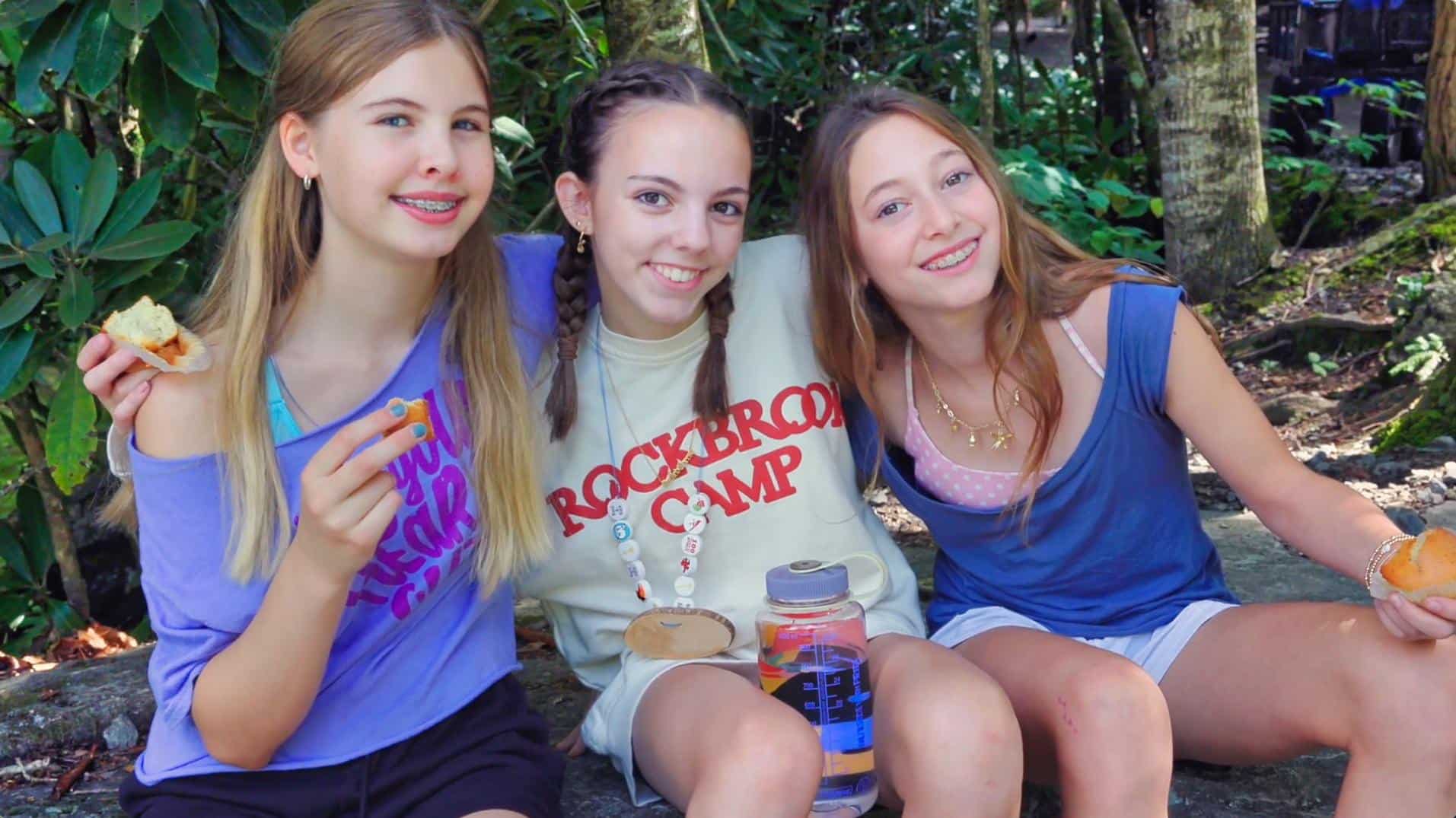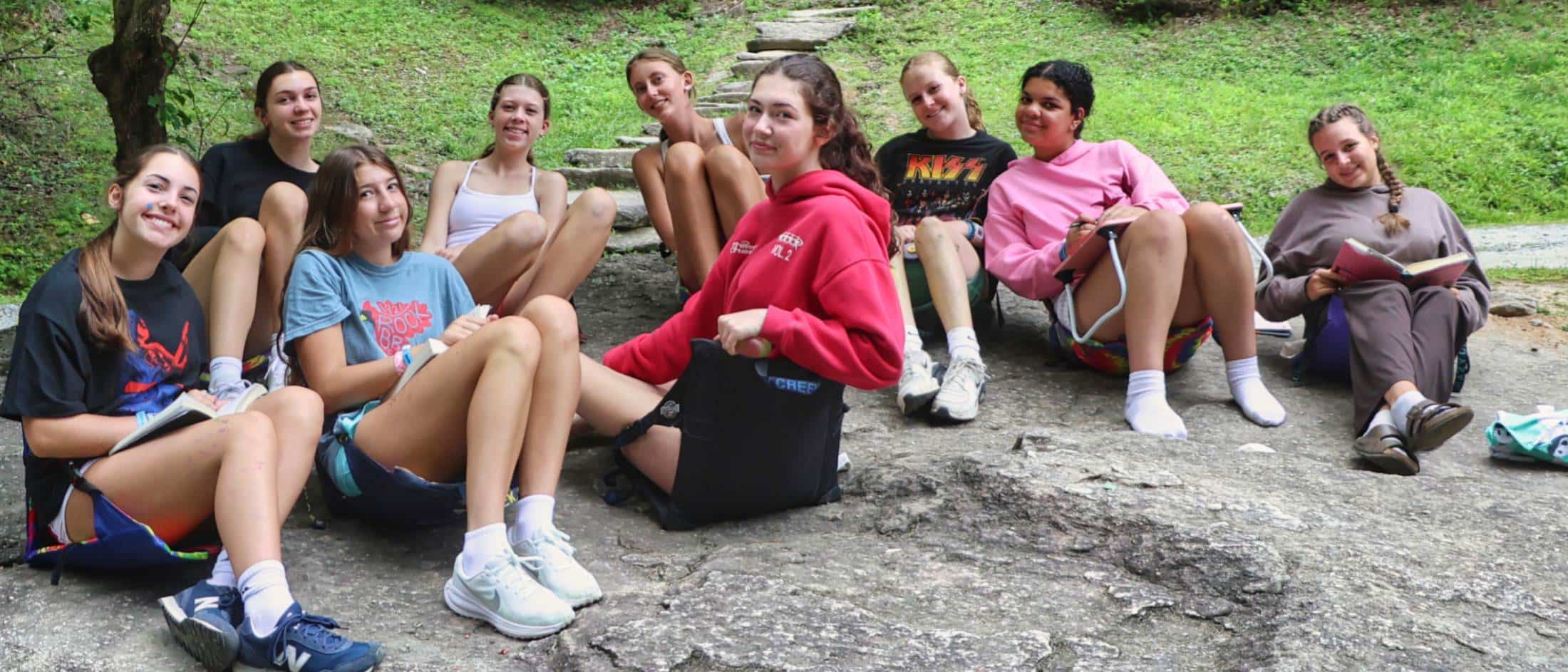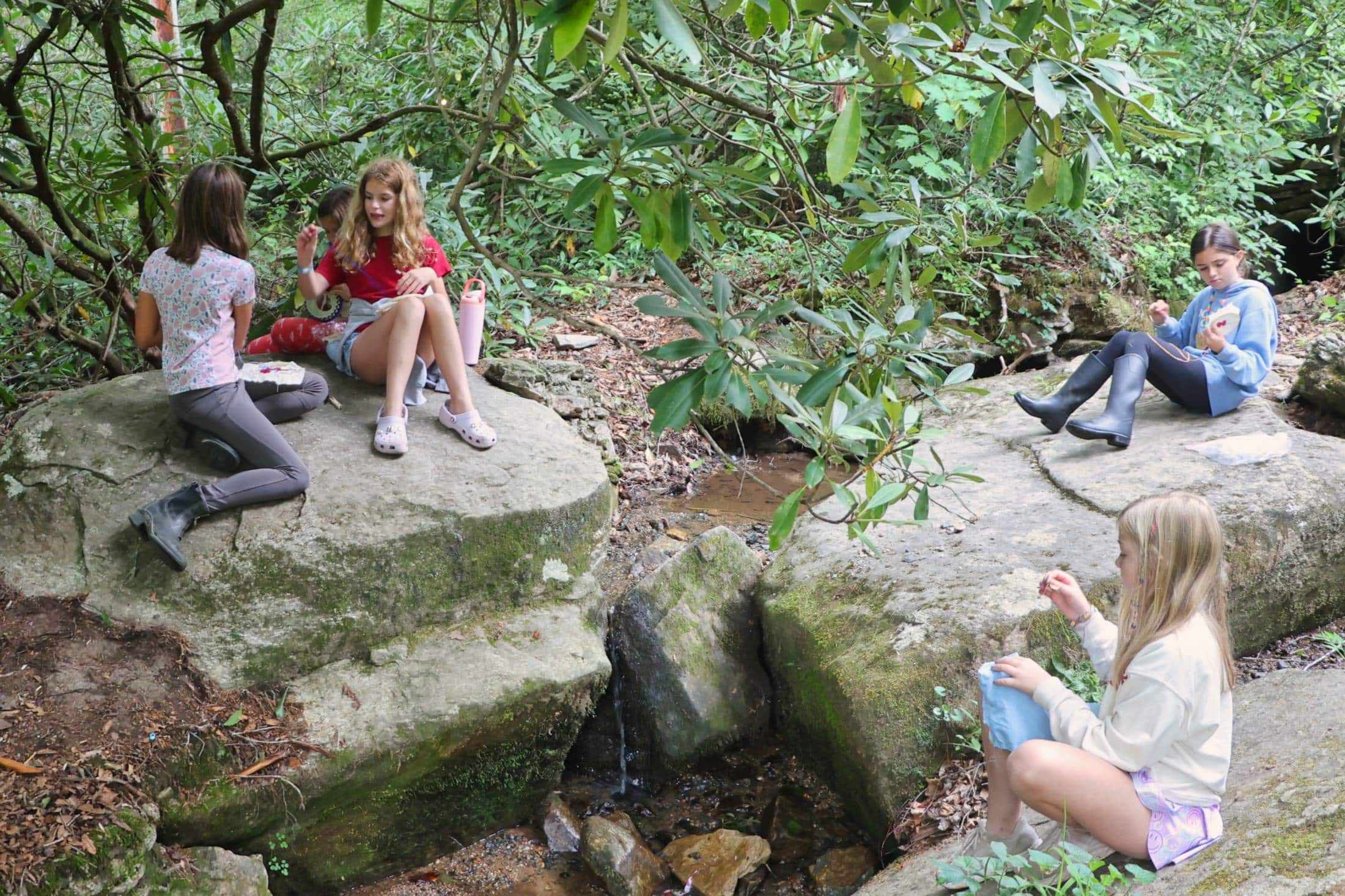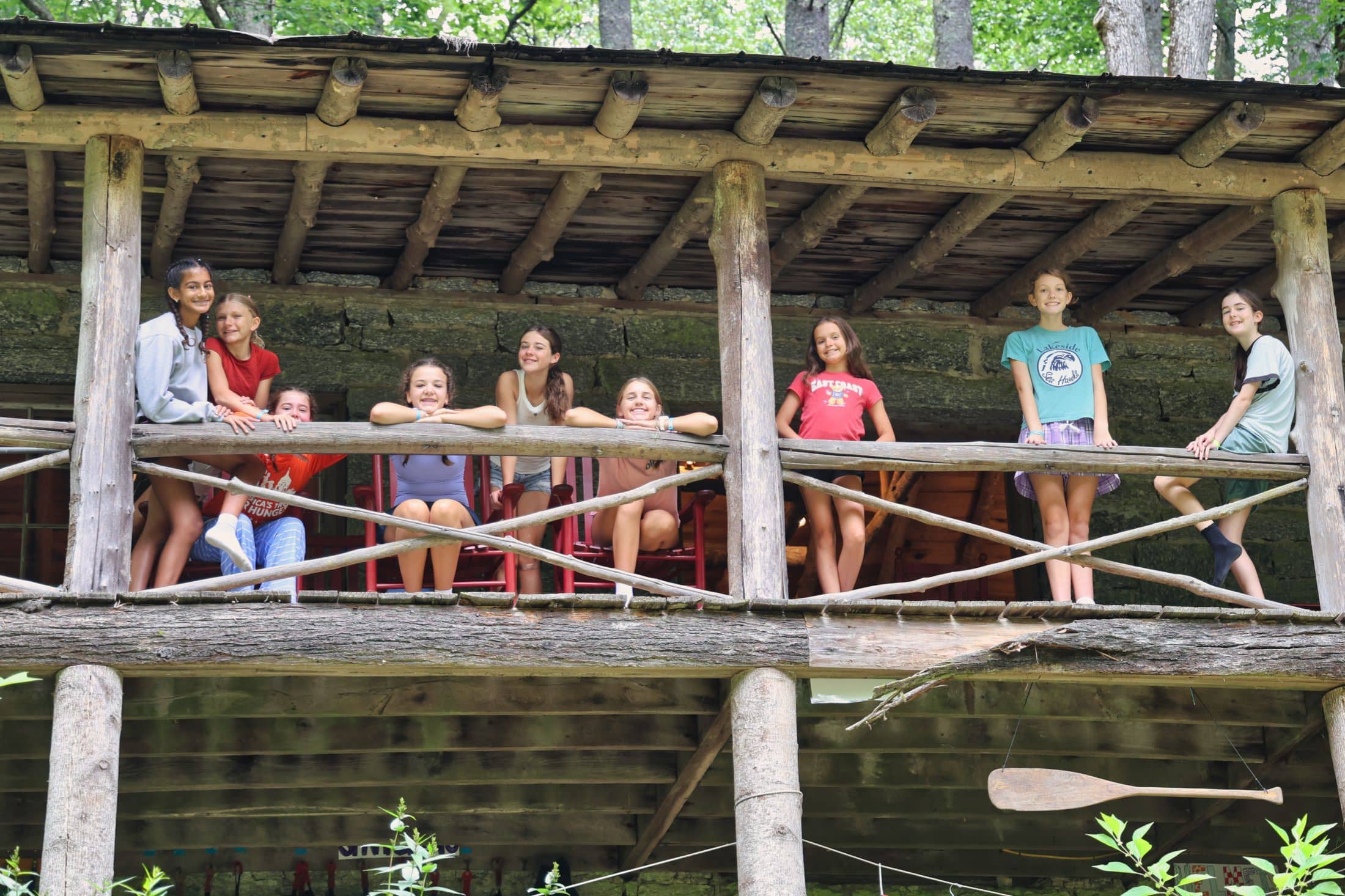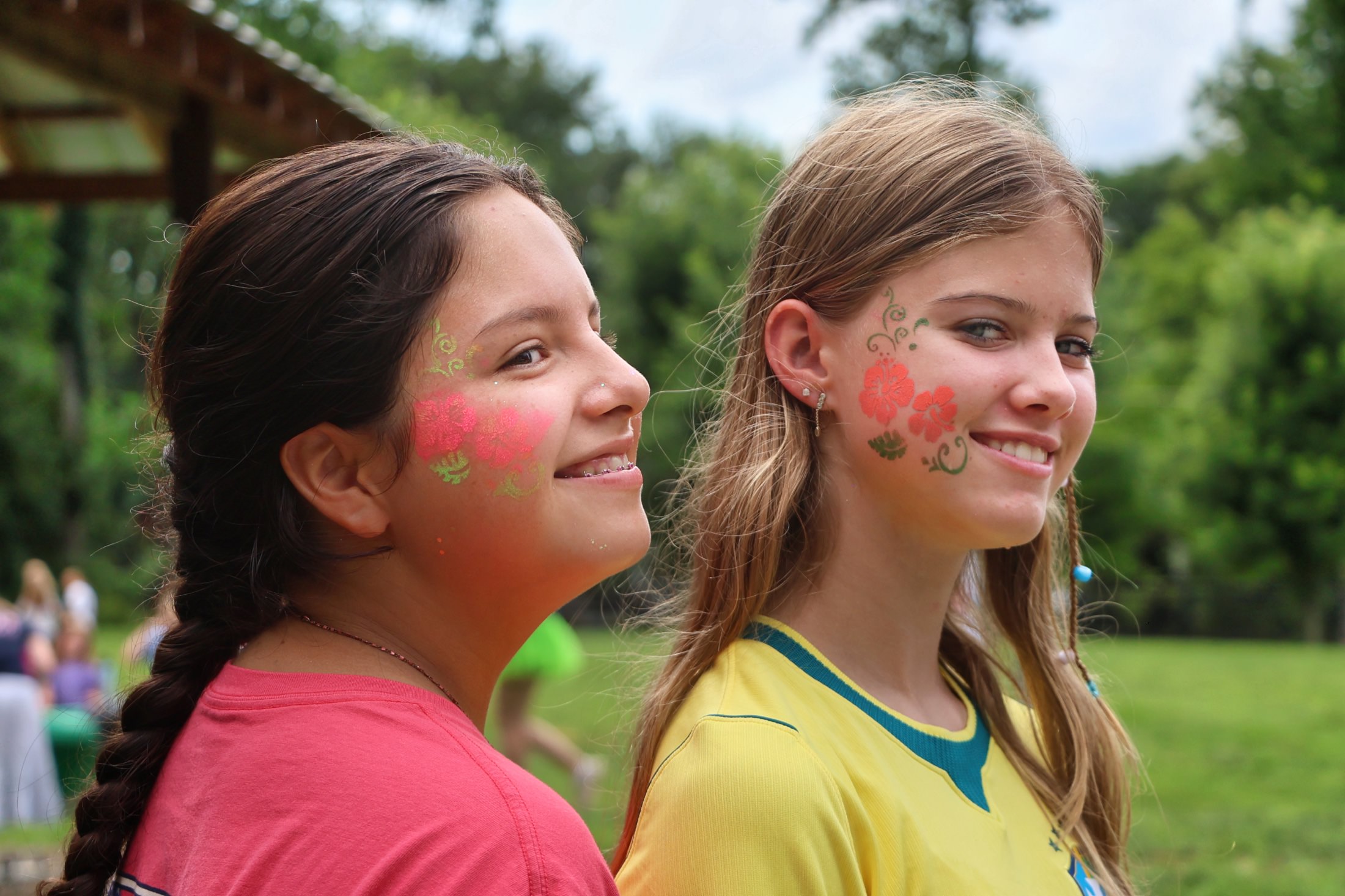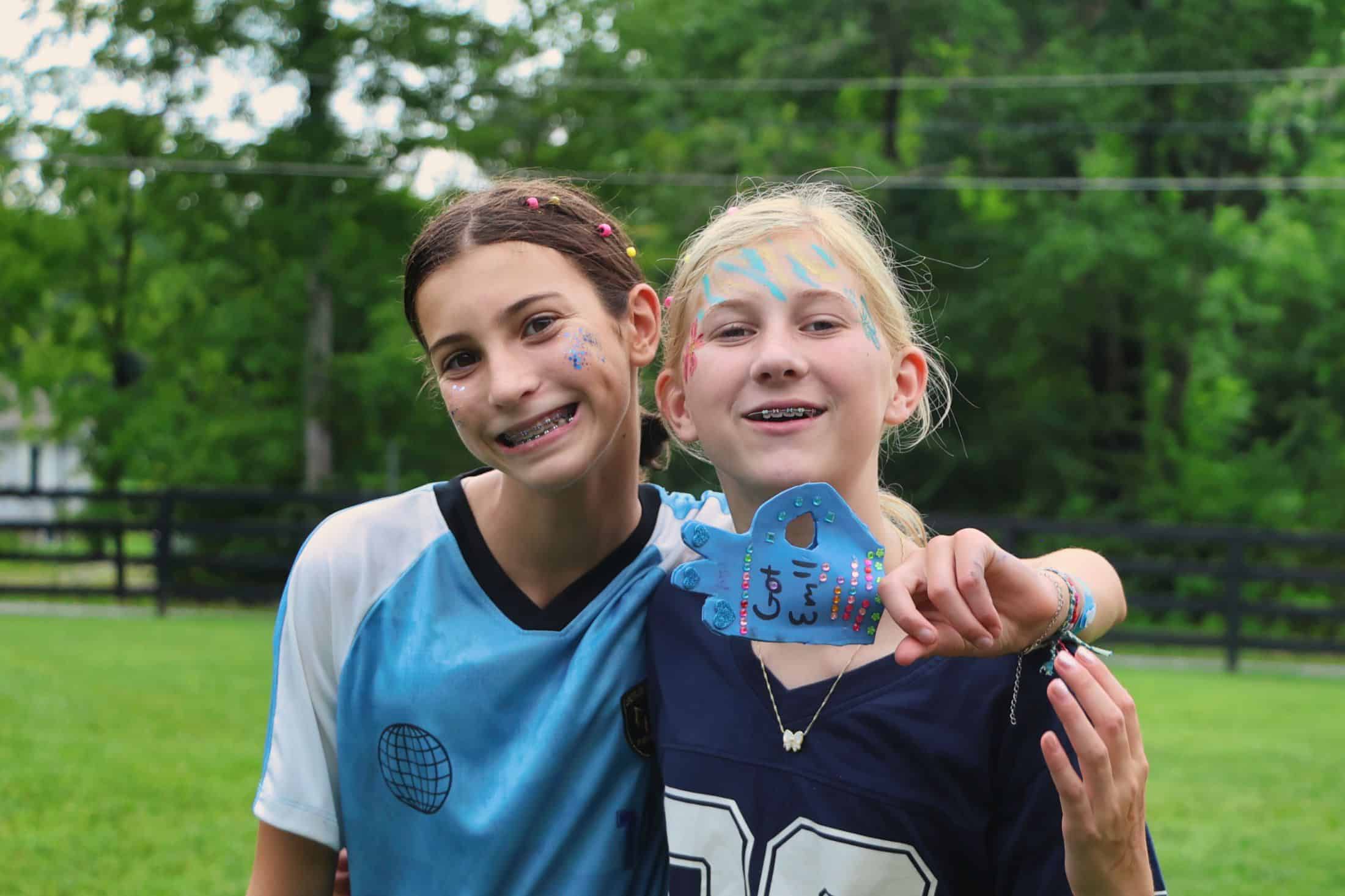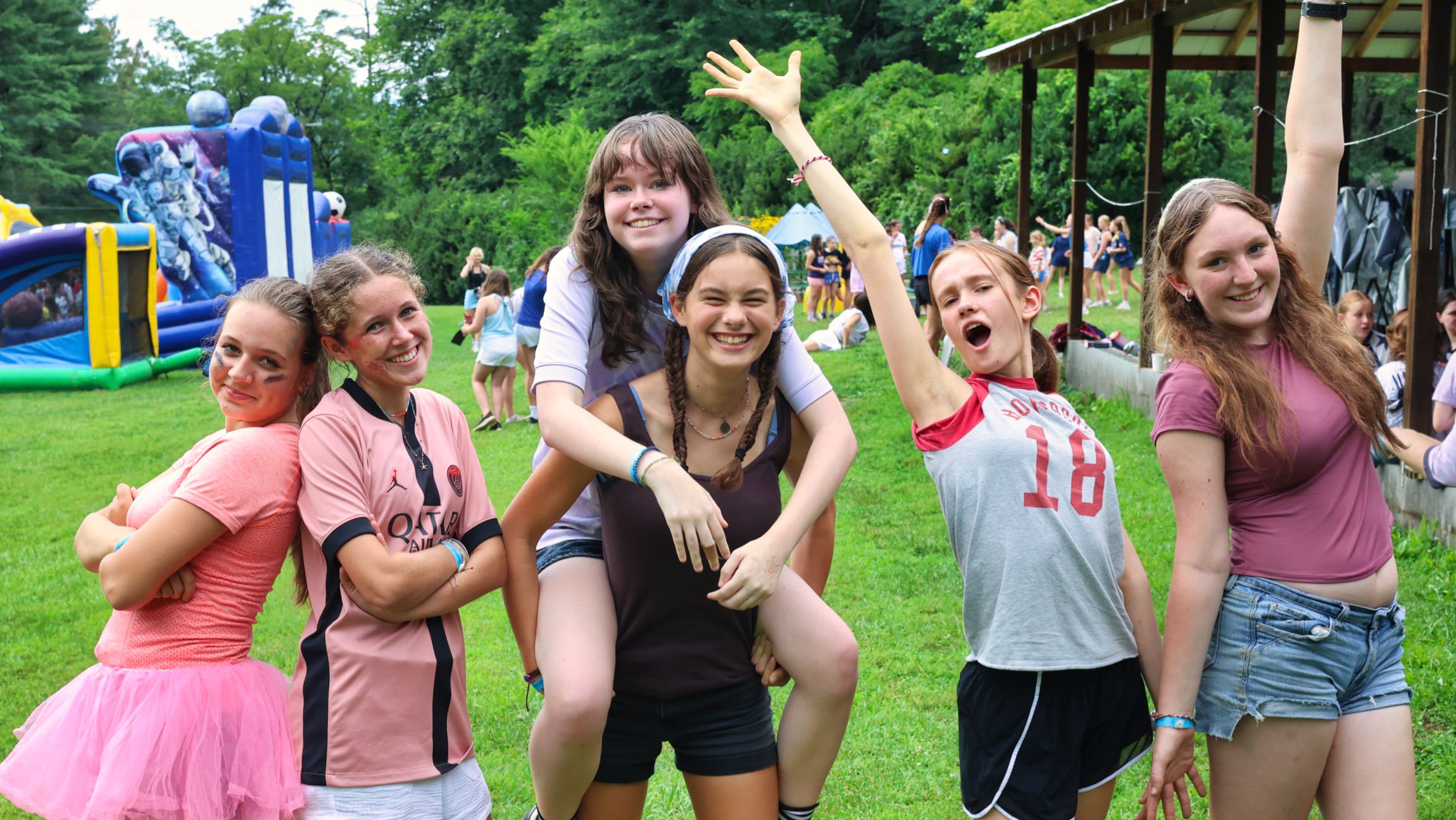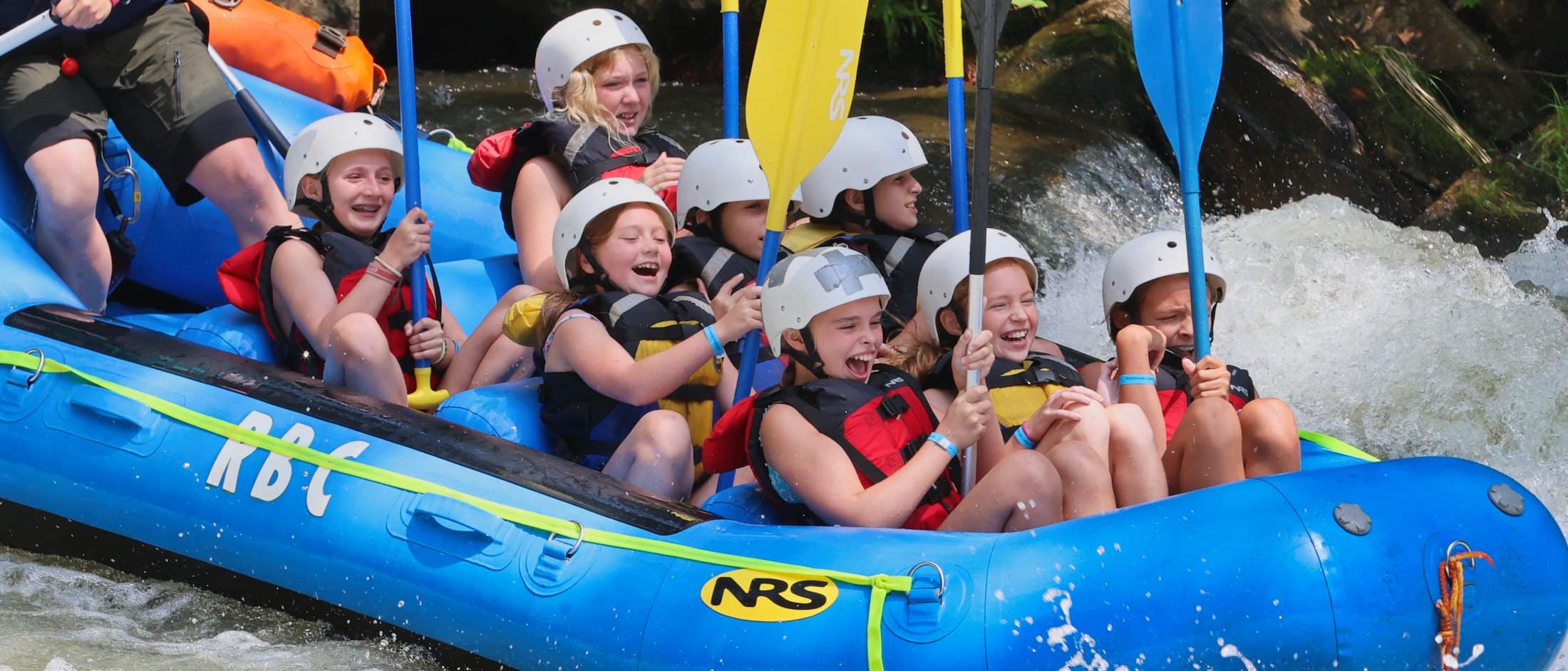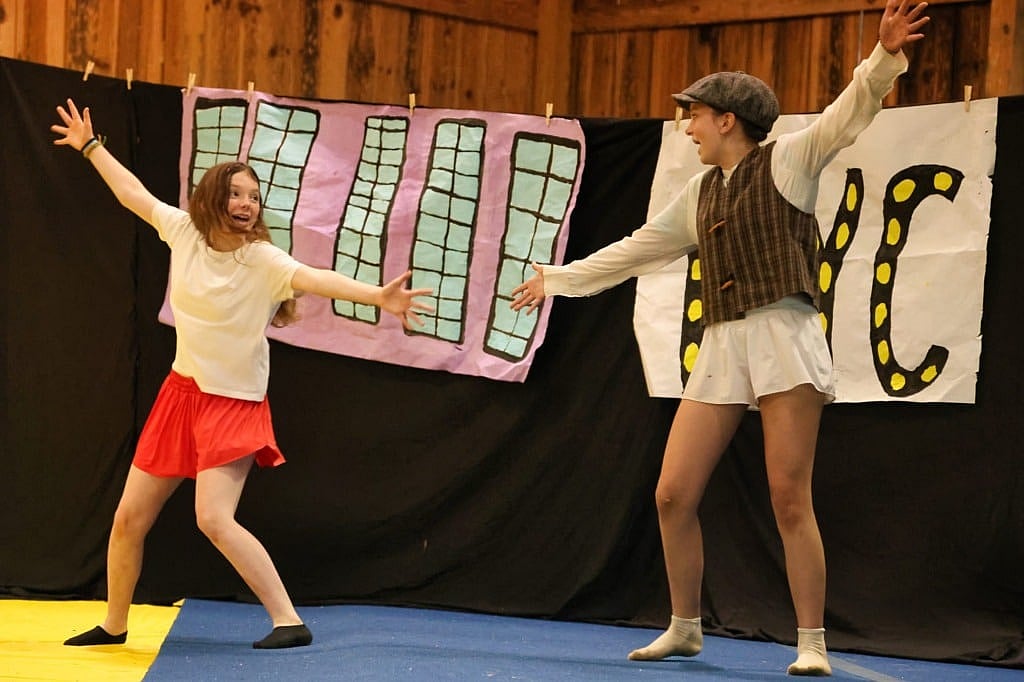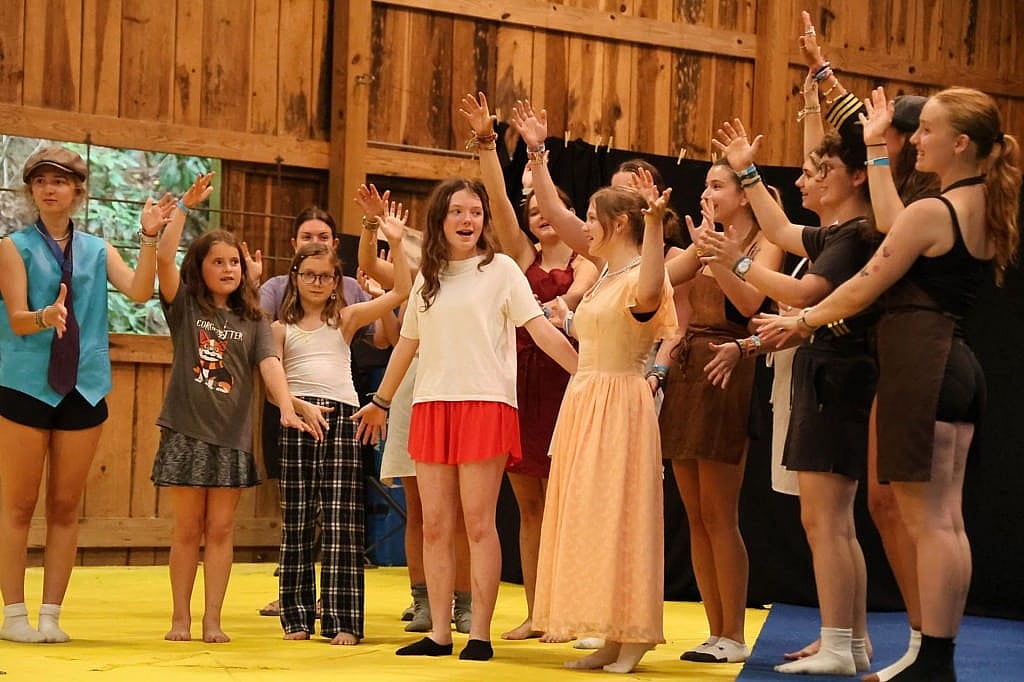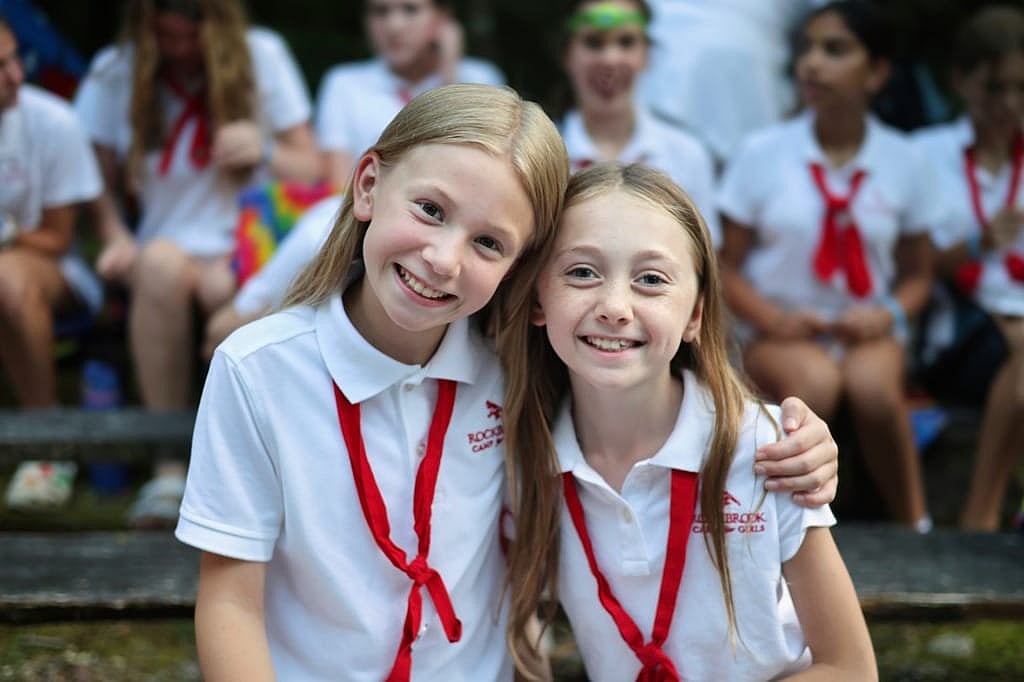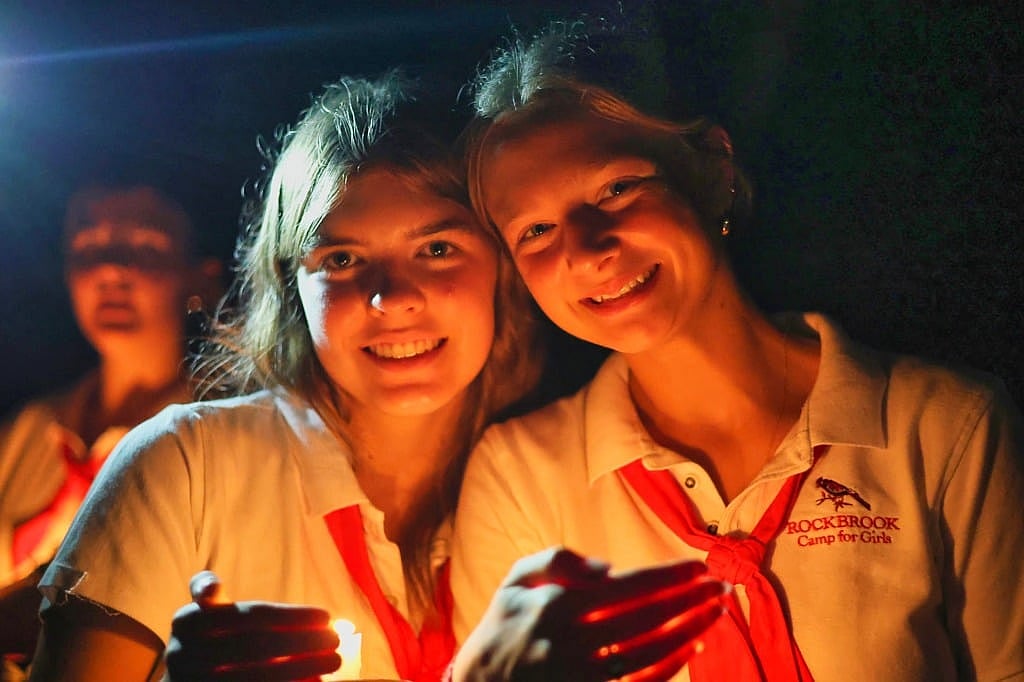

Robbie Francis of FrancisFilmworks is back with another highlights video for us this session. Once again, he has captured the upbeat action, sweet interactions, and everyday magic that fill our days at camp. The video gives a wonderful sense of Rockbrook’s mood— the friendships, the laughter, the energy, and the astonishing variety of fun happening all around us.
I came across the word “willowwacks” recently and immediately thought of Rockbrook. Pronounced “WILL-oh-wacks,” it’s a noun of uncertain origin meaning a wooded, uninhabited place, a remote and wild stretch of country. It’s separate from civilization, from human-made environments. A willowwacks is a place defined by the forces of nature, alive in fascinating ways.
I thought of Rockbrook because it is, deliberately, a willowwacks. When Nancy Carrier founded the camp more than 100 years ago, she knew its location was special. She wanted campers to fully experience these mountains of western North Carolina, to know them closely, personally. She thought it important for camp to be embedded in the forest, for the activities to grow out of it, for its many gifts to be a daily delight.
That’s why at Rockbrook, even these 100 years later, we all love the chill of the mountain water feeding our lake. That’s why we can hear pileated woodpeckers, spring peeper frogs, and rain chattering on the metal roof of our cabins. That’s the reason we’re surrounded by ancient trees, massive boulders and sparkling waterfalls. At camp we’re greeted by fog in the morning and glowing sunsets at twilight, by twisting roots and vines, pads of moss and clusters of ferns. Every breath fills us with a freshness you can sense immediately. Being this close to nature, face to face with a rich sample of its power and beauty, is at the core of our camp experience.
Of course, camp also includes modern conveniences and comfortable facilities we can name (for example, really nice bathrooms), but our aim over the years has been to keep the wild world close, unmanicured, and alive. We’re careful not to straighten every curve and remove every stone in the path. We prune the rhododendron bushes gently, and respect the many forest creatures we live among.
Living for a time in the willowwacks is important because it both takes away and gives back.
When a girl arrives at Rockbrook, one of the first things that happens is a kind of subtraction from her ordinary world. Here she finds a haven. No ambient hum of air conditioning, no social media feed hijacking her attention, no social pressures demanding a performance. At home we’re protected from nature, even completely removed from it most of the time in the name of convenience. At camp, we’re immersed in it. A manicured park might offer beauty, and Disneyland might promise wonder, but neither delivers the real thing. This is what we mean when we say camp provides a break. The willowwacks strips away the hectic pace of modern life, the algorithms curating our sense of reality, and the abstractions that stand between us and the richness of the world.
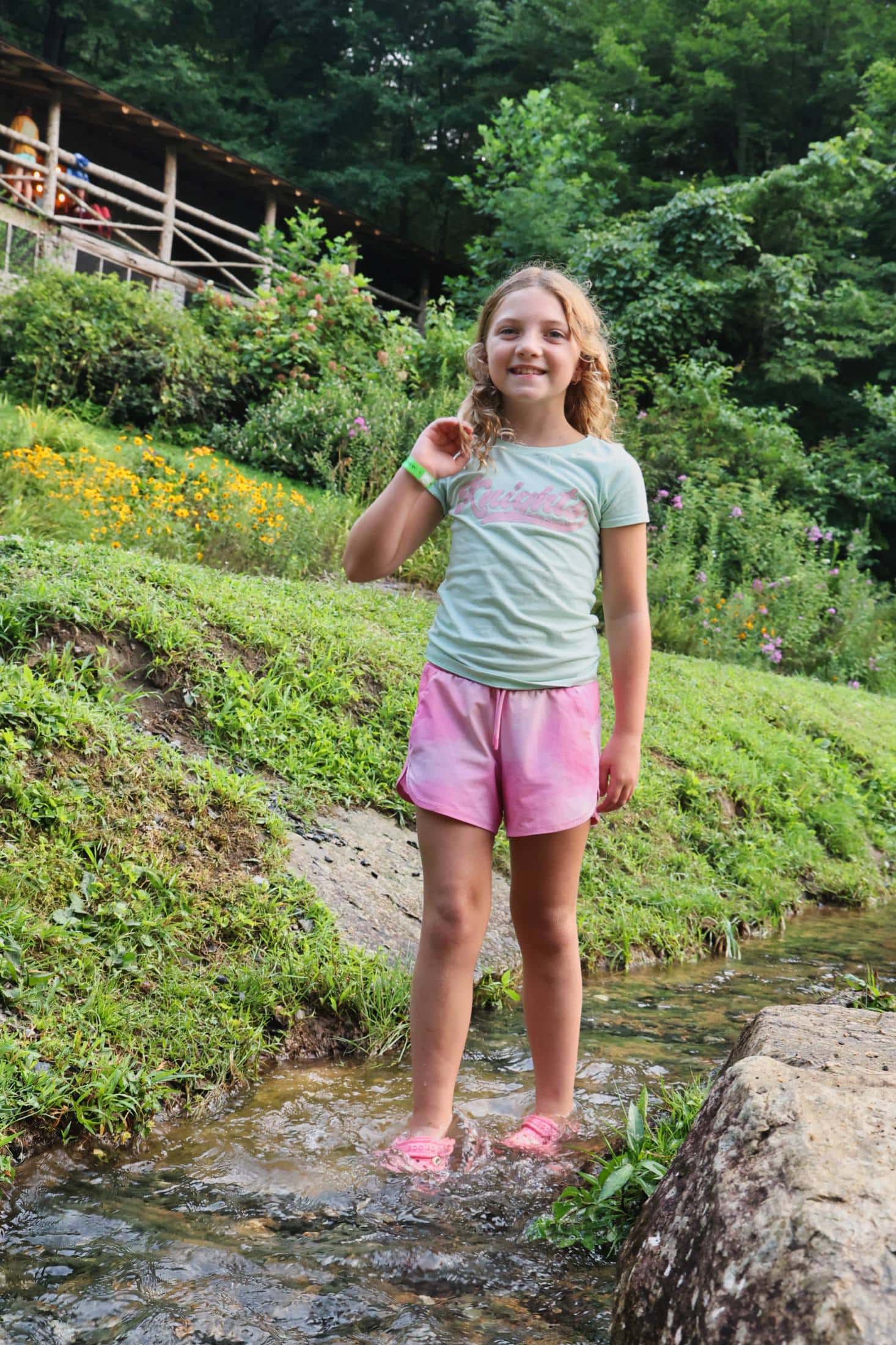
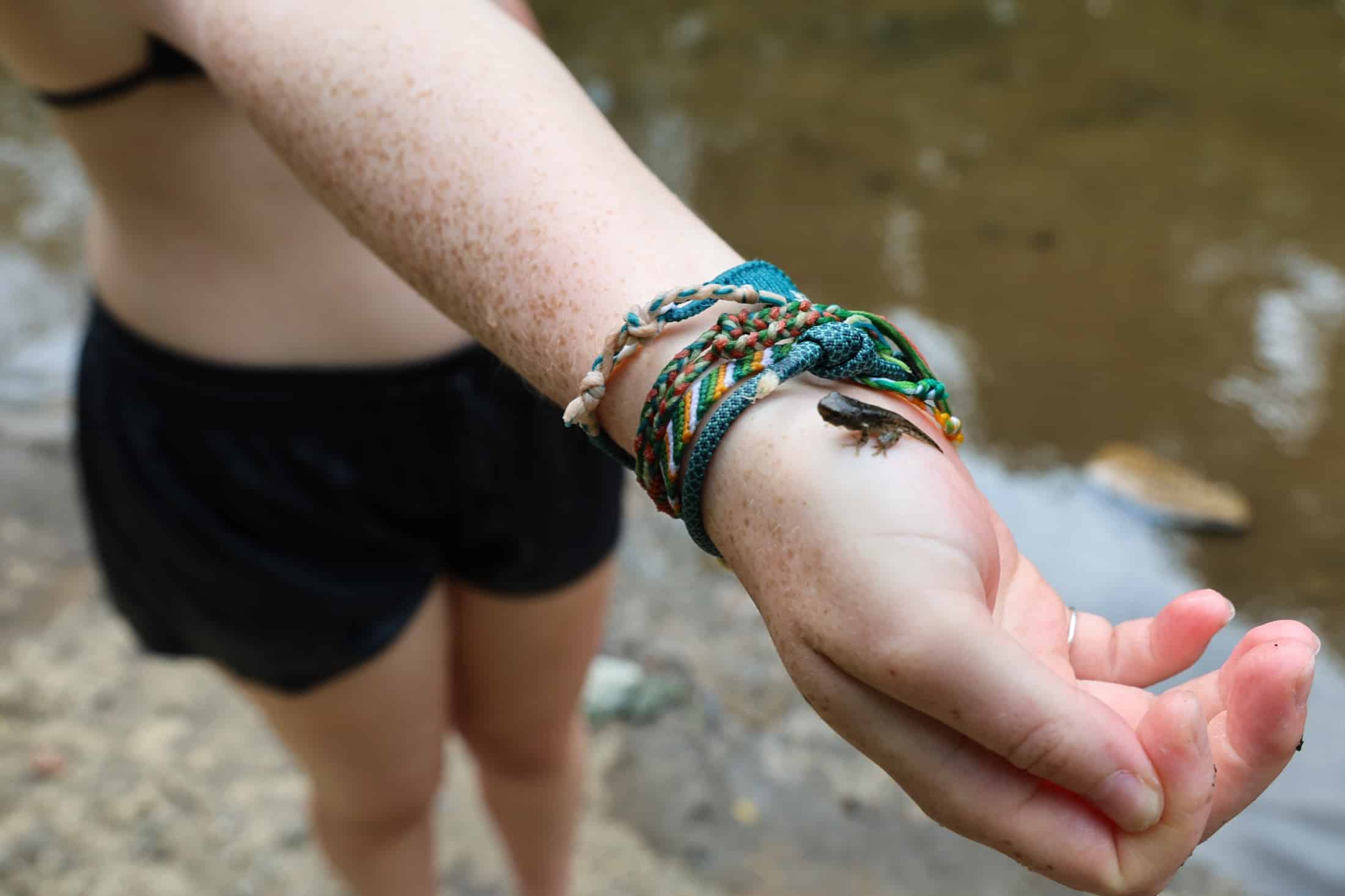
Just as quickly, the willowwacks fills this space with direct experience, unmediated, embodied encounters. It gives back. It continually inspires with breathtaking beauty, layer upon layer of fascinating detail, ancient things, living things. A quick glance in any direction at camp is sure to surprise you with something cool— an orange newt dashing through the leaf litter, a spider building a web, the morning dew on the hill, the rolling of thunder off in the distance, the warm sunshine on your face. The willowwacks brings you closer, connecting you to the real world around you, and to the people likewise enjoying its gifts. Living like this expands your awareness, proving that the world we know is merely a sample of what’s out there. We need merely pay more attention to discover it more fully.
Many children today grow up in spaces that have been carefully developed and maintained, built with pre-defined outcomes. There is nothing wrong with those spaces, but they do diminish access to the willowwacks and its gifts.
Camp thankfully preserves that access. It seems to me, we humans need the willowwacks, and perhaps always have. We need to spend time somewhere that’s immediate and real, not manufactured, somewhere that is simply there, alive, rich and mysterious.
Mostly I just feel grateful. Grateful that this place exists, that girls get to wander through it, and that something as old and unhurried as a forest can still stop them in their tracks with an “oh wow!” How lucky is that.
Looking around this Wednesday afternoon, you would have had a hard time understanding what was happening. A cabin of Juniors in their finest Granny outfits was hosting a tea party, complete with bingo. Down by the barn, another Junior cabin had gone looking for fairies, with a stop at the fairy salon along the way. Past the lake you’d find mermaids getting their hair styled, pirates racing corcls and hunting tadpoles, and a cabin of grannies chasing escaped chickens. It was, in other words, a normal Cabin Day.
We’ve written about this Wednesday tradition plenty of times before, the way the camp sets aside its regular schedule for an afternoon, the bonding that happens when a whole cabin sticks together, and the surprises the counselors dream up and keep secret until the last minute. During the week the girls scatter to their own activities, following their own interests, but on Cabin Day they come back together and do one thing as a cabin group. What that one thing turns out to be is a fun surprise, and a nice change of pace during the week.
Juniors in Make-Believe
Among the Juniors, the themes ran toward make-believe. One cabin switched to full Granny mode— dressing up, sipping tea, and settling in for a round of “Granny Bingo” on the dining hall porch. Another went on a fairy scavenger hunt and built tiny fairy houses in the forest. Two Junior cabins loaded up and headed to the Further Up Farm to pick flowers and meet a few chickens, with a stop at Dolly’s capping the outing.
Middlers in Motion
The Middlers scattered in every direction at once. One cabin made a day at the beach right here in the mountains, with beach games and an octopus sprinkler and picture frames decorated in shells and pearl beads. Another spent the afternoon as mermaids at the lake. There were pirates decorating eye patches between corcl races, a party in the Middler Lodge with felt sleep masks and freshly painted nails, a hike up to Castle Rock that ended with a snack of Puppy Chow, and a tetherball tournament that started with a quick swim.
A Senior Sorting
The Senior Line went bigger, turning the whole afternoon into a camp-wide game of Harry Potter. Dumbledore and the Sorting Hat divided the seniors into Rockbrook houses— White Squirrel, Chocolate Chip, Owala, Tetris Tots, and the Cardinals— and sent them off on a counselor hunt. The houses searched and received a nice reward of Coke floats and an hour of lake-side fun.
Sliding Rock After Dinner
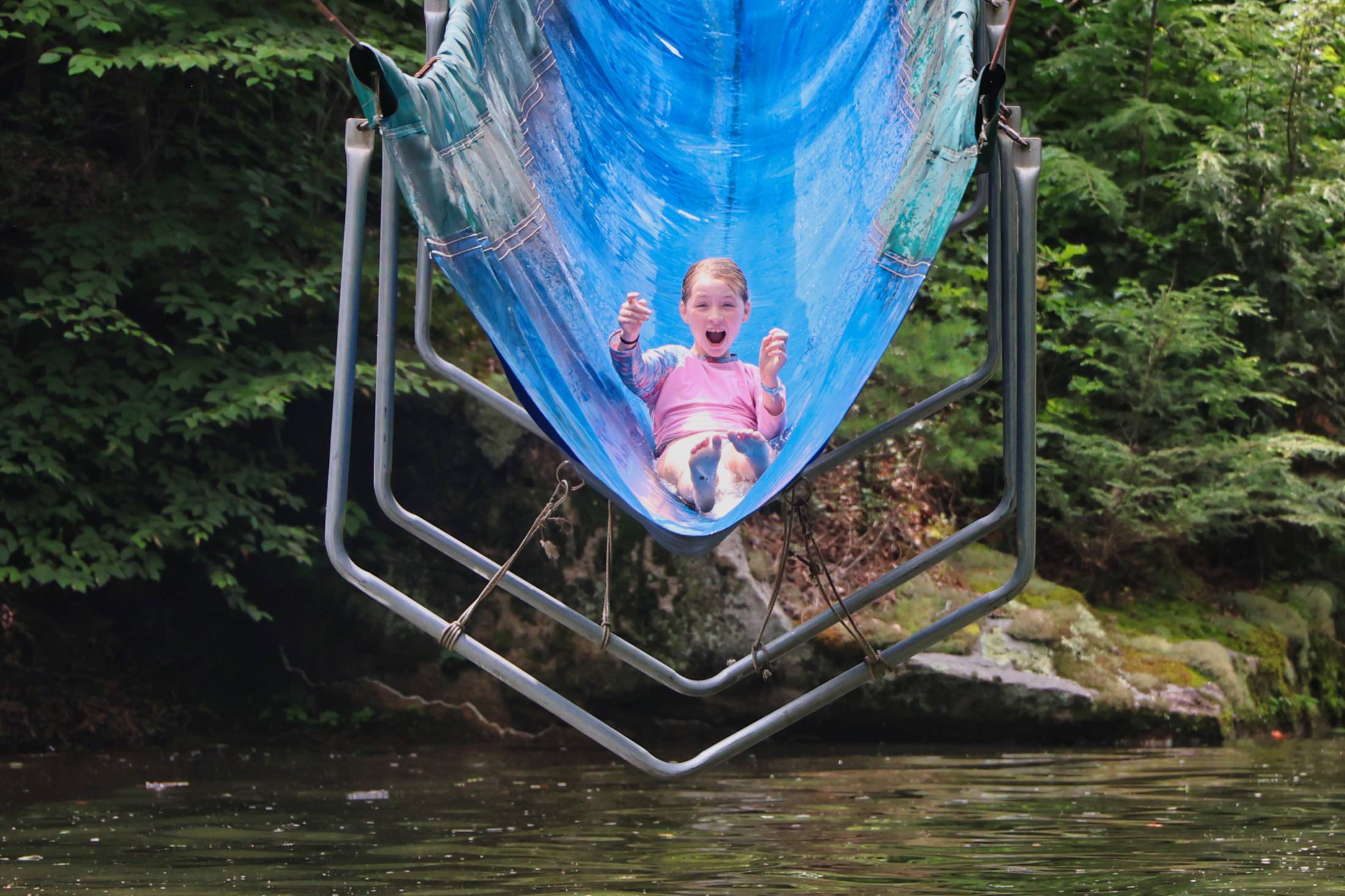
After dinner, we gathered all the Middler cabins together and took them to Sliding Rock. There’s nothing quite like the shriek of girls hitting that cold mountain water at the bottom of the slide, and then climbing right back up to do it again. We followed our sliding, naturally, with a stop at Dolly’s, everyone’s favorite spot for a sweet treat. It’s a classic camp combination: busloads of damp, happy Middlers working through their heaping cones of ice cream, chatting and eventually singing with more force than seems possible.
It might seem random and scattered all over camp… a tea party and tadpoles, grannies and Puppy Chow, an octopus sprinkler and a sorting hat, numerous chickens and plenty of rushing cold water. But Cabin Day is joyfully creative, the kind of silly Wednesday we love at Rockbrook.
We were chatting the other day in the red rockers on the dining hall porch, a CIT and I, about how camp opens up a space for girls to try new things, and not only to try them, but to lean in to things that otherwise seem a little scary. New encounters and experiences that might feel uncomfortable, beyond what they think they can do, or even just plain “awkward.” Between us we could think of countless examples: girls who, despite being wary of something new, despite worrying they might not be “good” at it, despite all the uncertainty, find themselves meeting a challenge and surprising themselves in the process.
We decided that camp girls know how to lean in. Or better, that camp life teaches girls they can lean in. And better still, that being at camp proves something to all of us— that leaning in to an experience, rather than shrinking away from it, is rewarding, enriching, and fun. In fact, we thought, maybe having fun requires us to lean in. If fun means fully embracing the moment, immersing yourself in the game, the conversation, the feeling of it all, then guarding yourself against it is clearly un-fun. That’s why a sure way to ruin an experience is to stand outside it, distracted by thoughts of what might happen, or what “people might think,” or even what it all might “mean.”
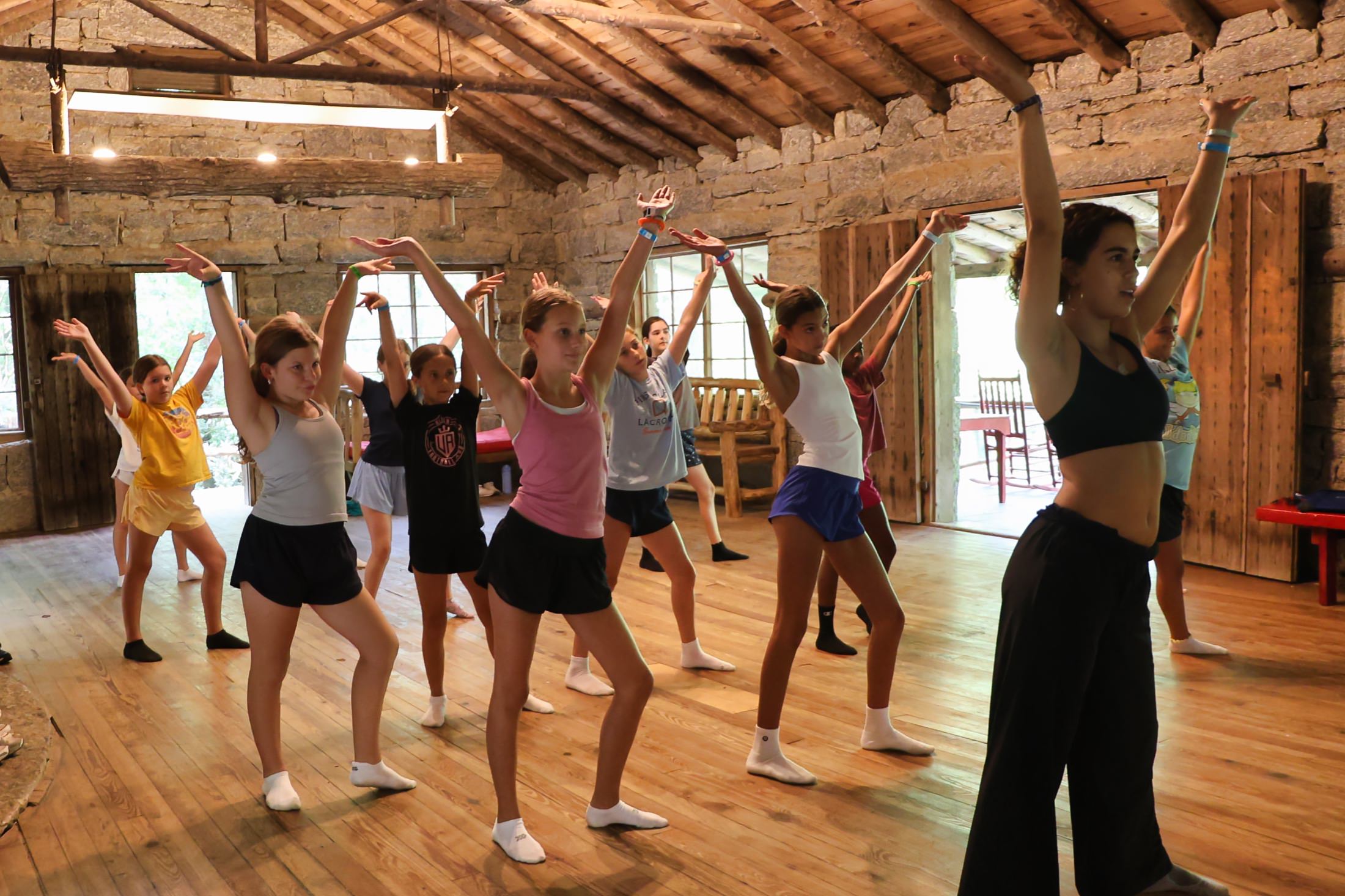
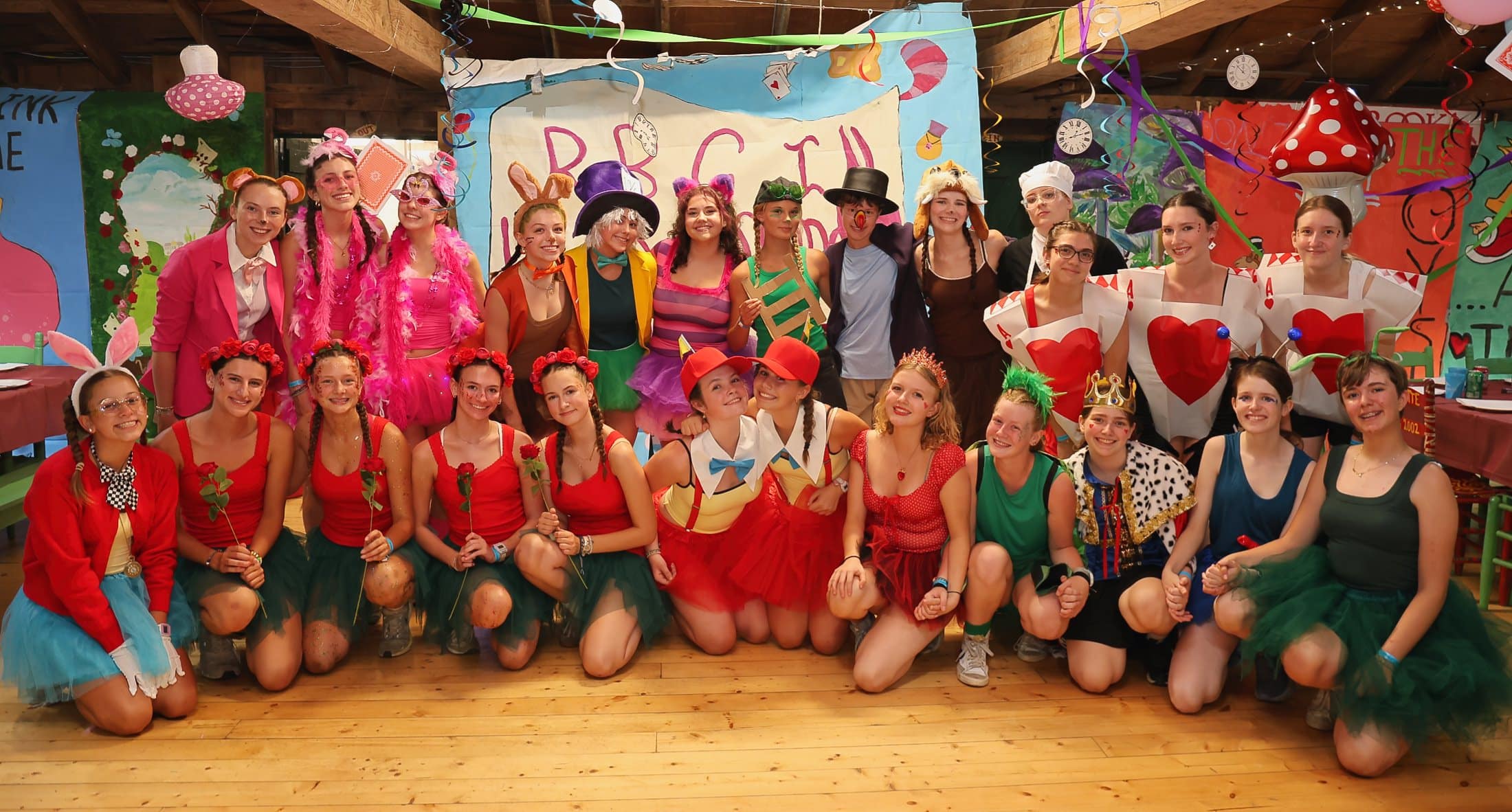
Instead, at camp we sing as loud as we can no matter how it sounds. We put on silly costumes and dance wildly. We paint and weave even though we’re certain we’re not artistic. We climb onto a horse having never touched one before. We flip our kayaks upside down and learn to “wet exit” without panicking. We meet all sorts of new people, try strange new foods (Gumbo!), and take care of a hundred small things without our parents there to smooth out the bumps in the road.
Eventually we landed on a neat little phrase: “If you’re not leaning in, you’re not doing anything.” Hold back, and you’re certainly not getting all you can from an experience— you’re watering it down, skimming the surface, settling for a weak sample of something that could be wonderfully more full. To truly get it, to feel its impact, you have to go beyond what you already know. You have to venture out, to lean in to whatever lies past the edge of your “comfort zone.” And once you drop that “boulder from your shoulder,” you just might find— as Bruce reminded us long ago— that “that’s where the fun is.”
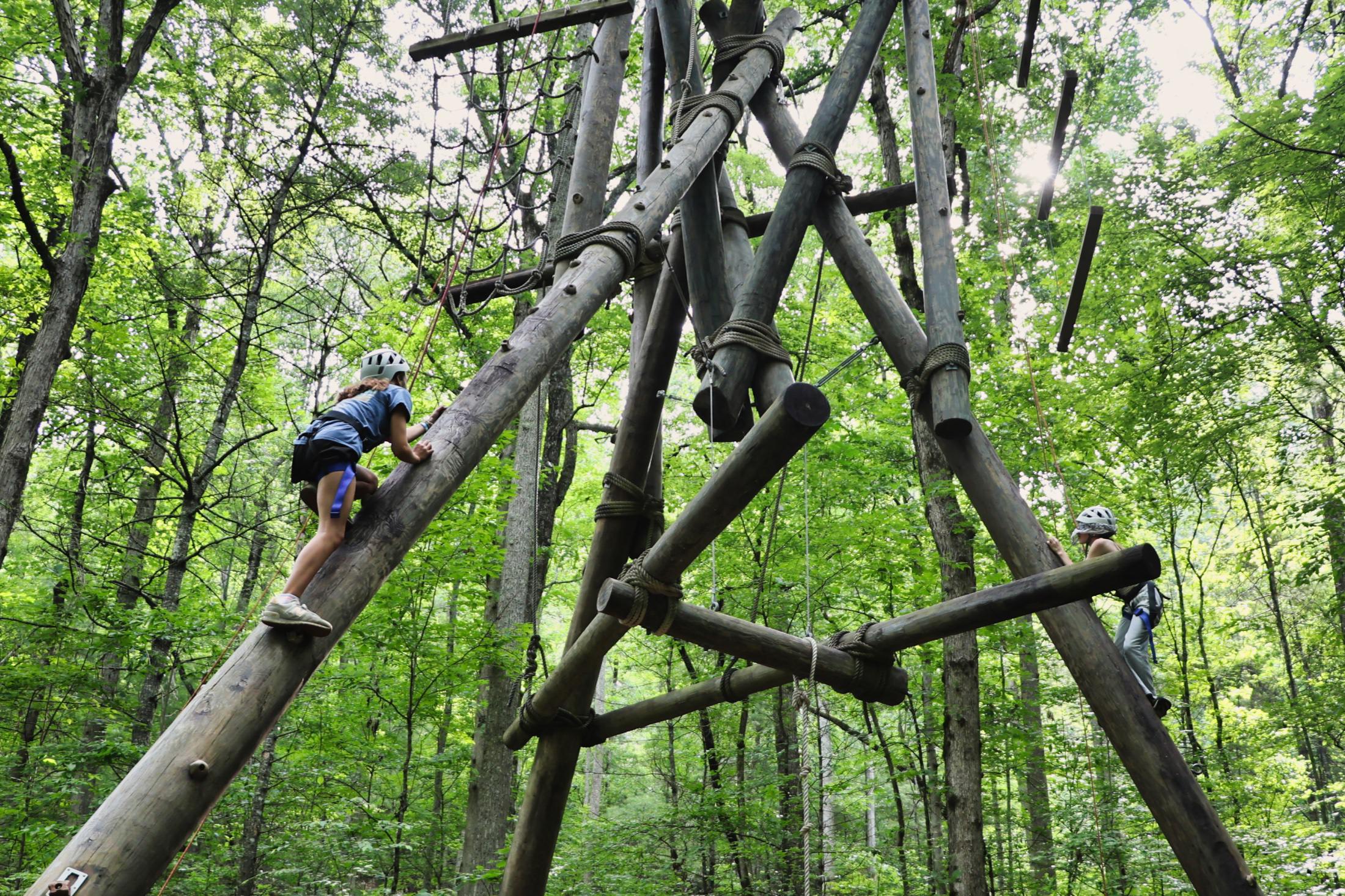
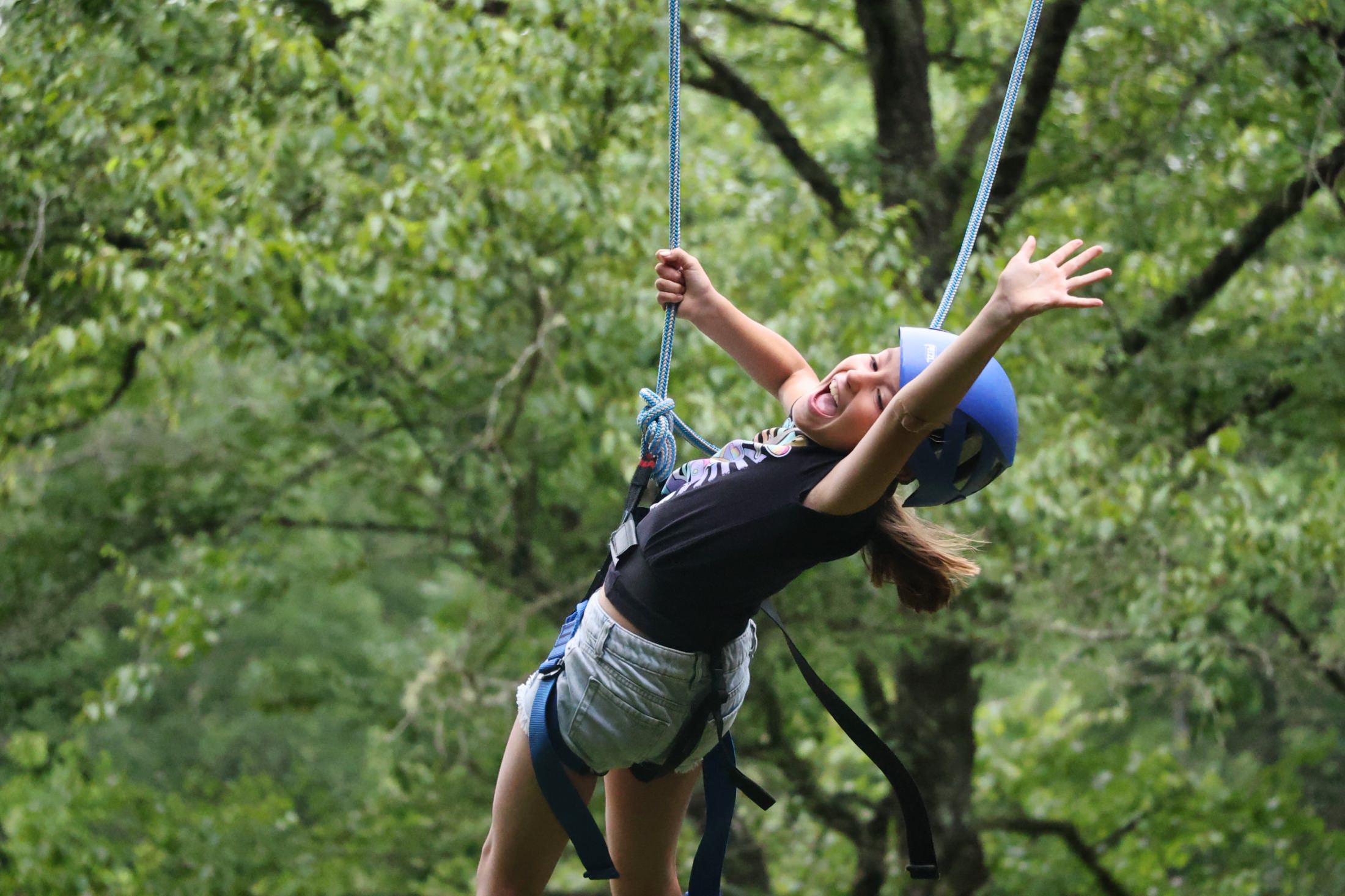
I should add that leaning in is not the same as jumping in. Jumping in throws all caution to the wind; leaning in understands potential risks and takes them into account. It isn’t reckless; it’s prepared and measured. That’s exactly why our adventure activities, like climbing the Alpine tower, depend for their thrill (and their fun) on specialized safety equipment and careful training. To climb without a solid belay would be terrifying, not fun. We should always consider risks and manage them as best we can. But since we can never fully erase the chance that something will feel awkward, or end in embarrassment or even failure, learning to lean in despite the uncertainty turns out to be essential to doing much of anything at all.
Fortunately, no camp girl has to find that courage by herself. Rockbrook is built to help everyone lean in— to notice the camper who’s shrinking back from something new, and to stand beside her until she’s ready to try. So much here is unfamiliar, and that’s just the point: a place where nearly everything is new is a place where leaning in becomes the ordinary thing to do. What makes that possible is the culture of kindness and non-judgment underneath it all, the quiet assurance that nobody is keeping score of who looked silly at dinner, struggled climbing the Alpine tower, or sang off-key at the campfire. Cheered on like that, a girl tends to discover she is stronger than she thinks, more capable than she knows, and braver every day. In ways large and small, Rockbrook en-courages courage.
One more thing I’ve been meaning to pass along: back in March, Rockbrook was selected by Cliffs Living Magazine as a featured camp in their article “Camp Summer.” The piece celebrates how, for more than a hundred years, the camps in this corner of North Carolina have prized “exploration, independence, and time outdoors.” It’s true— there really is a “formative power of place” that summer camps enjoy, and Rockbrook is a wonderful example of it.
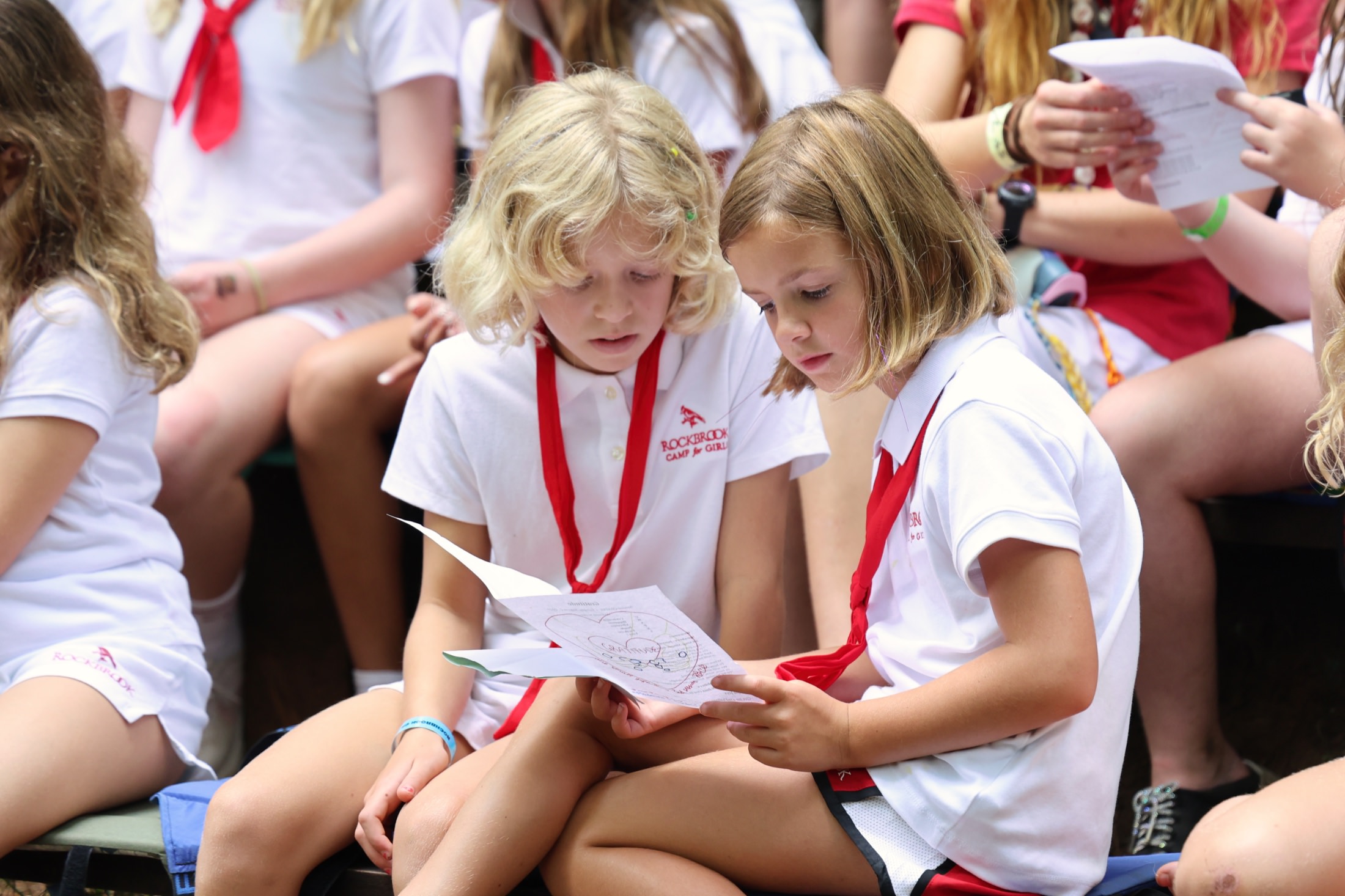
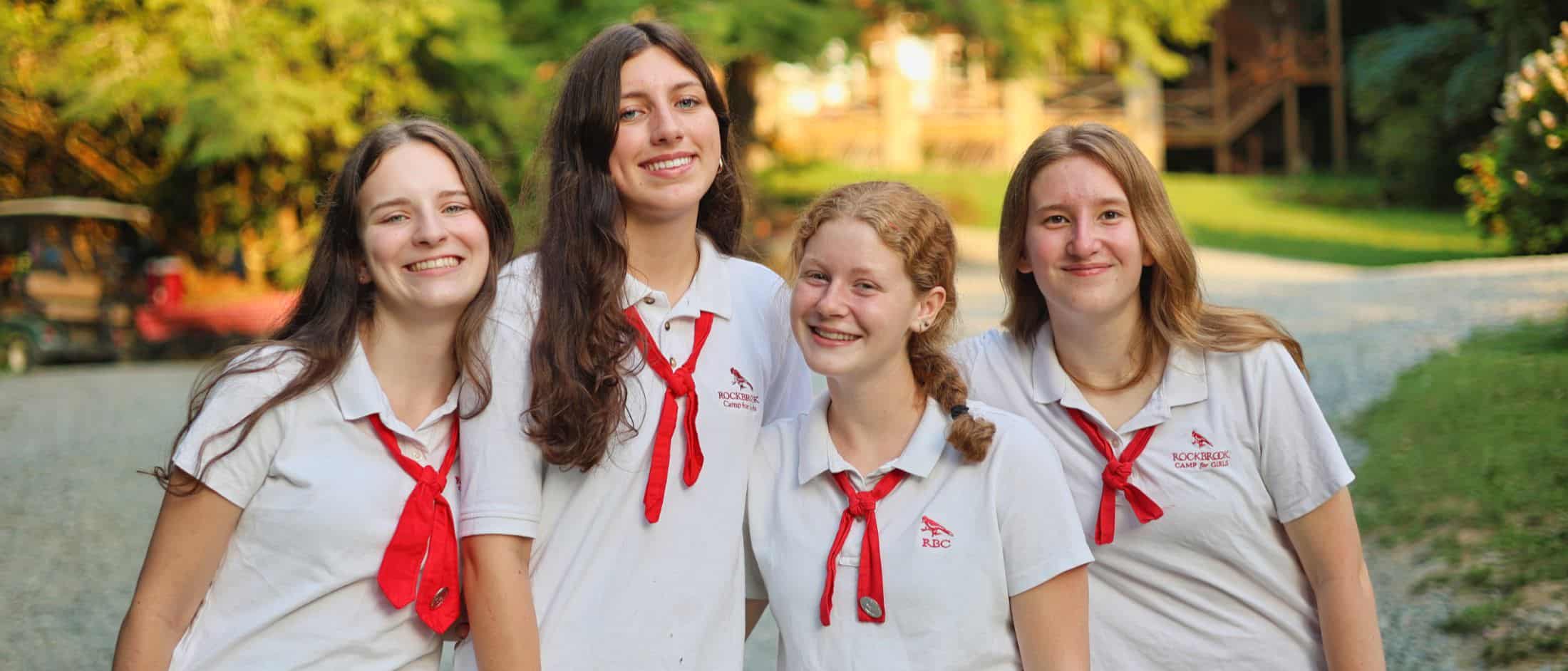
There’s a particular pleasure in a Sunday morning at Rockbrook, and it begins with the wake-up bell ringing a little later than usual. After a week this full of action— all the swimming, tennis, horseback riding, climbing and so forth— a slow start feels great. The girls drifted into breakfast still wearing their pajamas, another long Rockbrook tradition, and a nice nod to taking things easy once in a while. For breakfast, we added fresh Krispy Kreme donuts, also a regular Sunday morning treat at camp. PJs and donuts, a double treat. Afterwards, back at the cabins, everyone changed into their red and white uniforms for two more Sunday morning Rockbrook traditions, flag raising and Chapel.
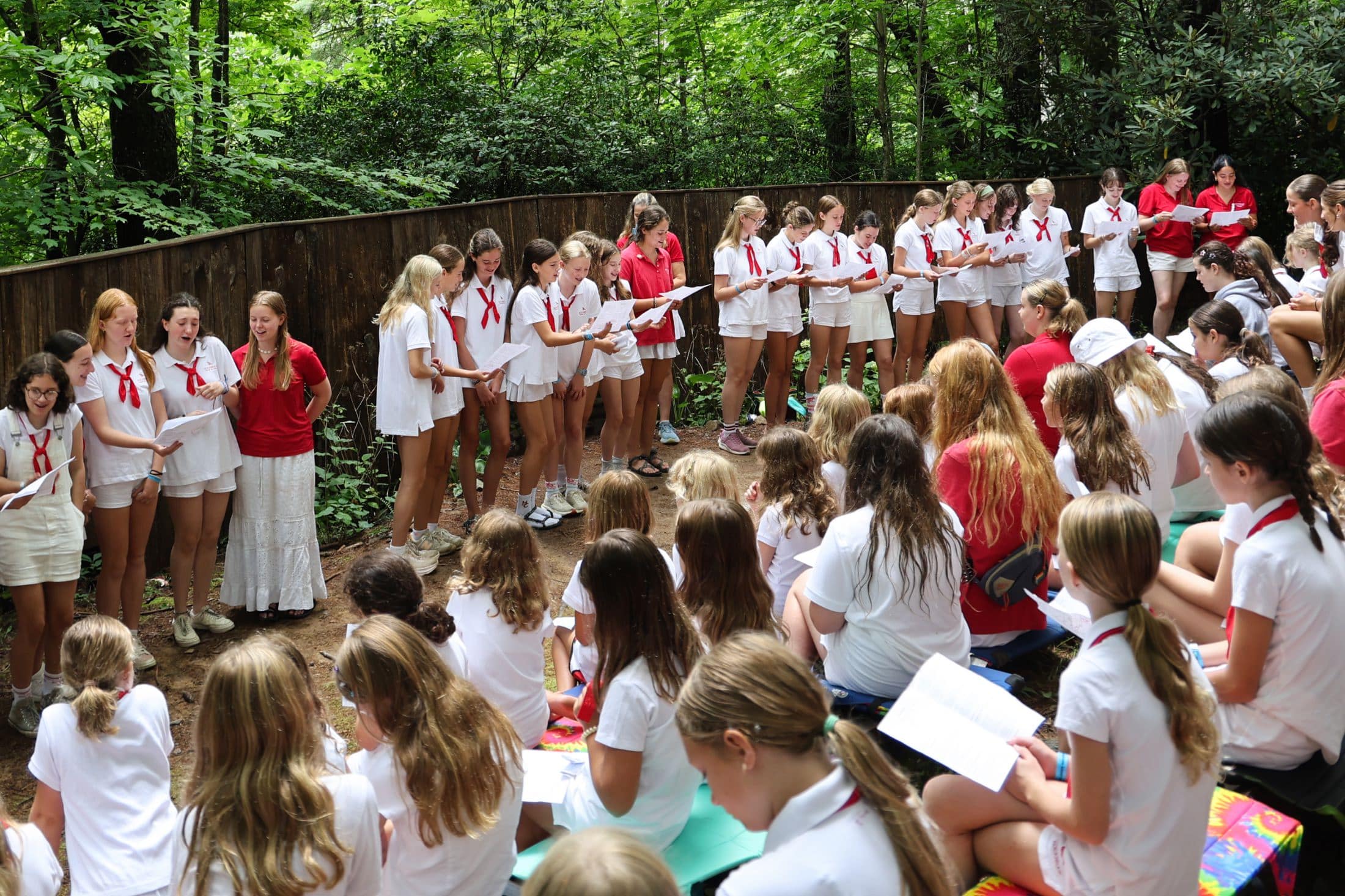
Our Hi-Up campers, the seasoned tenth graders, serve as the color guard, and they led us in a flag raising ceremony, as the whole camp gathered in a wide circle around them. They raised the American flag and our own Rockbrook flag. We recited the Pledge of Allegiance and sang “In the Heart of a Wooded Mountain” together in the bright morning sun, all of us in red and white against the green grass. Then, quietly, in a single line, we made our way down into the woods to the amphitheater for Chapel.
Chapel on Being Yourself
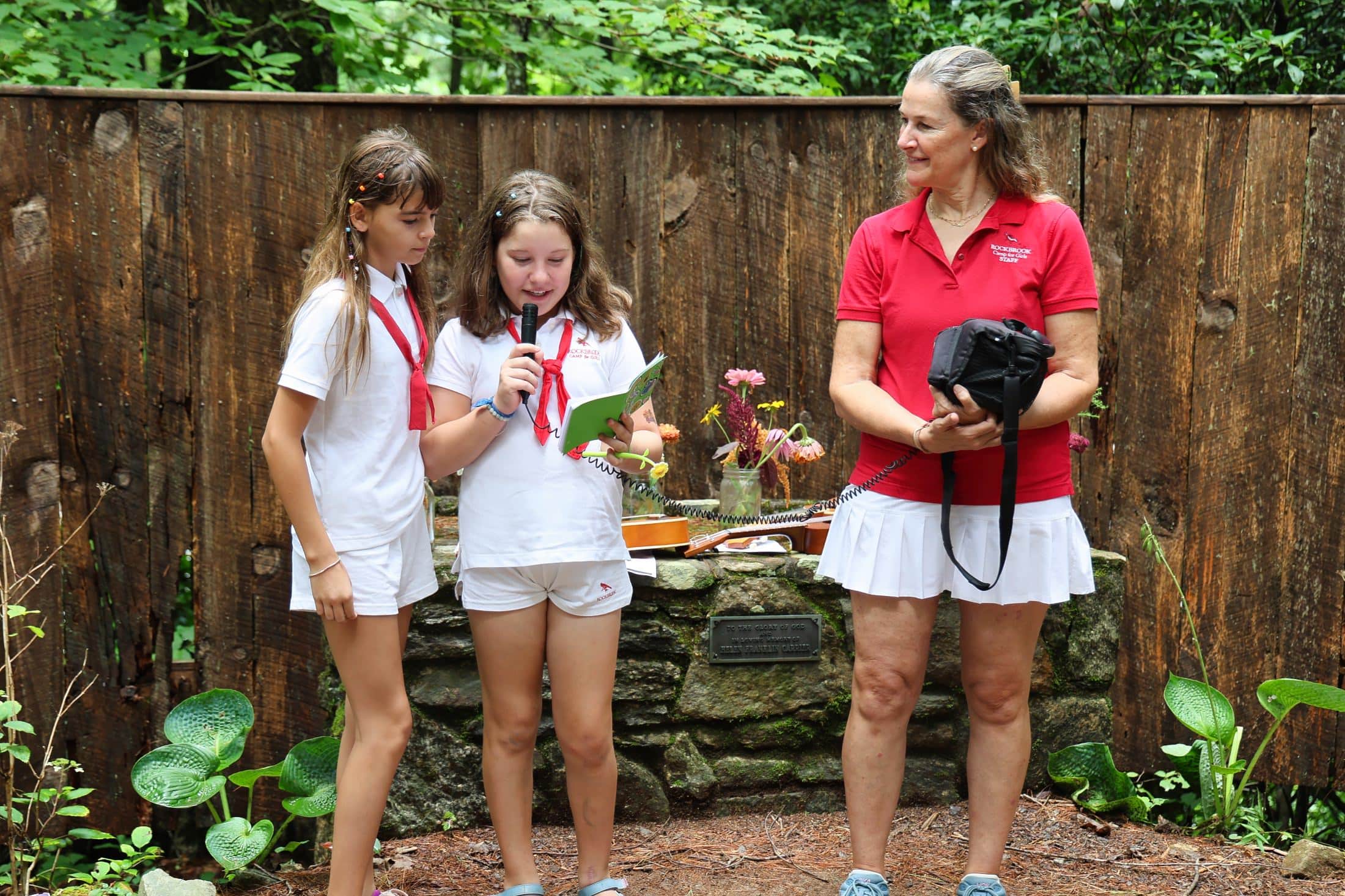
“Chapel” at Rockbrook isn’t a religious service. It’s a weekly gathering where we slow down and reflect together on a shared idea or value. Over the years it’s grown into an acronym we’re fond of— a Celebration of Happiness, Adventure, Peace, Earth, and Love.
This week the theme was “Be Yourself.” The focal point was Sarah reading aloud from Daniel Pinkwater’s 1977 classic, The Big Orange Splot. It’s the story of a man whose plain house, identical to every other house on the street, gets splashed one day by a runaway can of orange paint, and who then decides, rather than cover it up, to paint it with even more colors, bringing his dreams to life. Initially, his neat-loving neighbors disapprove of his individuality, but one by one they paint their houses too, until the whole street is fantastically different. The girls seemed to really understand how being yourself, despite your differences, can take some courage, but leads to greater happiness. It turns out camp is a wonderful place to see that in action. An odd burst of rain forced us to relocate to the Lakeview Lodge, but that made songs like “Free to Be You and Me” and a few others sound even better.
Two Kinds of Jersey
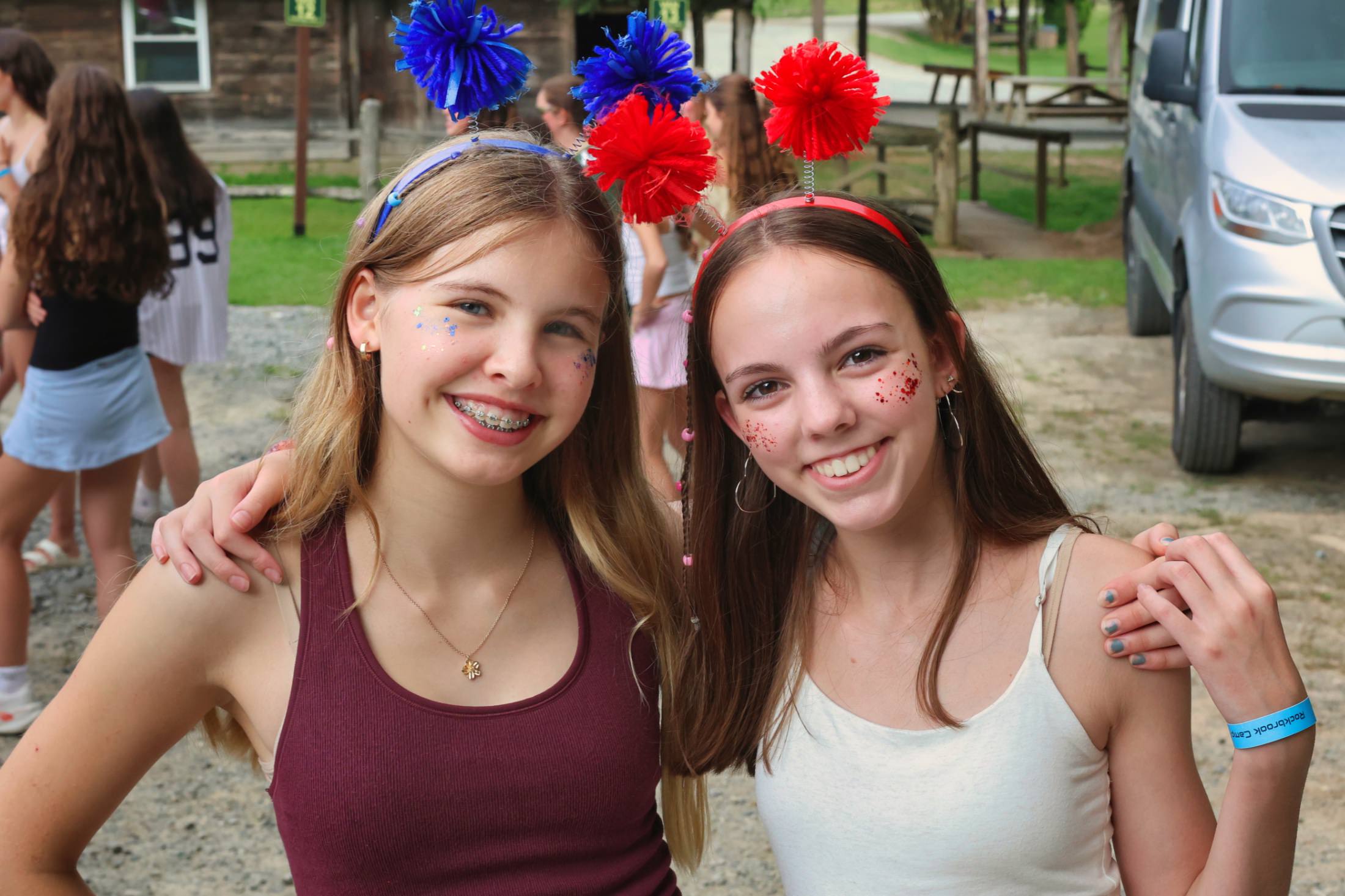
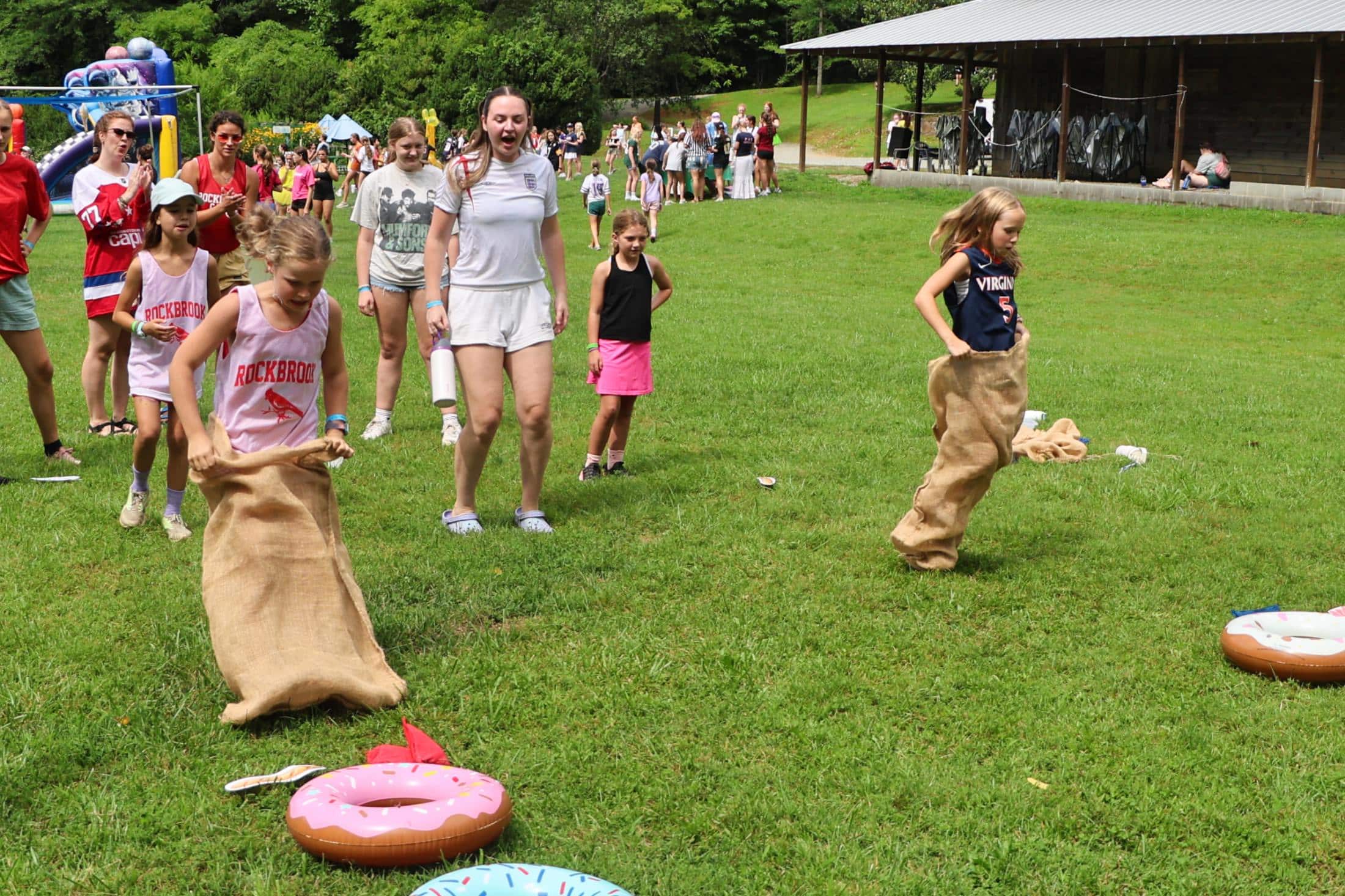
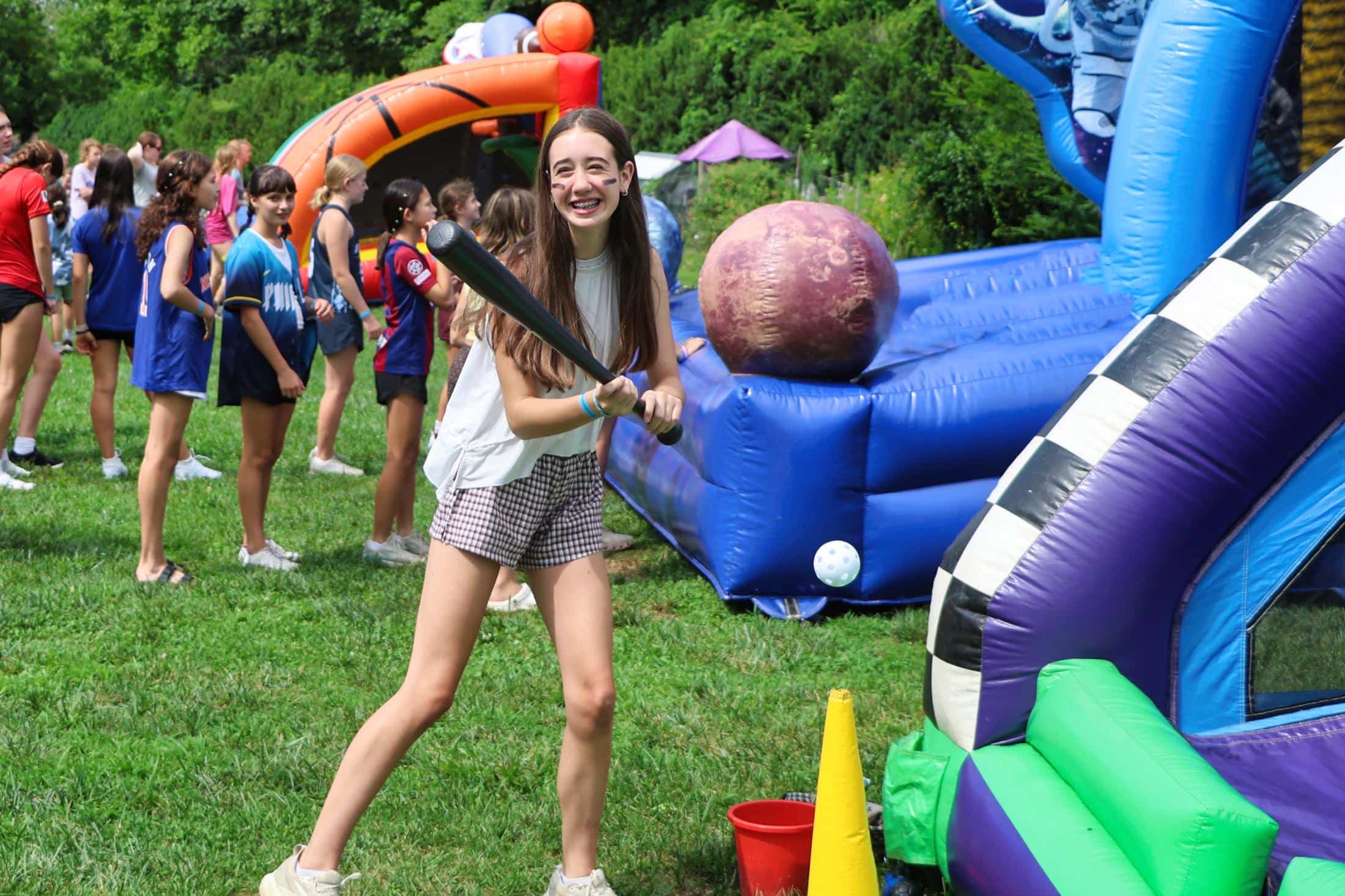
After rest hour, it was time for an all-camp event: Jersey Day. The girls knew to pack a jersey, and the Landsports field filled up with bright team colors and numbers— a friendly festival of basketball, soccer, and football players in jerseys, foam fingers waving, temporary tattoos and face painting.
Of course we had music bumping, and a few decorations like a yellow giraffe sprinkler, helping the whole thing take on the loud, happy, slightly chaotic energy of a real game day. There was a sub-relay where you stepped through hoops and zigzagged the cones, a station for churning “Jersey-cow butter,” a giant Connect 4 game, a massive nine square in the air game, disc golf, a water balloon toss, and a whole row of inflatable targets for tossing a football or frisbee, kicking a soccer ball, or sinking a basket. Plenty of nachos to keep everyone going. The baseball toss turned out to be the afternoon’s great humbling— ball after ball sailed wide of the hole, and by the end only three girls, Scotty, Dylan, and Effie, could claim they’d actually made one. The rest of us just cheered louder.
And then there were our meals today, a showcase of Rick’s idea of “Jersey Day”. While the girls thought “team jerseys,” Rick thought New Jersey, and he turned the whole menu into a love letter to the Garden State. Lunch was the famous “fat sandwich” born at Rutgers— chicken fingers, mozzarella sticks, and french fries all tucked into one sub roll with honey mustard— alongside giant bowls of blueberries. Dinner took us to the Jersey shore: a fried fish sandwich with homemade tartar sauce, coleslaw, and hush puppies. And for dessert, of course, saltwater taffy, which New Jersey gave the world. Another Jersey to celebrate.
We capped this busy day with a showing of Zootopia 2 in the gym, a recent animated film that, among other things, shows how differences can be worked through with a little communication and empathy. With sleeping bags and crazy creek chairs spread across the floor, the girls settled in to sing and clap along to its songs, happily ready to relax from the day.
A day of jerseys— and proof again that being a little different can be part of what brings us together, and makes the day more fun.
One of the quietest campers caught my attention last night. She’s a girl who tends to hang back a bit, who thinks about things before jumping right in. And yet there she was at our twilight event, a can of shaving cream in her fist, zooming across the landsports field and cackling as she fired her foam. A little later I saw her grinning as she sculpted a mohawk into her friend’s hair. Something about the whole ridiculous scene had swept her up completely. This was more than ordinary fun. This was exuberant fun, contagious, high-voltage joy spilling out everywhere.
If you’ve never seen one, the setup for a shaving cream fight is super simple. We ring the bell, the girls come pouring down to the landsports field in their swimsuits, and we hand out about a hundred and fifty cans of plain white foam. The music starts pumping. And then, with no instruction whatsoever, everyone knows exactly what to do. Spray it, smear it, plop a full handful right on top of someone’s head. Chase and be chased. Within five minutes there’s foam in everyone’s hair, on every back and shoulder, and the whole field is one big tangle of slippery, shrieking, laughing girls. It is loud, it is messy, and it is about as happy as a group of children can possibly be.
What makes a shaving cream fight so wonderful, though, is that it’s exuberance aimed outward. It’s not so much about covering yourself as it is about covering someone else. You sneak up behind a friend with a fat handful of foam, plant it squarely on her back, and tear off grinning, already bracing for the same in return. You spray, and get sprayed, and both halves are a delight. This is why a shaving cream fight requires other people. It requires pursuit and ambush, shrieks and retaliation, mischief mixed with generosity.
And when the whole group throws itself in at once, something special happens. The exuberance multiplies. Each girl’s silliness gives the next one a little more nerve, and the energy loops around the field, pulling in even the campers who arrived unsure. Nobody is keeping score, nobody is performing, nobody is left out. They are simply, completely, joyfully together. As a parent, this is exactly the kind of fun you hope your child gets to have— unguarded, generous, and shared with good friends.
It’s amazing what these girls can do together— even the quietest ones. All it took was one foamy evening at Rockbrook.
The summer is off and running, and we have our first highlights video to show you. Once again, we’re so glad to have Robbie Francis of FrancisFilmworks here with us— his eye seeming to find exactly the right moment, every time. Robbie has been a part of our summers since 2015, and by now he understands Rockbrook far beyond just knowing where to point his lens.
His videos are always special. Rockbrook is not easy to describe— there’s simply too much happening in too many corners of camp at once —but Robbie has a gift for distilling it into something you can actually feel. A glimpse of girls giggling, playing, and smiling. Sweet moments that make up our days.
We hope it brings you a little closer to what your daughter is living right now. Enjoy.
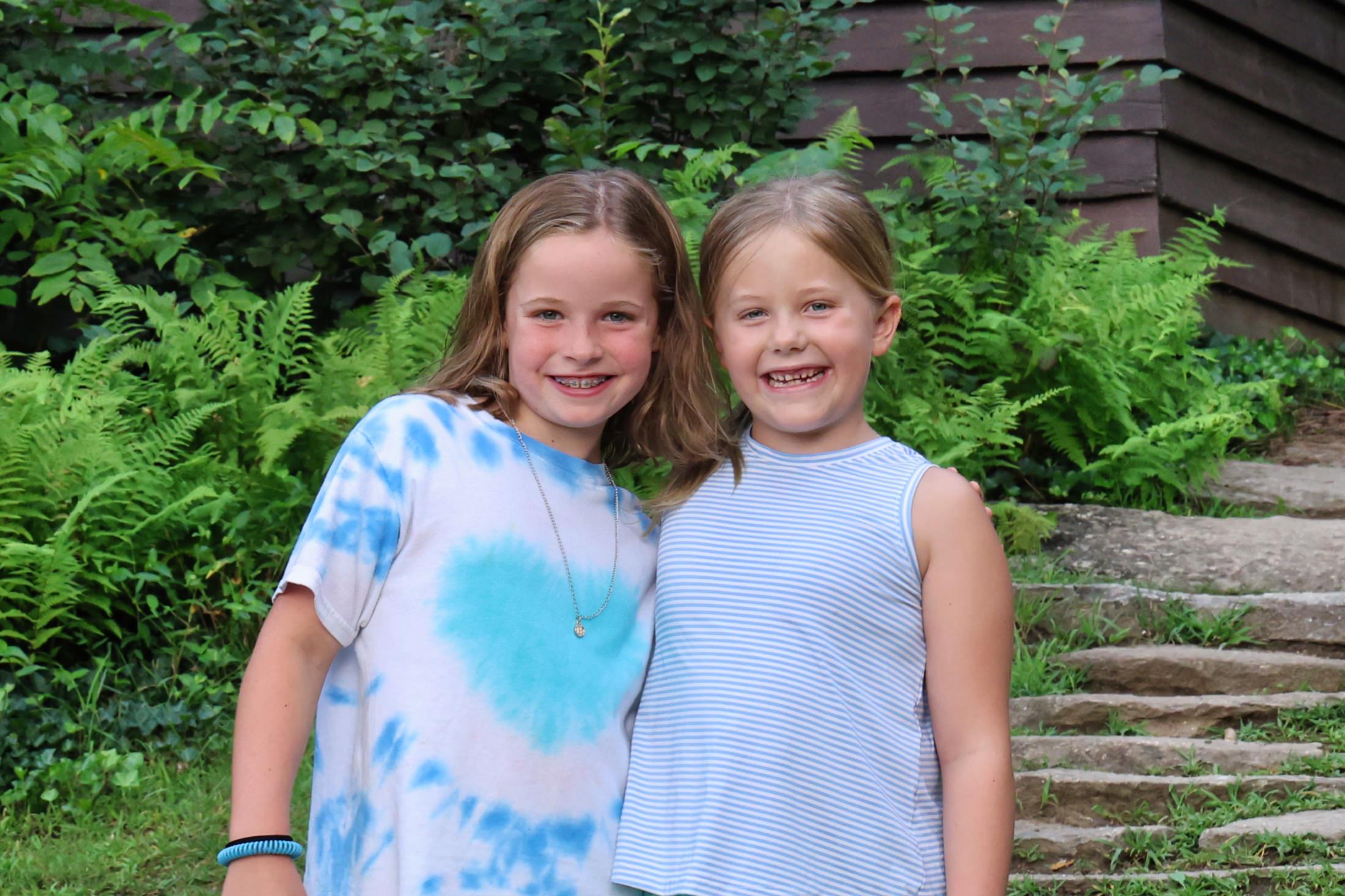
It happens predictably, and I’ve already seen it these first few days of camp. A camper or staff member arrives at Rockbrook not knowing anyone, and in a very short time, finds themselves making friends. What’s remarkable is how fast it happens. Ordinarily making a true friend is slow work, something that takes many weeks of testing the waters of a relationship, but at camp it often takes just a day. Especially for older campers and staff members, this is a pleasant surprise. There’s something special about camp that makes this possible and expected. I’ve seen some version of this “fast friends at camp” phenomenon so many times at Rockbrook, it’s worth wondering why.
After all, the wider world seems to be moving in the other direction entirely. Certainly, we’re more “connected,” digitally, to more people than ever before: hundreds, even thousands, of contacts saved in our phones. Multiple “social” media accounts feed us an unending stream of “updates” on the lives of the people and advertising corporations we might “follow.” Any time of day, a scroll of faces awaits. Yet in the middle of all this so-called connection, a great many of us feel more alone than ever. There’s lots of chatter, but how much real conversation are we having? And I think our children aren’t immune. Their days, too, are fast-paced, screen-lit, and only superficially textured by the real world. Camp runs against this current, and that’s why it feels so different here.
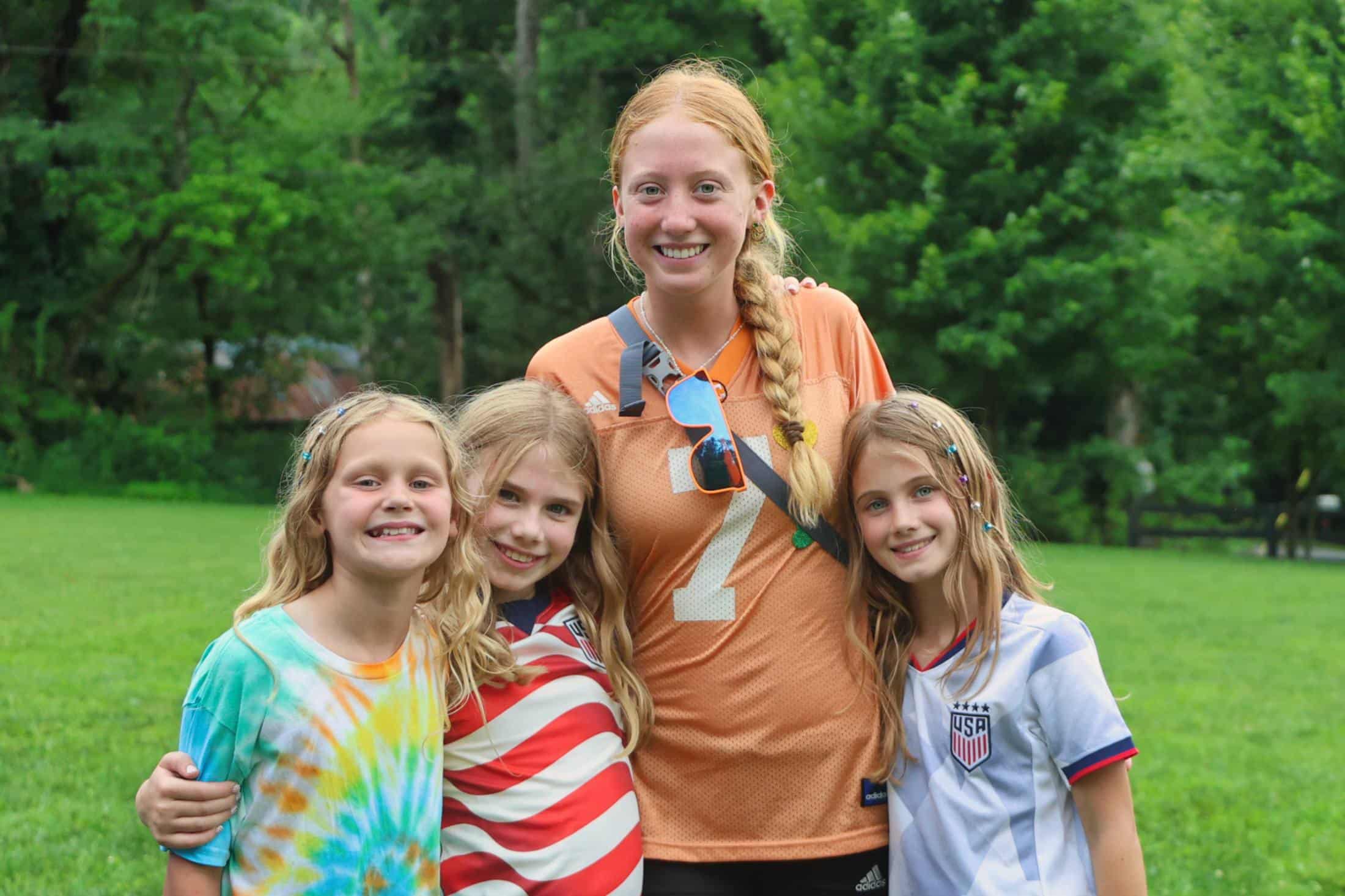
So why is making real friends easier at camp? I believe there’s a simple reason. True friendship requires authenticity. We are most able to make friends when we are most fully ourselves.
That sounds almost too tidy until you watch it happen, until you see a shy 12-year-old who arrived behind a careful shell decide that she doesn’t need that protection here. The culture of Rockbrook is what makes that decision easy. Experiencing genuine kindness, along with the smiles and caring that accompany it, lays the groundwork. No phones here means no audience to perform for. The regular dose of silliness, the shared experiences in the real world, the spirit of curiosity and adventure for trying new things, fuel the courage. In a place stripped of social judgment, girls can drop the assumptions they’ve been carrying about who they’re supposed to be and find the freedom to be, as the girls themselves put it, “the real me.” What they find, to their genuine surprise, is that the people around them still care about them, quirks and all. We’re all quirky in some way or another, and camp is one of the few places that treats this as good news.
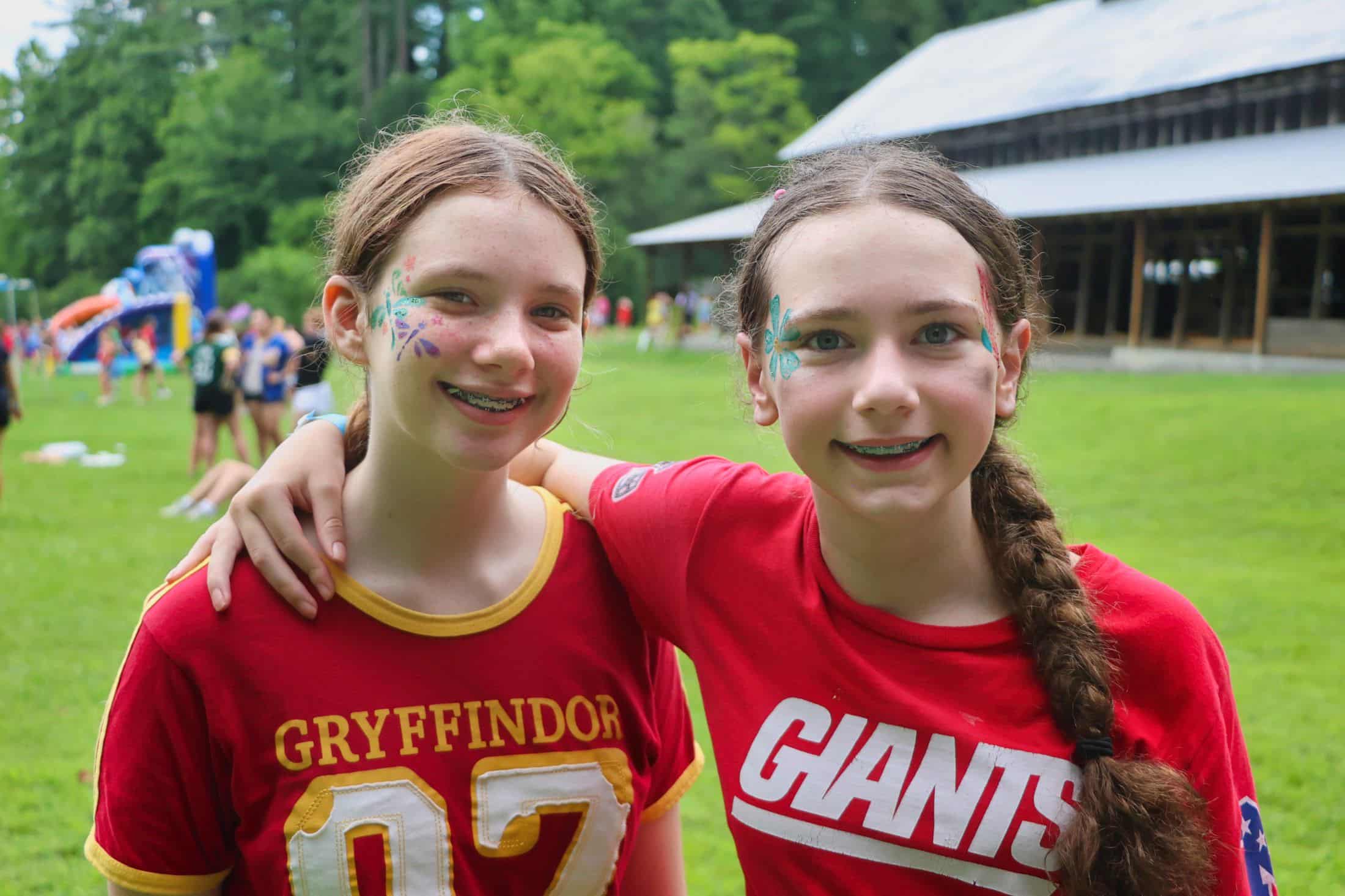
That, I think, is why camp friendships are so strong. They form between people who have stopped performing. With no posing, no nervous angling, no strategy about which version of yourself to reveal, the real you can actually be known. And, because you aren’t busy managing your own image, it’s actually easier to take a real interest in someone else. Moving past constructed personas is the trick. What we find is a sturdier thing, a mutual affection that comes from genuinely understanding each other. It forms fast because there’s nothing in the way. It lasts because it was real from the start.
One lesson in all of this is that the trait of “being friendly” is not really about having a “sunny disposition,” or being attractive in some way. It’s not about charm; it’s about nerve. It’s being willing to let yourself be seen without the armor, and the kindness to make room for someone else doing the same. It’s two acts of courage meeting in the middle.
It can take a lifetime to figure this out. Fortunately, for the campers at Rockbrook, we practice this every day. Through countless real-world conversations and interactions, we discover how the “real me” matters, how everything is better in the company of genuine people, and the world is rich with possibility when we truly engage. Beyond all the action—the hiking, swimming, dining hall songs—camp is about the people, which is to say it’s about the friends.
We might call it a “regular” day around here, but for the girls who just arrived, today’s first full day of Rockbrook activities was anything but ordinary. Today was the first day to jump feet first into camp life and all that it offers. And compared with life at home, this meant jumping into all sorts of new experiences.
New places to wake up— in a rustic wooden cabin, cooled by mountain air, and filled with the sounds of forest birds and drowsy cabinmates stirring. New things to eat— the warm bowl of secret-recipe oatmeal with fresh berries, nuts, granola and brown sugar for breakfast, and the surprise mid-morning snack, a freshly baked cookies and cream muffin. New creatures to find on your walk down to the lake, like the tiny ring-neck snake dashing off to hide under some leaves. New smells— the earthy leather saddles on horses, the smoky campfire ready for marshmallows, and fresh mint growing in the garden. And so many points of natural beauty all around us— the bright granite face of Castle Rock high above camp, the sparkling creek tumbling behind the weaving cabin, the massive trees, delicate ferns, and blooming wildflowers popping up, just to name a few. Camp life is new and wonderful.
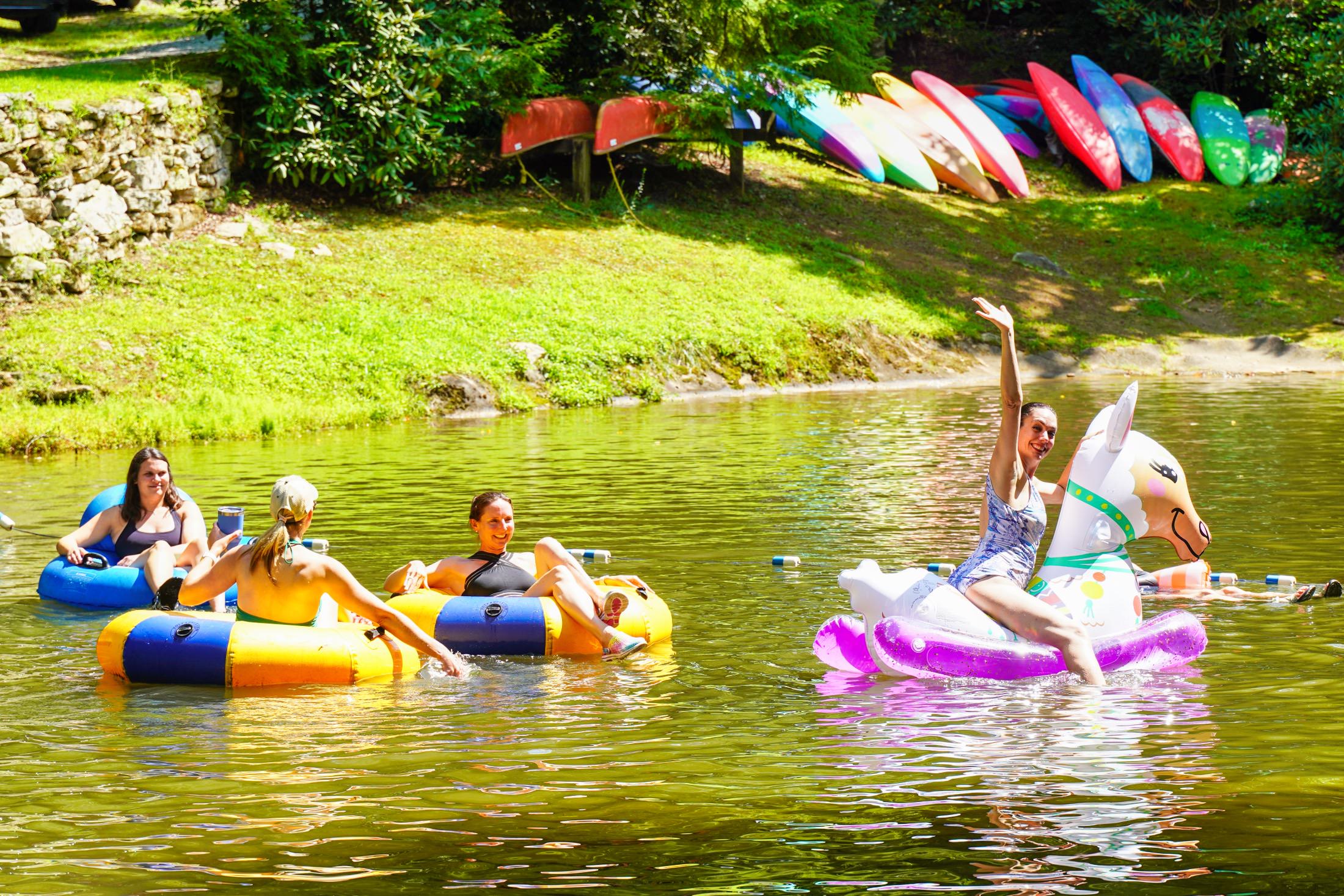
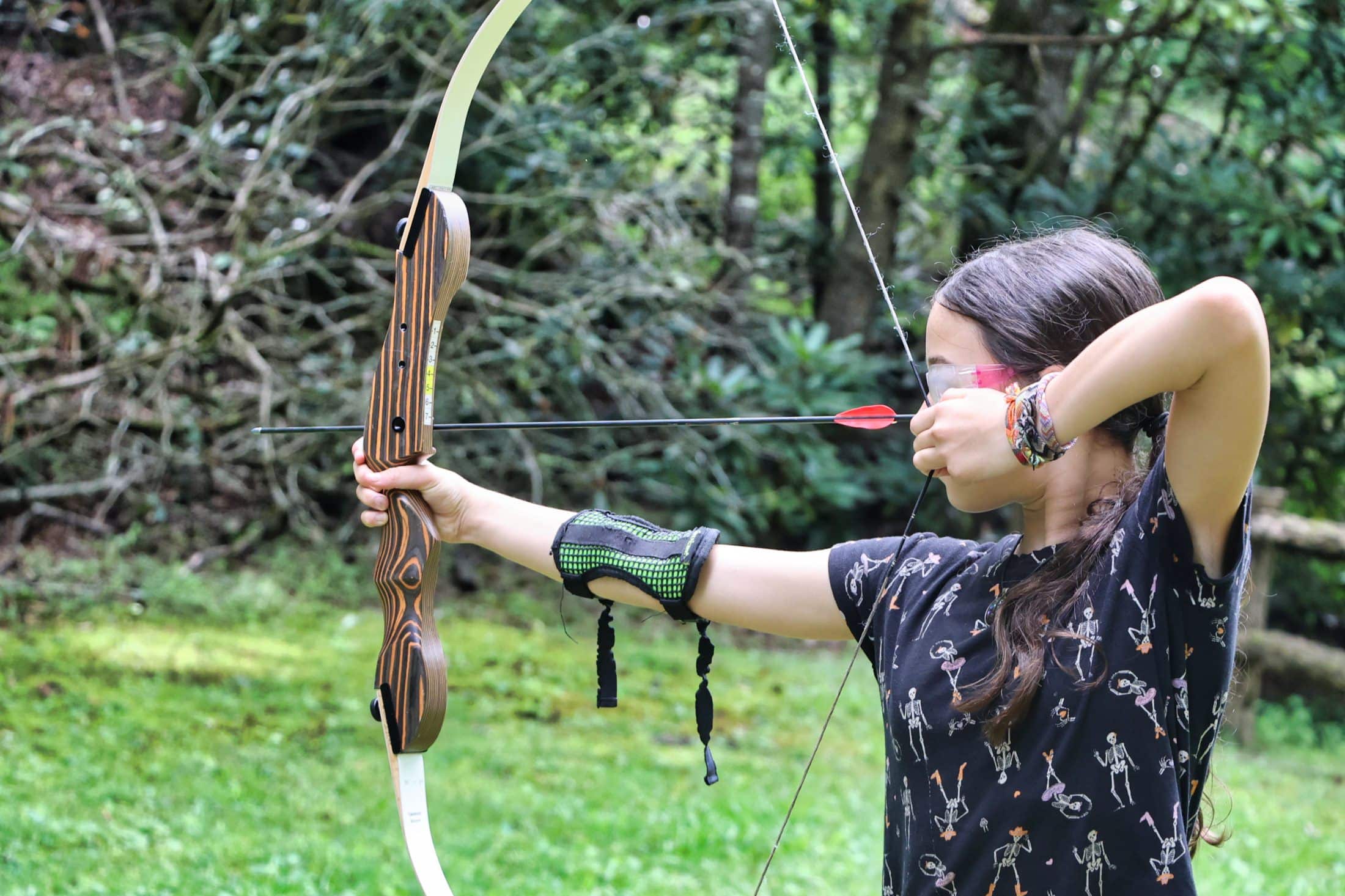
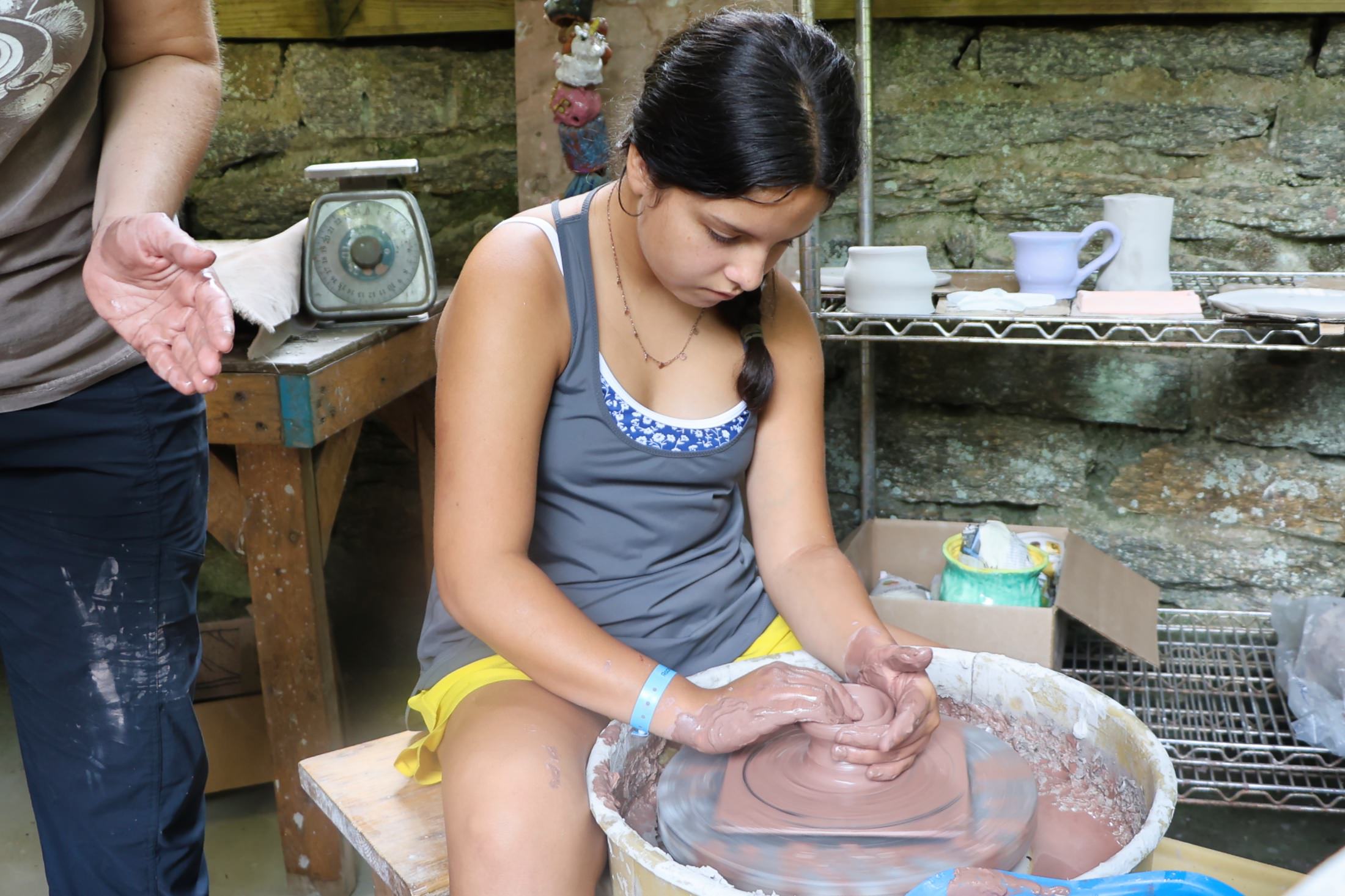
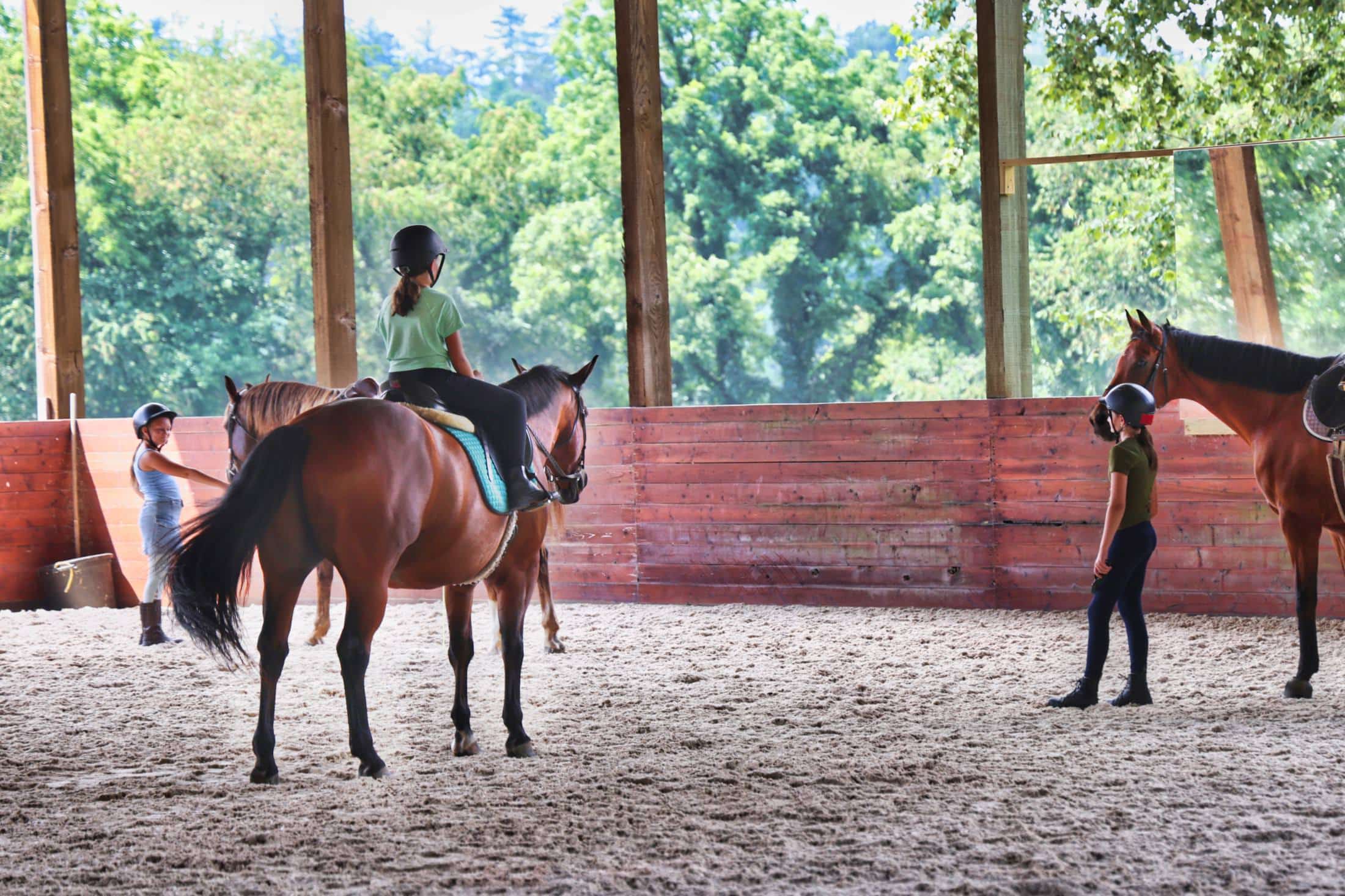
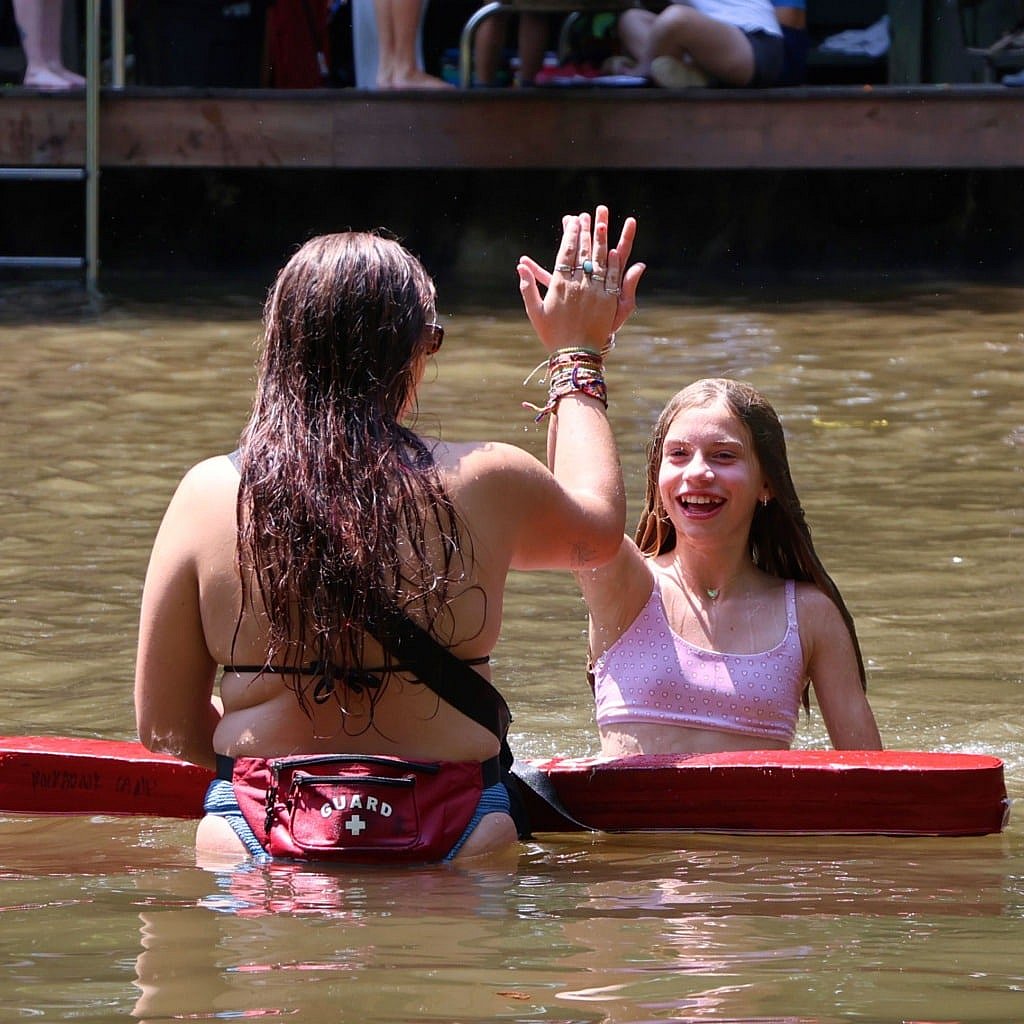
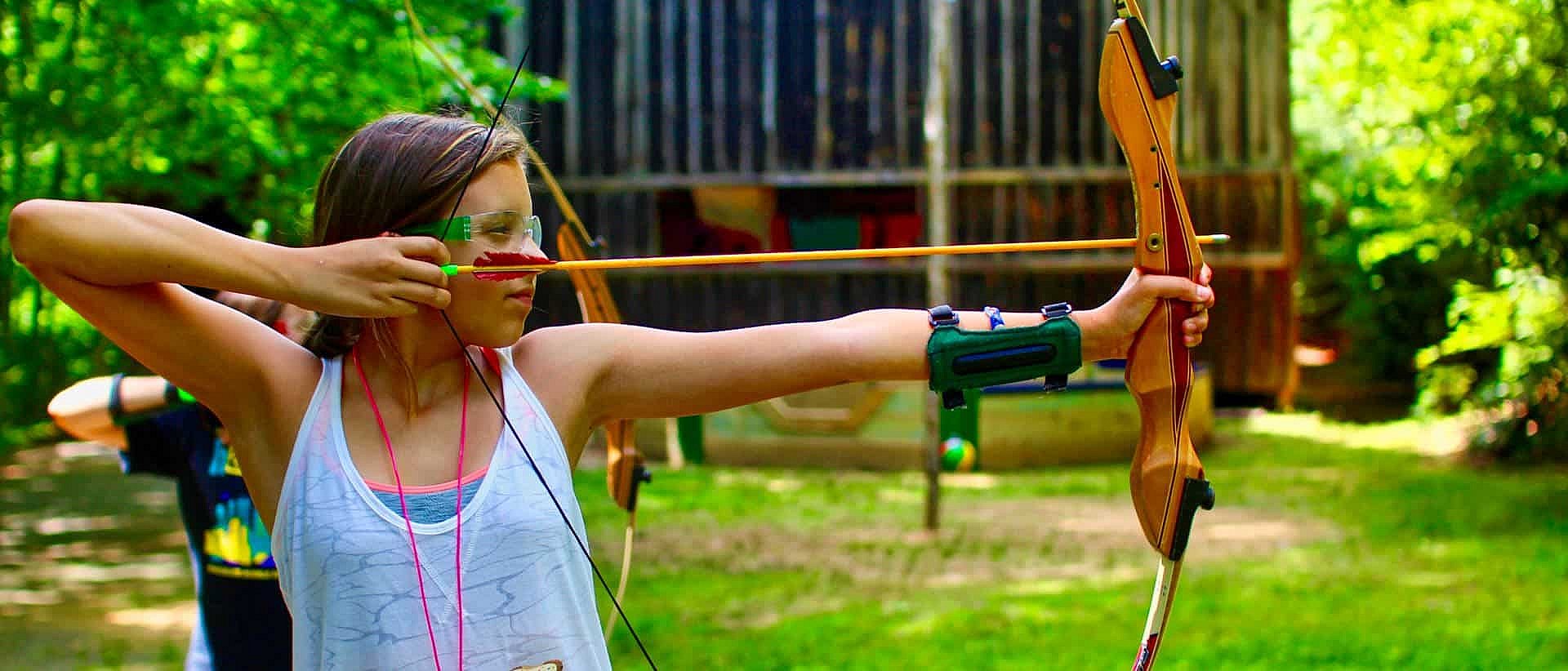
It’s also packed with action, with nearly 30 different activity options. After making their selections, every corner of camp seemed to hum with the energy of girls flipping in gymnastics, climbing the alpine tower, and zipping through the trees on the zipline. They were smacking tennis balls, bouncing basketballs, and swinging tetherballs. They were swimming and paddling kayaks in the lake. They were weaving on looms and stringing colorful beads onto necklaces. They were shooting arrows and aiming rifles. They were painting, gluing, and collaging paper, exploring what they might make with simple materials. They were hugging horses and chickens, jumping off the diving board and gliding down the waterslide during the free swim period. At other times, they were simply relaxing and soaking it all in.
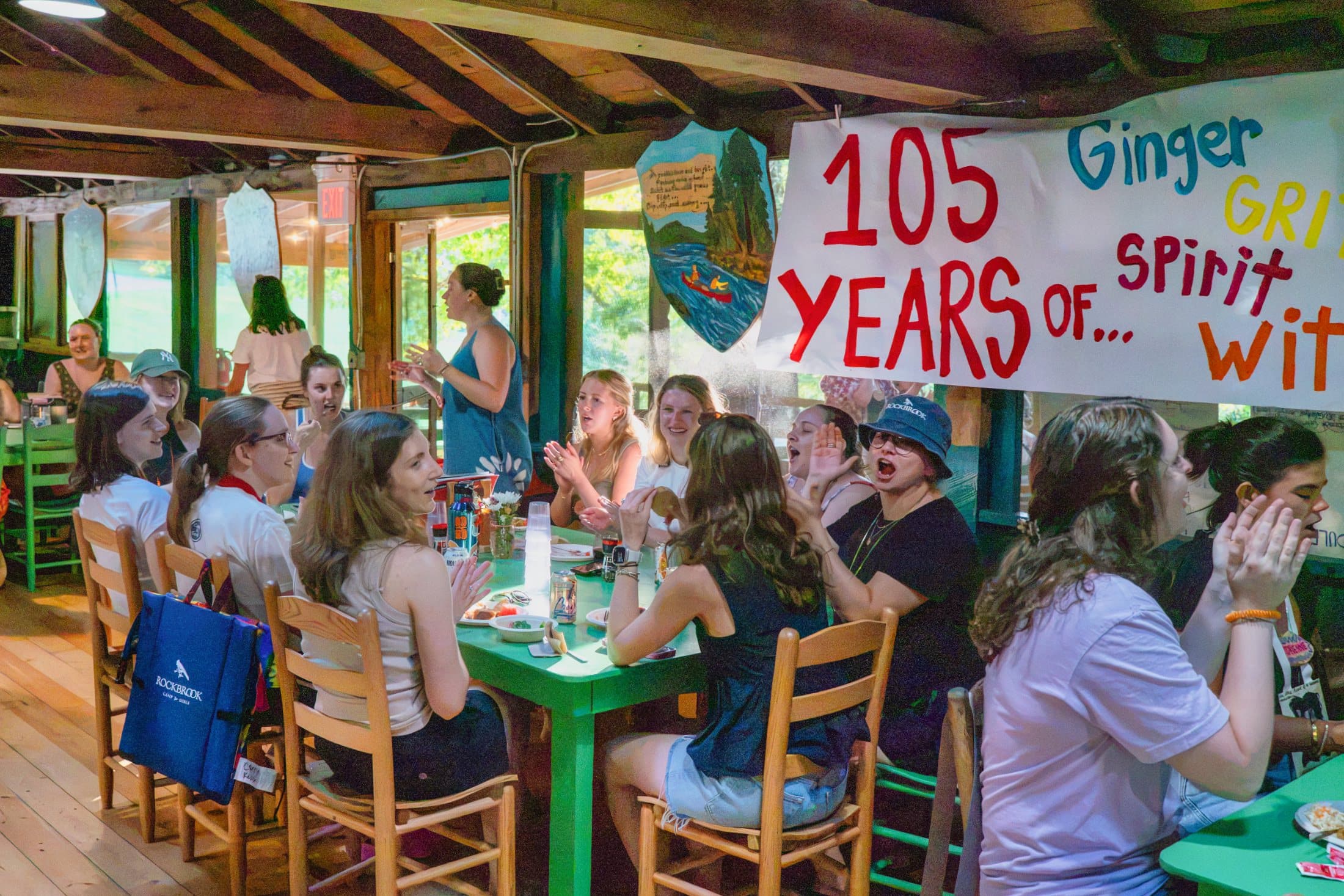
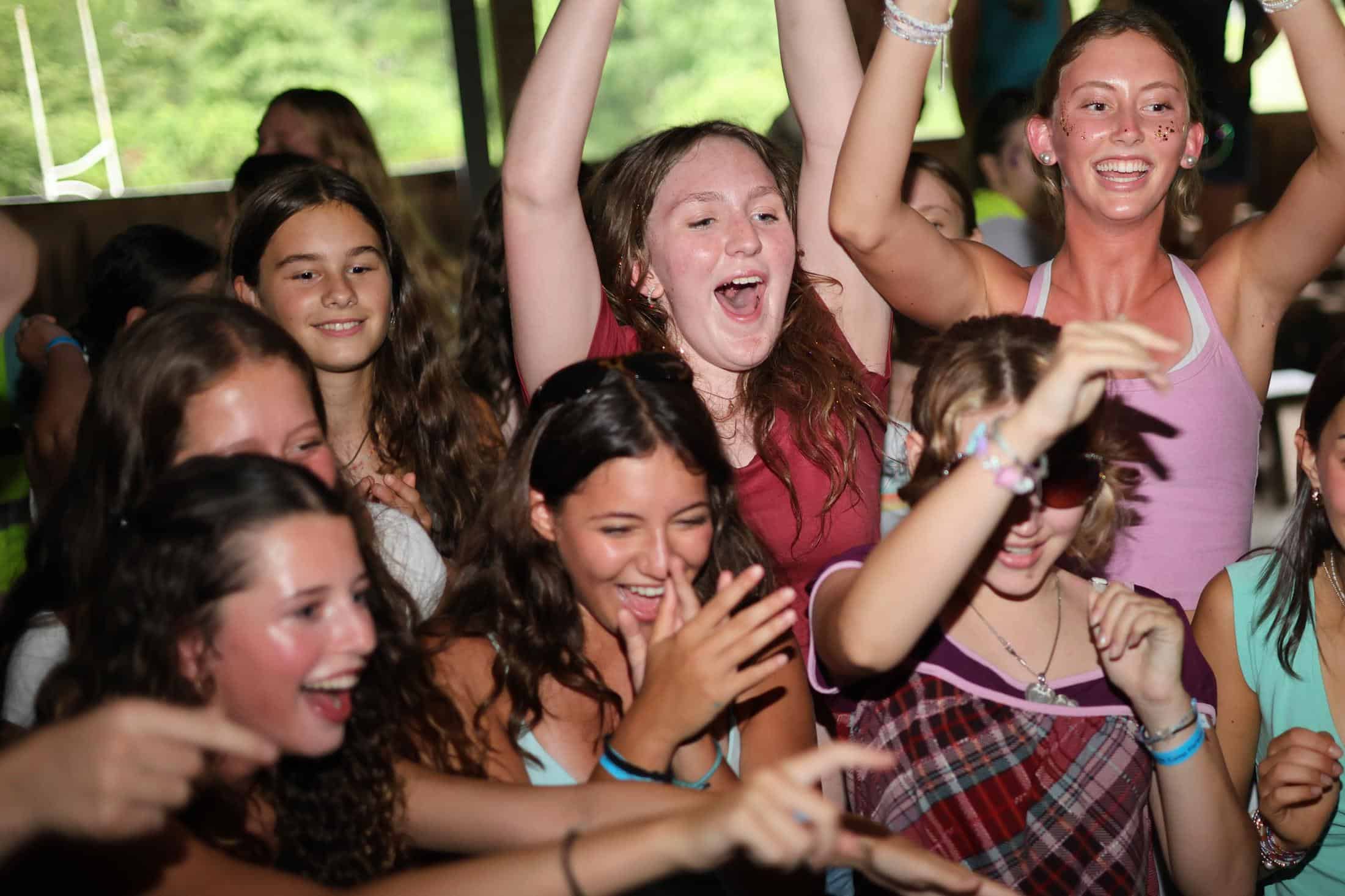
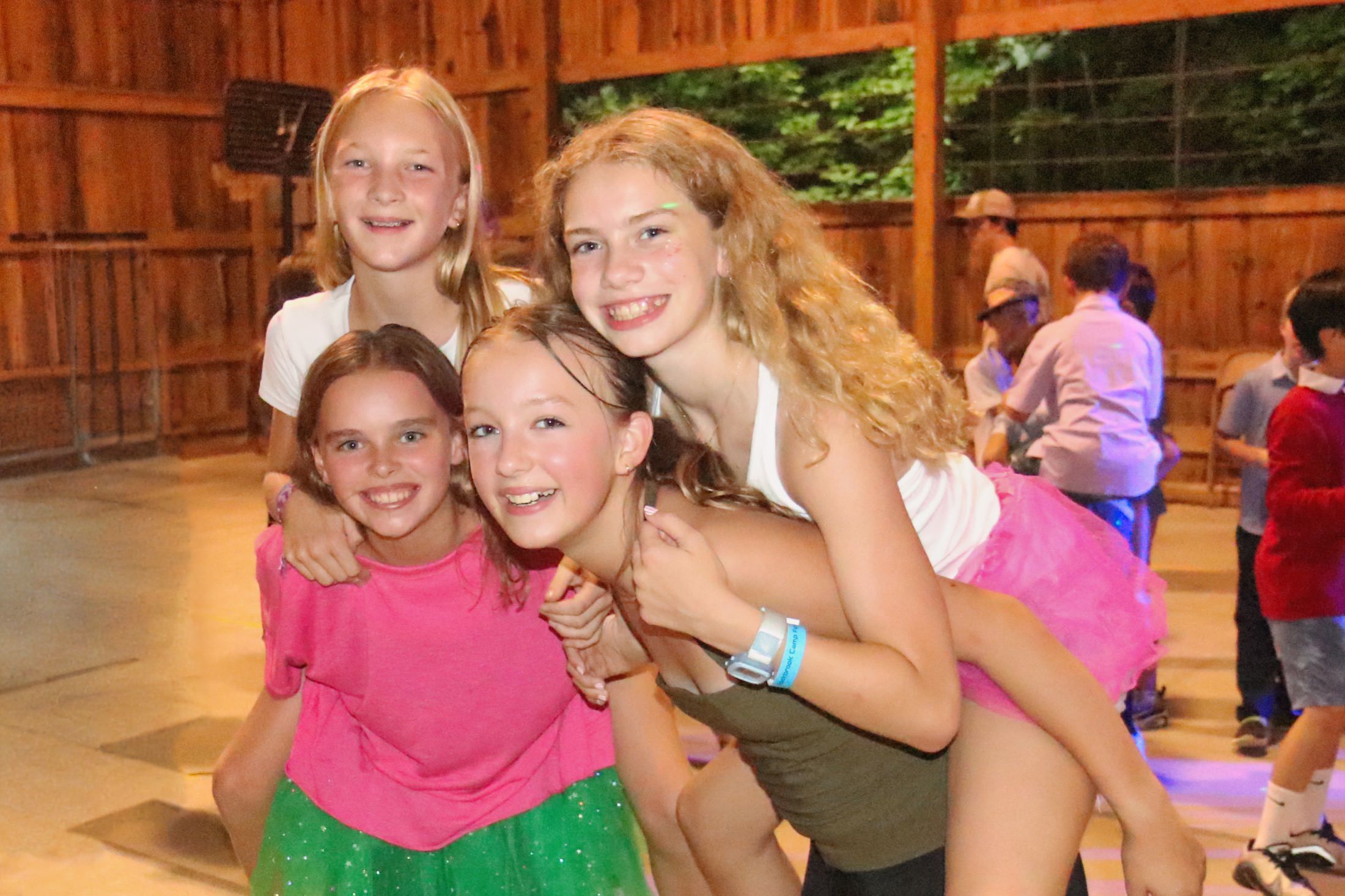
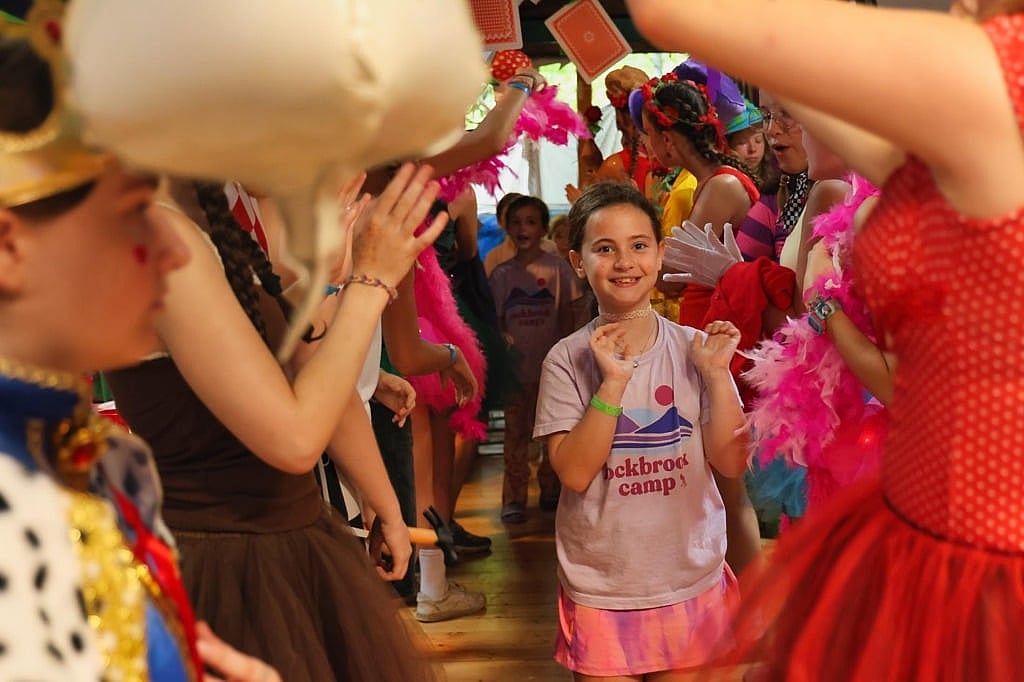
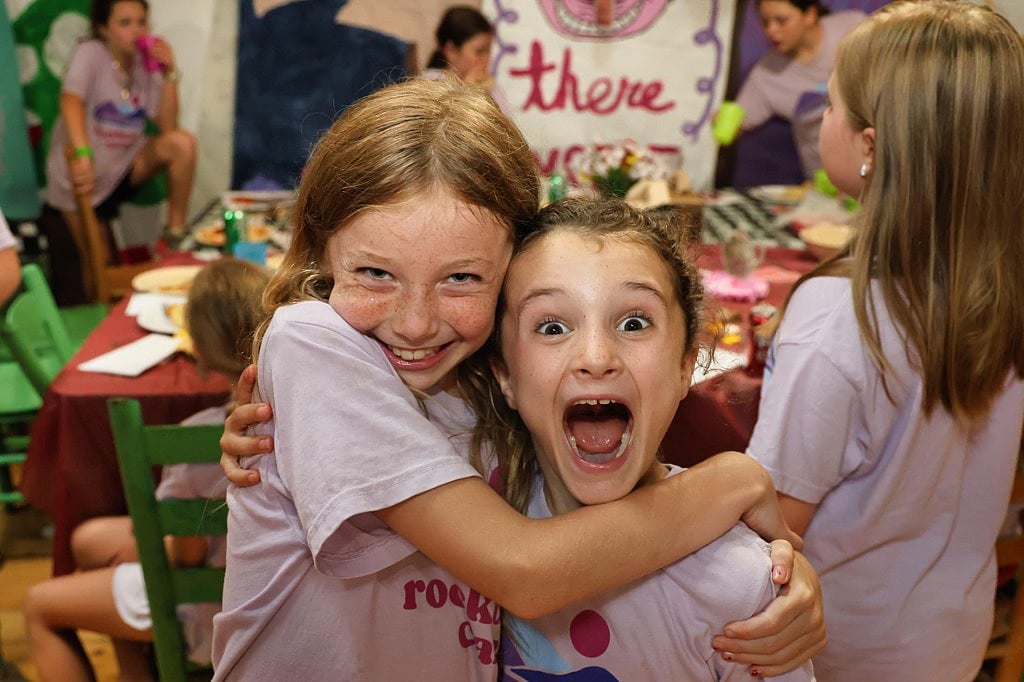
Most remarkable, and wonderful, is all the laughter of the day. Being surrounded by all these new experiences and activities, and being joined by so many easy friends, we can’t help but laugh and smile. We’re chatting all the time, telling stories, and whooping at every success (nice cartwheel!). We’re enthusiastic about wearing a costume whether it’s diamonds or denim. When kindness sets the tone— and it does at Rockbrook —it’s easy to be silly and find yourself having fun in the moment, laughing and singing, clapping along to whatever the group is doing. Meals in the dining hall are a daily example of this with hilarious cheers, dance numbers, and songs with hand motions. Yes, we’re eating, but it’s also a party, three times a day.
By the end of the day, camp life is already feeling good, less new and more familiar. The girls seem to understand better that this place is different. It’s beautiful and relaxing, thrilling and silly, playful and friendly, here for them to explore.
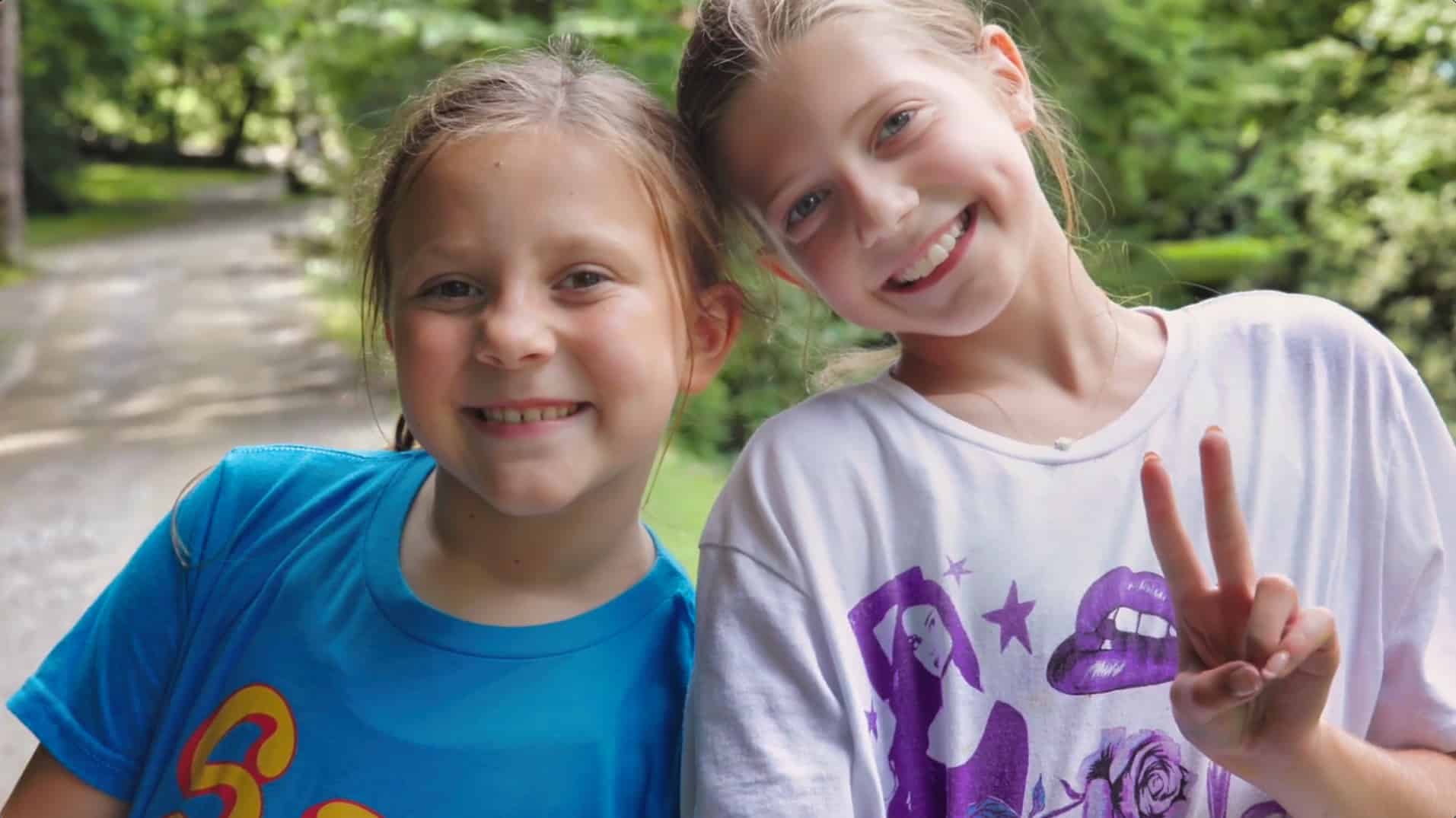
It’s very different from home. But that’s entirely the point.