
A Campfire of Songs and Stories

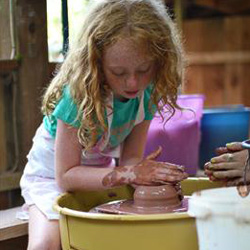
Camp girl throwing pot on ceramics wheel

Ceramics has always been a popular craft activity at Rockbrook, and this session is so far no exception. Poke your head in the “Upper Clay” studio, which is an open-air work space next to the dining hall, or the “Lower Clay” studio, which is a narrow stone building in the woods down along the path leading to the stables, and you’ll see lots of muddy hands. That’s because seated around the work tables, there are campers rolling clay into coils, pinching it into small cups, and flattening it into slabs. Joining these parts together, interesting sculptures are emerging. Perhaps most amazing is what the girls are doing on the electric pottery wheels. Katie and Will, our two lead ceramics teachers, have been teaching wheel-throwing techniques, giving the campers tips and individual instruction as they practice centering the clay and pulling it up into a bowl or cup, for example. Learning to throw a pot on the wheel is an advanced ceramics technique, but these girls are handling it easily. It will be great to see how their pieces turn out once they are glazed and fired.

Sharpening Skills at the Rifle Range
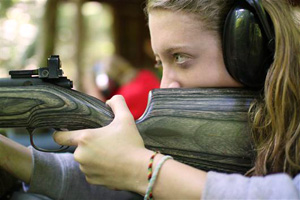
Camp girl shooting a rifle

The rifle range is another place in camp that sees constant action, with campers signing up and filling every class period it’s offered. Perhaps it’s the thrill of shooting the gun, hearing that distinctive “pop!” when you pull the trigger, and smelling the gunpowder, but I think the girls also like riflery for the satisfaction it provides after scoring on the target (“hitting the black”). It’s also an activity so different from what’s available at home, and something in which the girls can experience real improvement and success- even scoring a bullseye now and then. Later in the session we will be challenging Camp Carolina for Boys and hold a riflery tournament to see who has the best team of marksmen (or -women!). Cliff DeMeritt, who has joined our staff after retiring from being a law enforcement sharpshooting instructor, has been working with the girls to improve their technique, so we’re hoping to see a great showing at the tournament.
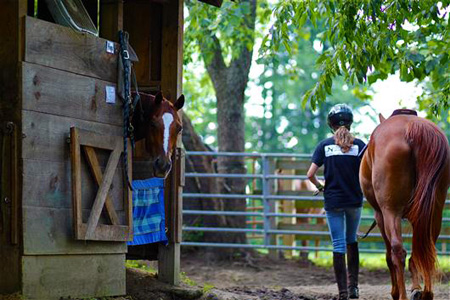
Camp horse barn
Wrapping up an afternoon of summer horseback riding

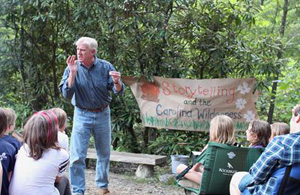
Gary Greene’s Campfire Program

Campfire Story Teller Gary Green

Tonight’s evening activity brought our friend Gary Greene back for a campfire and program of story telling, skits and songs for the Junior and Middler campers. With a crackling campfire set, Gary played his guitar and led the girls in several songs. One favorite was “Little Cabin in the Woods,” a funny song with hand motions that’s sung repeatedly (and fast) while words are dropped leaving just the song’s hand motions in the end. Gary had the girls singing, laughing and smiling in no time, yet also on the edge of their seats, wrapped into his telling of a Norwegian folktale. A few counselors also led a favorite camp song or two- “An Austrian Went Yodeling” with more hand motions -rounding out the evening. A classic camp night, and the girls enjoyed it thoroughly.
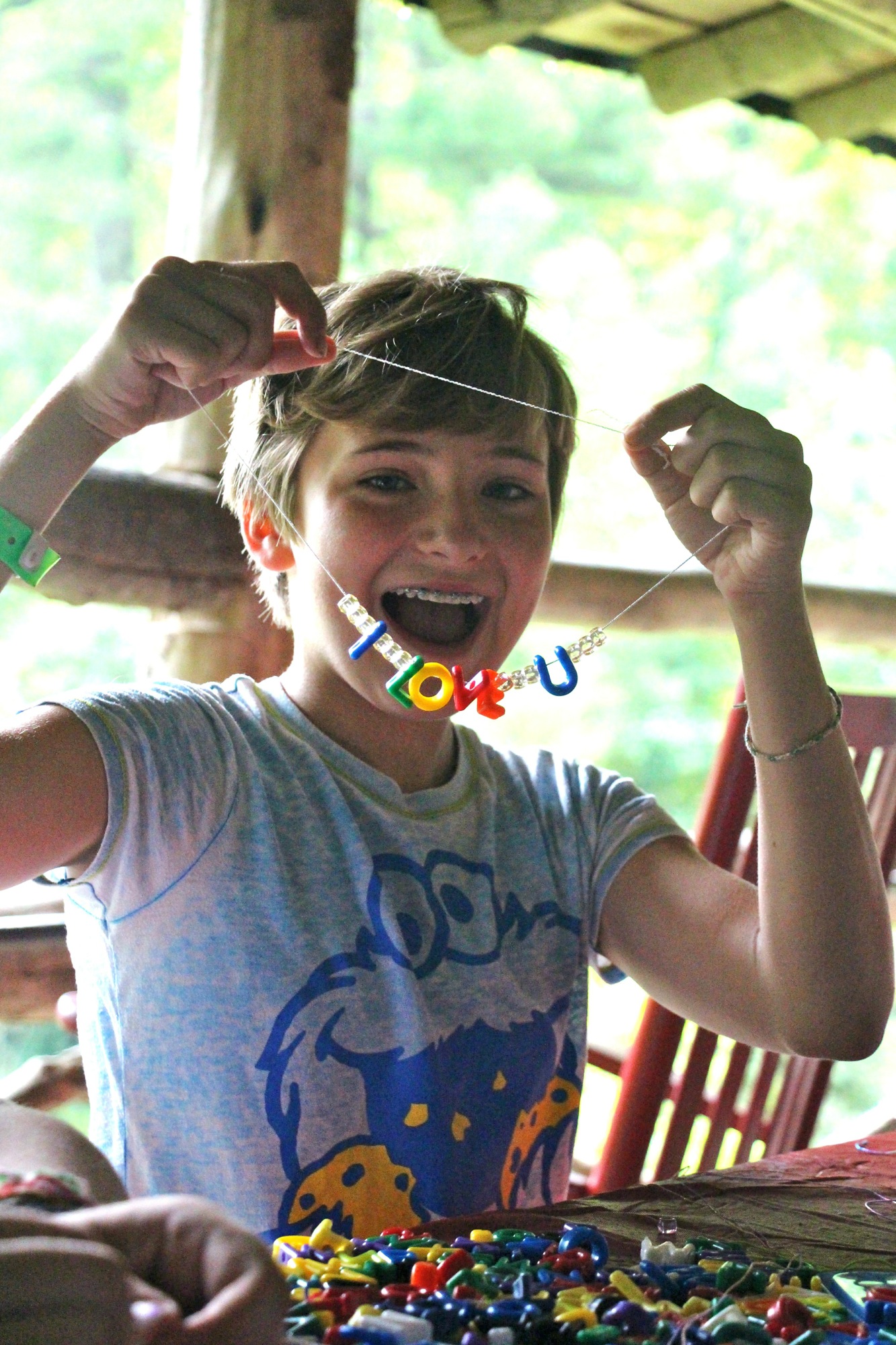
Silly and Chilly

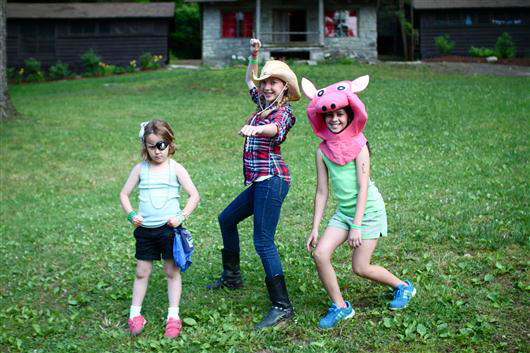
If you’ve been following the photo gallery, you know dressing up in costume is a regular occurrence around here. Every other day or so, we have a special event, or just an announced theme, where we encourage the girls and the staff members to dress up or create a silly character. And the sillier, the better! You should see what these girls come up with when they combine hats, dresses, wigs, make up, paint, glasses and all kinds of improvised props like sticks, leaves and brooms.

Camp Children Dressed Up

A great example of this was the “Disney Photo Shoot” the girls held on the hill after dinner, during the hour of free time we call “Twilight.” It’s a time when the girls can hang out, take showers, read, play tennis or tetherball, but when they can join an optional camp-wide game or activity. The “Photo Shoot” was just that: a chance to dress up and pose for a few photos. It seemed to be most popular with the Juniors (K-4th graders), but the counselors were also pretty excited about the chance to pose. I’m not sure how these costumes were “Disney-related,” but I’m sure if we asked, the girls would have a clear answer. In the end, of course, that doesn’t matter because dressing up is really just for the fun of it. It’s a chance to let go a little, to laugh with your friends about how crazy we look, and to be completely indifferent about what people might think. It’s camp!

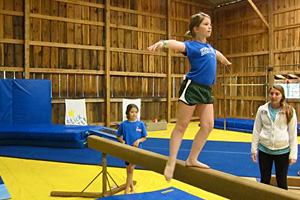
Camp child doing gymnastics on balance beam

Gymnastics in the Gym

Down in the gym, Elaine Trozzo our longtime gymnastics coach is working with the girls. After a thorough warm up with plenty of stretching on the deep blue padded runway (flexibility!), she has been helping them with beam techniques (balance!). Elaine and her staff of counselors are great at tailoring each class to every camper’s level of gymnastics experience. Beginners might be practicing on the low beam, while more advanced girls can work on the full-sized balance beam, for example. Each day the girls can enjoy a different gymnastics event. Maybe the high bar, the mini trampoline, or the tumbling runway- there will be helping hands, instruction and encouragement to make it great.

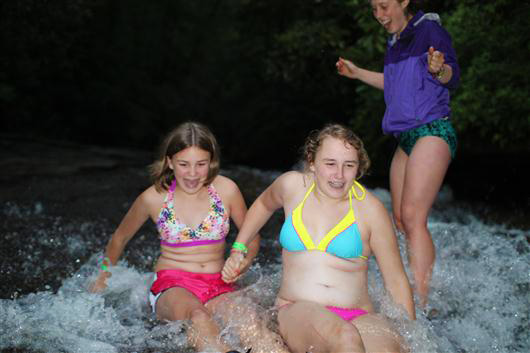
Camp children going down sliding rock

Sliding Rock Despite the Cold

It looked a little cloudy as we pulled out of camp with all of the Senior girls loaded into 4 buses, but we were hoping the rain would hold off for a picnic and trip to sliding rock. As we drove along Looking Glass Creek in the forest though, it started to sprinkle a bit, so suddenly our picnic needed shelter. Fortunately, we knew just the place were we could all sit and eat while waiting for the rain to stop. You might guess that it was a bit chilly at this point, but did that prevent us from stopping at sliding rock? No way! The rain had finished, and dinner had really energized the girls. Yes, the water was “FREEZING!” but that didn’t prevent many of the girls from enjoying the plunge. I do think the squeals were partly due to the water temperature, but also from the sheer delight that comes from such an extreme experience. With Dolly’s Dairy Bar at the entrance to the Forest, we had to stop on the way home. It’s funny how despite being chilly and wet, nobody was too cold for an ice cream cone!

More Reasons Kids Need Camp

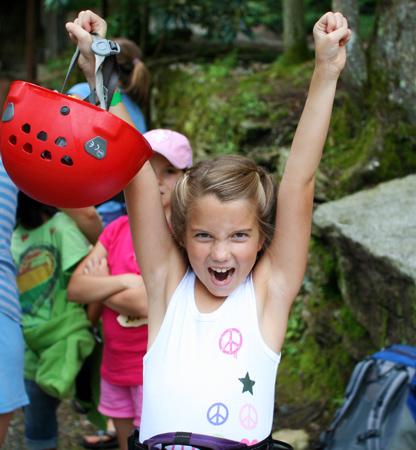
Excited Camp Kid

Around here at Rockbrook, we’re big fans of discussing why summer camp is so great for kids. There’s no doubt that spending time at camp is super fun and kids love it, but it’s also important for their personal, physical and social development. In so many ways, camp is something our modern kids need more than ever because it provides relief from unhealthy habits. It serves, as we’ve said before, as a haven for children.

Over on the Web site What’s Up for Kids, Kathy Alessandra just posted an article entitled, “Five Reasons Your Child Needs Camp.” Reporting information from the American Camp Association and several well-respected studies, the article is a nice reminder of some very significant ways kids benefit from camp.

Here are the 5 reasons listed.

  1. Campers gain positive life skills like “making friends” and “trying new things.”
  2. Campers stay in motion, enjoying physical exercise.
  3. Campers have experiences that help them back at school.
  4. Campers reconnect with nature.
  5. Campers engage in creative free play.

Of course, there’s a lot to each of these, but perhaps most importantly, this article is another reminder of how rare and valuable a summer camp experience is for our kids. Definitely a great thing!

Rockbrook’s Harvestmen

Daddy Long Legs Spider

Probably the most common arachnid (the class that includes spiders) you see around Rockbrook is this little guy. You probably recognize him as a “Daddy Long legs Spider.” And you’ve also probably heard that they are the “most poisonous spider in the world,” but (luckily!) they are not dangerous because their “fangs are too small and short to bite through people’s skin.” With that kind of reputation, this is definitely a little scary no matter what.

The Truth About Daddy Long Legs

The problem is; it’s not true. Also known as Harvestmen, these little guys do not in fact have fangs or any venom at all. It is true their mouth parts are quite small, so they can’t bite you. Overall, they’re totally harmless. They also don’t spin webs because they lack silk producing glands. It fact, technically speaking they aren’t even spiders! They do have eight legs and are in the same biological class as spiders, but are in a different order. It’s just a big misconception that seems to be repeated every summer at camp.

There are more than 100 species of Harvestmen in North America, and they are particularly common in rich deciduous forests (like Rockbrook!) where there are lots of other small insects, fungi, and plant matter they like to eat. If you’ve been at Rockbrook in the past, you’ll recognize them. And when you’re at camp this summer, keep an eye out for these fascinating, and harmless, forest critters.

Rockbrook’s Trout Lilies

Yellow Trout Lily
Yellow Trout Lily (Dogtooth Violet)

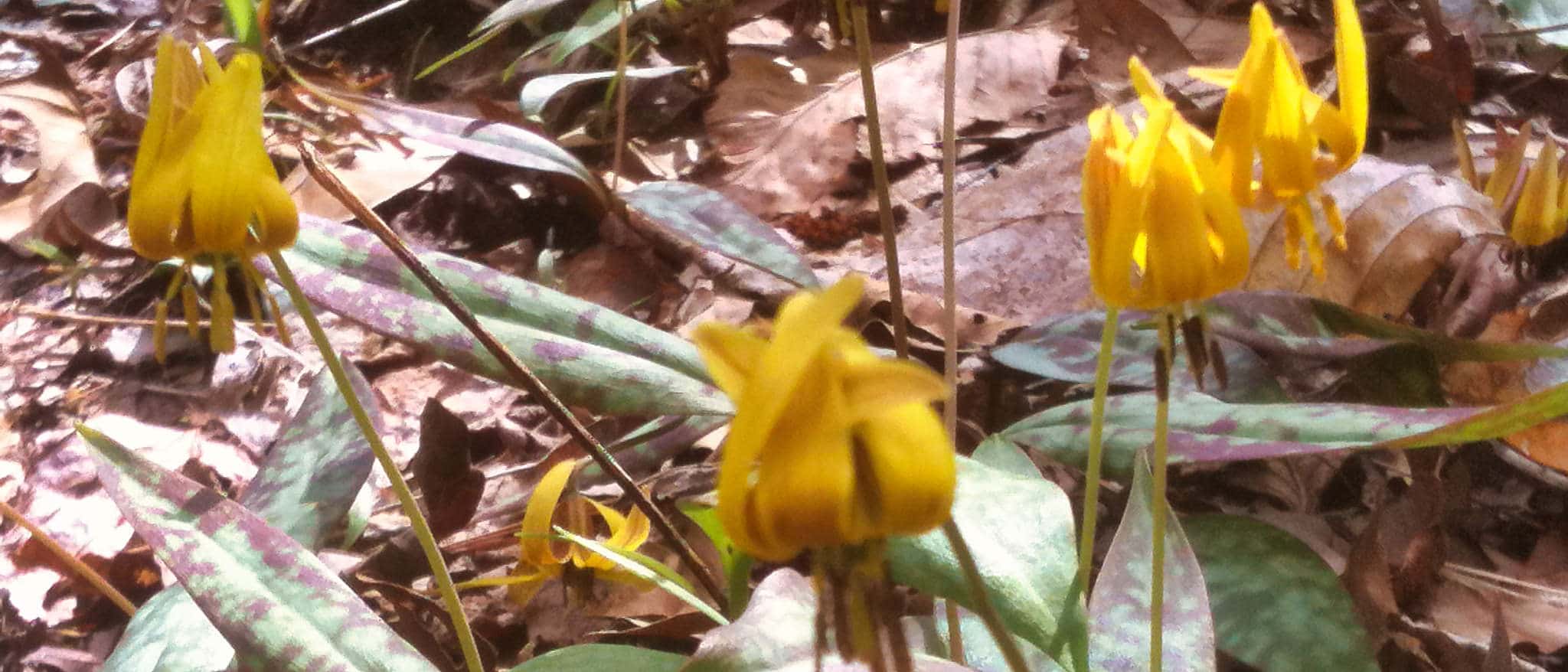
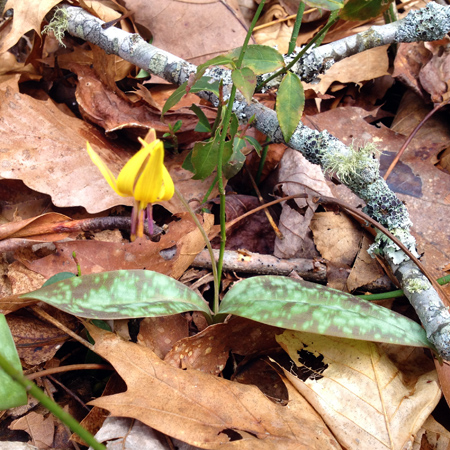
Do you recognize this wildflower? Do you remember seeing those very distinctive spotted leaves at Rockbrook? It’s an American Trout Lily (Erythronium Americanum). This is the time of year it begins to bloom, and sure enough it’s everywhere at Rockbrook! Being a perennial, this wildflower returns every year, blooming about now, signaling the Spring season. Its name comes from the elliptic, green and deep maroon spotted leaves that resemble the coloring of brook trout, a native Appalachian species. This flower is also called a “Dogtooth Violet,” (even though its flower isn’t violet at all!) because its underground bulb is shaped like a tooth. Unfortunately, they also contain a dangerous plant toxin called Colchicine, so you (or your pet dog!) should never eat them. We love seeing these beautiful flowers at camp. They are gorgeous reminders of summer being right around the corner!

Human Relations Makes the Counselor

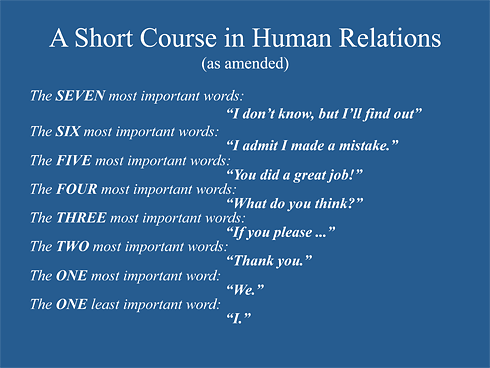
Have you seen this aphorism— A Short Course in Human Relations? Its author and origin are unclear, but it’s been around for years, and in various versions. I found one reference to it as a motivational poster spotted in 1987, and now there are even YouTube videos devoted to it.

As you can see, it is eight principles organized as a descending series of “most important words.” Taken together, they are meant to be “wisdom literature,” “rules of thumb” to guide and improve how we relate to other people. There’s certainly a lot to say about each of these principles, but it’s easy so see why the human qualities they represent— humility, honesty, encouragement, openness, respect, gratitude, cooperation, and altruism —are so fundamental to establishing strong, positive human relationships.

Course in Human Relations and Leadership

To understand how this is relevant to being a camp counselor, we need only to recall the close-knit character of camp, the true community life we share at Rockbrook. As we know, camp is foremost a community of people brimming with enthusiasm and a true sense of belonging shared by everyone. It is quite literally built upon positive “human relations,” daily interactions between people inspired by “central values like kindness, cooperation, compassion, care and generosity.”

Driving this sense of community are the camp staff members, cabin counselors, and directors— the leaders at camp. Beginning with these kinds of admirable character traits, we extend them to others, thereby strengthening the camp community, and ultimately enhancing all the benefits of camp life. The better we are at relating to each other, the better camp is.

So that’s one of the secrets to being a great camp counselor. Be an expert in human relations. Master this short course! Be the kind of person who relates to others in the ways this course advocates, and you’ll be a long way toward becoming an admired leader in any community.

A Haven from the Hectic

Does it seem to you like we are living in an increasingly hectic world? Look around and you’ll see families, and more importantly kids, being pulled into a whirlwind of commitments and scheduled activities, all while having less time than ever for quieter, slower things. They’re holding a hectic pace rushing from school to sports practices, from homework to home chores, cutting short time with family, or just the freedom to pursue whatever comes to mind. With rushed meals, complex logistics for “getting things done” and that ragged feeling of not getting quite enough sleep, it’s no wonder kids can so easily be unhappy.

Could it be that by “doing everything we can” to help our kids succeed and achieve, we parents are unintentionally failing to do something else? By charging full speed ahead and taking advantage of every opportunity, what other important things are we missing?

Camp as a sanctuary from hectic living

It reminds me of a quote by Tomas Tranströmer (b. 1931), the Swedish poet who won the 2011 Nobel Prize in Literature. The author of more than 15 collections of poetry, Mr. Tranströmer has been described as “Sweden’s Robert Frost,” a poet who “gives us fresh access to reality… through his condensed, translucent images.” You definitely should look up his work. At any rate, he also wrote,

You can see beauty if you look quickly to the side.”

Quite keenly, this is a prescription, a welcome reminder that beauty is all around us, that if we stop speeding ahead and take a quick glance to the side, something wonderful is right there waiting to be discovered. It might be as simple as a clump of grass squeezing itself between two bricks, or the decorative trim on an old man’s hat, but more importantly, it could be a person, or a new inspiring experience. It’s pretty clear that as our lives become more hectic, we are missing out on all kinds of subtleties and precious opportunities to expand what we already know. How unfortunate, especially for our kids!

Thankfully, there is summer, a time when kids can slow down and enjoy a meandering pace. And likewise, thank goodness for summer camp, that special place where kids meet wonderful people, and every day encounter fun activities and new experiences. Camp is just brimming with these kinds of positive opportunities to grow. It provides the right balance of structured instruction and free time to pursue casual interests “just for the fun of it.”  At Rockbrook, the rewards of “looking quickly to the side” are frequent, rich and immediate.

While the rest of the world grows increasingly hectic, Rockbrook is an exception. And that’s a good thing.

Camp Teaches Resilience

Everyone experiences setbacks now and then, the occasional failed effort or unexpected misfortune. But what happens when you kids trip up or get knocked down? Do they stay down? Sink lower, and let that moment of failure defeat them? Or, do they bounce back, maybe learn from the experience, and gain a new dimension of confidence to face the next challenge? Put differently, how resilient are your kids? What can we as parents do to help them become more resilient?

Girls Resilience at Summer Camp

Dr. Michael Ungar, a Social Worker, Family Therapist, and University Research Professor at Dalhousie University in Halifax, Canada has thought about this question a lot. He is a co-director of the Resilience Research Centre, an organization coordinating experts from around the world in sociology, psychiatry, education and medicine in a broad project to understand the cross-cultural similarities and differences in how resilience is understood, and to explore ways we can help children and young people be more resilient.

Several times before we’ve discussed how summer camp helps kids grow and how becoming more resilient is one of the clear benefits of camp. Now Dr. Ungar weighs in with a nice Psychology Today article entitled, “Summer Camps Make Kids Resilient.”

I encourage you to go read the article, but I wanted to summarize his main points here as well. Perhaps most importantly, Ungar identifies summer camp as a place where kids learn to do things for themselves without the kind of careful orchestration parents ordinarily provide. It’s a place where, instead, they can try challenging activities and take manageable risks, all while being provided encouragement and positive role models to help them learn to cope with disappointments.

Speaking from his research on resilience, Ungar pinpoints 7 important components of the summer camp experience children need to develop these coping strategies. These are seven things camp provides that help kids when they experience setbacks later in their lives.

Seven Things Camp Provides

  1. New friendly relationships
  2. Regular moments of pride and self-confidence
  3. Experiences of competency and self-efficacy
  4. Relief from unfair social treatment
  5. Healthy physical activity and nutrition habits
  6. Belonging to a meaningful community
  7. Opportunities to reflect on cultural values

There’s so much more to each of these, and I suspect interesting mechanisms that make them effective. What’s important to realize is that all of them are core ingredients of the camp experience here at Rockbrook. The program activities, staff training, and overall camp philosophy here work together to insure that our campers enjoy these beneficial experiences. Of course, we’re having a really great time together as well, just as we strengthen our powers of resilience.

Researching the Benefits of Camp

Sending kids to camp allows children to grow and learn good citizenship, social integration, personal development and social development, exploring his or her capabilities and being in a safe environment where they can grow, gain independence and take risks.”—Troy Glover, the director of the University of Waterloo’s Healthy Communities Research Network

Summer Camp Lodge Porch Girls


It’s pretty easy for those who have attended camp to speak enthusiastically about how much it’s meant to them. Campers themselves are full of glowing stories about their summer camp experiences, but even adult camp alumni, many years later, can trace aspects of their personal success back to their time at camp.

For others, though, how camp provides these important benefits, and what types of benefits to expect from a summer camp experience, are not apparent. It was this fact —the general public’s unawareness of what makes camp great for children— that prompted a team of Canadian researchers to study and evaluate the impact of a camp experience.

Working with camp directors, staff, campers and camp alumni, the researchers conducted surveys and compiled observations focused on what a summer camp provides and how that affects children over their time at camp.

What Research Reveals

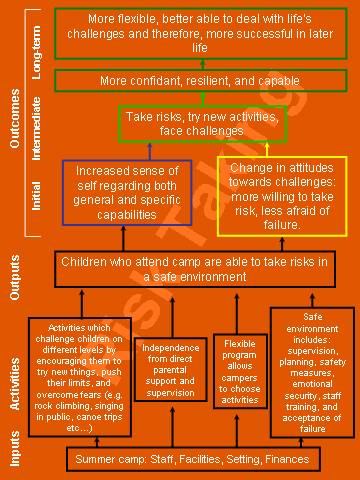
Camp helps children learn to take appropriate risks

The research aimed to demonstrate and understand the initial, intermediate, and long-term value of the summer camp experience, and found several significant outcomes. Most importantly, the study was able to pinpoint what “children first learn at camp, what they do with that learned material and what impact it then has on who they become.” The researchers were able to identify 5 main areas of this growth.

There is, of course, quite a bit to explain about each of these areas, so I encourage you to read more about the study’s findings on their site.

This is exciting stuff! We’ve often discussed the benefits of camp for children, so it’s nice to see this kind of organized, methodical verification. Now spread the word! Let’s help others understand how uniquely “camp is a place for kids to grow.”