
Fostering Elasticity

Girls Craft Table at summer camp

When we finish a session at Rockbrook and the girls have returned home, we always send out a brief survey to parents hoping to receive some feedback about their girls’ time at camp. We ask questions about all aspects of the experience, from the activities, the health care, and the staff to the special events and the food. It’s always very interesting (and helpful!) to learn how camp succeeds and where we might improve the way we do things. Two of the final questions ask parents to describe the most challenging, and the most rewarding, aspect their girls encountered while at camp. I wanted to share an insight one parent mentioned in her response.

This parent reported her daughter being challenged by some of her cabin mates, “getting along with them,” but then suggested “being flexible and understanding others” was a clear reward as well. For this parent, and likewise for others I would guess, camp life for her daughter was not at first entirely comfortable and easy, but because of that, it provided very important lessons. To be an opportunity for growth, it was at first challenging in an beneficial way.

Outdoor Yoga session at summer camp
Girls reading during free time at camp
All Girls Summer Camp

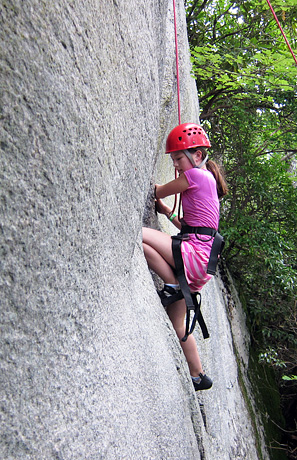
This is spot on. Being at summer camp, certainly the first time, means entering a foreign environment where the familiarity of home is replaced with all sorts of new experiences that can feel strange or even a little scary to a child. There’s unusual food… “Did you try the falafel?” There’s our mountain forest environment itself with its weird plants, perpetual parade of insects, eerie sounds at night and funky organic smells. At camp there are “never-tried-it” things to do like climb a real rock, improvise a character on stage, or knit a hat, for example, all which might appear “too hard” at first.

Camp, of course, is the perfect environment to try all these things, to go beyond the ordinary, and to learn what each requires. With the right combination of coaching and encouragement from our staff, girls will step “out of their comfort zone” and gain pillars of confidence that will support them in the future.

Learning Social Flexibility in the Cabin

This parent comment, though, identified one of the most complex and equally inescapable aspects of camp life, and that which often requires the most adjustment for girls: the social dimension of the cabin. Camp cabins are made up of girls who might talk in their sleep, and others who might like waking up early. There may be a messy girl and a “neat freak” who have to share a bunk. Each cabin will undoubtedly be a mix of shy and outgoing girls, crafty and sporty girls, some voracious and others picky eaters. Working through all these differences, learning to be elastic when necessary, is simply part of cabin life. Most essentially, camp requires getting along with the other girls, getting to know them and finding ways to understand them. At Rockbrook, the cabin counselors, their training, personality and instincts, recognize this goal and work tirelessly to help everyone be more flexible. Everyone on the staff is keenly aware of this social dimension, sensitive to it, and ready to step in whenever a camper has trouble (or might subtlety be causing trouble!) in the cabin. For some groups, learning this elasticity can take time, but generally the girls understand its value and are quick to exercise it.

This is good stuff because this kind of social elasticity is a skill that really benefits children.  After all, learning to adapt to various circumstances, making adjustments to others as needed, is the mark of a well-adjusted person who deals effectively with disappointment and is capable of creative problem solving. Throughout life there are situations when we are called upon to be flexible for a greater (often collective) good, so its important for our children to bank experiences where they have done so effectively. Again, with guidance from their counselors, life in the camp cabin provides exactly that.

Girls summer camp plays gaga

GaGa in the Pit

Here’s a photo of a GaGa (or Ga-Ga) game. Sometimes called “Israeli dodge-ball,” or “Octo-Ball,” and literally translating as “touch-touch,” this is a form of dodgeball played inside an octagonal court made of 3-feet-tall walls. Any number of players and any aged-camper can play, making it a great camp game. During free time and sometimes during the Sports and Games activity, there are groups of campers eagerly playing. The games are fast-paced as players use their hands to knock the ball trying to hit other players in the leg. Once hit (or if she hits the ball out of the pit), a player is out. Like other forms of dodgeball, play continues until only one person remains. It’s even fun for girls after they are out and have to stand on the outside of the pit because they can still play in a way. They can lean into the pit trying to hit the ball, and if they successfully hit another person out, they get to return to the game.  Game after game, the girls are really enjoying GaGa.

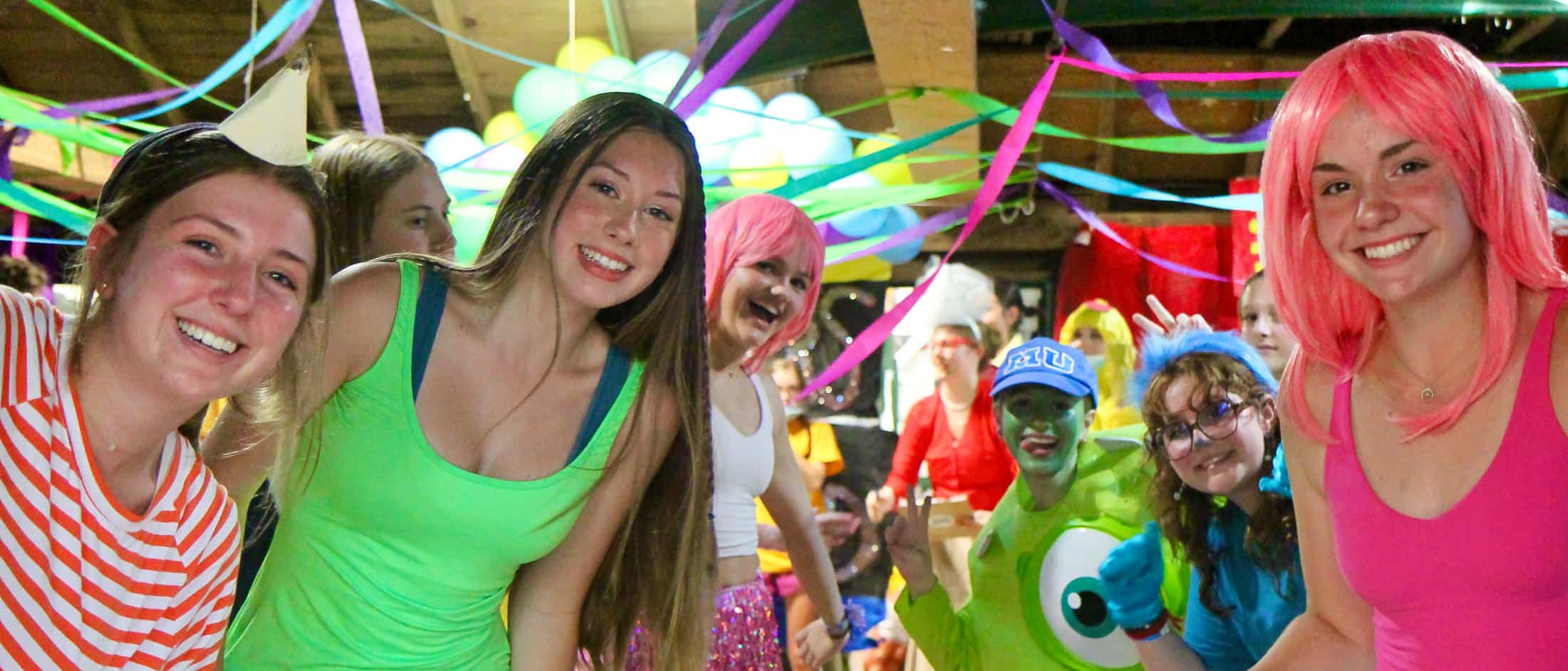
Finally, I can’t help but include this photo from our Twilight “Diva Dance Party” tonight. I was an hour of fun pop songs, costumes, and silly dancing… just your Rockbrook girls having a great time.

Summer camp girls are strong

Budding Independence

The first full day of the session, as was today, means several things. First, it’s a chance for the campers to become more familiar with the property and activity areas, to get a better sense of where everything is located. Following their camp tour yesterday, now they venture off on their own to the Alpine climbing tower, the Hillside Lodge for yoga, or Curosty for weaving, for example. There are almost 30 different things to do— organized activities available during the scheduled activity periods —and each has a “home” somewhere in camp.

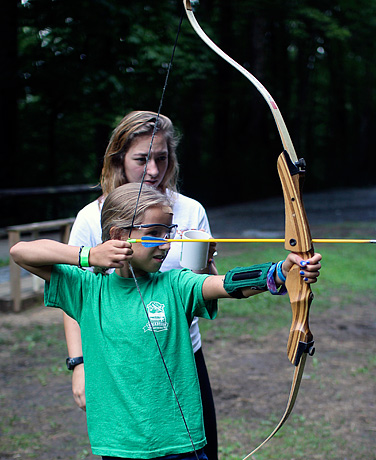
Imagine all the little pockets of activity spread around Rockbrook… Outdoor adventure instructors explaining how to use special equipment, arts and crafts teachers introducing cool sewing, pottery, or weaving projects, horses being tacked up, bows and arrows nocked. If you scan through today’s photo gallery, you can see the variety of things going on. These girls are impressive already!

Choosing Your Own Activities

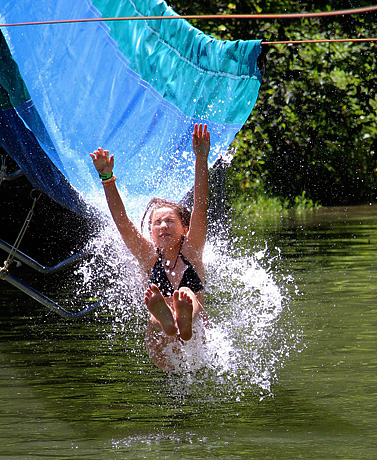
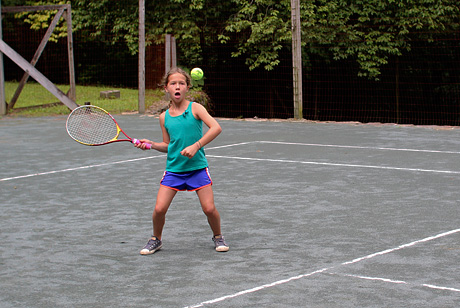
What’s even more impressive though, and probably more significant in the long run, is the independence this first day of camp has already brought about in your girls. Remember, at Rockbrook, the campers select their own activities while at camp. Often after much discussion with friends about the options, and “what are you gonna take?” kinds of questions, everyone selects 4 different activities they will try for the first half of the week. For each activity rotation, which happens twice per week, the girls themselves decide how to spend their activity time. Furthermore, during the blocks of free time scheduled throughout the day— before lunch, before dinner, and after dinner —the campers can decide to do even more independent things. With a friend, they might head to the lake for a ride down the water slide, go to the tennis courts to hit a few balls, challenge someone at the tetherball court, or just hang out on the grassy hill enjoying the mountain view.

The very structure of our day, in other words, encourages this budding independence for Rockbrook girls. As they select their daily activities (“Riflery or Drama? Hmmm…”) and decide on their own how to spend free time (“I want to go play in the creek!”), as well as navigate from place to place throughout the day, all while listening for the bell to help make it on time, they grow increasingly confident. They learn firsthand that “I can do it myself.”

As you see your girls smiling and enjoying themselves doing any of the regular in-camp activities offered everyday at camp, at least part of that smile arises from the simple satisfaction, and maybe a little pride, that follows her successful experience of independence. And that’s pretty cool stuff.

Succeeding at Failure

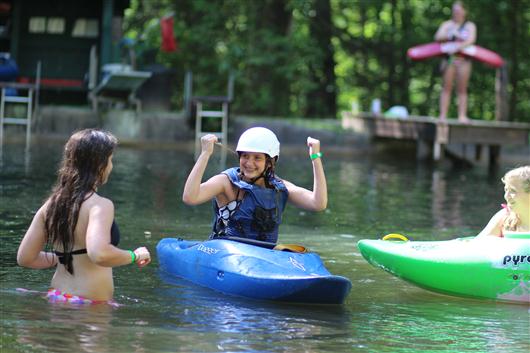
Kayaking Success

When I was a junior in high school, my drama teacher set my class two challenges, each designed to get us thinking creatively:

  1. Write down as many uses for a brick as you can think of.
  2. Draw three creatures that do not exist, and that are combinations of a bunch of different animals. Use as much detail as you can.
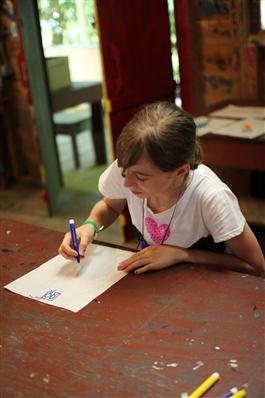
Thinking Creatively

The first challenge was a cinch. I’ve been writing fiction ever since I could hold a pen, and still can switch on daydreams as real as a TV show whenever I get bored. If you ask me to use my imagination to think up impossible things, I’m on solid ground.

Sure, I listed the usual (boring) uses for a brick: house construction, paperweight, impromptu dumb-bell, etc. But then came the fun ones: a piece of a giant’s Lego set, an impenetrable fortress for ant-armies, Twinkie-holder, napkin ring at a brick-layers’ convention, etc.

All this is to say, if you’re looking for something to do with that pile of bricks you have lying around your house for some reason, I’m your girl.

But then came challenge number two. Sure I could think of imaginary animals—how about a zebra-striped cow, with the head of a horse, the legs of a mini-elephant, and the horns of a water buffalo? Oh, and it can talk like a parrot! Oh, and maybe it can jump like a kangaroo! Oh yeah, the ideas were coming fast.

The Moment I Couldn’t Even Try

There was just one problem. I can’t draw. Not at all. Even stick figures are a struggle for me. I stared at that blank piece of paper, listening to the excited pencil-scratching coming from my neighbors’ desks, and my cheeks began to burn. I was the only one not drawing.
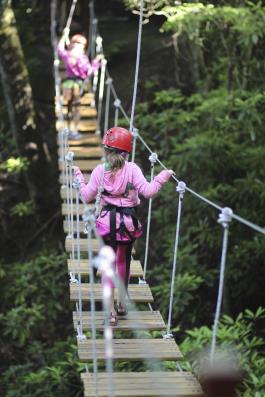
Venturing Out

I just sat there, with my head down, until the activity was over. I couldn’t even let myself try. I couldn’t even permit a doodle. I couldn’t take the risk that the beautiful image I had in my head might not translate onto paper. Better to be scolded by my teacher for failing to complete the activity, than for it to be known that I might be less than excellent at something. So I just sat there, almost in tears, until the papers were collected.

A Pattern We Must Break

I’ve thought about that moment a lot since then. Why hadn’t I even tried? Why had I assumed the result would be that horrible, without taking the simple step of just beginning? Why had I decided by the end of elementary school that I Am Not An Artist? End of story, no question about it, no need to try.

So many times, both in camp and out of camp, I see young girls give up on things before they’ve even begun.

“No, I can’t take pottery, I’m not artsy.”

“No way am I going to try out for basketball, I’m not athletic at all.”

“I can’t take the swim test. I’ve never been much of a swimmer.”
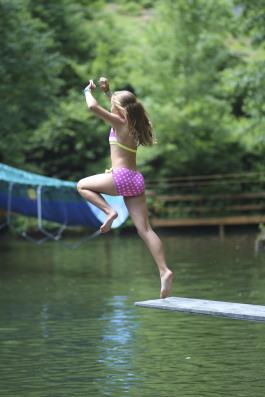
Taking the Leap

Somehow, it has become part of our mindset that our talents, our levels of intelligence and understanding, and our potential for achievement are set in stone from the very beginning. The thoughts that were racing through my mind that day in drama class consisted entirely of, I was bad at drawing in elementary school. Therefore, I am bad at drawing now. Therefore, I will always be bad at drawing, no matter how hard I try. Therefore, I should not try.

I know I’m not the only one that thinks this way. We have become so afraid of failure, because we think that that failure defines us even more than the successes that come afterwards. Sure, we know that da Vinci didn’t paint the Mona Lisa the first time he ever touched a paintbrush, and yet somehow we still think that if we fail the first time, then we will inevitably fail every time, with no shot at improvement.

But this is wrong. This is so wrong! Why should I, at 23 years old, have already decided which categories I belong in (Good Writer, Good Reader, Not-Good Drawer, Not-Good Dancer), and given up on changing any of them? Why should a 10 year old camper stand frozen at the edge of the dock on swim demo day, just because somebody told her one time that she wasn’t a very fast swimmer? Why should we throw away the chance to surprise ourselves with new, enjoyable experiences, in an attempt to save our pride from the sting of failure?

The Challenge: Be Bad at Something
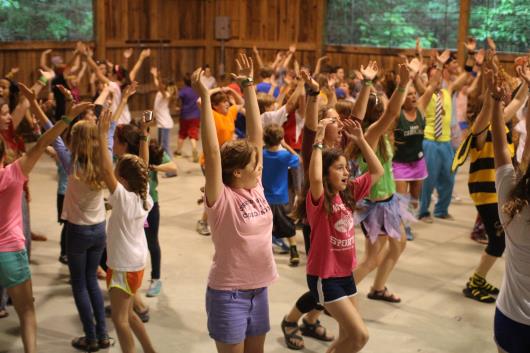
Dancing Queens

So here’s the challenge (you knew this was coming): allow yourself to be bad at something once a day. It can be a brand new experience, or an old one that you gave up on long ago. If you’re a bad dancer, then dance like a crazy person with your friends, and laugh when they tell you you’re not so good. If you gave up on piano after one lesson, sit down and bang out “Chopsticks” on the keys, and laugh when you hit a bad note. If you have always wanted to be a poet, then write down that poem that you have bouncing around in your head, and then laugh when you realize it sounds more like a Hallmark Card than Emily Dickinson.

That’s right: laugh. Train yourself to find the joy in failure. When that sinking feeling comes along that tells you to run away from the challenge before it becomes too much, then laugh it away, and try again. And again. And again. And again. Sure, maybe you’ll never be dancing at center stage in Radio City Music Hall, or tickling the ivories like Stevie Wonder, or becoming the next US Poet Laureate—but hey, maybe you will. You’ll never know unless you embrace the possibility that you might just fail, and then go for it anyway.

As for me, I’m still not a great drawer. But I hope that Mr. McFarland will accept this late addition to the creativity project. May I present, the Zebreleffow:
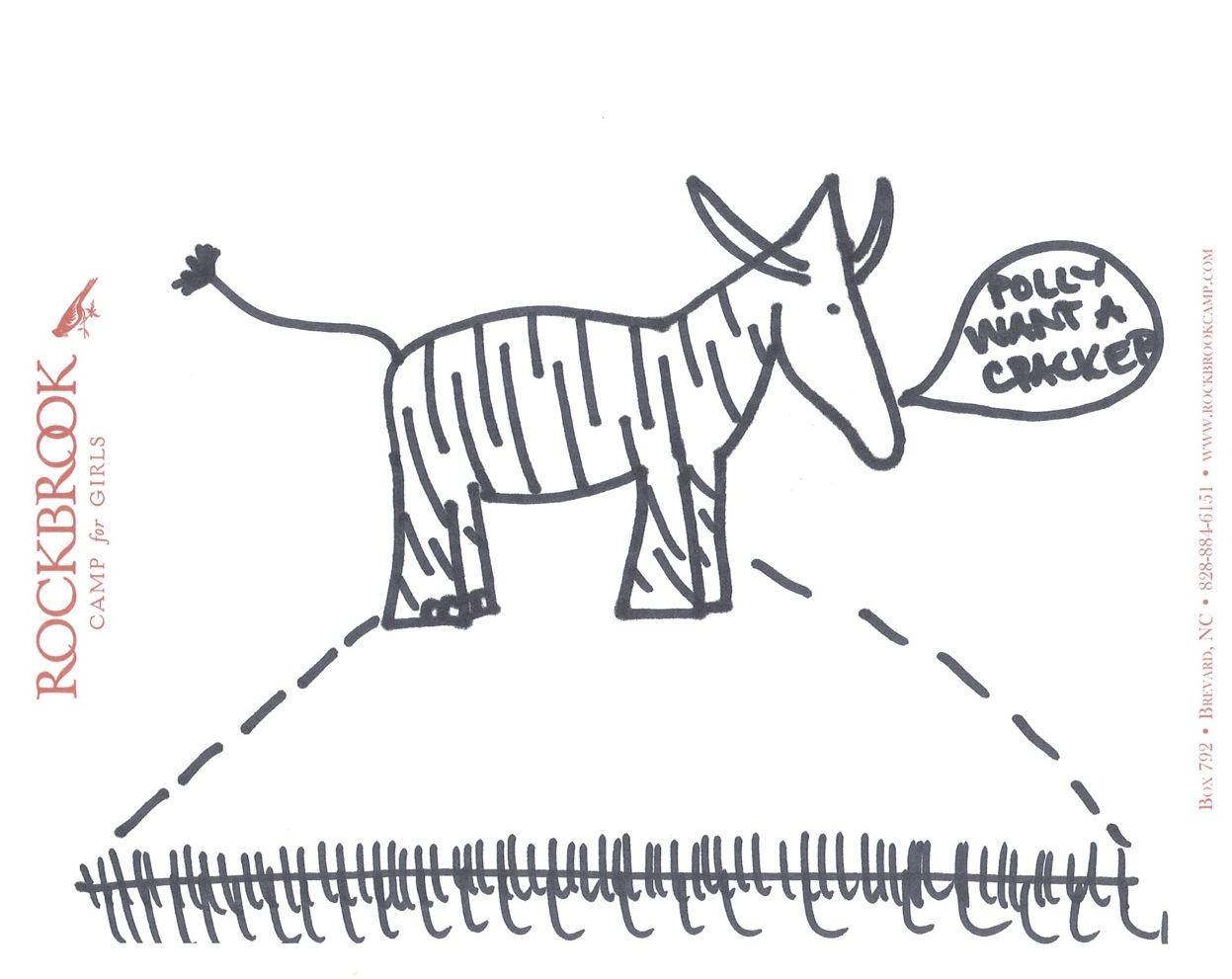
The Zebreleffow

Many Marvelous Things

North Carolina Waterfall Hike

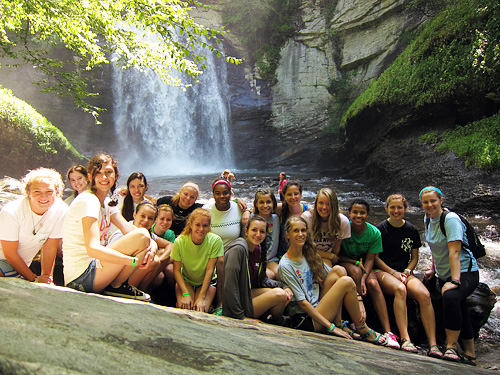
Yesterday afternoon, our current mini session Seniors and their counselors packed a lunch for a trip to this waterfall located up on the Blue Ridge Parkway.  Not knowing what weather we’d find at that elevation (a little over 5,100 feet compared to Rockbrook’s 2,300 feet), we took our chances and made the long climb in the buses up US276. As we ascended, however, the mistier and foggier it became. Finally up on the parkway, we stopped for a view and found we were within the clouds, completely immersed in the grey vapor and soon quite cold from the driving moist wind.  Needless to say, there was very little “view,” and suddenly our picnic plans seemed at risk. We realized though, driving a bit further, that the wind was the culprit, and that with some shelter, the view to the north was sensational and the outside temperature was suitable, albeit still a little cool. The rain was very light, barely a mist, so we were able to find a nice overlook and have our picnic after all. Once at the trailhead for our hike, it began to rain a little harder and again I could tell from the looks on a few of the girls’ faces, there was some doubt that we could continue. Fortunately, though, the rain blew past us quickly and we could reach the waterfall without too much effort. Sure we got a little wet, and yes we had to take extra care scrambling down and over wet rocks, but the trail, lined with glistening bushes, was gorgeous and the falls were magnificent. Despite what first appeared as terrible conditions, our determination and perseverance rewarded us in the end.

Girls splashing into lake from water slide
Camp girls having archery instruction

In addition to “Play Outside this Summer,” which I wrote about here, one of the Rockbrook tag lines is “A Place for Girls to Grow.” It is another short phrase that, also like our mission statement, summarizes the goals we have for your girls at camp, our aspirations for everyone at Rockbrook. Quite simply put, we hope your girls will grow from their experience at camp, that they will develop in important ways, all the while having the time of their lives. We want camp to be for them both formative and fun.

How Camp Helps Girls Grow

This hiking trip, as is true for so many other experiences at camp, is a good example of how this growth takes place. It created for all of us a set of personal challenges and thereby opportunities to learn. Beyond dealing with slightly uncomfortable weather, it presented physical challenges because it required us hike a steep trail and at one point to balance carefully over slippery rocks. It required true teamwork as each person helped another through one especially tricky area. The hike demonstrated that a positive attitude— an enthusiastic, supportive, encouraging, friendly approach— is powerful and often a crucial part of a successful group endeavor. It provided experiential evidence that setbacks and disappointments can be overcome with perseverance. It became another page in a wonderful book of experiences your girls are writing at camp, a book filled with life lessons that will undoubtedly play a role in their later success.

Lessons That Last

Sewing camp heart project
Learning gymnastics at summer camp

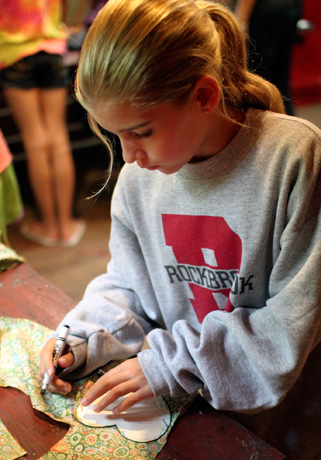
So many of the other challenges at Rokbrook provide these opportunities to grow too. On the surface of things we are sewing pillows, weaving baskets, balancing on the beam, paddling canoes, shooting rifles, and getting to know each other while relaxing in the grass before lunch. We are doing amazing things everyday. But what’s most important about camp lasts much longer. Years from now your girls probably won’t remember very much about what they did or didn’t do at camp. They’ll forget that hike. Instead, they’ll recall the positive feeling of being a part of a caring community. They’ll know first-hand how honest communication, compromise and cooperation makes every group grow closer, more powerful, and rewarding. They’ll be more confident, more resilient, and more courageous when faced with challenges later in life. From their time at Rockbrook, we know they’ll have grown.

There are many marvelous things in store for these girls later in life. We’re quite proud to join you in guiding them toward that future success.

Heartfelt Euphoria

Counselor and Camper happy together
Girls happy at summer camp

Lately, it’s been tour season at Rockbrook, with families, often 2 or 3 at a time, visiting to learn more about camp. Over the last week, I’d say we’ve had more days than not with tours scheduled. This is great because we are always pleased to show off a little of what makes Rockbrook special, and to hear what prospective families find remarkable. For example, tour groups are often surprised that “everyone is so friendly around here.” It’s true, walking around camp creates a chorus of greetings, waves and smiling faces, no matter what time of day. Also though, a parent today commented that everyone at Rockbrook seems so “genuinely happy” and this got me thinking again about why this is the case. Everyone knows that camp is a happy, fun-filled place where girls can spend their days enjoying activities, being with friends, and playing outside in a beautiful setting. But I don’t think happiness at camp can be traced simply to these kinds of outward characteristics, to the activities, the camp facility, the quality of the food, or even the experience of the directors, though certainly all of these are important ingredients. Also, the kind of happiness we’re talking about here, the kind that brings out the best in kids, can be elusive elsewhere. Outside the haven of Rockbrook, even when every material need is met (and sometimes luxuriously met), the pure joy we find at camp can be missing. And that’s what stands out; there’s a heartfelt delight (even euphoria!) at camp very different from the mere pleasures and comforts of ordinary life.

The Secret to Genuine Happiness

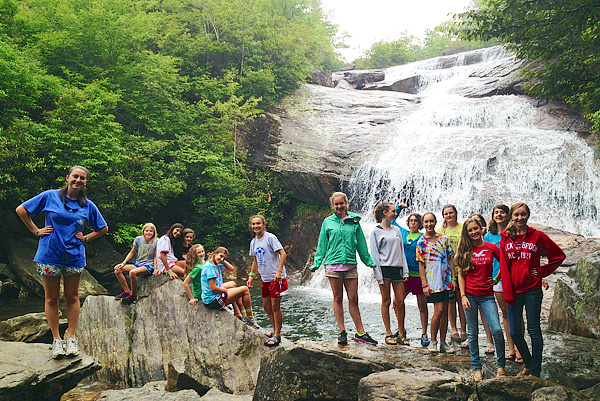
Waterfall Camp Kids

So what’s the secret?  What is it that happens at camp that might be implemented or encouraged at home and school to make our kids more “genuinely happy?”  While not the whole story, I think Rockbrook succeeds in this way because it is foremost a community of caring people who appreciate and respect one another. The girls here know that they belong. They know that wherever they go in camp— to their cabin, to an activity area, to a picnic or an assembly on the hill —and no matter who is there joining them (an old friend or a new face, camper or staff member), they will be enthusiastically welcomed, sincerely encouraged, and fully supported. The deep happiness felt at camp blossoms from the positive relationships formed among everyone who is a member of our community. Free from competition and criticism, the way we interact here is uplifting and in important ways liberating. We talk about the power of community a lot, and this is yet another of its rewards.

What Children Need

Rock Climbing camp kid

Much like you and me, children need to feel liked. They need to feel that they are appreciated and that they are essentially good. This makes them keenly aware of how others, other children (their peers) and adults (parents, teachers, and camp counselors, for example) respond to them. It’s when these responses are affirmative and approving, as opposed to grumpy, demeaning or even just spiritless, that the magic happens. Put most simply, a child will begin to find genuine happiness when she feels those around her are likewise genuinely happy to see her, to be with her, and to love who she really is. Perhaps surprisingly, this kind of happiness derives not from what we do or what we have, but from who we’re with. If they are caring and kind, “sweet” and reassuring, enthusiastic and encouraging, we will find happiness. This kind of collective spirit, so beautifully embodied by Rockbrook, is a powerful force.

And it’s something that builds upon itself in a community.  Beginning with our staff and then with our campers, caring inspires care, kindness calls forth further kindness, and happiness leads to the happiness of others. We can already see that the girls this session are helping each other in this way. As they grow closer, support and encourage each other, as they become more comfortable with each other, and as they feel genuinely appreciated, the fun of camp intensifies. It’s no wonder that the girls love it here.

How do you show you’re happy when your kids are around?

Three Dimensional Children

“Educating the Whole Child” is a phrase that the American Camp Association, the accrediting organization for camps, including Rockbrook, uses to describe what camps really do. Sure camps are fun for kids, but they are also uniquely educational, providing important developmental benefits that the otherwise 2-dimensional experience of schools often do not. If we wish to raise three dimensional children who are more than just academic achievers, polished artists or top athletes, for example, then we need to address the “whole child,” her creativity, imagination, bravery, decision making, thoughtfulness, compassion, love of nature, curiosity, passion, flexibility, initiative, collaboration and communication. We need to encourage and foster these important aspects of being a happy, well-rounded and adjusted human being. Wouldn’t it be wonderful to see all of these traits blossom in our children?

How Camp Develops Character

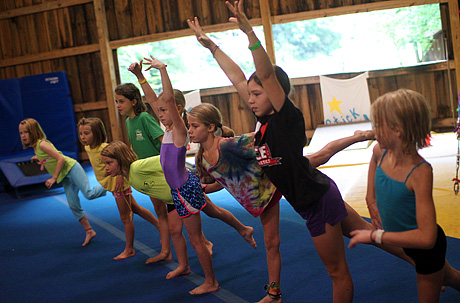
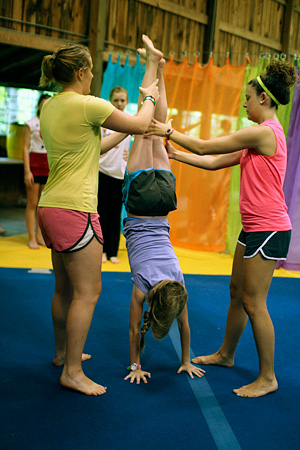
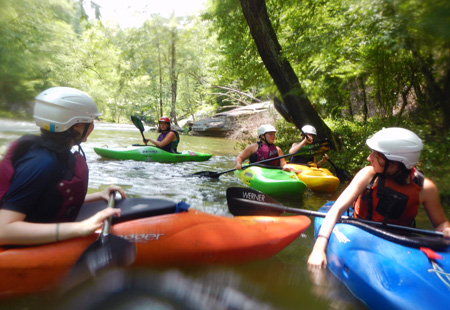
Of course! Fortunately, life at camp does provide many opportunities for your girls to develop these character traits. Learning to do a handstand, taking care of large animal, completing swimming laps to join the “Mermaid Club,” discovering a creepy looking bug (maybe, on the wall above your bed!), deciding how to spend free time, helping with cabin and dining hall chores, compromising when a difference of opinion arises, helping a younger camper, being inspired by the misty fog of the morning, singing (loudly!) with friends, getting your bare feet really muddy, tying an even more complicated friendship bracelet, leading your friends in an off-the-wall skit, rescuing a fellow kayaker after a rapid— each of these, and so many more experiences at camp, is a way to develop that third dimension, a way to promote being more fully human. In this way, camp is educational in the best sense of the word. It fulfills real childhood needs, and in the end, can be a profoundly life changing experience.

The Biltmore Train Tradition

OK, fine. But sometimes, we also cut loose, just for the fun of it… Like this afternoon when the “Biltmore Train” came to camp. Back before it was a winery and tourist destination, the Biltmore Estate ran a commercial dairy selling its milk and ice cream locally. For a while it delivered its wares in a truck decorated with a train motif, so when it arrived at Rockbrook, the girls called it the Biltmore “train.” Today, we have a different supplier of ice cream, but we continue this tradition by forming a different train; we hold an all-you-can-eat (well, at least until the six big tubs are gone) ice cream party. Campers break into several lines, counselors wear themselves out scooping, and after the first cone, the girls race to get back in line (to the end of the “train”) for another. All of this makes for a high-spirited, somewhat sugar-charged, afternoon, a once-a-year decadent treat for these girls.

Your Child’s Time Away

Girls Tennis Camp shot

An article published in The Atlantic and written by Jessica Lahey caught my eye, and I wanted to pass it along because it speaks about how parents often feel when they send their children away to an overnight summer camp like Rockbrook. The article is entitled “A Summer Camp Lesson: Good-bye, and Go Away, Thank You Very Much” and argues that children benefit from time away from their parents because, as Michael Thompson author of Homesick and Happy claims, there are critical “developmental milestones” children must achieve on their own, separate from their parents. I found it a nice affirmation of our mission at Rockbrook. Through our camp program activities, trips, and special events, enlivened by our camp culture that emphasizes caring and kindness, and as modeled by so many admirable, friendly staff members, camp is a place of wonder, excitement and adventure for our girls. It’s a welcome haven ideally suited to foster the kind of growth we parents simply can’t provide our children… how to be happy despite setbacks (resilience), how to make friends (social confidence), how to feel good about our true self (high self esteem), and how simply to be more independent. It might be hard to admit, but it’s really good for our children to be challenged on their own, and camp is the perfect place to do it.

Camp Water Slide girl

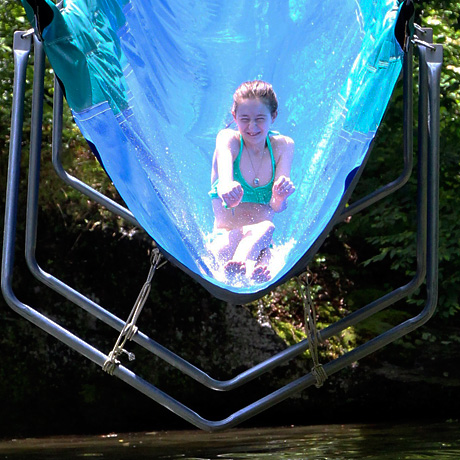
Facing Fears at the Water Slide

The sheer fun of camp life and the encouragement quick to bubble up around here, make facing these parent-free challenging moments much easier too. For example, it can be pretty intimidating the first time you climb the tower and stare down from the top of our 50-ft water slide, “Big Samantha.” It looks like a long way down from up there, and the slippery ride is fast enough, and the splash at the bottom big enough to create some hesitation. Fortunately, the slide is described as “super fun” around camp, and for those a little nervous, it’s reassuring to see plenty of other girls racing back around the lake excited to do it again. Conquering that hesitation, and others like it, feeling the exhilaration of just doing it, can be a powerful boost to a child’s confidence… Even after camp.

Camper with bumble weaving loom

Making Bumble Loom Bracelets

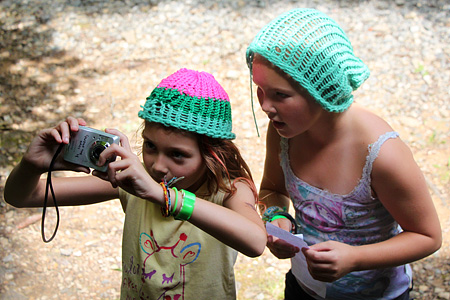
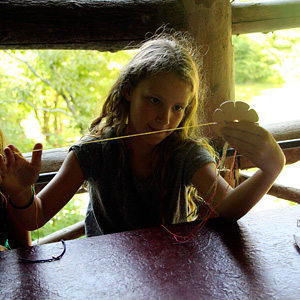
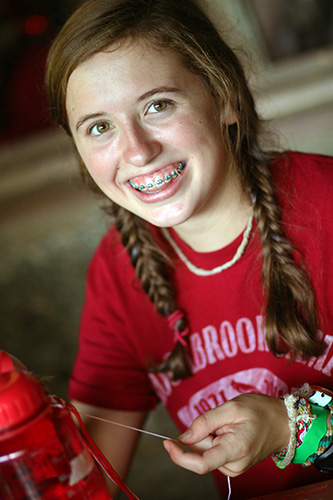
Here’s something fun. That flower-shaped item she’s holding is something called a “Bumble Loom,” and it’s used to weave cool thread bracelets and necklaces.  It’s just a flat piece of smooth wood with a hole in the middle and notches cut around the outside. The basic pattern uses 7 strands of thread (embroidery floss), all first pulled through the center hole, tied, but then divided so there’s one thread per notch. The girls then repeat a pattern of crossing one thread over to a different notch, twisting fibers and weaving as they go. The result is a colorful rope-like braid that can be tied and fastened to a lucky friend’s wrist, or perhaps given to someone special at home.

Waterfall Hike in the Pisgah

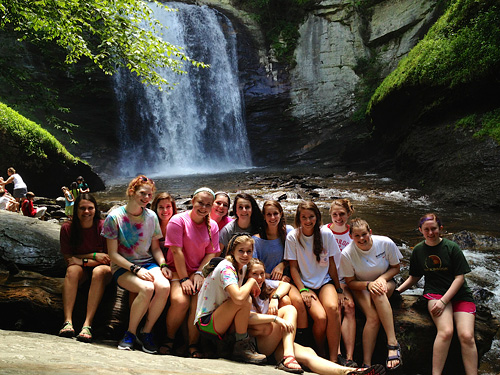
The Hi-Ups (our oldest campers: 10th graders) took a waterfall hike this morning to both Moore Cove and Looking Glass Falls in the Pisgah Forest. We’ve been having our typical afternoon scattered showers recently, and with that rain, the creeks are full, making all of the waterfalls around here more dramatic. The girls were particularly impressed by the sparkle of the sun as it caught individual drops of water gently falling at Moore Cove. Photo opportunity? You bet. Delightful forest experience? Absolutely.

Hi-Up campers at Looking Glass Falls

More Reasons Kids Need Camp

Excited Camp Kid

Around here at Rockbrook, we’re big fans of discussing why summer camp is so great for kids. There’s no doubt that spending time at camp is super fun and kids love it, but it’s also important for their personal, physical and social development. In so many ways, camp is something our modern kids need more than ever because it provides relief from unhealthy habits. It serves, as we’ve said before, as a haven for children.

Over on the Web site What’s Up for Kids, Kathy Alessandra just posted an article entitled, “Five Reasons Your Child Needs Camp.” Reporting information from the American Camp Association and several well-respected studies, the article is a nice reminder of some very significant ways kids benefit from camp.

Here are the 5 reasons listed.

  1. Campers gain positive life skills like “making friends” and “trying new things.”
  2. Campers stay in motion, enjoying physical exercise.
  3. Campers have experiences that help them back at school.
  4. Campers reconnect with nature.
  5. Campers engage in creative free play.

Of course, there’s a lot to each of these, but perhaps most importantly, this article is another reminder of how rare and valuable a summer camp experience is for our kids. Definitely a great thing!

Researching the Benefits of Camp

Sending kids to camp allows children to grow and learn good citizenship, social integration, personal development and social development, exploring his or her capabilities and being in a safe environment where they can grow, gain independence and take risks.”—Troy Glover, the director of the University of Waterloo’s Healthy Communities Research Network

Summer Camp Lodge Porch Girls


It’s pretty easy for those who have attended camp to speak enthusiastically about how much it’s meant to them. Campers themselves are full of glowing stories about their summer camp experiences, but even adult camp alumni, many years later, can trace aspects of their personal success back to their time at camp.

For others, though, how camp provides these important benefits, and what types of benefits to expect from a summer camp experience, are not apparent. It was this fact —the general public’s unawareness of what makes camp great for children— that prompted a team of Canadian researchers to study and evaluate the impact of a camp experience.

Working with camp directors, staff, campers and camp alumni, the researchers conducted surveys and compiled observations focused on what a summer camp provides and how that affects children over their time at camp.

What Research Reveals

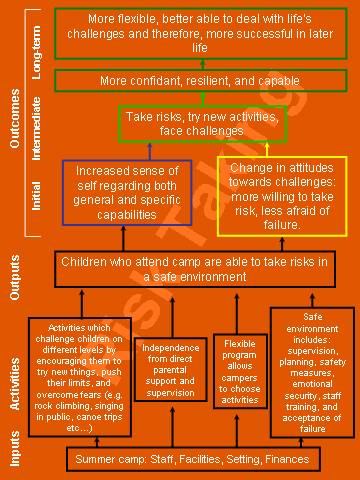
Camp helps children learn to take appropriate risks

The research aimed to demonstrate and understand the initial, intermediate, and long-term value of the summer camp experience, and found several significant outcomes. Most importantly, the study was able to pinpoint what “children first learn at camp, what they do with that learned material and what impact it then has on who they become.” The researchers were able to identify 5 main areas of this growth.

There is, of course, quite a bit to explain about each of these areas, so I encourage you to read more about the study’s findings on their site.

This is exciting stuff! We’ve often discussed the benefits of camp for children, so it’s nice to see this kind of organized, methodical verification. Now spread the word! Let’s help others understand how uniquely “camp is a place for kids to grow.”