
Welcome to Kid World

One twilight, late in July of 1999, I sat on the Rockbrook hill with my counselor, watching the sun sink down behind the mountains.

Well, she was watching the sun. I was too preoccupied with the stream of words pouring uninterrupted from my mouth to give much thought to the scenery.
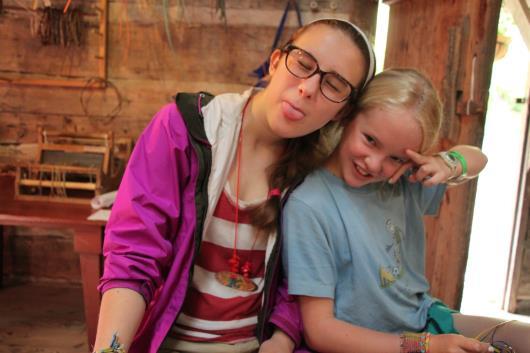
Goofing Off

I had been writing a new story for the past few weeks, and my counselor had made the classic mistake of asking me what it was about. Forty-five minutes later, she was still nodding along, as I explained the great tragedy of the main character’s mother not understanding that taking time to do her homework would distract her from her duties as a spy (what my stories lacked in originality, they more than made up for in melodrama). My counselor asked all the right questions, laughed and gasped in all the right places, and, in all, served as the perfect sounding board for my eight-year-old yarn-spinning. I was delighted.

Today, I remember very little else about the story in question (thank goodness), and even the once-familiar face of my counselor has faded into a half-remembered smile from an old cabin photo. But what I do remember with perfect clarity were the sensations I felt that evening on the hill.
The astonishment at being asked about my story out of the blue.

The shyness with which I began–sure that she only wanted to hear the barest details.

The glee with which I greeted her many follow-up questions.

And, more than anything, the growing realization that she was going to let me keep talking. There was no polite smile, and change of subject as the details of my story got more and more intricate. There was no attempt to steer the conversation to a topic more interesting to her. There was no indication at all that my counselor would rather be anywhere else than right there on the hill, listening to a play-by-play of my story.
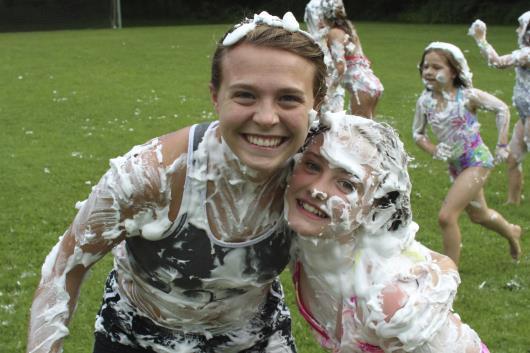
Good Clean Fun

Learning to Navigate the Grown-Up World

My whole life to that point, I had been trained on how best to be a kid in the grown-ups’ world. How to listen to what the grown-ups tell me. How to eat the food the grown-ups put in front of me without complaint. How to entertain myself or play with other kids rather than pester the grown-ups with constant requests for games or entertainment. How to recognize when the grown-ups are discussing something important, and wait my turn. How to be patient, quiet, seen and not heard. How, in short, to be a polite, well-behaved child. And these lessons weren’t a bad thing–they prepared me for the day when I would have to become a well-mannered adult.

Now, I’ll be the first to admit that some of these lessons sank in better than others. I was, and still am, rarely seen without also being heard. But I was also always aware of how far I was trespassing beyond the bounds of good manners for a child. Whenever I talked to a grown-up, I would be waiting for the moment when I’d be told that my time was up, so that the grown-up could turn back to whatever grown-up matters there were to occupy their time.

And yet, there I was on the hill, treading far past the dictates of good manners, as I spent ten minutes describing the main character’s relationship with her best friend (and mortal enemy), and my counselor made no move to stop me.
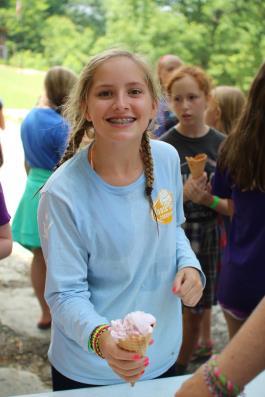
More Please!

The Central Truth of Camp

It was during that wonderful hour on the hill, several days into my first session at camp, that I first began to understand the central truth of camp: this is not the grown-up world. It is proudly, defiantly, magnificently not the grown-up world. I was not a guest in this new camp world, there to have Very Important Life Lessons served up for me by the nearest available adult. I was an active participant in this community, able to make my own choices, talk until I was blue in the face, make my own mistakes, and craft my own camp experiences. And every adult in sight was there to make sure I had the time of my life while doing it.

Being a Grown-Up at Camp

These days, I have the rarer opportunity of being a grown-up at camp. I get to be the guest in kid-world. Whenever I get lost in the logistics of camp–those lists of names, activities, and out-of-camp trips that pass through my hands every day–I can be snapped out of it at any moment by an invitation to a dance party in a lodge, or to the newly opened spa in Junior 3. I can be asked to braid one girl’s hair on the steps of the dining hall, and find myself braiding six others in quick succession afterwards, because why on Earth should I say no?
Just Lying Around

I get to watch as campers spend the first few days of camp coming into their own, and taking ownership of this new world. I get to see the looks of dawning possibility when they first choose their own schedule for the next three days. I get to see them try the food on the dinner table and, if they decide it isn’t for them, head off to the salad bar to find something more to their liking. I get to see them come alive in kid-world, and realize that, unless their safety or someone else’s is at risk, we won’t hold them back from pushing their limits and experiencing new things.

But my favorite moment to watch will always be those one-on-ones between camper and counselor. When I get to see the moment that the child realizes that her ideas, opinions, and interests are sincerely appreciated by an adult she respects–an adult who will listen without promoting their own ideas as being better informed or more interesting.

That’s the moment when they realize they’ve entered kid-world, and it’s going to be better than they even imagined.
Shut Your Mouth

Being a great camp counselor means being aware of the needs your campers have, even when they don’t express them directly. It can mean knowing when to speak and when to listen. At times, camp life asks us staff to be quiet. Here are a few times when we best serve ourselves by staying silent.

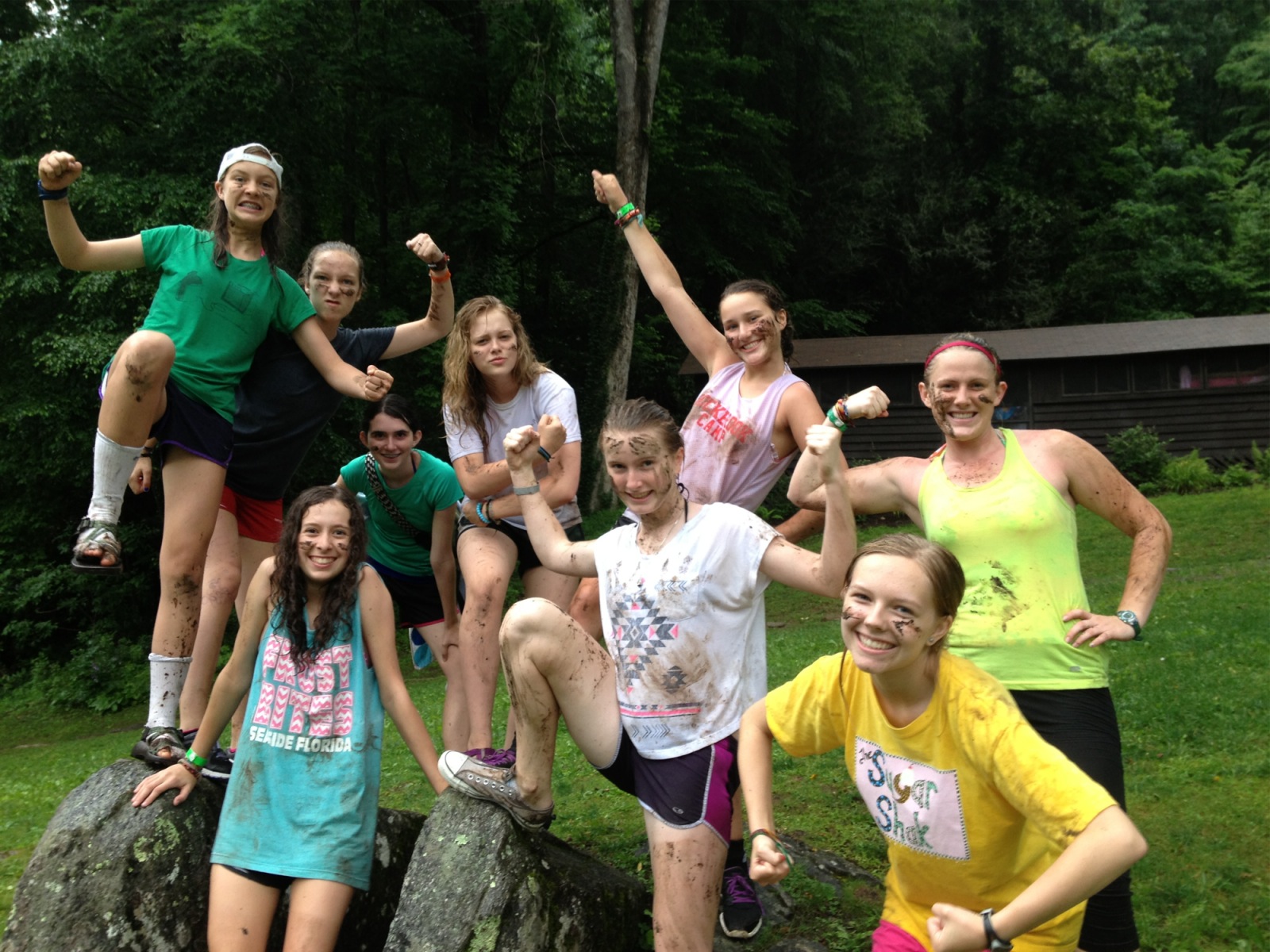
In The Mud

When We’re In The Mud

Anytime we find ourselves engaged in a nasty conversation, we should shut our mouths. Gossip and cruel words about the character, clothing, or personality of anyone else adds no value to our own lives. In fact, those powerful words do quite the opposite. At these times, we can open our mouths only to stand for the hard right against the easy wrong.

When We’re Learning

Teachers come in many forms- bosses, children, friends, books, newspapers, animals, moments, and, of course, teachers. When life is presenting us with a lesson we should work to keep our mouths closed. We can listen and observe, and allow our minds time to process the experience before we jump in with our own opinions.

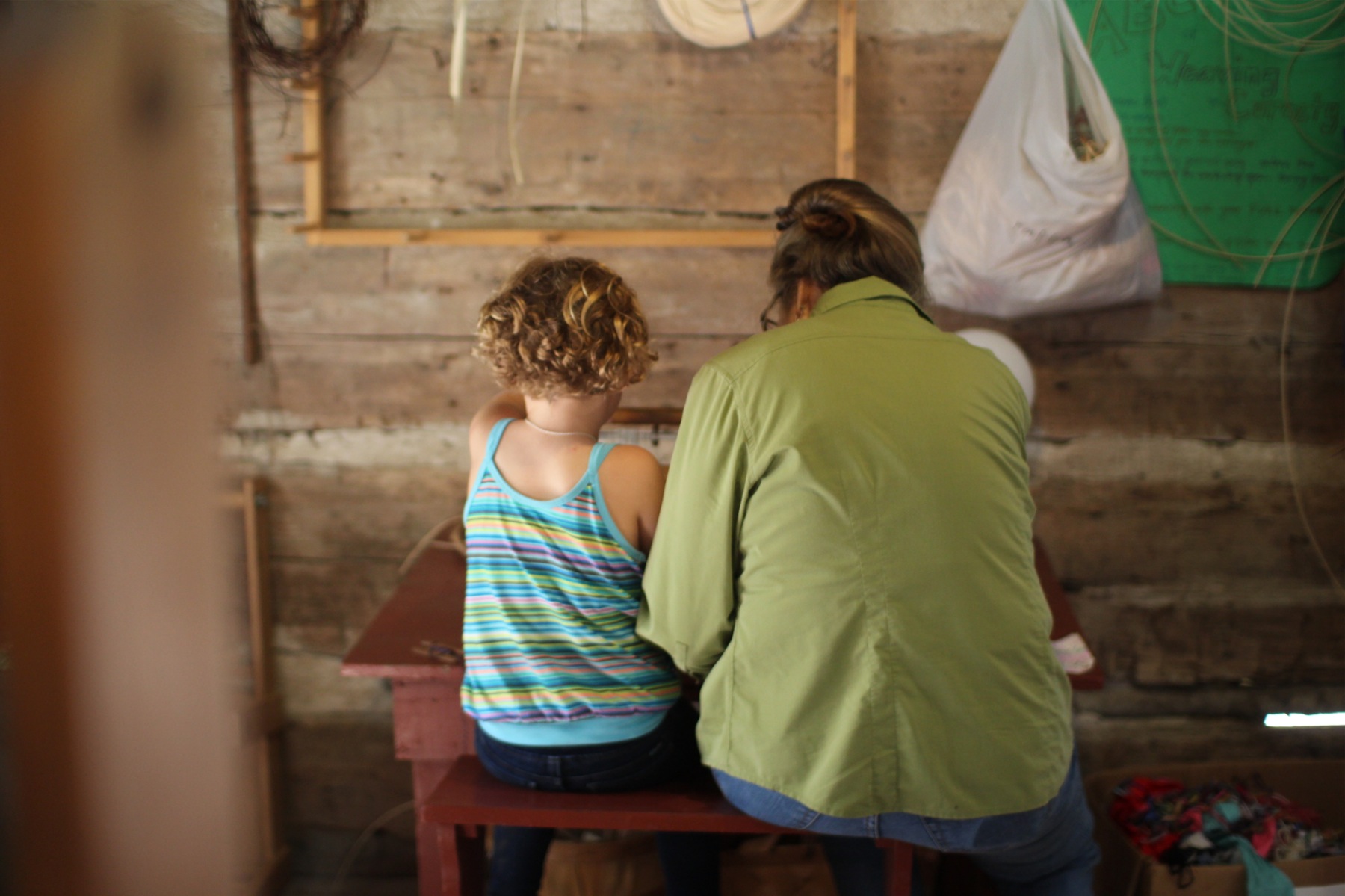
Friend

When a Friend Comes To Us

Often times, we just want to help. When a friend or loved one comes to us with an issue, our first instinct is to problem solve. We, initially, must resist this urge. Let’s give our friends the time and space they need to explore their troubles from multiple angles. Instead of talking, we can listen, nod, empathize, and speak only when our loved one elicits our help. Mostly though, in this moment, they are searching for a listening ear.

When Good Things Are Happening Without Us

This shut-our-mouths moment is crucial for those of us who work with children. We want to facilitate conflict management, encourage healthy risk-taking, and manage our children’s choices so that they will make the right ones. Of course, we need to model best behaviors and teach our children healthy and wholesome ways to live their lives. After this, we can take a step back now and then. We’ll be amazed at how well children can manage their own arguments and how gracefully they can implement the lessons we’ve passed on to them. Practice makes perfect. Let them practice without us every once in a while.

When People Are Watching Us

…and we’re watched more than we realize. What we say helps those around us determine who we are as a person. If what you are about to say may speak negatively about your character: keep it to yourself.

The Good Life

When Life Is Good 

Sometimes we talk over our own bliss. Allotting ourselves just a few moments of quiet observation each day can help us see how beautiful our lives really are.

It’s a Little Upsetting

Silly Sad Kids

Ah, don’t be so sad! This is the last full day of our second session and that can be a little upsetting, but it’s not because these girls are leaving camp and can’t continue to have the kind of silly fun we’ve been having over these last few weeks.  It’s not because they can’t go whitewater rafting, rock climbing, or zip lining any longer. It’s not because they can’t jump in the lake, shoot a rifle or play teatherball, and it’s not because they can’t weave or throw another pot on the wheel. Sure, all the fun things we do at camp are ending for this summer, but what’s really at the source of everyone’s melancholy is having to leave our friends, our new, extraordinarily close camp friends. It’s leaving the people (not the camp activities, cabins or muffins) that’s so difficult. Here at Rockbrook, as we’ve relaxed into our true selves and found caring people despite it all, as we’ve shared so many full experiences together, we’ve grown to appreciate camp as a special place because of its people. So that’s the problem; we have to say goodbye tomorrow to the people at camp. As they sing “I don’t wanna go home” in one of the camp songs, I think they mean “I don’t want to leave these great folks.” It’s how we feel when we’re together; that’s what’s ending with camp, and that’s kinda sad.

Jungle Book Kids Play Cast members

Celebrating with The Jungle Book

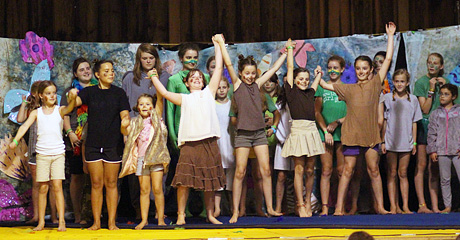
Knowing this is the case, we do what we can to make the most of these last hours of camp by sticking together. For example, this afternoon, we all gathered in the gym to enjoy the performance of this session’s musical, The Jungle Book. For some girls, those who had auditioned to be a part of the play, it was time for all the rehearsing— memorizing lines, choreography, and songs —the costumes, and set decorations to be coordinated and presented. For everyone else, it was time to cheer and applaud the hard work and talents displayed.  With the whole camp gathered, including a few parents of the cast members, we could sing, clap and celebrate, more enthusiastically than ever.

Camp Spirit fire indoors

Spirit Fire in the Rain

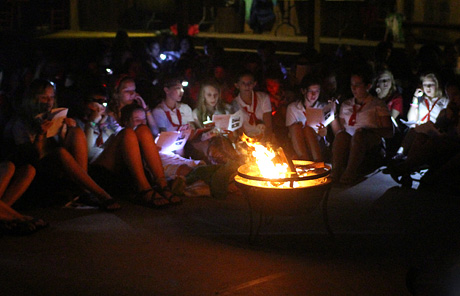
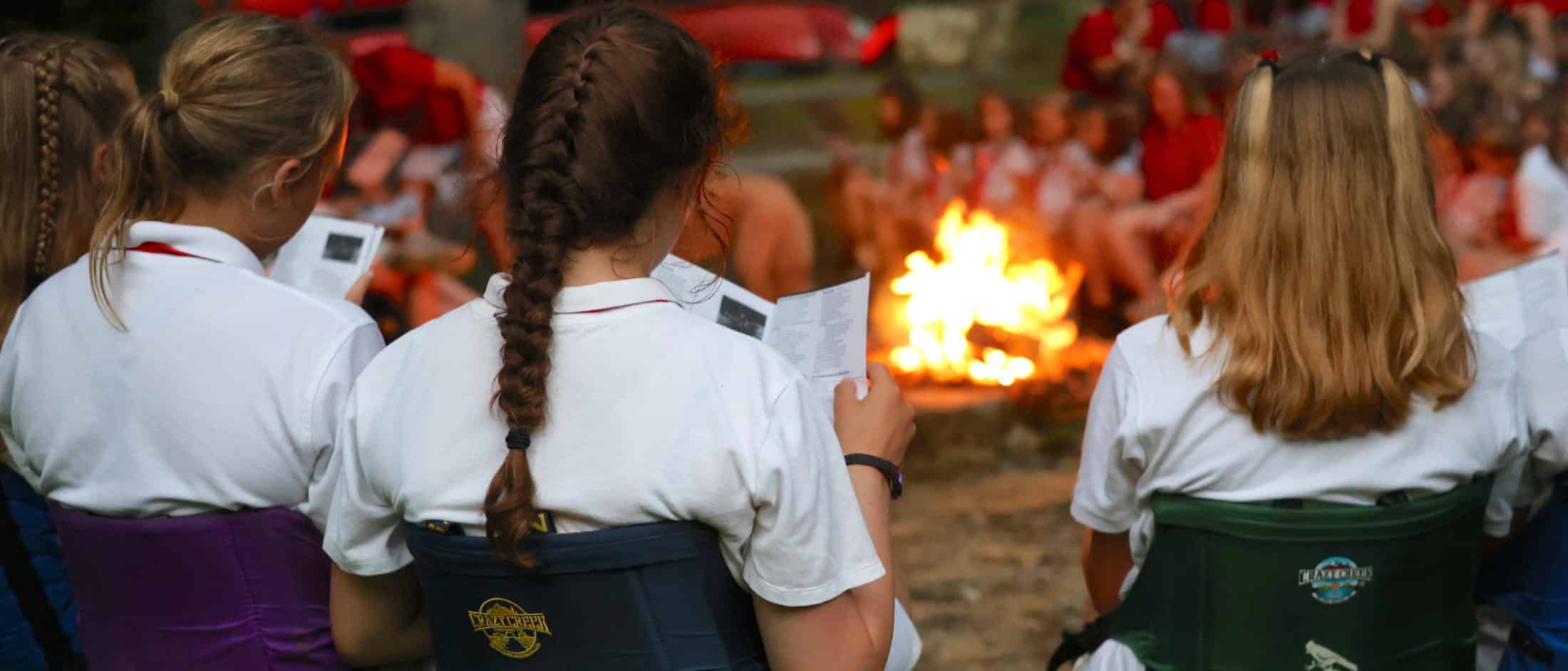
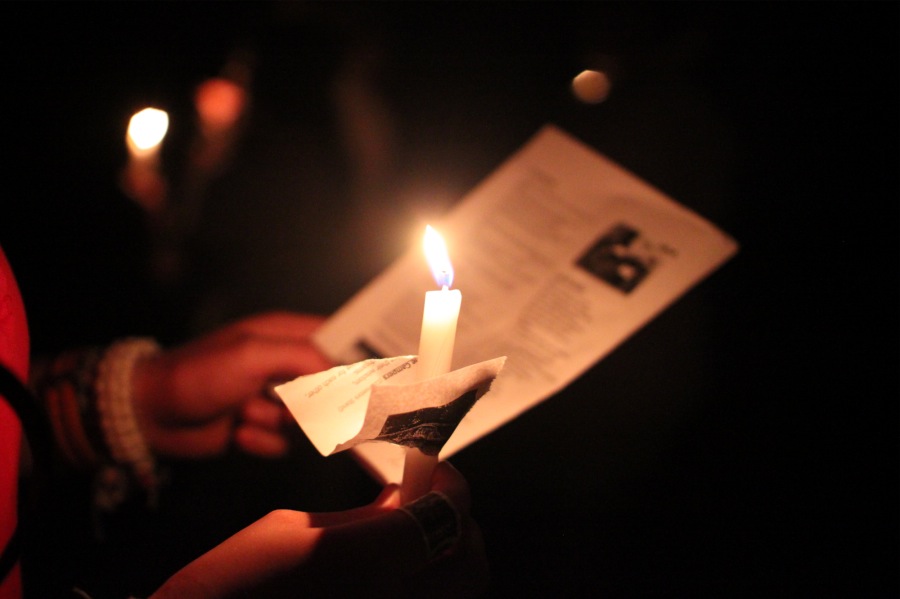
As has been our tradition for more than 90 years, we closed this final night of camp with a campfire we call the “Spirit Fire.” But for the first time in recent memory, we held the program in the gym because of rain. As is usual, the entire camp dressed in their red and white uniforms, but this time circled around a fire built in a low insulated vessel. So as the rain fell outside, everyone stayed dry and comfortable in their crazy creek chairs singing the traditional Spirit Fire songs and listening to different campers and counselors speak about their experience at camp. By the end of the program, the rain had stopped allowing Sarah and the other directors to light a small white candle for each person, and all of us to circle around the lake for the final few quiet songs. This was another all-camp event that conjured a few tears, and many, many hugs. Like so much at camp, it was charged with emotional energy born from the amazing relationships between your girls and all the wonderful people they’ve met. It’s an astounding thing, and a true privilege to be part of it.

Turkey Day…Rockbrook Style!

Rockbrook girls know how to have a good time. Thanksgiving is the perfect day to show off your camp skills. Read on for a few ideas about how to put your Rockbrook knowledge to use this Turkey Day, Gobble Gobble:

-Rockbrook girls love to help out! Offer a helping hand to anyone who is working to prepare the holiday meal.

-Rockbrook girls love to get creative! Prepare a skit or talent show for your family. While the turkey’s in the oven you can wow the crew with your talents!

-Rockbrook girls love to get dirty! If there is any dish that requires you to mash, peel, or mix with your hands-go for it. Who needs a mixing spoon when you have the opportunity to make a little mess?

-Rockbrook girls love to share! If you and your sister both love pumpkin pie and there’s only one piece left, why don’t you split the piece in two? Vwah-la!

-Rocbrook girls love to get a little silly! Tell a story or two from camp at the table. The sillier the better. (You’ll get extra points if you can make your family laugh so hard they snort!)

-Rockbrook girls love to sing! Teach your family a campfire song to sing after the meal. They’ll be thankful you did.

-Rockbrook girls love to try new things! Go for it! Today’s the day- you’ve never tried Brussels sprouts? gravy? cranberry sauce? Be a little adventurous and give them a whirl!

However you use your Rockbrook style this Thanksgiving, just do your thing!

Thanksgiving Style Found at Summer Camp
What’s Your Thanksgiving Style?

The Ineffability of Camp

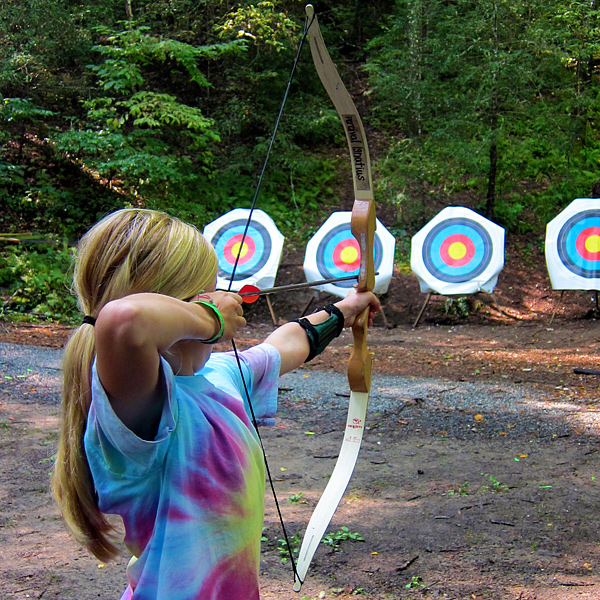
Girl shooting archery at summer camp


With summer drawing to an end and so many kids returning home from summer camp, Talya Minsberg writes in the New York Times about What Parents Don’t Get About Camp. The piece is partly a fond memory of life at camp for both campers, who “find the joy of growing and exploring on their own,” and as a staff members, who are the “warmest, silliest, most fun (and responsible)” people they can be. It’s one author’s recollection of how summer camp is a magical place bubbling with experiences for positive transformation. The article hints at the features of camp life that make it difficult to describe, that make kids’ stories from camp seem so inadequate— the close friendships, the freedom and independence, how hilarious things were —but in the end suggests it’s OK for parents and noncamp friends to not fully understand “camp.” You have to experience summer camp, to really “get” it.

And since camp is “a place of their own” (as Rockbrook’s mission recognizes), it’s perfectly natural, even preferable, for others to mistake what camp really is, to grasp only a faint sense of what it means to the campers and staff members who live it. We have to agree; it’s hard to describe the magic felt from living like we do at Rockbrook (despite our attempts to describe it all summer long), but that’s just part of it, and in the end, a very good thing.

You Have Got To Be Kidding!

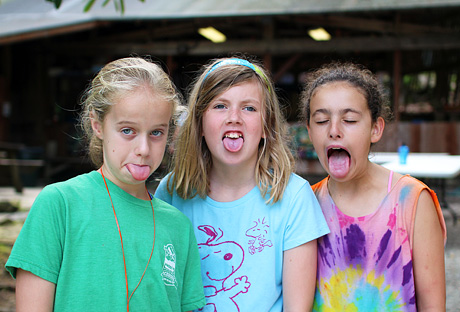
Our campers are talented! We have pianists, jugglers, gymnasts, singers, and actresses! Girls who can rub their belly and pat their heads, touch their tongue to their nose, and hula hoop! Girls who can whistle, snap, and click their tongue.  Camp girls who make up hand-jives and dance ’til the cows come home!

Today, I feel honored to share one of my talents— when I was fifteen I wrote a few jokes of my own. Here’s a sampling— a giant list of corny jokes for kids —sure to impress all your friends!

Don’t worry; they’re 100% funny kid friendly!

Q: Why is Big Bird big, yellow, and feathery?

A: Because if he was small, yellow, and nuggety he would be a corn on the cob!

Q:What do you call a group a grizzlies cracking up together?

A: A BEARel of laughs!

Girl Campers Outside

Q: What do people who love to brag on themselves carry their papers in?

A: A GLOATbook!

Q: What is a UPS worker’s favorite sport?

A: Boxing!

Q: What type of chair goes to wild concerts?

A: A rocking chair!

Q: What vegetable do you eat when you want to be very fast?

A: Hustle sprouts!

Q: What’s a livestock’s favorite math tool?

A: A COWculator!

Q: What type of shoe stops up drains?

A: A clog!

Q: What type of chair is good at yoga?

A: A folding chair!

Q: What soothes a sick stomach and gives you neck support at night?

A: A PILL-ow

Q: What time is it when people are throwing pieces of bread at your head?

A: Time to DUCK!

Q: What is a builder’s favorite kind of paper?

A: Construction paper!

Q: When playing spades with The Donald, why did the dealer lose?

A: He handed Donald Trump!

Q: Why couldn’t the farmer find his way out of the corn field?

A: He was in the middle of a maize!

Q: Which medical professional likes to break things?

A: A DENTist!

Q: What do you call a cow who always takes your stuff?

A: A mooooocher!

Q: What MTV show do bass fishermen watch?

A: The Reel World!

Q: What do you call a wild dog that you can’t find?

A: A WHEREwolf!

Q: How would you describe the views a peppermint gets while looking at the Blue Ridge Mountains?

A: Breath Taking!

Q: How are reciprocals like gymnasts?

A: They flip!

Q: Who is Burt’s Bees wax’s roommate?

A: Ernie’s bees wax!

Q: What sport do people who listen to loud, deep music from their stereo play?

A: BASS Ball!

Q: Which island of the coast of Africa does Dale Ernhart Jr. like?

A: MadaNASCAR!

Q: What happened to the gun at work?

A: He got FIRED!

Q: What happened to the pottery at work?

A: He got fired!

Q: Why was the light bulb cold?

A: He was in the shade!

Q: What part of your body says one thing but does another?

A: A HIP-ocrit!

Q: Why do Grizzlies break their pencils?

A: They BEAR down too heard!

Q: What salad topping do you find at ACE hardware?

A: Wrench Dressing!

Q: What  happened when the master detective closed the door behind him?

A: He Sherlocked himself out!

Q: Why was the pig red?

A: He was out all day BACON in the sun!

Q: Which relative chimes at you every hour?

A: A Grandfather Clock!

Q: Why was the painter hot?

A: He put on an extra coat!

Q: What kind of hug straitens your teeth?

A: EmBRACES!

Q: What food preservation container is lost?

A: A TuperWHERE!

Q: What type of pirate testifies in court?

A: An “Aye” “Aye” Witness!

Q: Which two months are dishonest?

A: FIBruary and JuLIE

Q: Which four months are cold?

A: Septmebrrrrrrrr, Octobrrrrrrrr, Novembrrrrrrr, and Decemberrrrrrrrr!

Q: Which coloring utensil makes you tired?

A: A craYAWN!

Curing Community Deficit Disorder

Camp Girls Connected in Community

There are many ways to describe the difference between camp life and the “real world” that happens elsewhere and throughout the school year. At Rockbrook, we might point to our living mostly outdoors and close to nature. We might celebrate our opportunities to experience adventure (hike, paddle, climb!), or to have time for unstructured play. We could describe how camp is a break from electronic technology, and from the social pressures of school revolving around our appearance, possessions, and status. We might highlight the true independence kids experience being away from parents and teachers.

These are all very clear differences, each helping to explain the benefits of a sleepaway camp experience for children. But there is another one, and it is community, the very real sense of being included, respected, trusted and loved by a group of people. Camp is, at its core, a special community built on central values like kindness, cooperation, compassion, care and generosity. It is brimming with enthusiasm and encouragement, wrapped tightly by a collective spirit. At camp, and certainly at Rockbrook, everyone is welcomed and included.

How different this feels from ordinary life! Camp is not about individual consumption, getting a grade, standing out as the best, or advancing at the expense of others. It’s not so ego-centric, nor blind to the people around us. At camp, where there is always support from friends, you’re never left to just fend for yourself.

And how wonderful it feels! Partly, I think joining a camp community, and other communities too, provides us such a powerful sense of contentment because it is so different from ordinary American life. Human beings, and especially kids, crave this kind of connection. We need to know wholeheartedly that we belong to something bigger than “just me,” that our “true self” is accepted and valued by those around us, and unfortunately it is all too rare these days. Perhaps we modern Americans are dis-content because we are dis-connected from an authentic community. Perhaps we are suffering from what could be called “Community Deficit Disorder.”

Thank goodness for camp and its ability to be a powerful and effective antidote for this disorder. It may not be the main reason we attend a sleepaway camp, but the joy of joining a camp community is certainly one of the most important reasons why we love it.

Camp Food and Kitchen

One of the most common questions we hear is “What’s the food like,” which translates into,  “How often do you eat tater tots and chicken fingers?” The answer is, not very often! The kitchen strives to find that balance between kid-pleasing-comfort-food while at the same time being health conscious. There is always a deluxe salad bar at lunch and dinner and a vegetarian option at all meals.

Corey
Corey

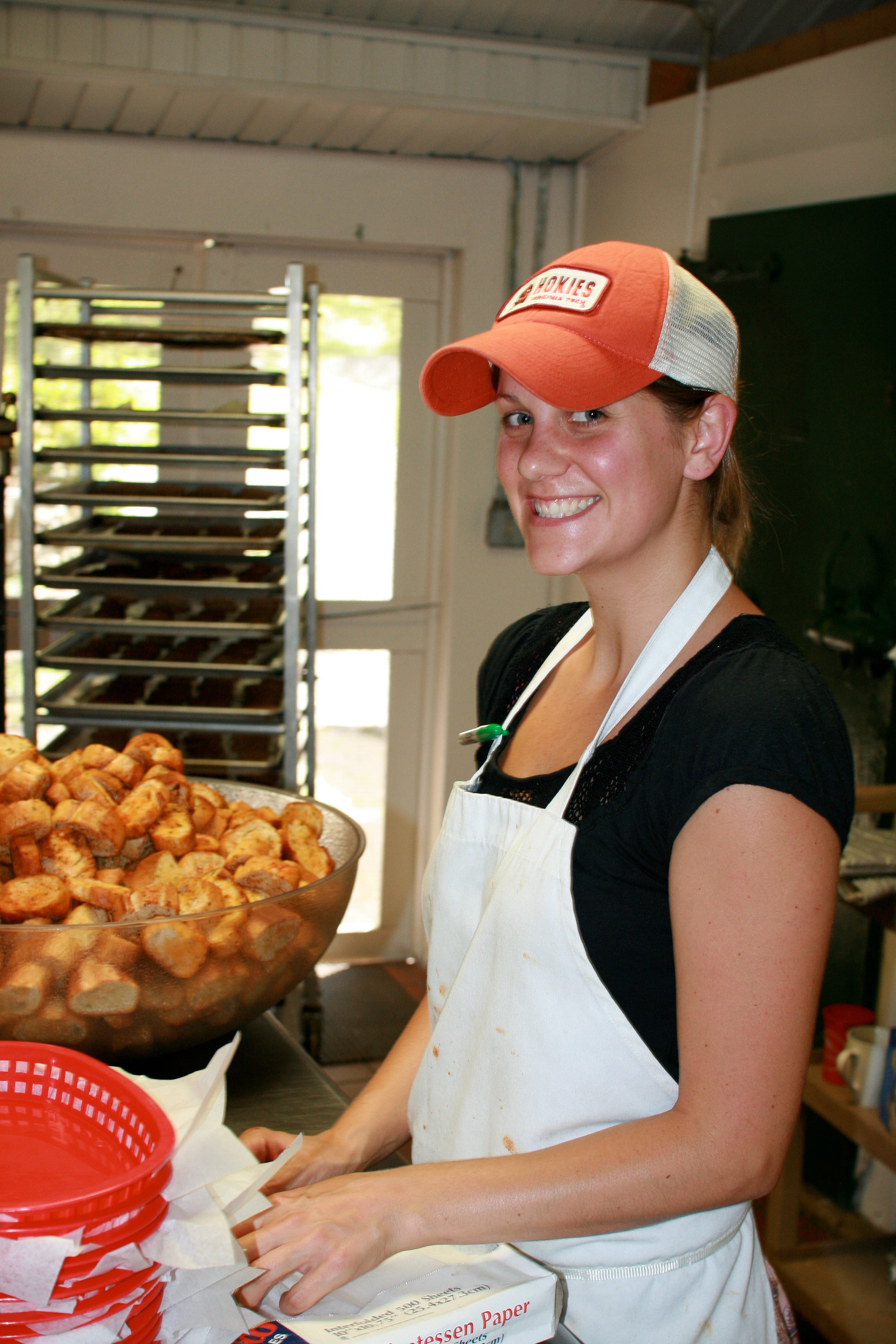
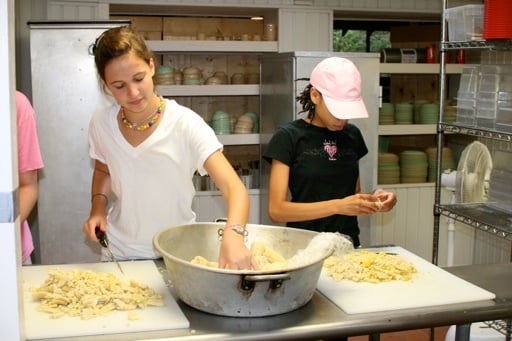
Rick Hastings was our Head Chef this year. He has a background in vegetarian cooking and has also worked at a camp before. He and his fabulous kitchen crew welcomed campers into the kitchen to help prepare the day’s meals and snacks –  including muffins for the daily mid-morning muffin break!

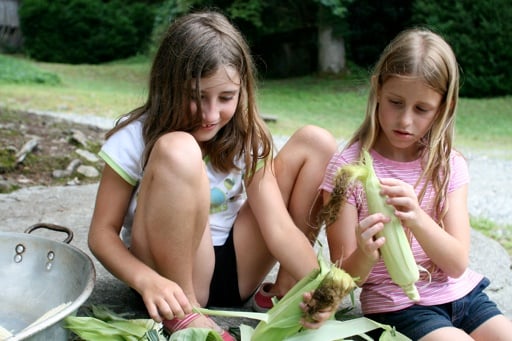
Shucking Corn for Dinner

Here is what the Senior linehead counselor, Sarah Thompson, said about the food and kitchen staff this year:

IMG_4171_m
Food tastes better prepared with a little love!

“I cannot praise the kitchen staff highly enough. A happy camp is a well-fed camp and they feed us exceedingly well! The magic started during  staff orientation (Capers? Fresh Basil? Is this really camp food?) and did not let up as the summer weared on. The food is healthy, innovative and delicious.

What impresses me the most, though, is the staff’s attitude. They are unfailingly helpful and upbeat, even when faced with hordes of hungry and demanding people.  More importantly, they realize that the kitchen affords valuable opportunities for the camper. The kitchen staff has opened its doors to several campers this summer, allowing girls to assist. Often, they are girls who are somehow most in need of the opportunity. There are some places at camp – the climbing tower, for instance – where girls are clearly going to gain confidence and other skills. This year’s kitchen staff has turned the kitchen into such a place for campers. The knowledge, independence and self-confidence they have instilled in the girls is nothing short of amazing.”

“Cooks you made a wonderful dinner! You know we’ll never get any thinner!” – From the Cook Song