
Camp Milk and Cookies

Summer Camp Treats Cookies

More Cookies!

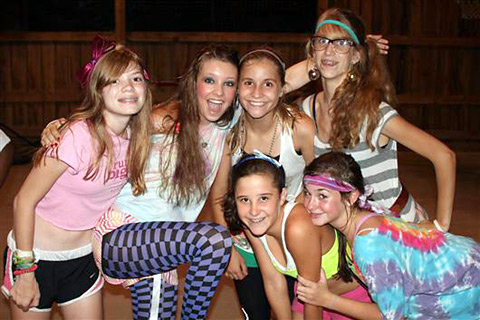
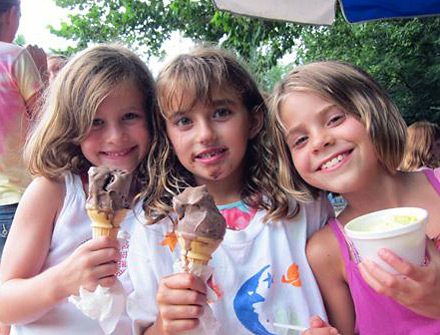
At camp, there are cookies every night! It’s a long standing tradition at Rockbrook for all the campers (and counselors 🙂 ) to have a cookie and small cup of milk at the end of the day. Everyday the kitchen crew makes a batch of homemade cookies— chocolate chip, oatmeal raisin, cinnamon nut, peanut butter, or maybe sugar cookies. Which kind is a daily surprise. When the evening program is finished, a couple of staff members from each line grabs their bag of cookies and jug of milk from the kitchen and sets it all out for the girls.

It may seem a little strange to have cookies right before bed, but it makes a nice little snack to get you through the night. Don’t forget to brush your teeth before hitting the hay. Maybe read a little in bed, and the next thing you know you’ll be waking up to the morning bell. Ahhh camp..

Sliding Rock North Carolina Fun

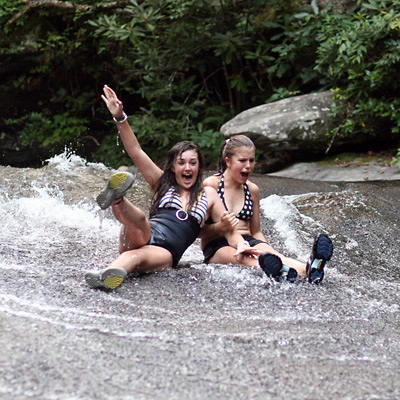
Sliding Rock Natural Water Slide in North Carolina

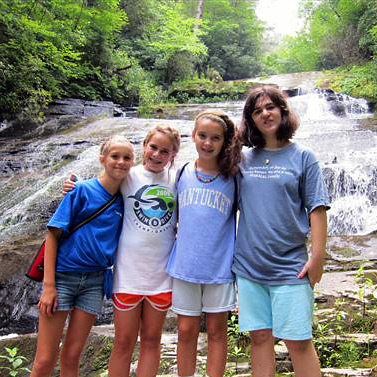
This part of North Carolina, in the western part of the state, is well known for its lush mountains and waterfalls. In the Brevard area alone there are more than 250 named waterfalls (Do you know the two that are on the Rockbrook Property?). Some of these waterfalls are quite remote and hidden, but others are popular places for swimming.

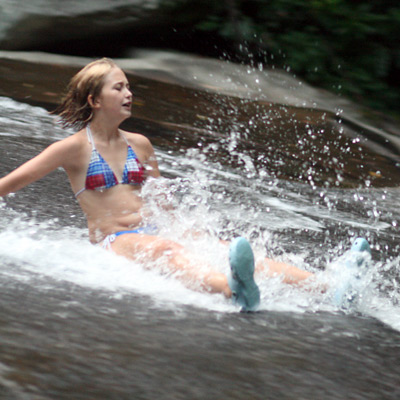
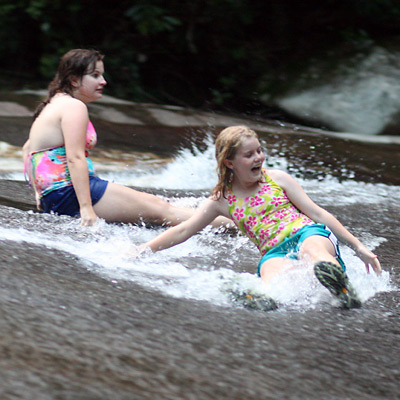
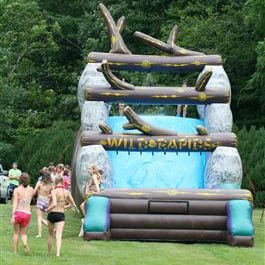
The most famous example of these waterfalls is Sliding Rock. This is a place in the Pisgah National Forest where Looking Glass Creek cascades about 60ft over a smooth sloping rock and drops into a deep pool at the bottom. The Forest Service has developed it into an organized recreation area so it can provide parking, lifeguards and first aid services during the busy summer months. In the last few years, Sliding Rock has become so popular the Forest Service has begun charging a small fee to use the area.

The Rockbrook Middlers and Seniors take a trip to Sliding Rock most sessions. We go at special times when the area is less crowded and we always bring our own additional lifeguards. It’s a great mountain experience for the girls, and when you top it off with a trip to Dolly’s Ice Cream stand, it really can’t be beat.

You’ll have so much fun, you might raise your foot in excitement!

Big (Horse) Hug!

Horse Riding Girl Summer Camp

Hug your horse!

Why would you do that? Well, it’s because you love your horse. He or she becomes a really good friend of yours at camp. Like all good friends, you’ll grow closer with good communication, trust, and consistency. Horse riding requires all of these, and over time riders and their horses become more and more responsive to each other. A real emotional bond begins to form, a real feeling of care.

That’s what we mean when we say at camp you can “befriend a special horse.” Riding, you’ll develop a special relationship with someone wonderful. It won’t take long; soon you’ll be hugging your horse too!

Common Mistakes for Camp Counselors

3 Common Mistakes

Life as a camp counselor is a lot of fun, and is rewarding for all sorts of reasons, but it can sometimes be challenging too. Children are learning and growing, and in the camp environment away from their parents, it’s common for them to struggle a bit, need assistance now and then, and even make “less than ideal” choices leading to unwelcome behavior.

Seeing these behaviors and struggles, it’s common for camp counselors to want to “fix” the situation. They’ll rely on their instincts, their pre-camp training, and character to help their campers improve. At the same time, it’s also easy to fall into certain traps and make mistakes, despite their best intentions.

Here are 3 common mistakes camp counselors often make.

summer camp counselor fun

1. Telling children the things you don’t want them to do, rather than the things you do want them to do.

We often tell children, “Don’t fight! Stop running! Quit arguing! Leave that alone!” This way of communicating leaves children with a much better idea of what we don’t want them to do than of what we do want them to do. No wonder many child-care workers are exasperated with the ways children behave! It takes awareness and a concerted effort to break this habit, but learning to say what we want from children pays dividends. Calm, clear expectations are the goal.

2. The tug-of-war trap.

When a child says, “I’m not making my bed! My parents didn’t pay for me to come to camp to work; I came to have fun,” most novice counselors fall for the bait and immediately get caught in an argument about who paid for camp and whether the camper must make the bed or not. A better strategy is to understand what might be motivating the child’s behavior by kindly asking how you might work together to accomplish the goal at hand.

3. Missing the feelings in what children say.

We become fixated on behavior and forget that a child may be acting out of fear, sadness, or a sense of loneliness. Unless counselors learn to identify and name feelings, much of what campers communicate to them may be lost. Pause and listen. Bring out your compassion, and be patient. You’ll soon understand what feelings are present.

More Benefits of Youth Camp

Camp Benefits Girls

I spotted an article discussing how parents can understand why residential summer camps are worth their cost. It’s true; sleepaway camps are usually expensive and can cost between $1000 and $2000 per week. And while it’s also true every summer activity (e.g., other educational opportunities, extracurricular activities, family vacations, trips, and entertainment) costs something significant, what are the unique benefits of an overnight camp experience that can justify its price?

First of all, the American Camp Association has a lot to say about the benefits for youth of attending summer camp. We have written about it before here and here (and especially here!), but you should visit the ACA Web site to see what they say.

One clear, obvious benefit to camp is the fun and concrete skills kids gain from the wide range of camp activities available.  By trying everything at camp, girls learn how to be an archer, a swimmer, a knitter, a tennis player, an actor, and a horseback rider, to name just a few.  They learn to do things, exciting new things that can easily turn into life-long pursuits.

Perhaps more importantly, a quality camp experience provides kids intangible benefits as well. Here’s how one camp director in the article put it.

“Besides all the exciting activities and friendships made, the immense value in camp comes in the development of key lifetime skills and attributes such as confidence, cooperation, communication, new skills and decision-making, to name a few. Camp goes beyond a summer session. It’s unique in that it really is about each camper developing their best self for life… In that regard it is priceless.”

More than other summer activities, a sleep away summer camp experience endows children with valuable life skills, provides positive adult role models, supports them with consistent encouragement, and all within the kind of well-rounded wholesome environment all too rarely found these days. These are lasting benefits that can really make a difference in a child’s life as she becomes an adult.  It’s pretty clear; with that kind of benefit, camp is definitely worth it.

Let’s Go for a Swim!

Swim Summer Camps Girls

No matter what set of activities you sign up for at camp, there are two times each day when the lake is open for “free swim.” These are right before lunch and right before dinner. It’s up to you how you spend this free time, but it feels really great to jump in the lake for a swim after you’ve spent the day at other activities around camp. You might have been playing basketball with friends in the gym, or climbing the alpine tower, or just walking back from horseback riding, but chances are you’ll be at least little hot and sweaty. It’s summer after all! So head down to the lake, and you can meet up with some of your cabin mates and find out how they’ve been spending their day. The Rockbrook swimming lake is fed by a mountain stream, so as anyone will tell you, it’s guaranteed to cool you off.

Let’s go for a summer swim!

How to Make a Lanyard!

Summer Camp Lanyard Patterns

It just wouldn’t be camp without making a lanyard. That flat colorful cord, twisted and tied, seems to be a part of every girl’s summer arts and crafts. Even camp alumni speak fondly of learning to make decorative lanyards. Here are four different lanyard patterns to learn. Have you seen these?

1. Diamond Braid.
The first pattern to the left is called the “Diamond Braid.” Like most of these braids, getting started is the hardest part.  This one is unique too because it’s more braiding that tying knots, and will require a knot at the end to keep it from unraveling.

2. Cobra Braid.
The second one is usually called the “Cobra Braid” because it makes a flat lanyard reminiscent of a cobra’s head.  Some people also call it the “Ladder Knot.”  If you know how to tie a square knot, or even how to tie your shoes, you’ll be able to make this lanyard.

3. Box Braid.
The third pattern is probably the best known camp lanyard pattern.  Known as the “Box Braid” or the “Square Braid,” it makes a regular 4-sided strand.  The important thing for this arts and crafts project is keeping your strands straight and your knots tight.

4. Round Braid.
The last pattern shown here is a variation on the box braid, and is usually called the “Round Braid.”  To make it, use the same 4-strand weaving knot, but each new knot makes a slight turn crossing over (rather than parallel to) the previous knot.  Like all these patterns, you repeat the knot and braiding over and over until your lanyard is long enough or you run out of cord.

Don’t forget that these are just starting points. You can combine them, switch from one the other, add a twist to a strand, or maybe even add a bead to create your own summer arts and crafts project. Go ahead and experiment, and you’ll have something really cool.

SC Camps in the Mountains

South Carolina Summer Camp Girls

Looking over the listing of girls attending Rockbrook, this summer and in the past, it’s interesting to see how many campers are from South Carolina. It’s not too surprising if you realize a couple of things about RBC.

First of all, camp is located only about 8 miles from the South Carolina border. You have to go up the mountain to get here, but you can drive to Rockbrook in less than 6 hours from just about anywhere in South Carolina. Here’s a map showing camp’s location.

There is also a long tradition of Rockbrook directors being from South Carolina. For example, our former director “Jerky” (Ellen Hume Jervey) was a native of Charleston, SC.  Later, the Stevensons and the Whittles where also from SC.

Another thing to appreciate is that before air conditioning was common in the south, heading to the mountains was the best way to cool down in the summers.  South Carolina summer camps would even establish outposts in the “upstate” for this reason.  It’s hard to beat the mountains in the summer!  If you’re from Columbia or Charleston, you know what I mean.

Unplugging at Camp

Kids Enjoy Summer Crafts without Technology

Spotted a nice article about summer camp in the American Way Magazine. It’s called “Summer, Unplugged.” The author, Winston Ross, interviews several camp directors and camp kids to find out what’s so attractive about being at camp. There’s a lot of good stuff to read, so you should go check it out.

One thing that stood out for me, was the discussion about technology and how camp is so nice because it doesn’t have cell phones, video games, television and the Internet. Campers admit that it’s really tough to give that stuff up at first, but once they settle in at camp, they appreciate being “unplugged.” One girl put it this way.

“It’s kind of like a symbolic way of stepping out of the real world,” she says. “It allows me to take off from home, leave my worries, thoughts about college, and stress behind. I just go escape.”

What Unplugging Unlocks

Turning off your technology allows you to really engage all of what camp offers— the real friendships, the physical activity, and the chances to explore and discover the natural world. Instead of being entertained by a flickering screen, you get to create a fun time with your friends. You get to actually do really cool things instead of just sitting around “watching” something. …Take off your shoes, soak ’em in the creek, and let’s make a basket.

When you think about it, there’s a lot more to life, to being human, than “facebooking,” text messaging, and watching “reality” TV. These days, it takes a real effort to get past all of that so you can exercise those more important parts of who you are. Camp is special place to help with that effort. It’s perfect for reminding you that life is more fun in the real world.