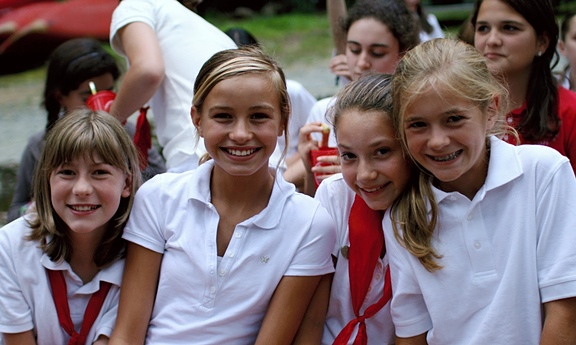
The History of Summer Camps

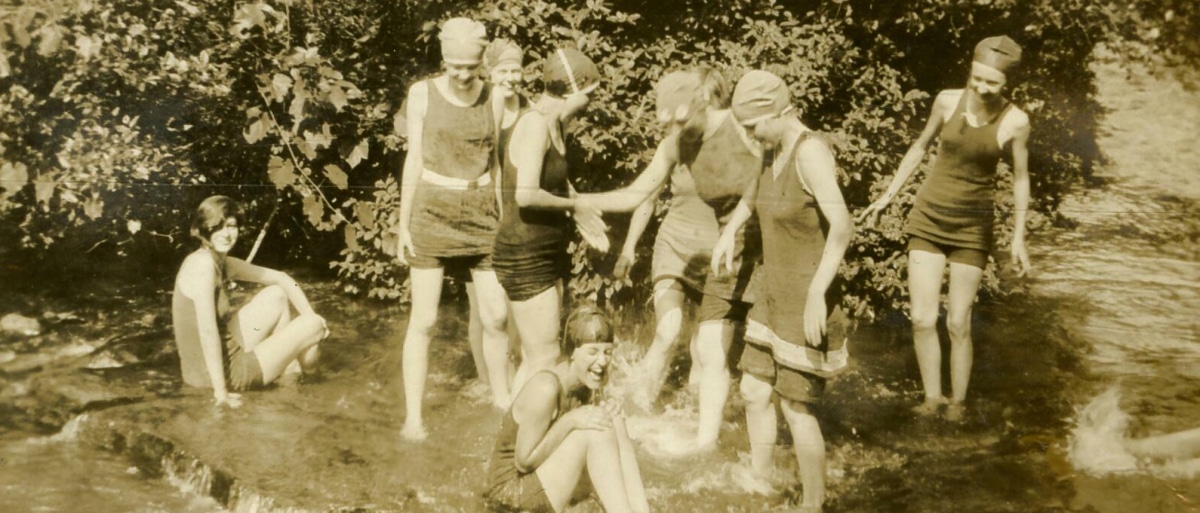
1861 First Summer Camp

The American Camp Association, the national accrediting organization for summer camps in the United States and American camp professionals is celebrating its 100 year anniversary. It was back in 1910 that it was founded under the original name of the “Camp Directors Association of America.”

As part of their celebration, the ACA has published a nice collection of historical photos, documents and interviews. It traces the history of organized camping to a particular event in 1861. Here’s how the timeline starts:

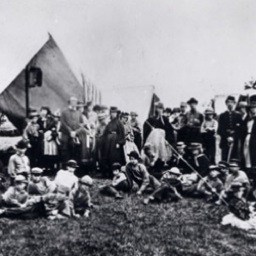
The Gunnery Camp is considered the first organized American camp. Frederick W. Gunn and his wife Abigail operated a home school for boys in Washington, Connecticut. In 1861, they took the whole school on a two-week trip. The class hiked to their destination and then set up camp. The students spent their time boating, fishing, and trapping. The trip was so successful, the Gunns continued the tradition for twelve years.

It’s nice to see summer camps so well represented, and interesting to think that Rockbrook’s founding in 1921 came so soon after the ACA. By the way, if you want to learn more about the history of summer camps, there are some great resources out there.

Be sure to read more about the history of summer camp at Rockbrook.

A Case for Summer Camp

Kids Camp Friends

Head on over to the Chicago Tribune web site and read a fantastic article by Josh Noel entitled: Making a case for camp: This summer institution is old-fashioned — and as relevant as ever.

Describing a camp in Michigan, the article reminds us of why camp is so important to kids. As we’ve mentioned before, the benefits are so crucial given how most children these days find themselves at school and at home.

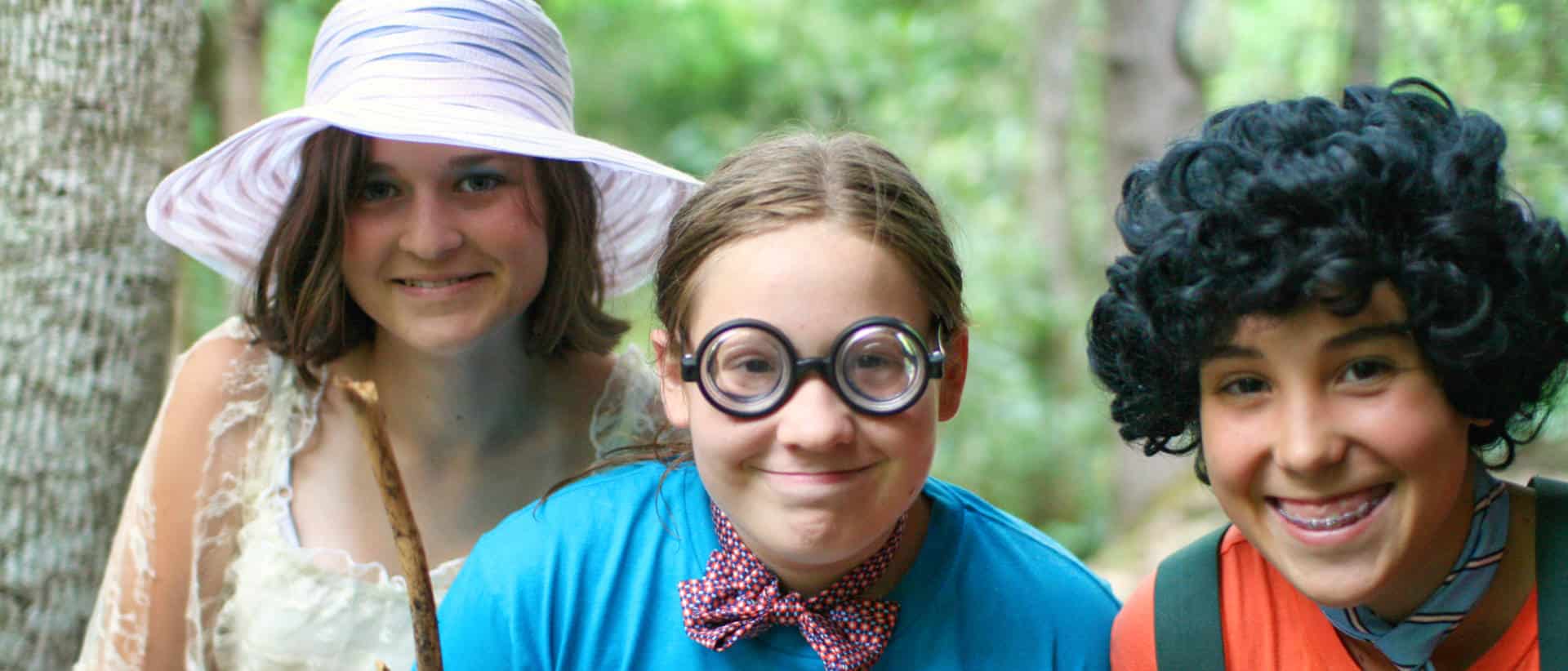
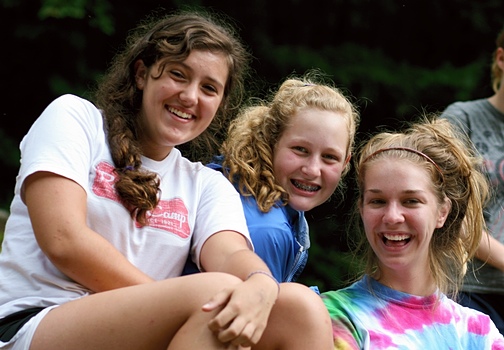
Anyone who has been to summer camp knows that the relationships are like few others. Friendships form quickly, intensely and with open minds. Even if camp friends don’t keep in touch long-term, what has been shared is long remembered. For many, it provides best moments of your life.

Camp is an open and friendly place. It’s where you can put aside your reputation from school, avoid a lot of the drama, and just relax into who you really are. That’s a big part of why you make your best friends at camp; you’re not trying to impress or be someone else. It’s just you, and you soon see, that’s just fine.

Once you experience it, you understand it, and you too will be coming back to camp for the friendships it provides.

Balancing on the Rock

Kid Rock Climbing Summer Camp

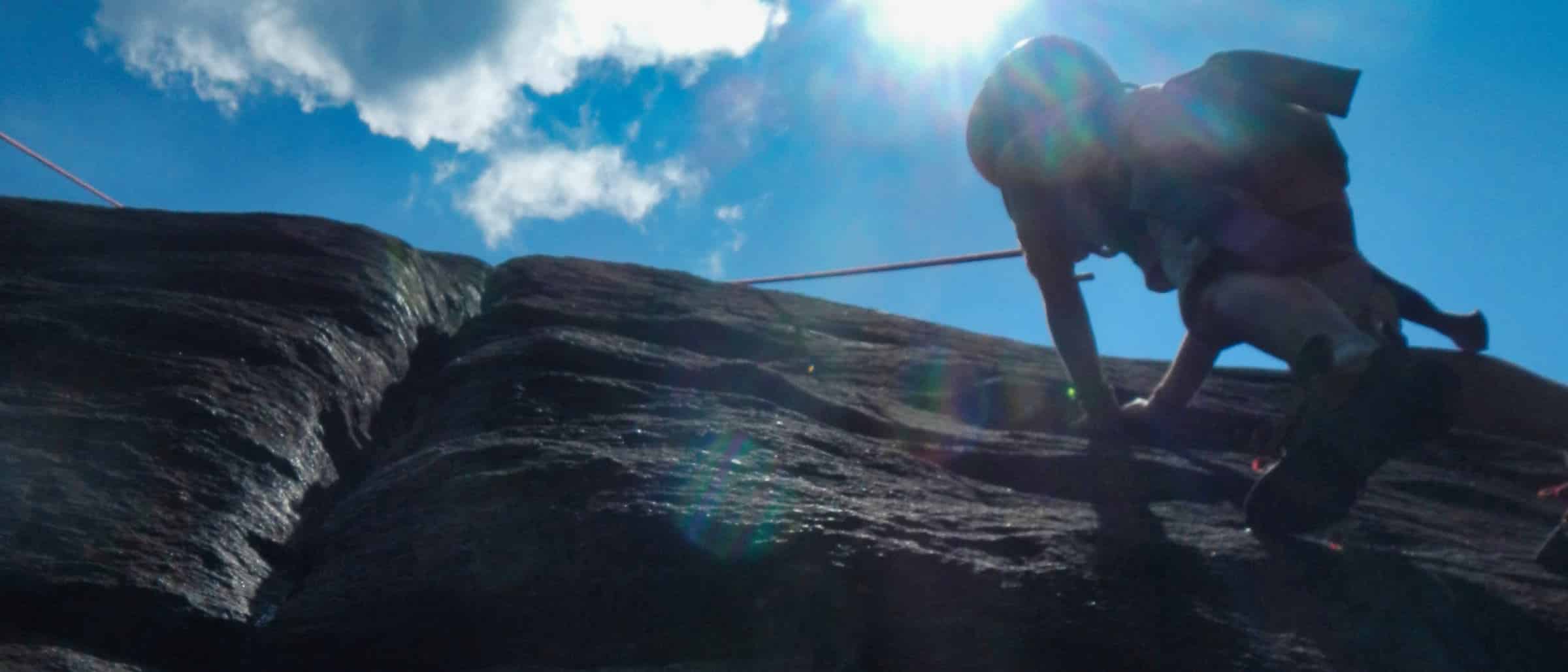
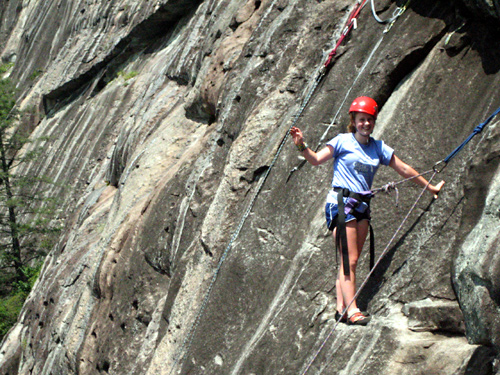
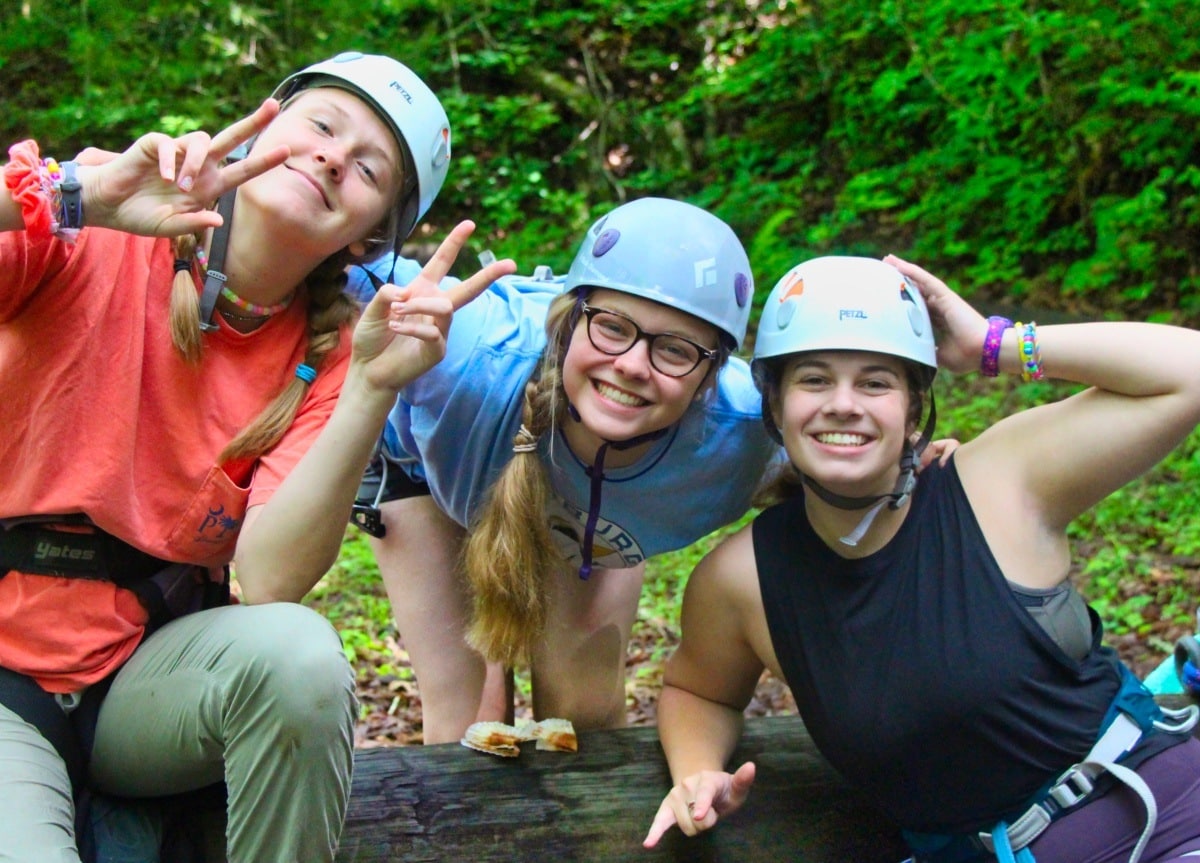
You’ve probably heard that “balance” is one of the most important skills to have for rock climbing. It’s true; a lot of the technique involves balancing on your feet, and usually one foot, as you move up the rock.

The 3-Point Contact Technique

But it’s not only that simple. It’s also important to learn how to hold yourself still, to use your muscles to shift your weight from one foot to the other slowly and smoothly. Generally, as you climb, you’ll keep your torso stationary and move a hand or foot up to the next hold. This is sometimes called the rule of “3-point contact” and refers to the practice of only moving one foot or hand at a time while your other limbs stay on the rock.

For example, you might keep both feet on the rock, hold on with one hand, and shift your weight to the left or right to reach a new handhold.  Likewise, you might hold on with both hands, keep one foot set, and lift your other foot up to a new hold. The trick is to stay smooth, keep your body still, and shift your center of gravity from left to right and up. It’s this deliberate and precise moving that we meaning by “balancing.”

Are you rock climbing this summer?

RBC Alumnae Gather in Atlanta

Rockbrook Alumnae Reunion Atlanta
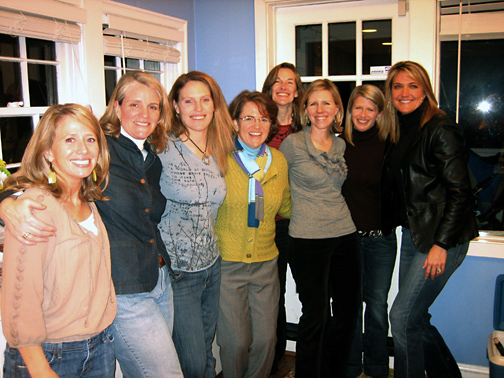
L to R: Carter Page Schondelmayer, Melissa Thurmond, Betsy Smith Appleby, Betsy Rothschild, Sarah Reed Carter, Rachel Paine Fuller, Lucile Page Martin, Ansley Ledyard Callaway

Back on the 29th of January, a few RBC girls got together for a mini-reunion at Lucile Martin’s house in Atlanta, GA. Fifteen or so people were able to make it. Not pictured above: Jennie Lewis, Charlotte Page, Jenny Howard, Maggie Allgood, Mandy Horton, Jill Woodruff King, Haley and Bayless Fleming.

It’s always so great to get together and remember all the happy times we’ve shared at Rockbrook. Sometimes you can’t help but laughing at some of those old photos.

Stay tuned! We’ll let you know when the next Rockbrook Mini Reunion is planned.

Rockbrook and the NC Cherokee

Cherokee Lost Settlement near Rockbrook Camp

If you’ve been to Rockbrook you know how it’s located in an amazing place— tucked between two prominent rock faces, surrounded by forest on three sides and bordering the valley formed by the French Broad river on the fourth. Add to that the two freshwater creeks, two waterfalls, and the two caves, you begin to understand how unique it really is.

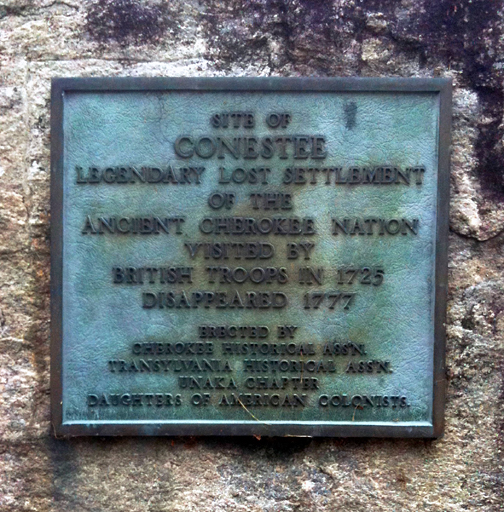
But did you know that Rockbrook was also the site of a Cherokee settlement? That’s right; a Native American town called Kana’sta was located right near camp. This photo is a marker telling a bit about it.  The plaque says:

Site of CONESTEE, Legendary Lost Settlement of the Ancient Cherokee Nation. Visited by British Troops in 1725. Disappeared 1777. Erected by Cherokee Historical Ass’n, Transylvania Historical Ass’n, Unaka Chapter, Daughters of American Colonists.

There is also a Cherokee story telling of the Kana’sta settlement leaving its town to go and live with another Cherokee group.  Two visitors arrive one day and offer to let the Kana’sta people come and live in their town “where we are always happy.”  It is a story of why the Kana’sta “disappeared.”

It’s so interesting to think about the rich history of this part of North Carolina.  Long before European settlers arrived, a group of Cherokee recognized its special character and made it their home. Today, hundreds of years later, it is home to all of us at Rockbrook.  Pretty cool.

Getting the ‘Old Guard’ Together

Camp Old Guard Ladies

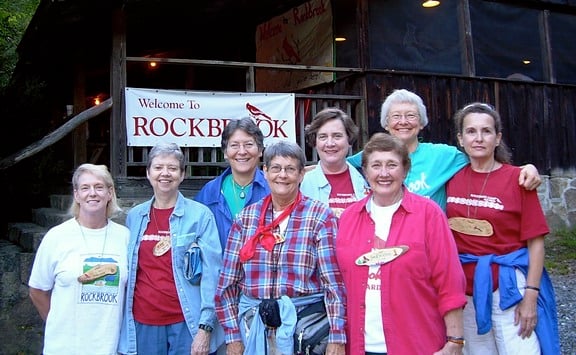
Here’s a nice photo of the “Old Guard” taken at Rockbrook’s recent Alumnae Reunion back in August. From left to right, there’s: Lucy Gibson, Brenda Byrne, Elsa Claverie, Madge Kempton, Mary Ellis Carrere Hasseltine, Jo Littleton, Phyllis Shaw and Elizabeth Acree. Years and years of camp experience right there!

They Need Summer Camp

If you could reform the common education of teenagers, change something about how teenagers today learn, or what they learn, what would you do? Looking around, what do you think teenagers need to understand? How do they need to change if they are to become happy, well-grounded, satisfied adults? Is there a skill, a personal value, some rule of thumb that you wish all teenagers today would adopt? Is there one crucial thing that today’s teens are missing, and as a result has placed them on a path toward trouble later in life?

What's Really Missing for Teenagers

You get the picture; the assumption here is that our young people are already having trouble, and aren’t measuring up to the ideal outcomes our education system, culture, and families define. It might be declining test scores, weak academic competencies (compared with children in other countries), unhealthy eating and exercise habits, poor social skills (e.g., difficulty making friends, disrespecting others), decreased creativity, or a general failure to overcome unexpected challenges. Any of these, or several, might be identified as the core problem facing our teenagers these days.

Summer Camp Teenagers

Why More School Isn't the Answer

So what can we do to help? If your teen is slipping in any of these ways, how can you improve the situation, make a difference in some way? One proposal suggested, and increasingly so it seems, is to lengthen the school year. It’s claimed that organized classroom education provides the best chance to “reach” the youth and “make a difference in their lives.” As we’ve mentioned before, this is a weak, incomplete solution at best, one that fails to understand the complexities of youth development and the many dimensions it demands. It might be easy to understand and simple to measure, but extending the school calendar is not going to help our teenagers navigate their lives better. If your teen can’t make choices for herself, extra math homework isn’t going to help.

Again, what is there to do? How can we complement our current education system, augment what we already do in the classroom with learning that addresses the complete human being? What experiential gaps should we fill, opportunities should we create, models should we provide? What setting would best support these ordinarily neglected aspects of growing up?

One answer, we, and so many other youth development professionals, advocate is the benefits provided by summer camps. Camps are organized settings that encourage young people to reach beyond what they know, interact with others positively, take responsibility for their own decisions, physically engage the natural world, build self-esteem, and experience meaningful success. Summer camps are incredibly effective educational institutions, that camp parents will tell you, make a huge difference in the health and well-being of their children. Summer camps are just very good at helping children grow in these very important ways.

Yes, we should extend the education of our teenagers and children, not by lengthening the school year, but by providing greater experiential opportunities like those found at summer camps. Send your teenager to camp. That’s what you can do.


climbing teenagers

Time in Nature Makes Children More Caring

Time with Nature

New research from psychologists Netta Weinstein, Andrew Przybylski, and Richard Ryan at the University of Rochester suggests that when exposed to nature people are more inclined to be caring.  They are more willing to share and do good in the world.  The mechanism behind this effect is not entirely clear, but there’s simply something special to being outside, to having personal experiences of natural beauty and wonder.  When you think about it, we all are drawn toward nature and it does improve our mood, calm us down, and generally restore us as human beings.  Study after study supports this.

Here again, we’re finding that every child benefits from time outdoors and in contact with the natural world, and of course, camp is probably the best way to get a good solid dose of it.  So for us, we’d say time at camp helps children be more caring as well.

Learn more by watching this video interview of Richard Ryan discussing the research.

The Best Girls Summer Camp

What is the best girls summer camp?

best-girls-camp

It’s funny, but you see that claim now and then. “We’re the best girls camp ever!” or “Welcome to the best girls camp in North Carolina.”

Most of this can be considered a version of team spirit, of the folks from a camp expressing how much they love their particular camp, how proud they are of it, and how they know their camp really is excellent.

Of course, in reality, there is no measure that would allow you to say objectively which girls camp is the best. Here in western North Carolina, there are so many great girls camps, each with dedicated and experienced directors, outstanding counselors, beautiful facilities and diverse fun activities. These camps also have very strong supporters, families who have found the camp perfect for their children. You will certainly find happy enthusiastic campers at all of these camps.

So is there really a best girls camp? Only to the extent that a camp is right for you. The subtle differences between camps, their particular strengths or emphases, will probably make you feel more at home at one girls camp or another. To put it differently, there are of course differences between camps but they do not distinguish which camp is “best.” That is something that follows from how much you love your camp, and that’s what makes it best.

So yes, for many reasons, generations of girls believe Rockbrook is the best girls summer camp. They believe it because they’ve experienced it and love it as their own.