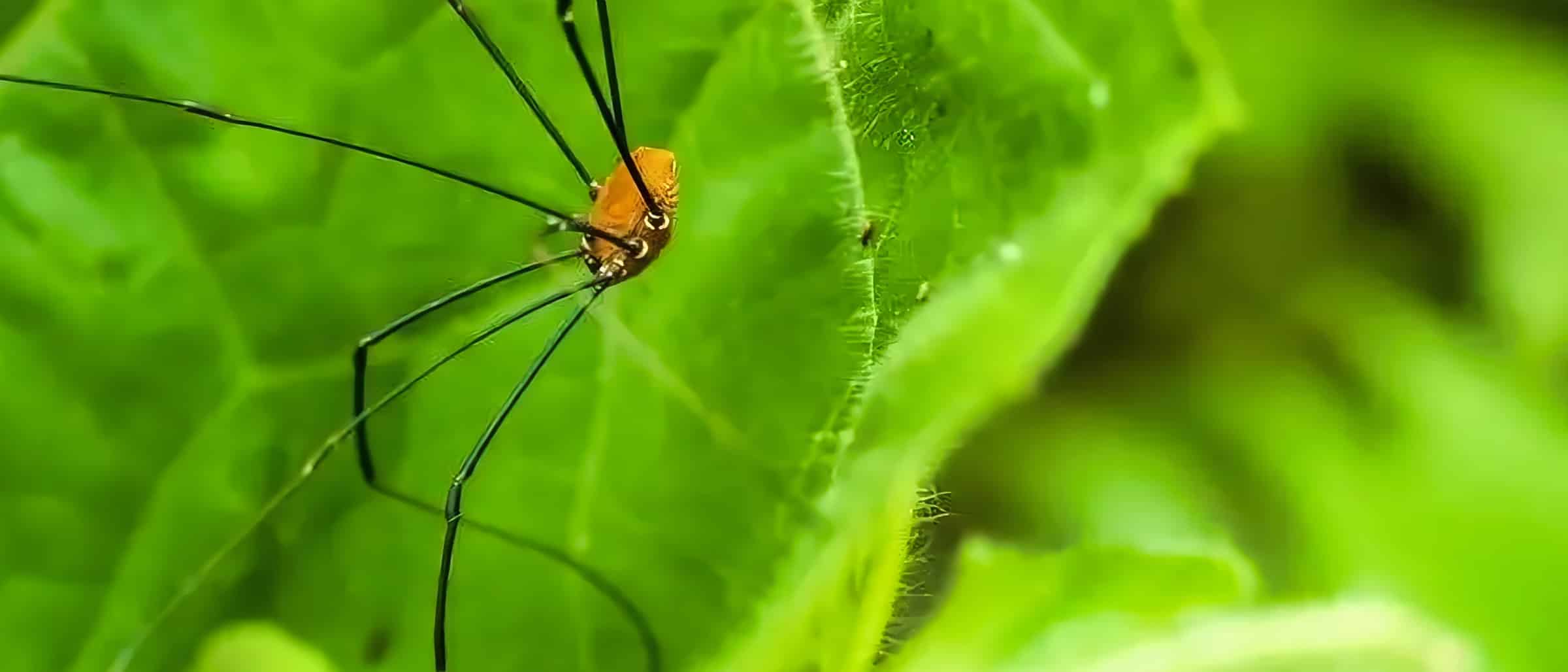
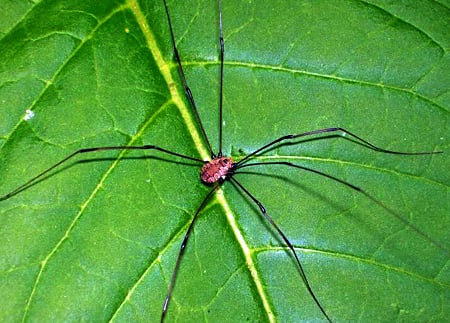
Probably the most common arachnid (the class that includes spiders) you see around Rockbrook is this little guy. You probably recognize him as a “Daddy Long legs Spider.” And you’ve also probably heard that they are the “most poisonous spider in the world,” but (luckily!) they are not dangerous because their “fangs are too small and short to bite through people’s skin.” With that kind of reputation, this is definitely a little scary no matter what.
The Truth About Daddy Long Legs
The problem is; it’s not true. Also known as Harvestmen, these little guys do not in fact have fangs or any venom at all. It is true their mouth parts are quite small, so they can’t bite you. Overall, they’re totally harmless. They also don’t spin webs because they lack silk producing glands. It fact, technically speaking they aren’t even spiders! They do have eight legs and are in the same biological class as spiders, but are in a different order. It’s just a big misconception that seems to be repeated every summer at camp.
There are more than 100 species of Harvestmen in North America, and they are particularly common in rich deciduous forests (like Rockbrook!) where there are lots of other small insects, fungi, and plant matter they like to eat. If you’ve been at Rockbrook in the past, you’ll recognize them. And when you’re at camp this summer, keep an eye out for these fascinating, and harmless, forest critters.
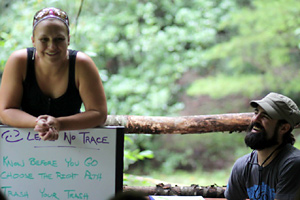
Today Rockbrook welcomed Mark Ardagna and Tara McCarthy from the Leave No Trace organization. They are currently traveling around the country on an e-tour, providing educational programs for young people that use the Leave No Trace principles to promote responsible enjoyment of the outdoors. Rockbrook was very fortunate to have Mark and Tara spend the day with us and present several workshops to our campers. Leave No Trace (LNT) is a nonprofit, educational organization dedicated to “responsible enjoyment and active stewardship of the outdoors by all people.” It advocates seven principles (not so much rules) to minimize negative impact on the environment from outdoor activity whether it be a camping trip in the woods or simply walking your dog in a city park.
What is “Leave No Trace” ?
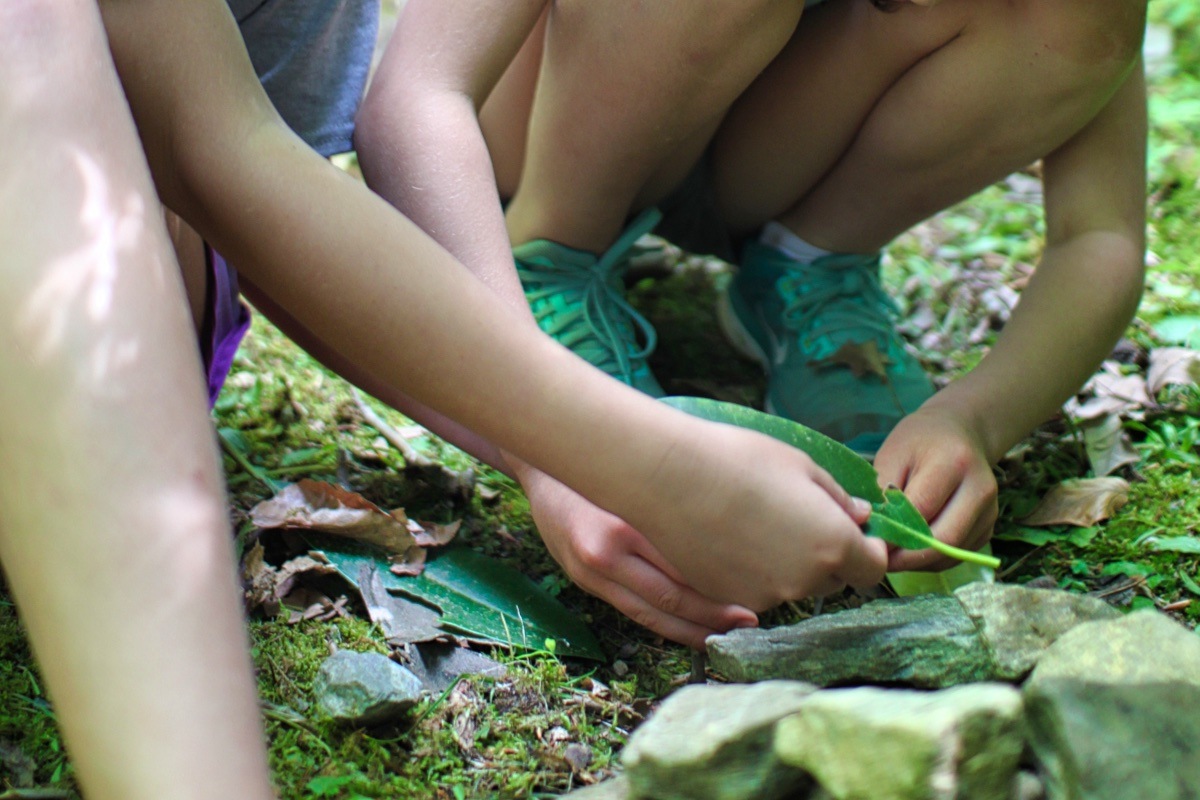
Addressing these principles, Mark and Tara discussed with the campers what it means to plan and prepare for outdoor activity, the importance of traveling and camping on durable surfaces, disposing of waste properly, preserving what we find outdoors, safely minimizing campfire impacts, how to respect wildlife, and being considerate to other people when out. They led an observation activity where the girls broke into small groups and studied a small area of the forest enclosed by a circle of string. The girls were surprised just how many different organisms were in such a small area of the forest, and how the more they looked, the more they noticed. Imagining the entire forest, something many, many times larger than their small circle of string, the girls really understood how following the LNT principles can have such a huge impact. Everyone really enjoyed meeting Mark and Tara and we all appreciated learning so much from them.
The Alpine Climbing Tower
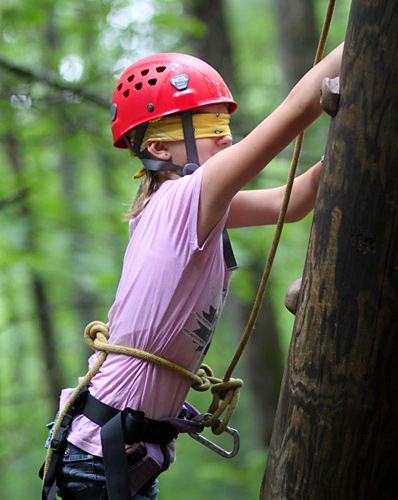
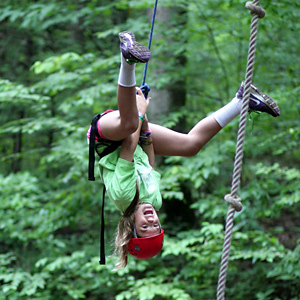
Hidden in the woods along a short trail behind our gym is Rockbrook’s Alpine Climbing Tower. This is a 50ft-tall high ropes course with almost 100 different climbing challenges available for the girls. They receive their first introduction to rock climbing here by learning about the safety equipment (helmet, harness, shoes, carabiners, etc.), the belay commands to make sure their belayer (the person holding the belay rope) is ready and working, and the important climbing techniques needed to make progress up the tower or rock. Girls of every age group can sign up for climbing and try the tower, from the littlest Juniors to the tallest Seniors. In addition to climbing one of the routes up the Alpine Tower or tackling one of the challenge elements like the “Cargo Net,” the girls can try and climb blindfolded. This of course adds a degree of difficulty to the climbing, but it also tends to calm you down and slow you down, thereby allowing you to concentrate on the climbing instead of how high in the air you are. It’s a strange wonderful feeling and a great climbing exercise. There’s also a trick the girls often do after they climb and as their belayer lowers them on their belay rope. They pause mid-air and flip upside down, “Spiderman” style… in true Rockbrook fashion, “just for the fun of it.”
Dancing with Camp Carolina
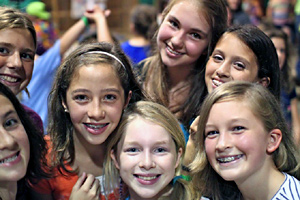
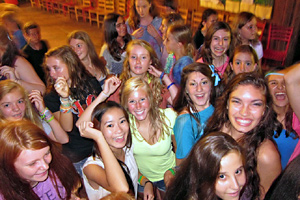
The highlight of the evening, as you may be able to guess from these two photos, was our dance with Camp Carolina for Boys, our two dances I should say because we held two simultaneously: one here at Rockbrook for the younger set, and one over there for our older girls. We’ve found over the years that splitting the girls and boys up by age allows us to adjust the music and the feel of the dance to match the different interests of 13-year-old and an 8-year-old, for example. Some girls are happy to opt out of the dances altogether, so we always provide an easy way for them to do that, to team up for a “dance alternative” activity of some sort involving an art project and snack.
These dances are a lot of fun for the girls, even if they sometimes start out with a few jittery nerves as well. Fortunately, the counselors are there to help with this, to dress a little silly, not making a big deal about their looks, to be carefree about their dance moves (again, goofy is good!), and to encourage group dances. No pressure, just the fun of being together.
Do you know about the North Carolina Children and Nature Coalition? It’s based in Asheboro, NC and is a non-profit organization dedicated to reconnecting children with nature. In response to the growing evidence documenting the benefits children gain from playing outside, benefits we have discussed here and here, this group strives to keep people informed through its web site, publications, conferences, and public policy initiatives.
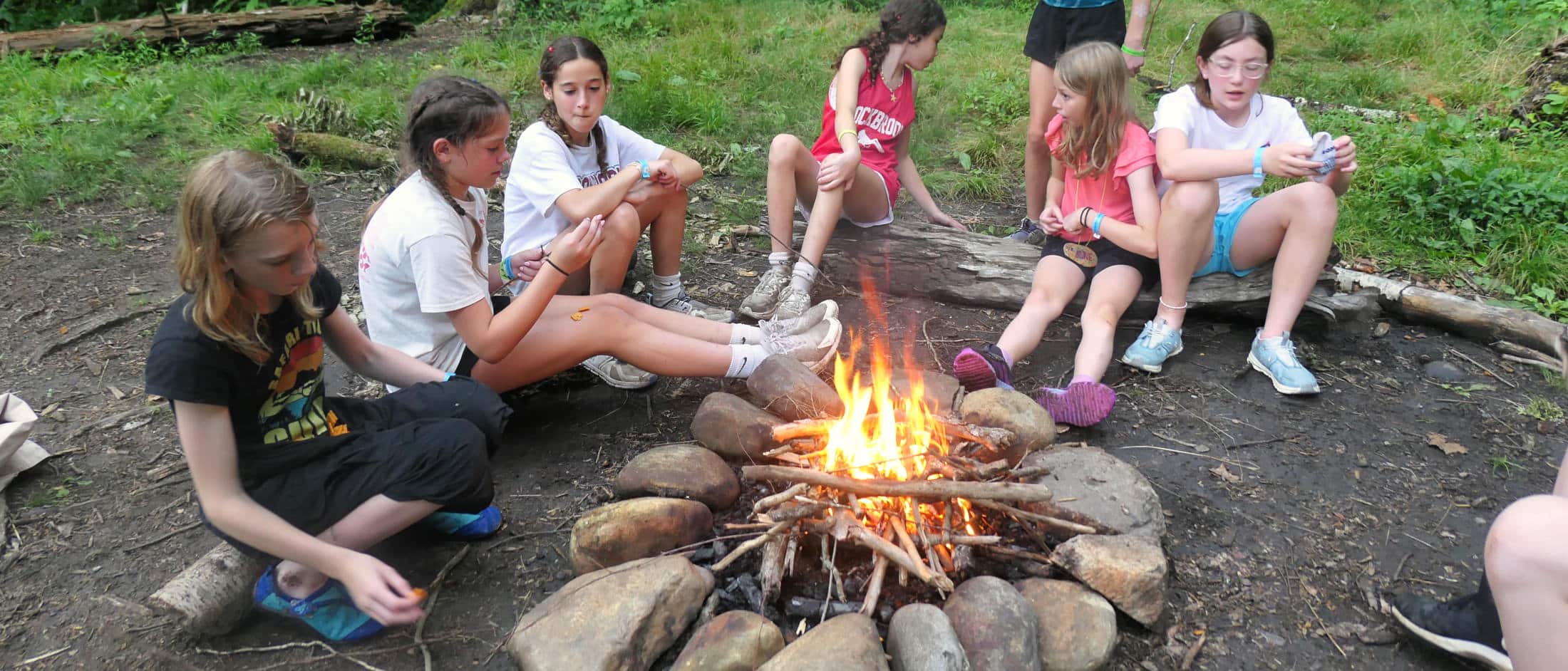
Of course, Rockbrook fully supports this mission. Camp life is immersed in the natural world, offering a daily celebration of its wonders and hidden beauty. Every minute, as children newly experience nature at camp, they are inspired to grow more confident, cooperative, and compassionate.
The NC Children and Nature Coalition and other state-wide environmental education organizations have launched a campaign to establish a “Children’s Bill of Rights,” a formal recognition that children need and deserve outdoor experience. They put it like this.
A Children’s Bill of Rights
Every North Carolina child should have the opportunity to discover, explore and connect with natural spaces and wild places close to home, in neighborhoods and cities in North Carolina, from the mountains to the sea by:
Playing in a safe place outdoors,
Camping under the stars, learning to swim, riding a bike,
Using their senses to experience the natural world,
Visiting a farm, seeing how food is grown, growing something,
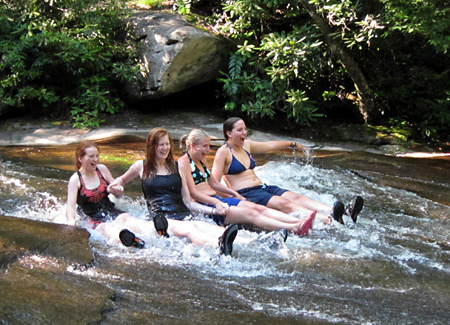
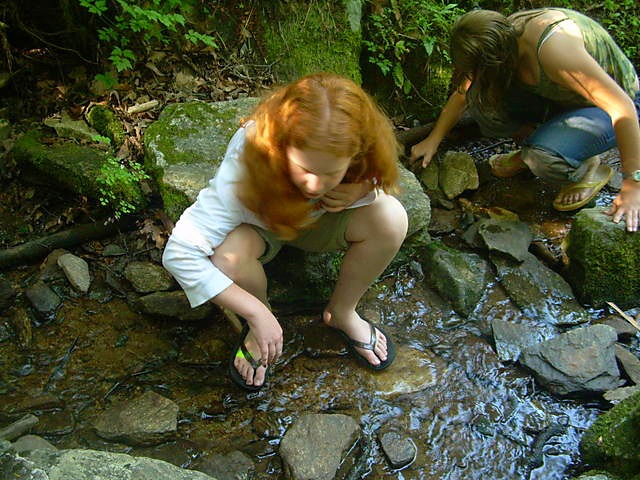
Exploring a stream, splashing in a wave, catching a fish, stomping in a puddle, playing in the mud,
Hiking in a natural area and following a trail,
Rolling in the grass, playing in the sand, climbing a tree or searching under a log,
Sharing nature with a parent, guardian, mentor, teacher or environmental educator, and visiting a zoo, aquarium or environmental education center.
We’ve talked about Richard Louv before, here and here, but I just found this video of him discussing the importance of nature for children. It’s a short introduction to Louv’s notion of “Nature Deficit Disorder.” It recalls some of the core traditions and values that led to the founding of camp. Check it out!
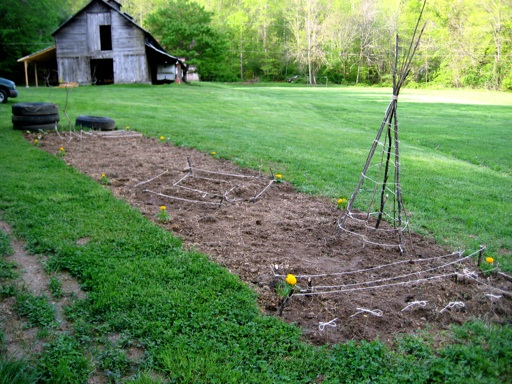
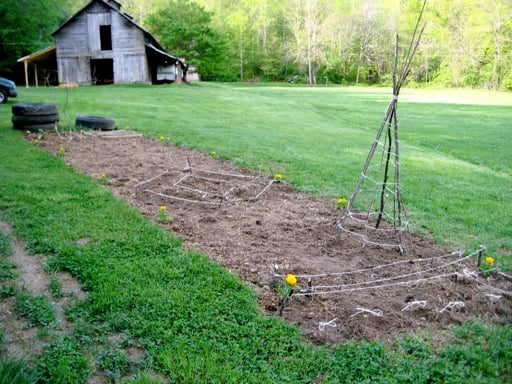
This weekend, with the help of Tara Millington and Catherine Goodnight, the first seeds were planted in the new Rockbrook garden. What you don’t see yet in this photo are the carrots, beets, beans, corn, onions, peas and more that will soon be sprouting! This is actually the same place that the old garden use to be many years ago. The soil is top notch!
This summer, like in camp years gone by, campers will be able to sign up for garden workshops, where they might even get to pick right out of the garden! Both campers and counselors can pitch in during Twilight (the time after dinner and before evening program) to water and care for the garden.
New research from psychologists Netta Weinstein, Andrew Przybylski, and Richard Ryan at the University of Rochester suggests that when exposed to nature people are more inclined to be caring. They are more willing to share and do good in the world. The mechanism behind this effect is not entirely clear, but there’s simply something special to being outside, to having personal experiences of natural beauty and wonder. When you think about it, we all are drawn toward nature and it does improve our mood, calm us down, and generally restore us as human beings. Study after study supports this.
Here again, we’re finding that every child benefits from time outdoors and in contact with the natural world, and of course, camp is probably the best way to get a good solid dose of it. So for us, we’d say time at camp helps children be more caring as well.
Learn more by watching this video interview of Richard Ryan discussing the research.
As a parent, have you ever felt you were driving around in circles, literally driving your kids from home to school, to sports or dance practice, to other lessons or weekly events? Would you say that your kids are scheduled and busy most of the time? Do they spend most of their time inside, and when they do have free time, how do they spend it? Watching TV, on the Internet, text messaging?
All of this is valuable, of course, with each activity exposing children to new ideas, information and challenges, but there’s a growing awareness that if overemphasized it can create problems as well. It’s becoming clear that children need time with nature too. They need the opportunity to explore the outdoors, to play outside without the time constraints of school, to feel the elements and reconnect with the wonders of the natural world.
The Children and Nature Network is an non-profit organization dedicated to researching this issue and providing resources for encouraging children’s health through outdoor activity and experience. It’s a great place to learn about the importance for children of direct experience of nature.
Camp as the Antidote
Summer camps, thankfully, are still ways for children to recover from the “nature deficit” they endure throughout the school year. Nature and camp just go together. Particularly at an overnight camp like Rockbrook, nature is a constant companion— the earthy smell, the feel of the weather, the surprising creatures, the plant life that’s everywhere you look. Sure camp offers crafts, adventure, sports and lots of silly fun, but every minute is also a chance to be with nature. It’s the greatest feeling, and is also, incredibly good for you.
Richard Louv, who we’ve mentioned before, has published a new and interesting article discussing the benefits of outdoor play, the problems caused when it’s neglected, and what we might do to encourage it. The article is in the March-April 2007 issue of Orion magazine, and is entitled “Leave No Child Inside” (link to the full article). Louv has no trouble documenting an overall decline in the amount of time American kids spend outside, and likewise the numerous problems associated with this “virtual house arrest” (“threats to their independent judgment and value of place, to their ability to feel awe and wonder, to their sense of stewardship for the Earth—and, most immediately, threats to their psychological and physical health”).
A Movement to Reconnect
Despite the forces behind this “nature-deficit disorder” (“disappearing access to natural areas, competition from television, smart phones and computers, dangerous traffic, more homework, and other pressures”), Louv also finds a “growing movement to reconnect children and nature.” What’s crucial here is the positive childhood experience of nature most of us adults share and recall fondly. No matter what our current profession, level of income, or political views, we love those experiences… turning over rocks in the stream, hiking through tall ferns, catching a glimpse of a hawk overhead… and we want our children to have them too.
Louv’s point is that with this kind of broad agreement on an issue, we should be able to do something about it. There’s power to this movement because “no one among us wants to be a member of the last generation to pass on to its children the joy of playing outside in nature.”
Fortunately there is camp. There is a special community designed to help children reconnect with the the natural world, and fortunately, they love it!
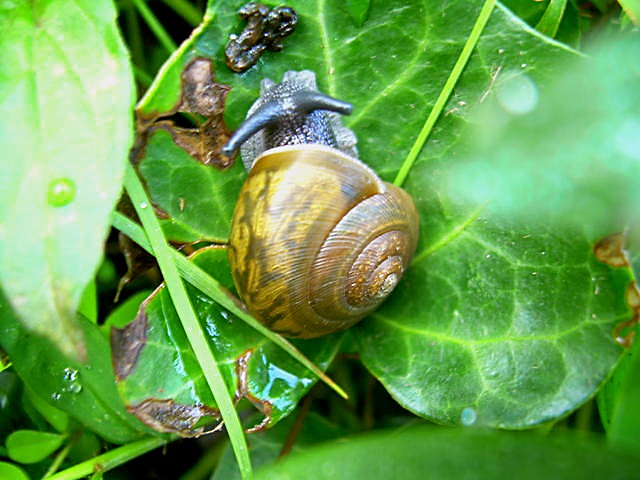
What a great shot! Could it be the rare Noonday Globe Snail(Mesodon clarki nantahala) found only in North Carolina? We’re not sure, but we think it’s a really cool example of the discovery that nature provides girls around camp (It’s lush, to say the least!). A camper in the photography activity took this photo last summer wandering around camp.
Our camp alumni are always quick to tell us about their memories of the plants, animals and insects they remember from camp… Snails included!