
The Amazing “Jerky”

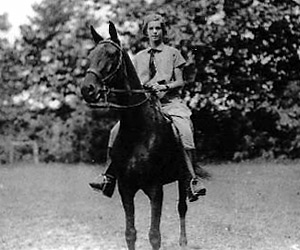
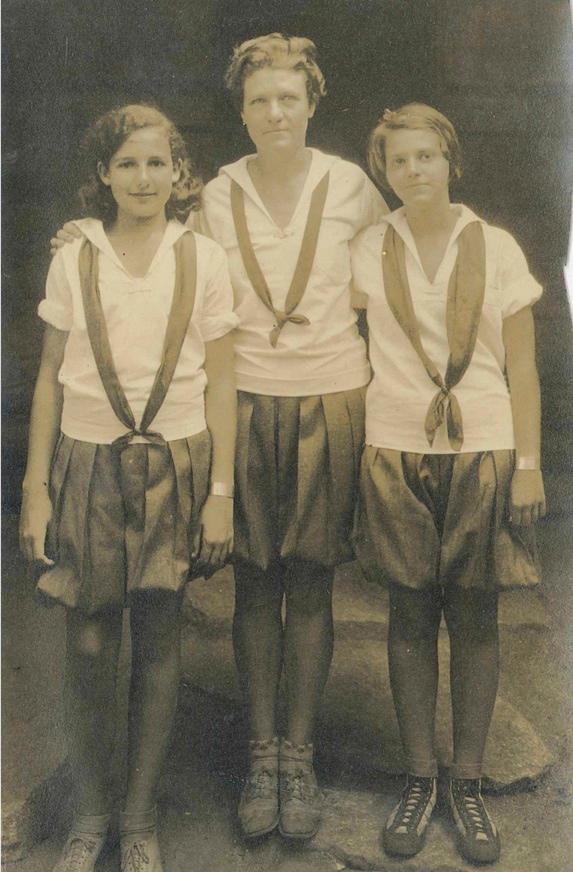
Ellen Hume Jervey (center), 1928

In the stories and history of Rockbrook, perhaps no one is more legendary than former counselor and director Ellen Hume Jervey.  Fondly known as “Jerky”, she was an institution at Rockbrook for over 40 years.  Jerky grew up in Charleston, SC (just an interesting side note, Jerky lived next door to The Verner Gallery, the art gallery of Elizabeth O’Neill Verner, another memorable Rockbrooker). She began her Rockbrook career as a counselor in the 1920’s.   After college, Jerky was the Physical Education Director at Hood College, but she continued to work at Rockbrook for the summer.  In the 1940’s Jerky became a Director at Rockbrook and continued working at camp through the 1960’s.  She lived in Charleston, SC during the school year where she taught at Ashley Hall, a private girls school.  She is referred to by many of our alumna as one of the most influential people in their lives.

A Navy Officer in WWII

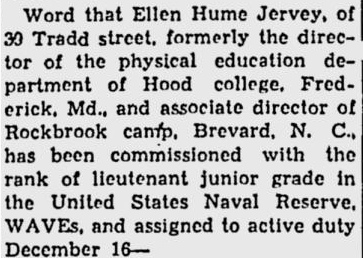
One of the most shared stories about Jerky is that during WWII she was commissioned as an officer with the US Naval Reserves!  Rockbrook closed for the summers during the war and many women became involved in the war effort.  None more so than Jerky! We have searched high and low for more information about it and were thrilled to find the following article from a Charleston, SC  Newspaper.
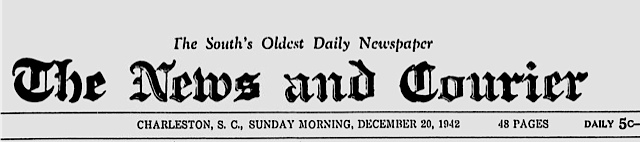
Charleston Paper 1942
Charleston News Ellen Hume Jervey

The WAVEs (Women Accepted for Volunteer Emergency Service) division of the Naval Reserve consisted entirely of women.  From the very beginning, the WAVES was an official part of the Navy, and its members held the same rank and ratings as male personnel. The first commissioned female officer in the Navy was the commander of the WAVES, and she was commissioned in August, 1942.  You can see from the article that Jerky was not far behind, being commissioned in December.  We are not sure how long Jerky served, but will continue our research to find out more about her time in the Navy.  You can see just one of the reasons why she was an amazing role model and mentor to so many Rockbrook women.
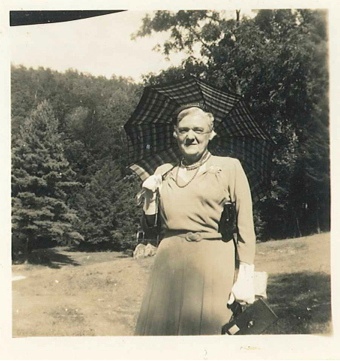
Jerky, 1960's
Jerky, 1960’s

Stay tuned for more Jerky stories!  If you have any you would like to share we would love to hear from you!
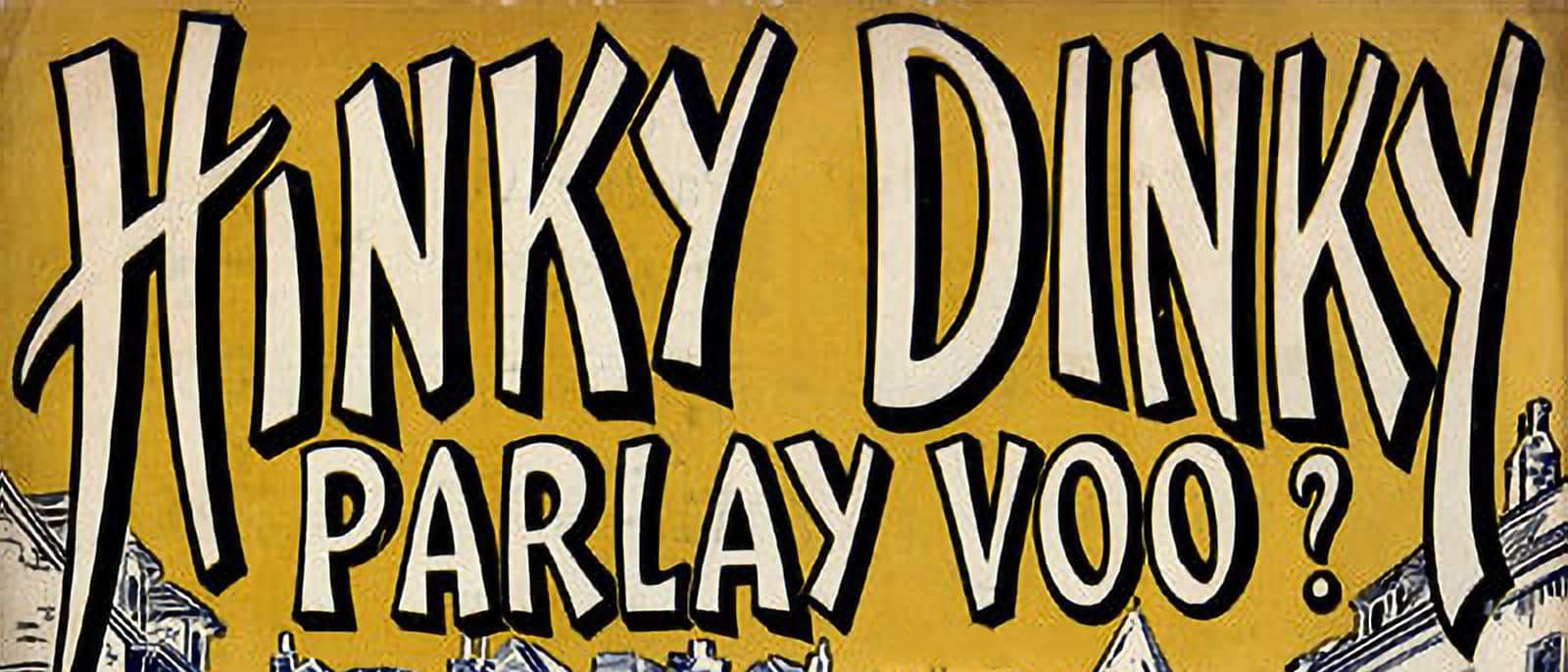
The History of the Parlez-Vous Song

Singing is a huge part of camp life and one of the funniest song traditions at Rockbrook is the Parlez-Vous Song.   A Parlez-Vous is a song made up by a cabin or group of campers and then performed spontaneously in the dining hall.  After asking several Alumna if they remember singing Parlez- Vous at camp, it seems that they have been part of the Rockbrook lore since the 1930’s.  Here is an example of a Rockbrook Parlez- Vous:

Parlez-Vous

We had so much fun at the camp out last night, parlez- vous

We had so much fun at the camp out last night, parlez-vous

We had so much fun at the camp out last night

The S’mores and stories were out of sight

Inky Dinky parlez- vous

These spontaneous songs are often very humorous and creative and always bring a laugh and a smile to everyone as we enjoy our meals together.

From WWI Trenches to Camp Dining Hall

So, what in the world is the history of the Parlez-Vous and how did it come to be part of Rockbrook’s history?

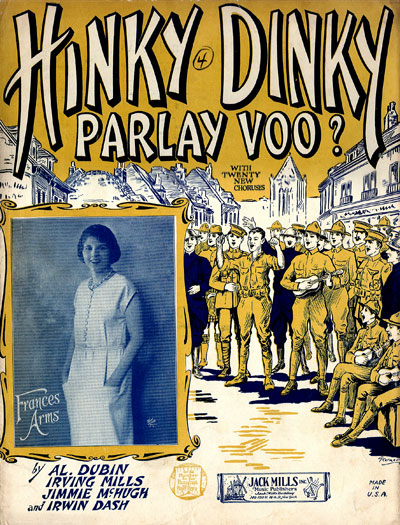
After a little digging it appears that the origins of the Parlez- Vous come from a World War I song called Mademoiselle from Armentières.  This song was adapted from a British Indian Army song called Skiboo.  It was a rhyming song, whose lyrics changed quite regularly.  During World War I it was often referred to as the Hinky Dinky Parlez Vous Song and would be adapted and sung by soldiers.  Some versions were a bit risque but we were able to find a great version.  Listen below and be sure to wait for the chorus!

Isn’t it fascinating how songs at camp are passed along from generation to generation?   If you remember any funny Parlez-Vous from your days at camp, please send them in!  We would love to hear them.

Winter Walkabout

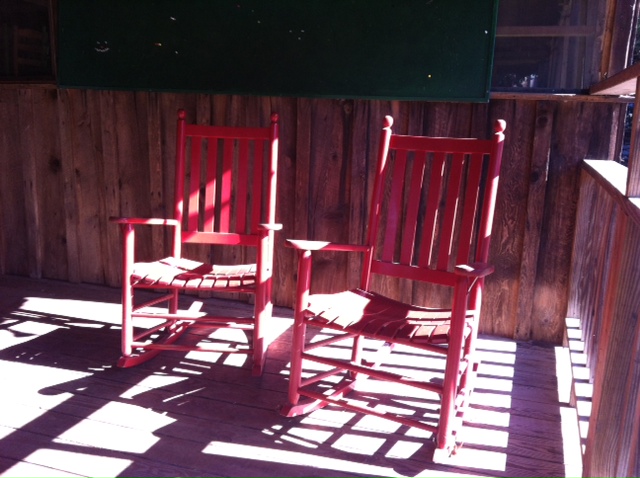
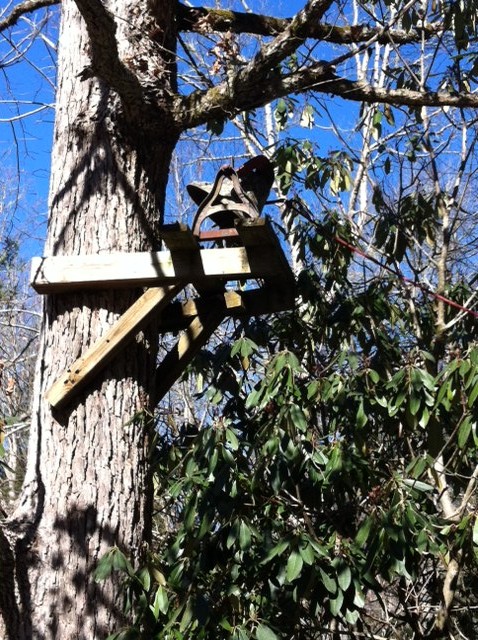
We enjoyed a beautiful walk around camp last week and wanted to share some of the scenes we captured as we wandered around.  Camp is quiet in the winter but the beauty of the quiet cold season is remarkable.  It is hard to believe that there will be flowers blooming, frogs chirping and kids laughing at camp in just a few short months!  Enjoy these winter shots.  Can you tell where they were taken?

Red Rocking Chairs
Camp Bell
Can you hear the ring?

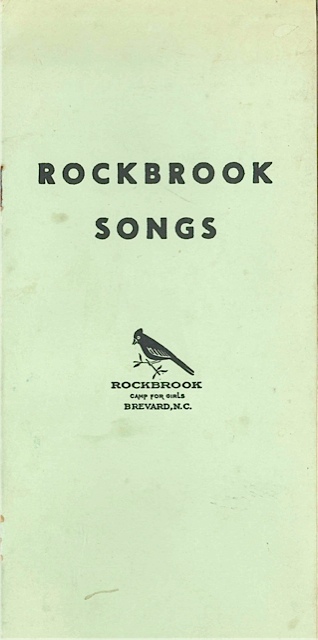
The Rockbrook Songbook

singing songs at night
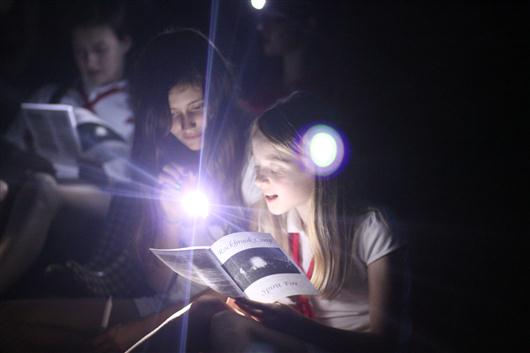
Singing along at Spirit Fire, 2012

Singing is a HUGE part of life at Rockbrook and is something that every camp generation can share.  We hear fabulous stories from our alumnae of camp songs being sung at weddings, college events, in the middle of a restaurant, or even when you run into a friend at the grocery store.  The songs are in a way a history of camp. What is it about those fun camp songs that sticks with you forever?

Preserving Our Musical Heritage

Because singing is such a big part of camp life at Rockbrook, we are in the process of updating our famous camp songbook.  Over the years some songs drifted out of popularity, while new ones “came into fashion”.  Songs like “Liberty” and “When the Moon Plays Peek A Boo” were very popular in the 60’s while songs like “The Coconut Song” and “Yogi Bear” are a few current hits.  With our new songbook we hope to include ALL of the camp songs from the Rockbrook repertoire.  That is where you come in!  We do not have a songbook from the 20’s-40’s.  If anyone has an old songbook or can send us any information about the songs from the early years of Rockbrook we would SO appreciate your help.

camp songbook
The Rockbrook Songbook, 1970

Now that camp songs are running through your mind, go an listen to our archive of Rockbrook Camp songs!

The Carrier Pigeon

We have just mailed the 2012 Rockbrook Carrier Pigeon to this years campers and staff.  The Carrier Pigeon is the camp’s annual yearbook featuring stories, poems, drawings and photographs of the summer.  The Carrier Pigeon has been published each year since the camp was founded in 1921, making it one of the best resources for the history of camp.  This makes this years copy the 91st edition of the Rockbrook memory book.  The Carrier Pigeons are wonderful treasures filled with Rockbrook memories and fun times.  Here are some samples from over the years:

Carrier Pigeon writings 1926
The Carrier Pigeon, 1926

The Aim of the Pigeon

“Like ghosts passing to and fro, good times come and good times go.”

Good times do come and go as swiftly, but the Pigeon is going to help us keep our good times with us.  The little funny incidences and all the pleasures that go toward making up this happy summer of ours are going to pass more slowly because of the Pigeon.  Certainly, time will pass as quickly, but the memories will remain.

In the long winter to come, we will be able to laugh and talk over the good times at camp.  Not only that, but we will be able to pass on our happiness and share it with others- the others that are not with us now.  All because of the Pigeon that will bring back our memories at Christmas time.

We will never forget it it, this happy summer of ours, It is the aim of the Pigeon to do this, to serve as a record of happy memories.  With your help it will succeed. – K. Wallingford, Junior Editor

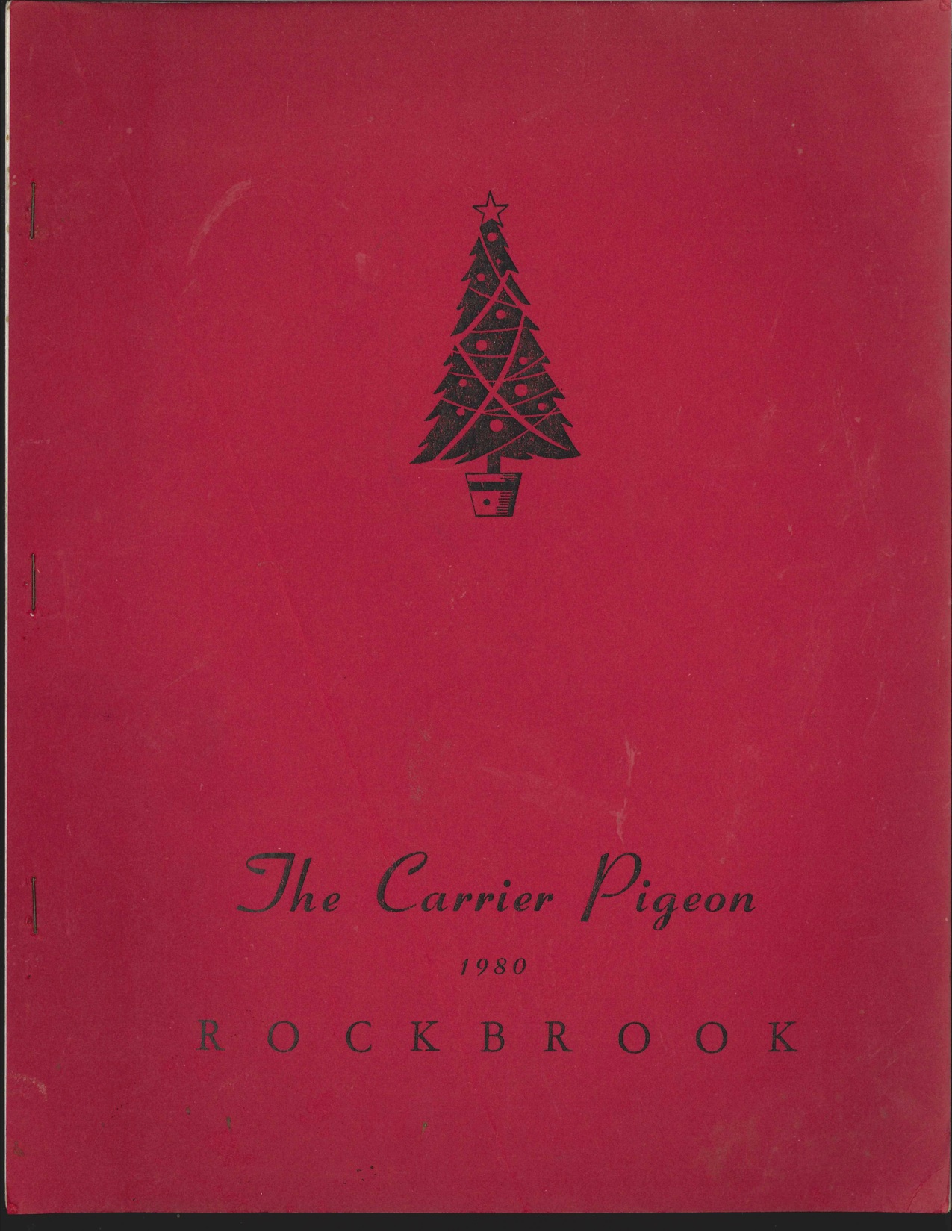
Camp writings book 1980
The Carrier Pigeon, 1980

To Me Rockbrook Means

togetherness around a campfire

Jean and Sarah Scott playing their guitars

And everyone listening and enjoying the soft music

Making crafts and going home and sharing them with your family

Sitting on the hill in the evening watching the sun slowly

fade behind the proud tall mountains

Rockbrook I thank you for the Happy days you gave me. – Muffy Howard

We hope you have many happy memories of your time at RBC and if you have any copies of your old Carrier Pigeons we would love to hear from you.  Please share with us any of your favorite camp poems, memories, stories and photos.

The Rockbrook Tie

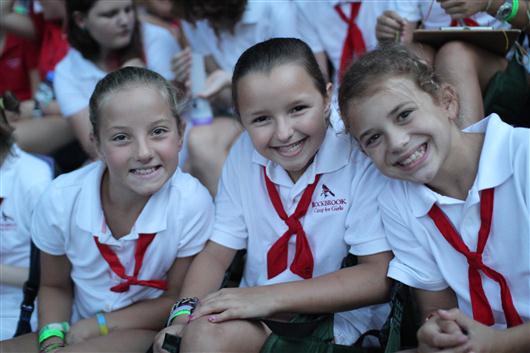
The most distinguishing feature of the Rockbrook Uniform is the Red Rockbrook Tie.  The tie has been part of the camp uniform since Rockbrook was founded in 1921.  This made us wonder…what is the origin of the Rockbrook tie?

The Friendship Knot

After doing some digging, it looks like that many of the early girls’ camps like Rockbrook had a tie as part of their uniform.  While they come in many different colors, they all share a similar element- the Friendship Knot.  It appears that the history of the friendship knot in camping came from the Girl Scouts.  According to the Girl Scouts, the Friendship Tie (and knot) stand for the “tie that binds all girls and women who are part of the world association of Scouts”. The knot is a sign of the continuous friendships they share.  Nothing could be more true for all of our Rockbrook girls and women all over the world.  The red Rockbrook tie is surely a symbol of the Spirit of Rockbrook that binds us all together!

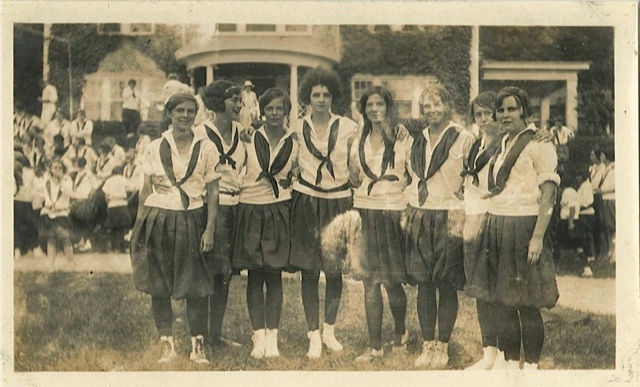
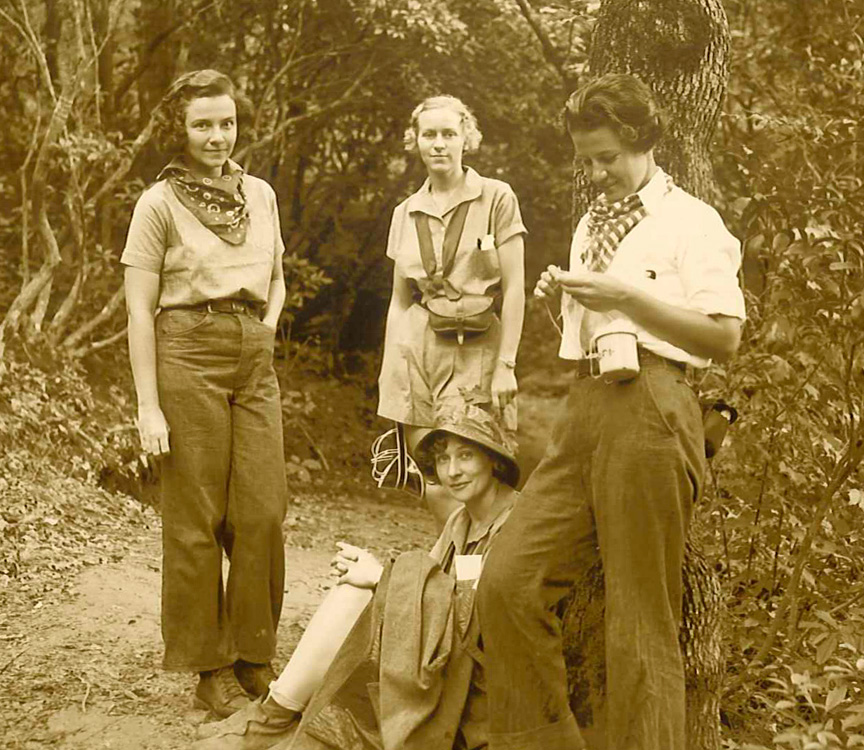
Vintage camp photos of women in ties
Rockbrook Uniform, 1920’s
modern camp girls in ties
Rockbrook Uniform, 2012

We also found a wonderful poem that speaks to the beauty of the Friendship Knot.  While we are not sure of the author, we know that they definitely went to camp!

The Friendship Knot

This knot is women in friendship true,
And interlaced with memories, too.
Of friendship found and share by you,
That times and miles cannot undo

Rockbrook Girls Ahead of their Time

Vintage camp girls relaxed pose

Did you know that Rockbrook was founded only 2 years after women earned the right to vote?  The 19th Amendment was passed on June 4, 1919 and Rockbrook officially opened on July 6, 1921.   Nancy Carrier, founder of Rockbrook, was certainly ahead of her time in creating a space for young women to come to gain independence, learn skills, make friendships and take part in adventures.  It is hard to imagine the excitement a camper must have felt to pack up and ride the train to Brevard and stay at camp for 8 weeks!  Here are some wonderful historical excerpts from an early camp catalog that describe the adventures.

Adventures from the 1920s

“For 25 years camping parties have gone out from Rockbrook, thus they know by experience how far the first hike may go, where is the best spot for a moon-light supper and in what sheltered coves tents may be pitched for a stay of several days.  They know where the coldest springs lie hid; when the huckle-berries are ripe on the top of the ridges’ and on whose property a canoeing party may camp.”

vintage camp girls hiking

“Hiking. Here at Rockbrook, it means a well regulated walk amid scenes of unsurpassed beauty with a party of congenial comrades.  The over-night hikes, taken after the girls have learned to climb up and down, to make camp and to care for themselves and others, are among our most popular sports.”

early camp horse riding

“The Pisgah National Game Preserve is within reach of both riding and hiking parties from Rockbrook.  The forest regulations are complied with so that campers may enjoy the camping and fishing if they wish to do so.”Thanks to strong, empowered women like Nancy Carrier, we think Rockbrook Girls have always been ahead of their time!  Here’s to many more years of fun, friendship and adventure in the heart of a wooded mountain.

Rockbrook in The New York Times

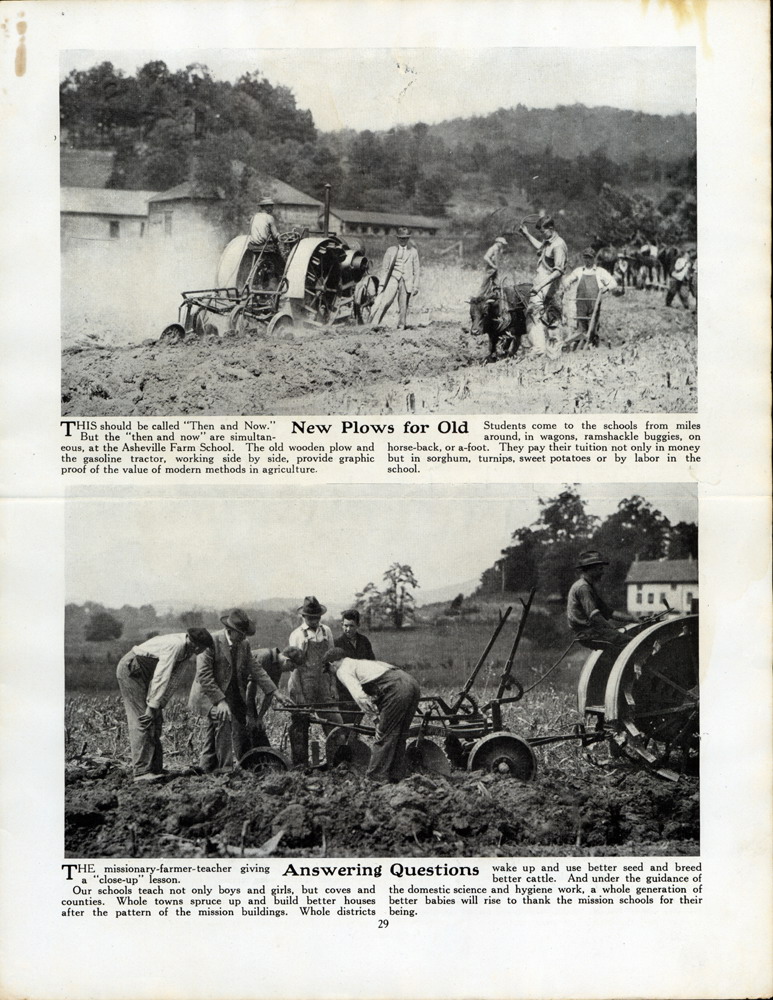
In our last blog post we shared some interesting information about the history of Farming at Rockbrook.  During our research on the history of the farm, we also found a fascinating news article from The New York Times about The Carriers bringing the first motorized tractor to the area saving the farming season with their new machine.  Mr. Carrier was in the automobile and tractor business down in SC, and that is how he came to Brevard in the first place. H.P. Clarke, founder of Rockbrook Farm and father of Nancy Clarke Carrier (camp founder) ordered an automobile from Mr. Carrier’s dealership.  While delivering the car, Mr. Carrier met Nancy Clarke and their romance began.  They would eventually marry and Mr. Carrier would relocate to Rockbrook Farm.  It is during this time that Mr. Carrier joined Mr. Clarke in his farming business and eventually purchased the tractor that would come to serve such an important role in farming of the French Broad River Valley.

The Tractor That Saved the Season

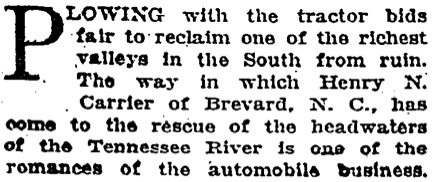
Henry N. Carrier of Brevard North Carolina
The New York Times, September 12, 1920

The article states that:

When Mr. Carrier took over Rockbrook and became a farmer, he carried his auto-traction interest with him.  He had his car and his truck, and he got a couple of tractors.  He sold one tractor to the town of Brevard for street and road purposes, and then the French Broad River got busy.  It flooded the valley three times before May 1.  Farmers who had lost their crops in the bottoms before began to despair.  Not a grain of corn was planted in the whole valley, but then came a few precious days of dry warm weather and the tractor got busy.  It plowed up whole fields in the time when a team of mules had previously covered only acres.  It ran from sunrise until after dark, without a whimper.  It carpeted the young green valleys with mighty areas of rich dark brown.  The sound of its chug-chug as it sturdily turned its wide furrows from river’s bank to mountain side, echoed back from distance coves and told the wondering mountaineers that a new era had dawned on the French Broad.  Excerpt from The New York Times, September 12, 1920

Isn’t it interesting that this bit of news made it all the way to The New York Times?  Mr. Carrier really did save the day!  It is said that not only did he lend out the tractor to local farmers, he also traveled with the tractor to teach his friends how to use the new gas powered machine.

From Plow to Tractor
Transition from plow to Tractor, The D.H. Ramsey Special Collection

Rockbrook Farm and HP Clarke

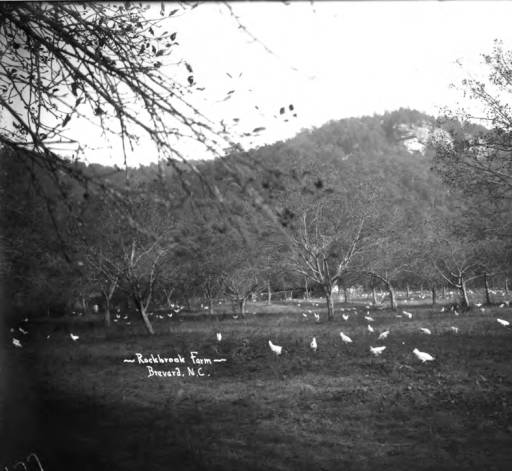
Did you know that before Rockbrook was a summer camp it was well known in the area as a working farm?  Henry P. Clarke, the father of Nancy Carrier, camp founder, was a well respected farmer in Brevard.  After doing some research we have found that Mr. Clarke bred chickens, shorthorn cattle and even raised dogs.  There was a large garden plot, muscadine grape vines and a dairy that was run by a family member of Mr. Clarke.  When Rockbrook was founded in 1921 the farm provided all of the food and meat for the whole camp!

chicken yard at Rockbrook Farm

The chicken yard at Rockbrook Farm

A Man of Many Talents

While researching the history of the farm, we came across Mr. Clarke’s name in several publications.  We learned that Mr. Clarke operated a kennel called Brevard Kennel.  Here is a snippet from The Field Dog Book:

Dog boarding listing
From The Field Dog Book

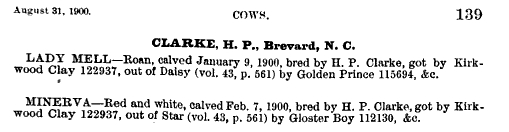
We also discovered an interesting advertisement in the back of The Country Gentlemen Magazine for Rockbrook Farms Shorthorn Cattle.  Check out the ad as well as a birthing record of two of the cows Lady Mell and Minerva.

Cow announcement
Birthing Record, 1900

It is clear that Mr. Clarke was a man of many talents! In our next blog we will share a great article about Mr. Clarke “saving the farming season” with his new modern tractor.