
Camp as Our Constant

Change, change, change. It feels every stage of life brings more and more change. When I was feeling a bit overwhelmed this year with all the change around me, one of my peers offered me some (unsolicited) advice:” Change is the only constant in the world.” Although I beg to differ, I do know a place that will always be more constant than change in my life.

camp weaving girls

Exactly a year ago, I drove away from Rockbrook Camp for Girls and towards Ann Arbor, MI to start medical school. My life became busy with deadlines, schedules, exams filled with what seemed like endless memorization. To make things even more hectic, my schedule was different every week and change became my new normal. Needless to say, it’s been a busy year with so much change, and it seemed that as the year went on, I realized I didn’t take time to reflect on who I was and whom I was becoming.

When I made the choice to come back to camp this session—even just for 10 days—I wanted to make sure it was for the right reasons. I have spent so much of my year worrying about my own needs and filling my own cup that I wanted to give back to a place that gave me so much. Many of my camp friends and campers would not be present during this session, so I was nervous to come back to a place where so many of the people that made it special were no longer there. With those friends and campers that were at camp this year, I knew it would be important to avoid showing up with expectations of what I wanted my short time at camp to be. In a happy turn of events, my short time here has turned into so much more than I ever expected. When I arrived, I was expecting camp to feel different, and yet, camp hasn’t failed to bring the incredibly familiar.

Coming Back to Yourself

knitting girls

As soon as I caught a whiff of the camp smell, it felt like I was home. It felt like for the first time in over a year, I was able to hit pause and look around. The crunching sound as we walk through the rocks at camp, the beautiful wooded mountains in the background, the chilly lake waiting for campers to jump in— how I took these simple sights for granted! In addition to these consistent sounds and scenes of beauty, I’ve realized camp brings other timeless qualities to new and old Rockbrook girls that make this place a home base for so many of us.

The best part about this familiarity is that I’m not the only one who feels it. A few days ago, I met an alumna from many years ago who described the sense of comfort that walking through camp brings her; she knew Rockbrook as the place that helped her know who she was and who she always wanted to be. So relatable! Just a few hours later, I heard the same words from some teenage campers on the senior line. They talked about how much they wanted to bring their camp self to their lives year-round because they knew that here they are their best selves.

How Camp Helps Us Be Our Best Selves

zip line camp girl

How exactly do we become our best selves? While I think there are many answers, I have a hypothesis: Camp reliably brings us routine and, in that routine, so much comfort. This comfort gives us the space to be our best selves. This is a place where we build each other up and we begin to judge our successes based on the success of our community and not our own personal success. By investing in each other, we inevitably become the best version of ourselves.

How did I get so lucky? In a world that seems to never stop bringing change, it is so nice to know that we have Rockbrook to remind us of who we are. I get to have a place to come back to that will—without fail—always remind me of who I am and can be. What a gift. Thank you Rockbrook for another great summer. Thank you for all the new and old friendships. Thank you for always being more constant than change and never failing to be exactly what I needed.

—Maria Santos

camp girls together

Forgiving Each Other Daily

friendships and community at summer camp

If you ask most people why they come to camp, the friendships and community will probably be high on the list. Rockbrook’s entire focus is on relationships; it’s the foundation of everything else. Even teen camp girls talk about how their friendships at camp are different than other friends: they get closer more quickly. There are many reasons for this: the ability to be oneself without the same judgment that they experience at home, the prevalence of real conversations that are uninhibited by technology, the idyllic setting and the slower pace of life at camp are all apart of it. Yet there is also a part of it that we do not talk about as often, but I think it may be one of the most important lessons we learn at camp: the ability to have differences and disagreements, and to learn how to compromise and forgive one another.

Living together is mostly fun: we experience the connection that comes with being part of something bigger than ourselves, to get to know others from different backgrounds, to experience laughing so hard our stomachs hurt when someone reflects on their “high, low, funny.” Yet living together can also be uniquely challenging, and I don’t think we really would want it any other way. We are asked to consider the group’s needs before our own, to refill the basket of bread if we were the last ones to get a piece, to go along with a skit idea even if it wasn’t our first choice, to do chores for the good of the cabin. We learn how to work together in order to achieve a common goal.

Why Living Together Gets Harder Before It Gets Better

According to Tuckman’s stages of group development, these sacrifices are less challenging in the beginning of a group’s time together, what he terms the “forming” stage. This is where everyone is still getting to know the others, and everyone is careful of everything. Making the small sacrifices is easy for the first few days; then, it gets more challenging, what Tuckman calls the “storming” phase. This is when we know each other well enough to express our individual needs, to talk about what we could do better. Frequently, people shy away from the storming phase, but it’s actually a great sign in group development. Storming means that we trust each other with our personal needs, can loosen up and feel more at home, and in having more challenging conversations, we are able to move into deeper levels of friendship. Then, we get into norming, which is the stage when we move past the storms and learn to live with each other in this closer, deeper space.

summer camp girls ready for a skit

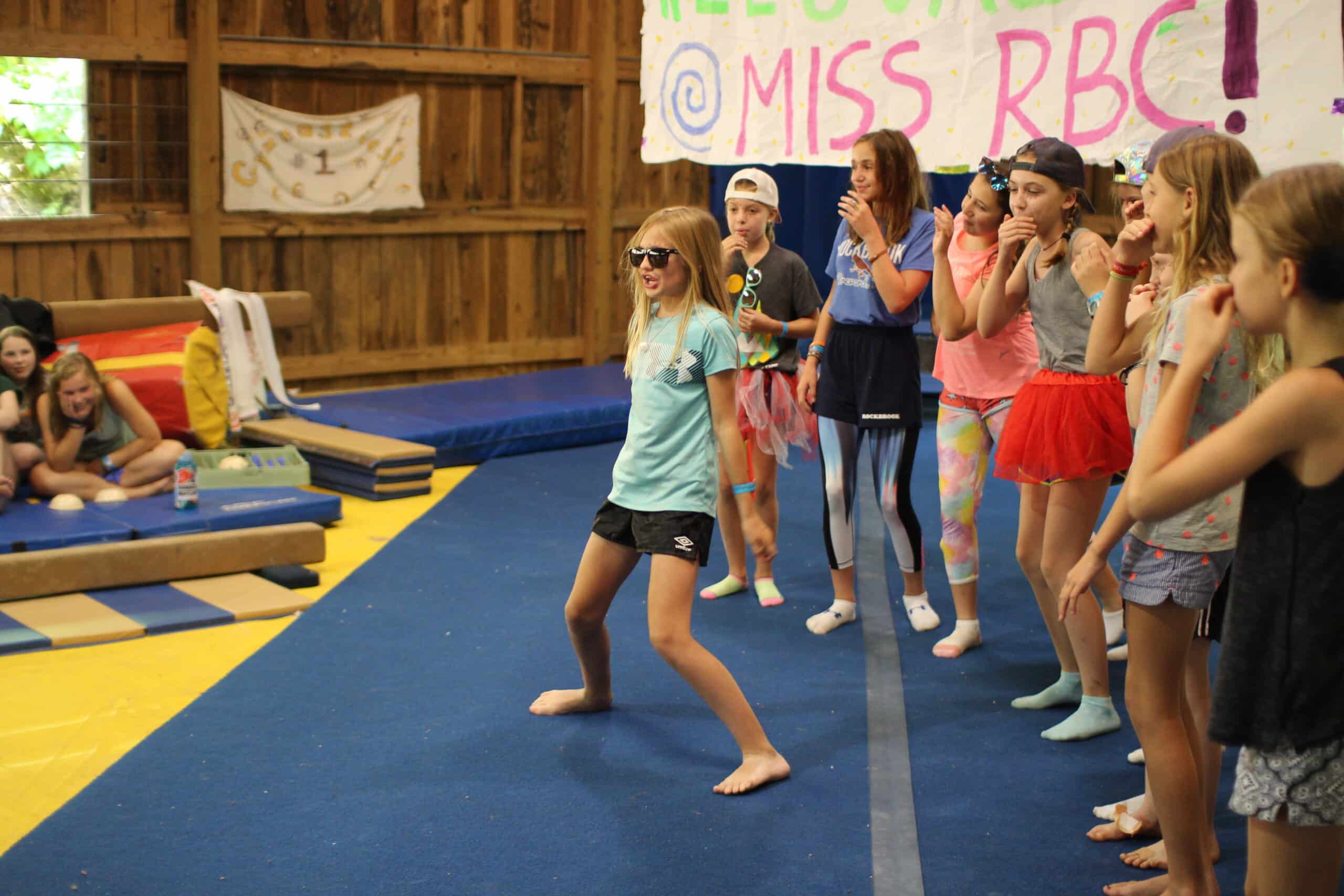
Of course, during storming, conflict can arise. We will all face conflict so many times in our lives, but what makes camp special is the way it prepares campers to resolve conflict in a safe environment with lots of support. A common time for conflict to arise during storming is while planning skits, or while planning an event like today’s Miss RBC. Miss RBC is an event that is a spoof on a beauty pageant, where all cabins perform a “talent” (usually a song or a skit) for the rest of the camp. Then, at the end, the representative from the cabin who won is crowned “Miss RBC.” The event is so joyful to watch, with cabinmates proud of each other for their finished product. Yet until then, it is challenging to come up with a concept, get the entire cabin to agree on it, and practice until it is where you want it to be. Everyone wants their idea to be heard and understood, and wants to have just the perfect role. When this doesn’t happen, sometimes conflict arises. We continue to ask campers to plan skits and Miss RBC, though, partly because it presents them with a challenge. In tackling that challenge and reaching a final product, campers learn a multitude of intangible lessons about the challenges and possibilities that come from working together.

At home, when we are faced with a conflict, we may go hide in our rooms or get away from the situation. At camp, we have to address it, and though this is challenging, it also teaches us that conflict is okay and empowers us to learn how to resolve it and compromise. Here is a place where, if conflict becomes overwhelming, girls will go find their counselor, and their counselor will model a calm and fair way of resolving it. It’s a place where we learn how to deal with some of these conflicts ourselves. And it’s a place where we learn how to be forgiving.

Learning to Forgive

I once had a professor who told our class, “I truly believe that we are forgiving each other daily,” and I think this applies so aptly to camp life. We all have to make compromises every day when we are all living together, like waiting for the girl who is running late to archery or letting a cabinmate have the lead role in the skit. Yet we are in a place that reminds us that, even when it’s hard, we should always look for the best in others. So we learn to forgive, to be friends even after we have been frustrated with someone, to put into perspective what is a big deal, and what we do not need to spend our energy on. We learn that we are worthy of being loved even when we make a mistake or hurt someone else’s feelings. It is through conflict and forgiving each other that our friendships deepen and grow in our ability to solve problems, and keep patience and perspective.

skit performance of girls cooperating

Every night before bed, girls say the Rockbrook Prayer, reciting in part, “Forgive us if we are unkind and help us to forgive those who are unkind to us.” In this quietly profound hope that we say together, we end our day with a fresh slate, a new beginning for the next day. We take responsibility for the humanness in us and accept the humanness in others. This is such an important part of growing up and being a good person, and living together in community enables us to practice conflict resolution and compromise a lot, to figure out how to graciously respond when we are frustrated with each other, or when we don’t get exactly what we want. That’s what it means to be part of something larger than ourselves, and we are so lucky to have a place like Rockbrook that allows us to care so much about our community that we are willing to forgive and compromise with them.

Seeing Past Failure

kid on pottery wheel

It is OK to fail.

I repeat: it is OK to fail.

This is not something we hear everyday, or something we ordinarily tell children. For most, we’re not looking for failure; we want success! But if thought about differently, this is advice we don’t hear enough. Getting that C on your math test or missing the bullseye in Archery may seem like the end of the world, but they don’t have to be.

Learning to Fail in Comedy and in Life

I majored in Comedy Writing and Performing in college. Junior year, as part of my studies, I spent a semester at the Second City, a well known institute for comedy in Chicago famous for turning out comedic stars like Tina Fey and Stephen Colbert. An important lesson we were repeatedly taught during my time there was that not only is it OK to fail, but you have to fail. You have to go in front of an audience and try your stand-up or sketch act and it has to at least fail a few times so you can figure out what is funny and what is not. Failing, in comedy, is how you find your voice. As a self-proclaimed perfectionist, it was the most freeing thing for me to hear that failing now and then was a good thing.

The American composer and music theorist John Cage had this to say: “Nothing is a mistake. There is no win and no fail. There is only make.” For him, especially in creative endeavors, what seems like a failure in truth contains the seeds of learning as long as one is determined enough to “do the work.”

weaving on lap loom

Failure as the Best Teacher at Camp

That same lesson can be applied to camp. Accepting failure is especially important when, as a camper, you are learning new things all the time, whether it be in an activity or in learning to live within a community for the first time (communication! compromise!). Learning something new means expecting and accepting mistakes. It means you are going to fail once or twice or a few times before successful habits and skills come to be.

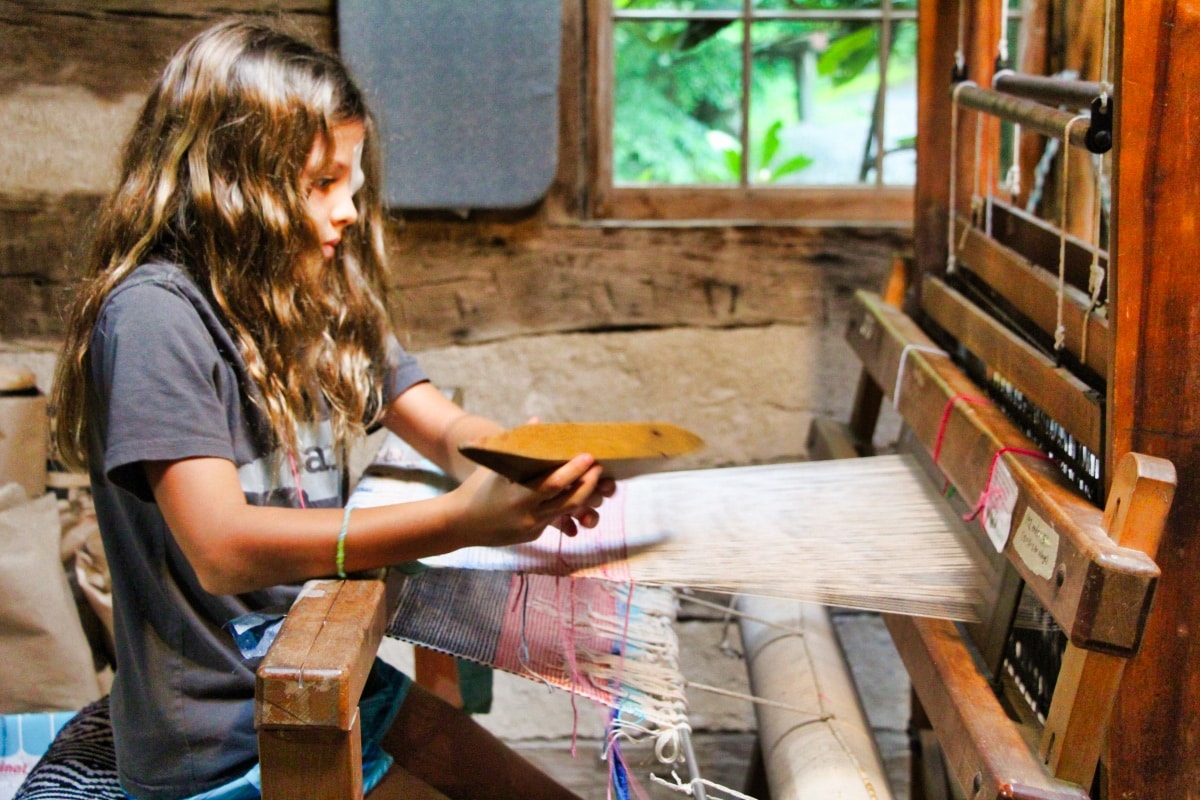
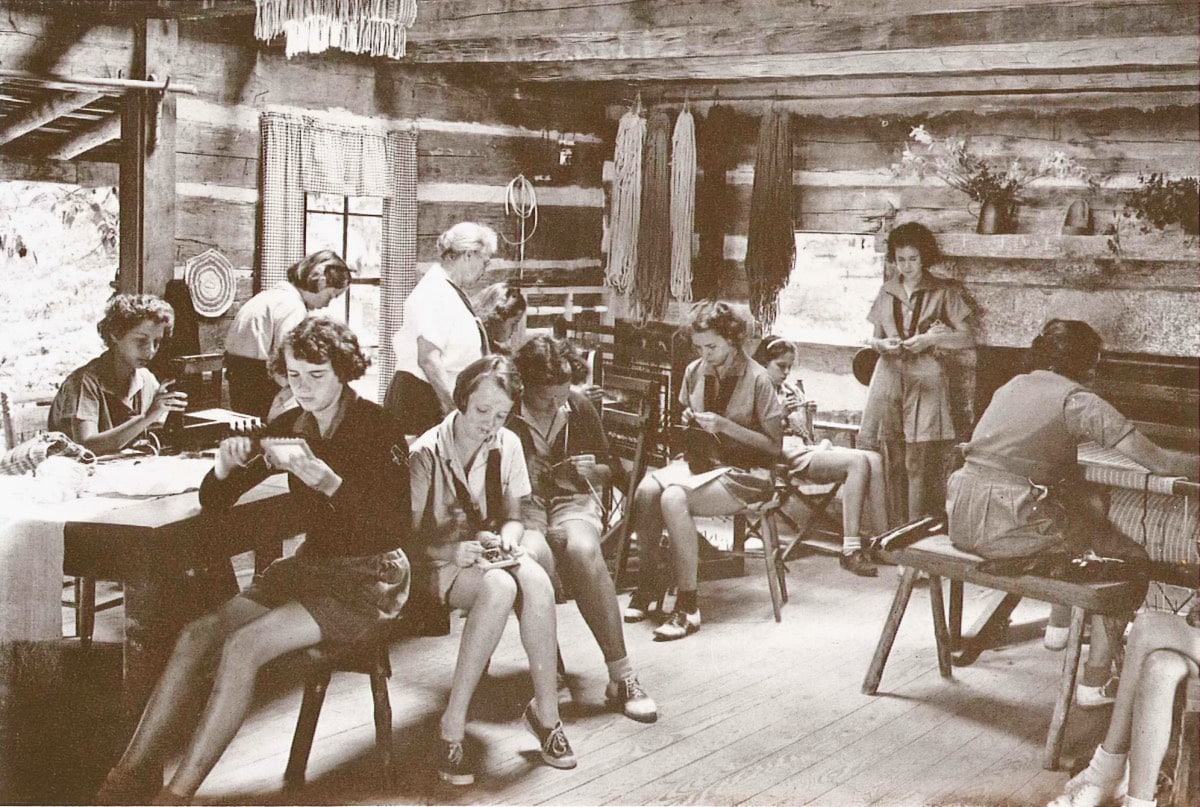
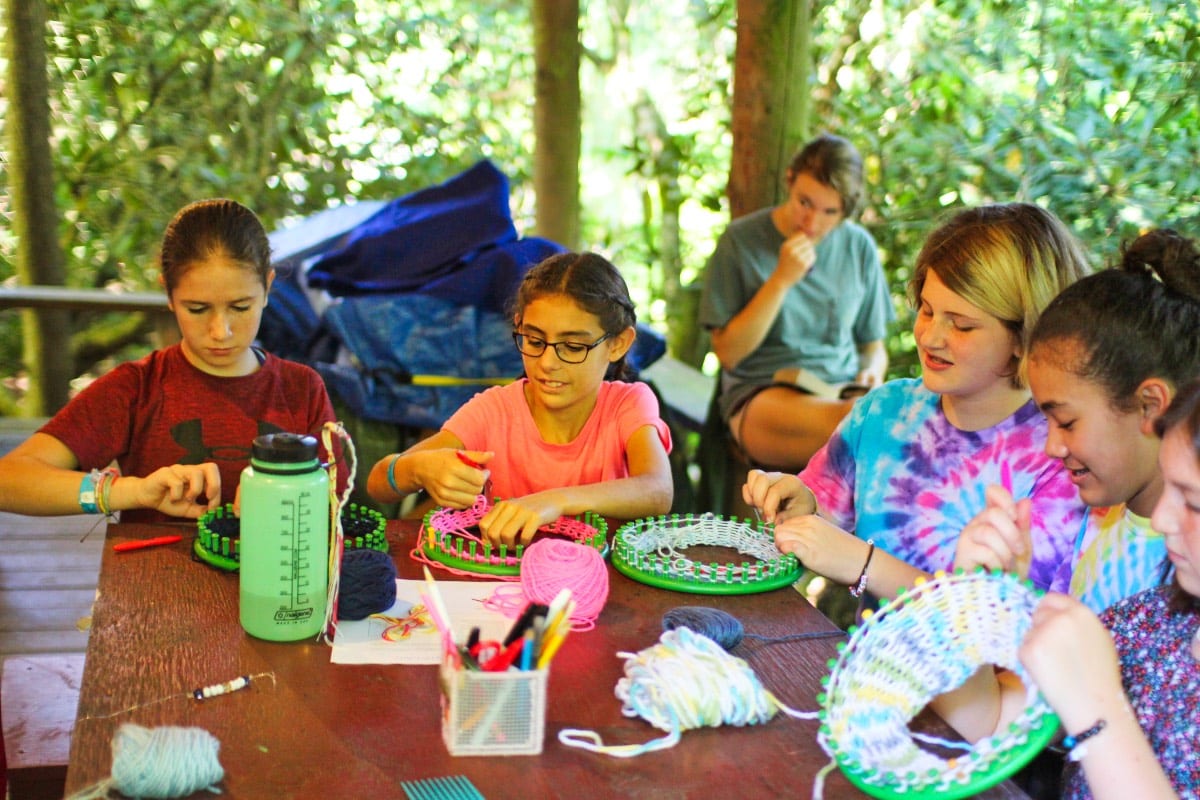
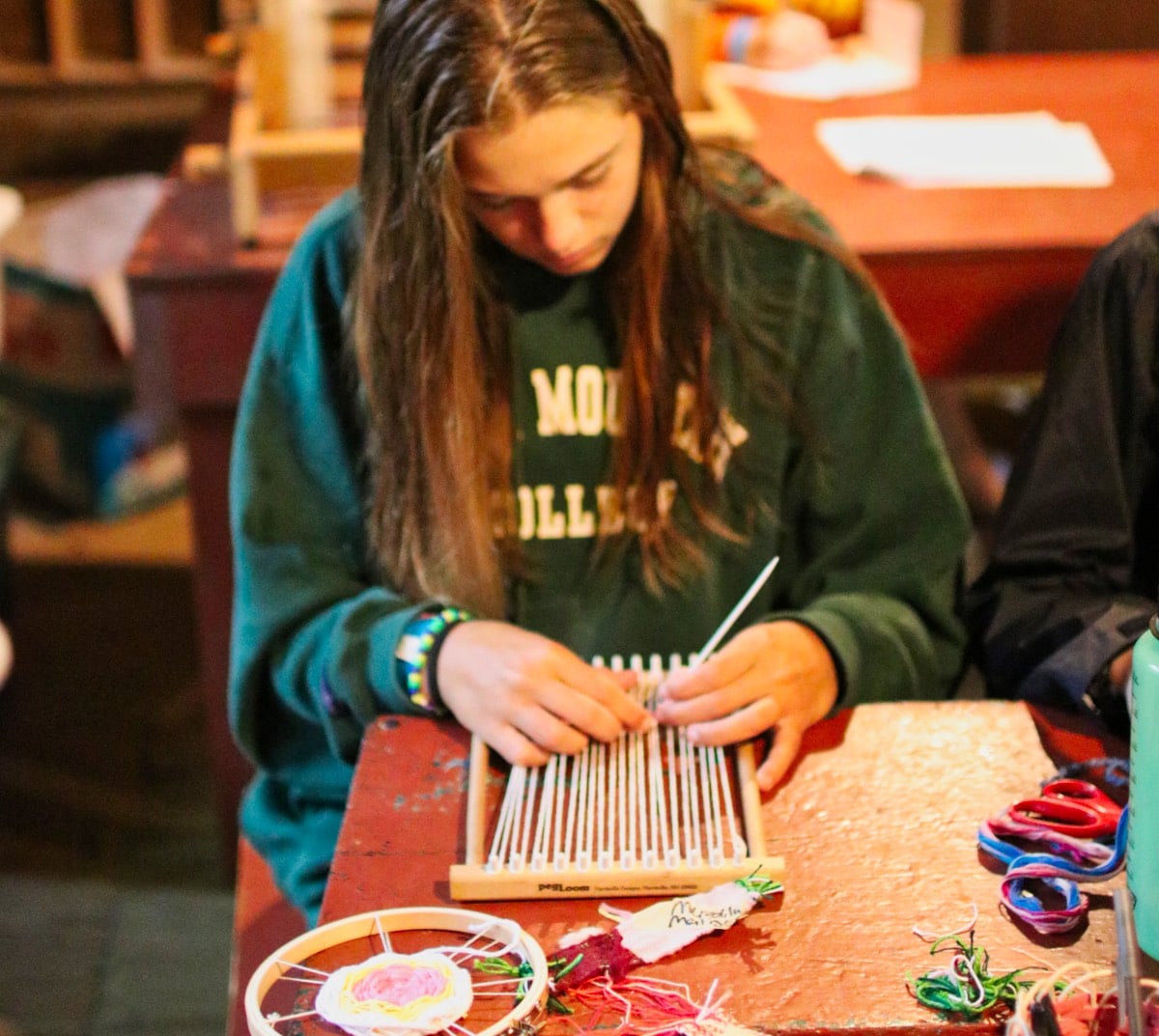
I teach Curosty, Rockbrook’s weaving activity, where girls are learning something new just about every time they enter the cabin door. For lots of campers, it’s their first time ever seeing a loom, let alone using one. For some, the act of weaving by hand is a new feeling completely. For them to expect to be perfect at it, not make a single mistake, from the get-go is a ridiculous expectation because they usually never are. They’ll have to tie and re-tie knots on their bookmarks a few times. All the potholder loops will pop out when they’re casting off their work. And there will usually be gaps in their first reed basket. But that’s the best way to learn: by failing. Correcting failure, seeing past it, always leads to growth. With the right attitude, moments of failure can blossom into real learning.

Camp is a safe place for this kind of learning too, because, no matter what, you know you are supported and encouraged by your friends and the entire Rockbrook community. Camp experiences keep us all experimenting, all discovering, and all failing now and then along the way. We’re all in it together. If there’s any place to fail and fail safely, it’s here.

girls summer camp campers

Lost and Found

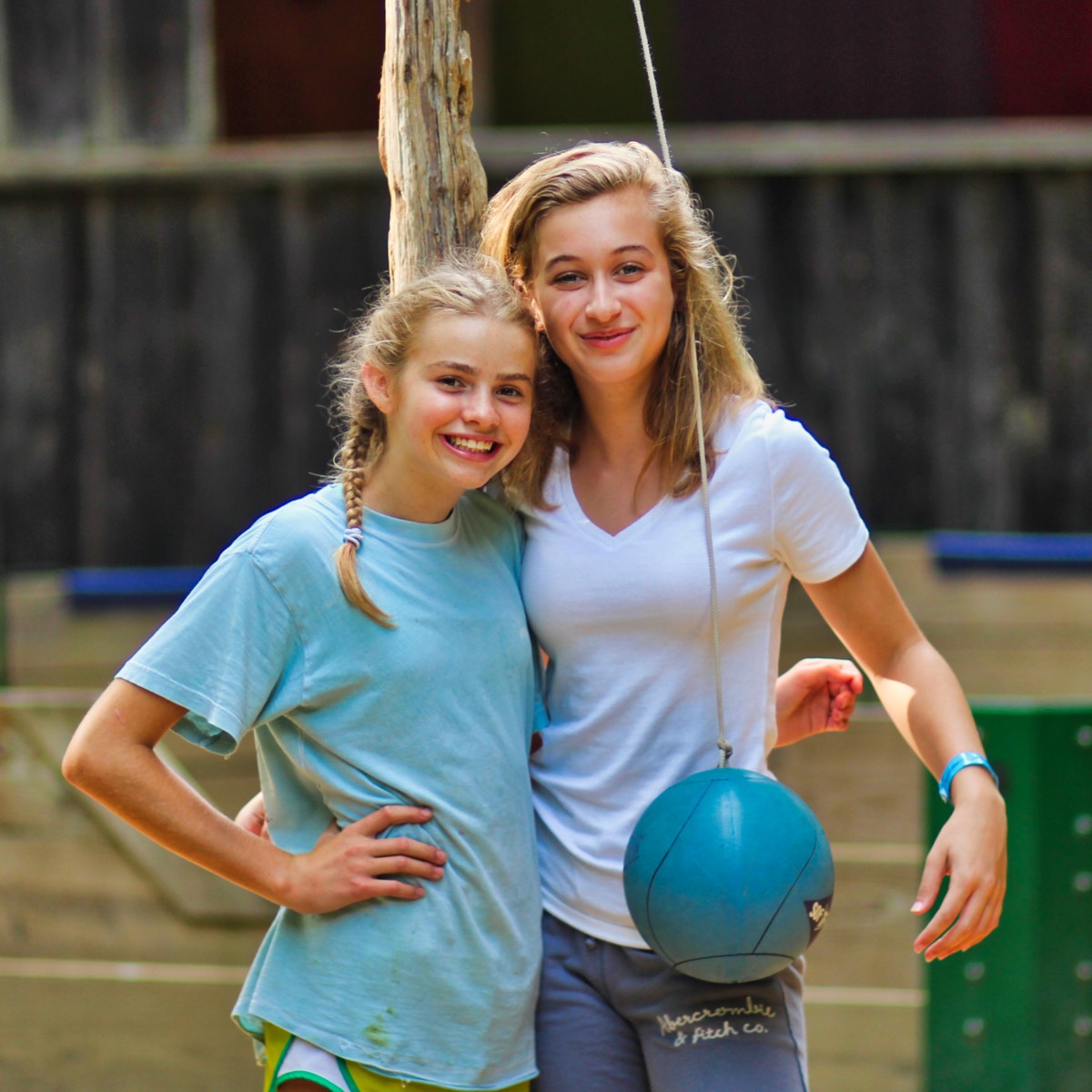
Camp tetherball buddies

On the bulletin board where announcements are posted, you’ll see the lost and found list. As the name suggests, campers update the list about belongings they have lost or found while at camp. Sometimes the list gets pretty specific (“If anyone sees a sock that is blue with cooked pink shrimp on it, please return it to Middler 6!”), and we read the list aloud frequently to make sure that girls return with everything they came here with. When the list was read today, though, there wasn’t anything on the lost list. In fact, there were only items on the found list. I thought this was beautifully poetic—it represented the ways in which the community was looking out for each other, even before anyone realized they had lost something.

Finding More Than We Lose

In many ways, this idea seeps into our everyday lives at camp. In coming to camp, we lose things, or more accurately, are without things. We have the basics in our trunk: a flashlight, a book, some clothes, and some friendship bracelet string, but we are without some of the more present items of our existence: our phones, our computers, the familiar environments we are used to. Yet camp girls come back every year, and daydream about it all throughout the year. I think that is because they have found so much more at camp than they have lost. They find strength in them that they never knew was there before, they find that they have a lot in common with people from different backgrounds, they find the capacity in them to be giving and authentic—the found list is much longer than the lost list.

zip line kid

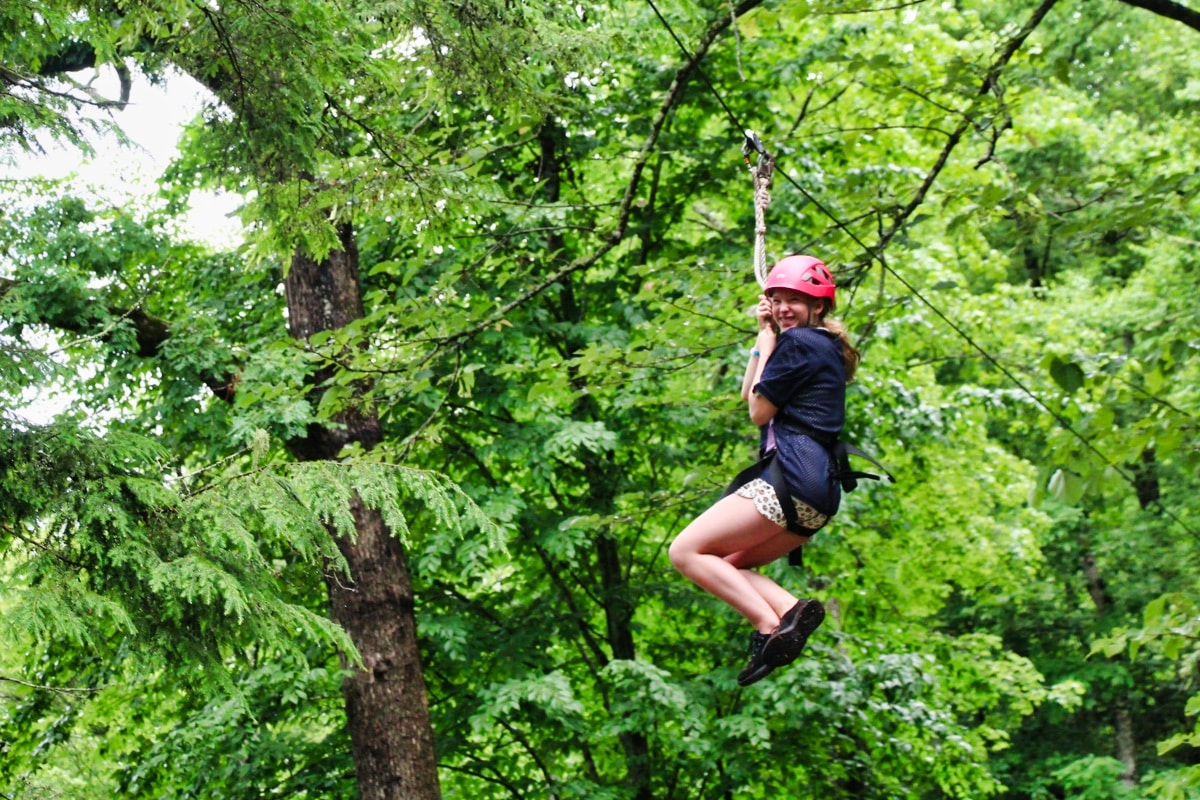
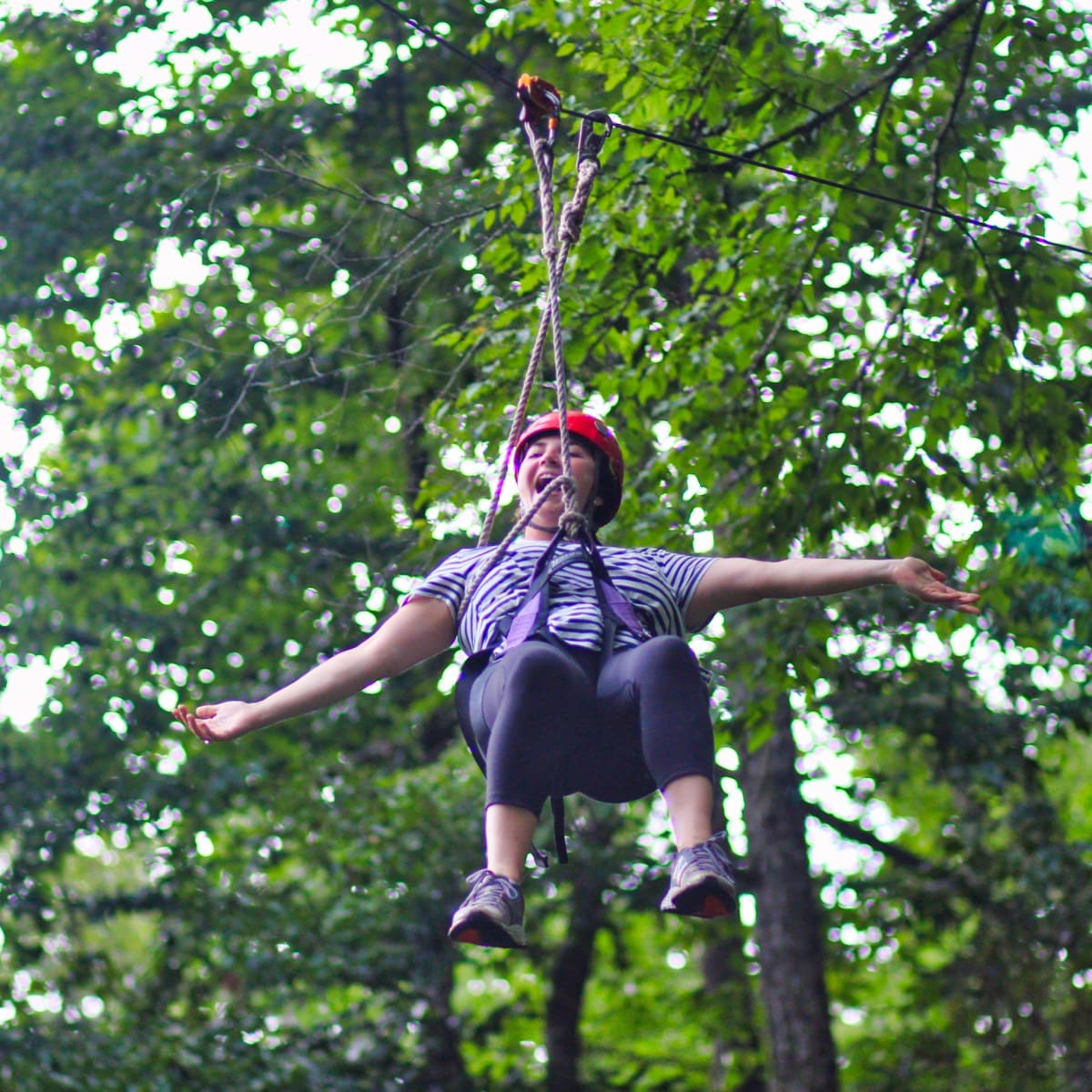
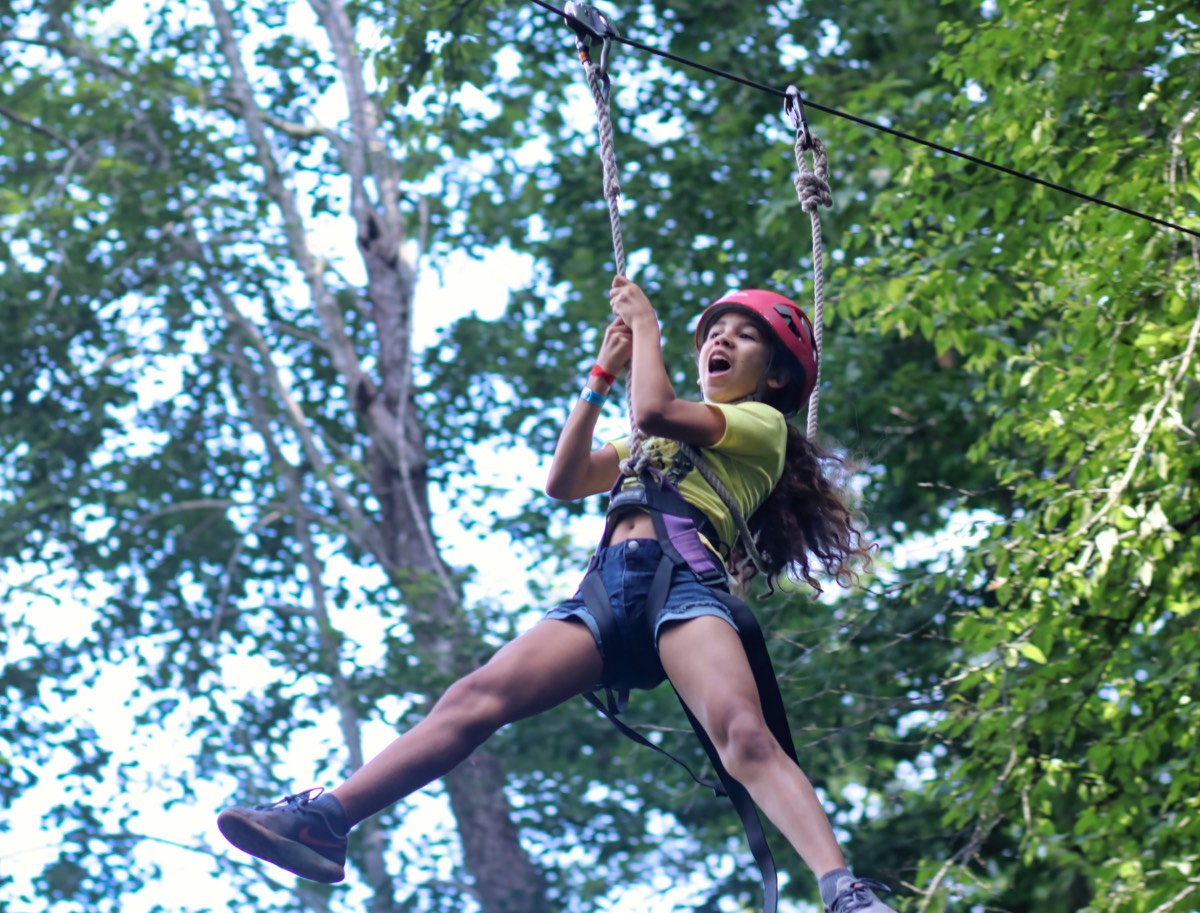
Throughout camp, the exchange between lost and found is seen every day. Today, it was announced that there was going to be a trip on the camp zip-line course. The zip-line goes throughout the back side of camp, taking girls across waterfalls and through the trees. This trip is generally offered multiple times every day, and is always wildly popular. As this was the first activity day for many girls, today was a particularly popular day to sign up for the trip. Because the trip was so popular, it was impossible to get everyone who wanted to go today on the trip (they’ll definitely have more opportunities to go, though!). A trio of juniors who arrived yesterday were all in line for the trip. When two of them drew cards that meant that they could go, but one of them could not go, the two who were chosen to go on the trip gave up their spaces, saying that they would go another time when their friend could go. This beautifully exemplified this lost and found principle. Even though they lost going on the trip today, they found a way for them all to go together another time. More than that, though, they found a deeper sense of friendship and the joy that comes from being a loyal friend and the maturity that comes with compromising one’s own bliss for the good of others. They gained much more than they lost.

county costume kids

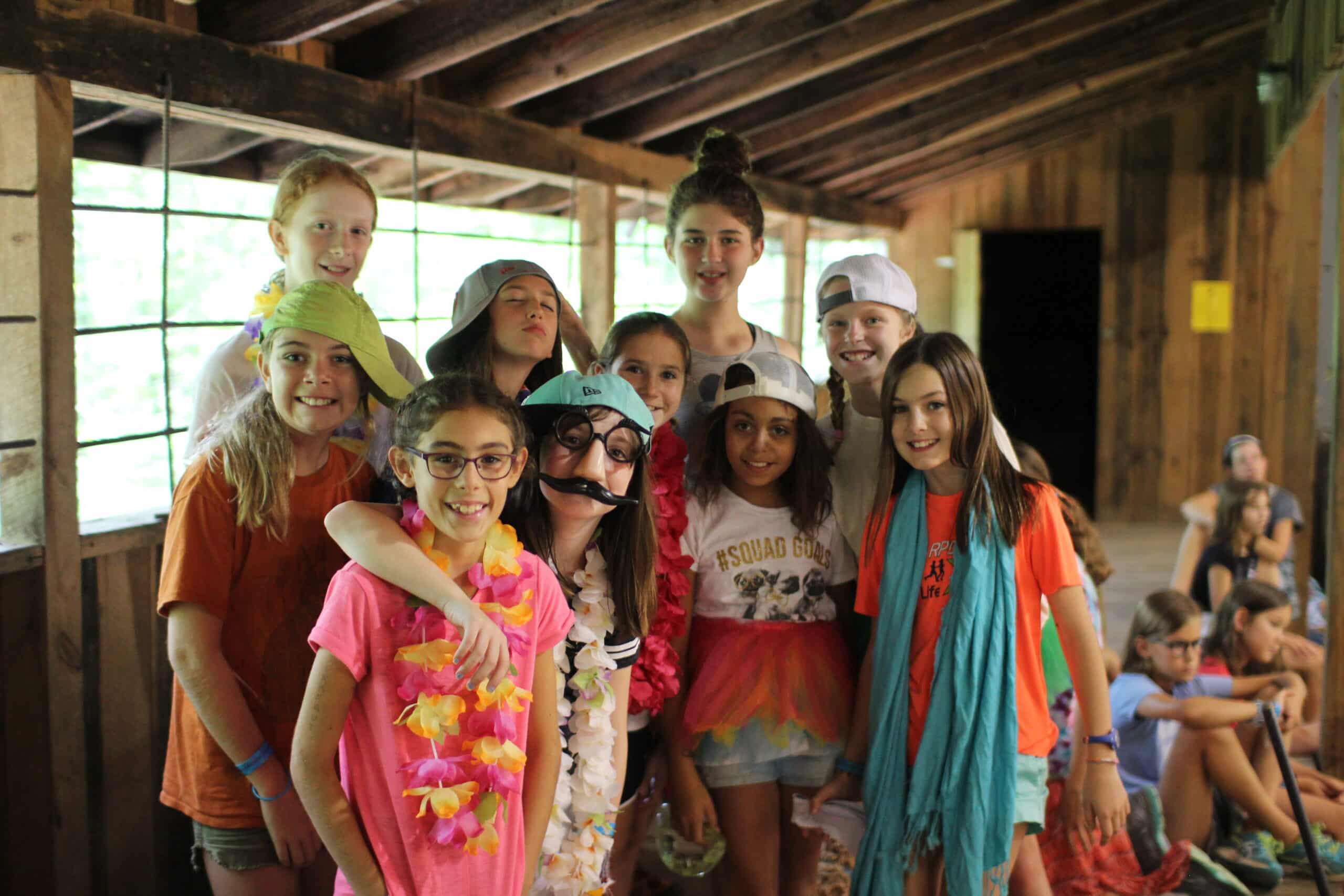
At camp, we see this in other ways too. Sometimes, what we lose is not as tangible as a sock or even a zip-line experience. A lot of the time, it’s our inhibitions and the things that prevent us from having fun and being our true selves. The other day, we were having an evening program called “Jug Band.” Jug Band is an old-fashioned campfire that incorporates Appalachian culture and silliness. Everyone brings an “instrument” (like rocks or brooms) and sings songs such as “Mountain Dew” and “Wagon Wheel.” Jug Band is incredibly fun, but is also incredibly silly. On the night of Jug Band, a middler cabin lacked their usual enthusiasm for the event. They were hesitant about going, and did not want to dress up. Their counselors, however, started playing on instruments (trunks and tennis rackets) and making up songs. Before long, the entire cabin was joining in the fun, creating their own band! By the time they showed up to Jug Band, they were some of the most enthusiastic and spirited campers at the fire.

In their cabin, the band kept practicing and writing new songs. The band’s name was “Saurkraut,” (the spelling is intentional) and tonight during twilight, Saurkraut had their first performance. They created tickets that they handed out to everyone (some of the tickets were even autographed: ‘Saurkraut! Rock out!’) and one of their hit songs was “Do You Jam, Bro?” The band was a hit, and the reviews were raving, “That’s the best thing that’s ever happened at twilight!” When inhibitions were lost, Saurkraut was found. Creativity, a greater sense of community, identity, and the ability to let our hair down—these are the things we find here at camp.

When Inhibitions Are Lost, Magic Is Found

The other thing about lost and found at camp is that we learn to live without the things we have lost. We realize we can live without that sock, that we can thrive without our phones. But when things are found, we gain a new appreciation for them. We want to keep what we’ve found safe, we know it in an entirely different way. I think that’s how the intangibles at camp work, too. We find this authentic version of ourselves, someone who knows how to compromise and get along with others, who seeks the best in others, who isn’t afraid to get her hair wet. When we go home, we have a new appreciation for this version of ourselves, and we live differently, as we continue to stay found.

girls camp group

Camp Teaches Kindness

Rockbrook is accredited by the American Camp Association, an organization dedicated to defining and promoting professionalism and program quality among America’s summer camps. Through its many educational efforts and accreditation program, the ACA’s goal is to foster “greater public understanding of and support for the value of the camp experience” while “increasing [the] number of children, youth, and adults of all social, cultural, and economic groups [who] will have a camp experience.”

horse and small kid

Today, the ACA has deemed July 24th “camp kindness day,” a day simply to celebrate kindness as a core characteristic of many camp communities. Tom Rosenberg, the current President and CEO of the ACA, and good friend of Rockbrook, put it this way: “At camp, everyone belongs and learns to contribute altruistically in a nurturing, physically and emotionally safe environment where they learn to build caring, trusting, and respectful relationships with individuals who are different from themselves.”

Why Camp Teaches Kindness

We’ve said it many times before; camp teaches girls to be kind. There’s a kinship, an intensity and closeness, to camp life where sharing this much (meals, chores, songs and laughs, for example) charges up our sympathy and compassion for each other. The camp community, defined by heartfelt relationships rooted in caring and generosity, simply inspires kindness toward others. At Rockbrook, it’s easy to see too. Girls are helping each other in every activity. They’re quick to comfort, support and encourage each other. There’s warmth and affection in every greeting and cheer. Living in this kind of positive community feels really good also. It opens us all up to be more trusting, and paves the way toward greater resilience and self-confidence. Of course, friendships blossom along the way, making everything more fun. Kindness is definitely key at camp. Hooray for #CampKindessDay !

camp rafting kids

Rafting and Outpost Camping

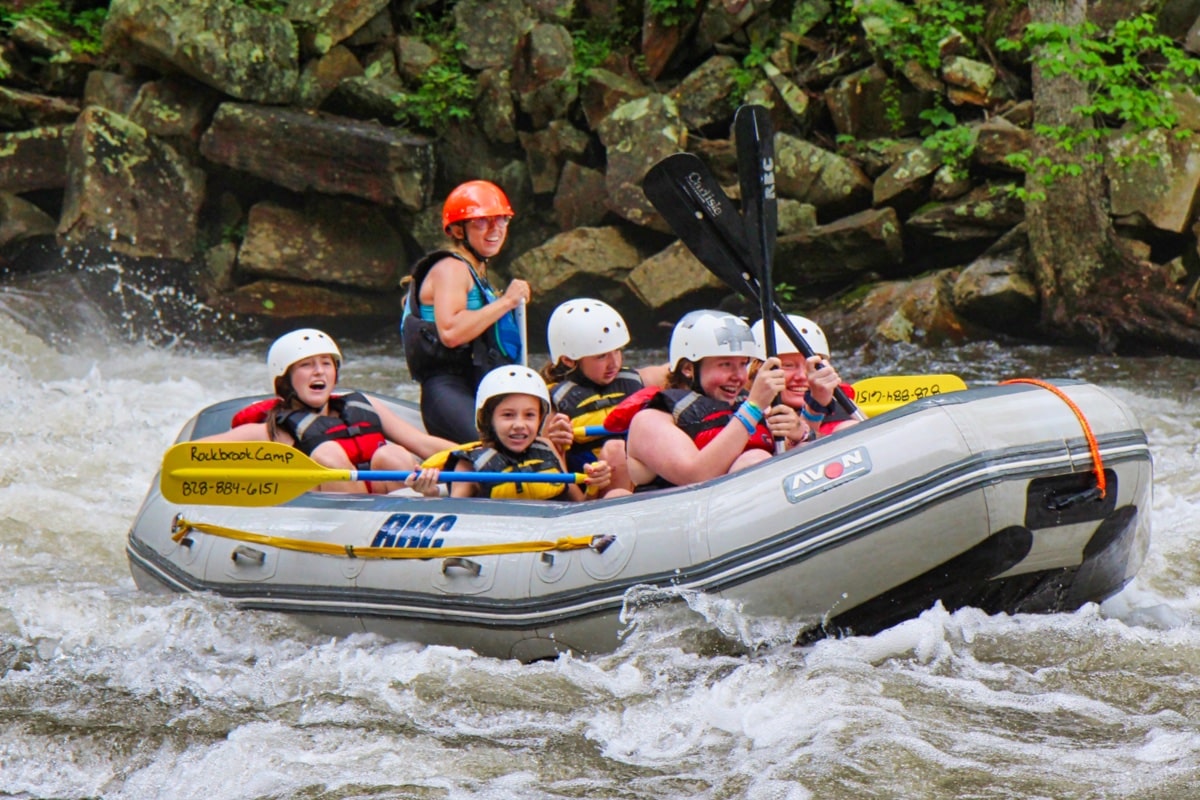
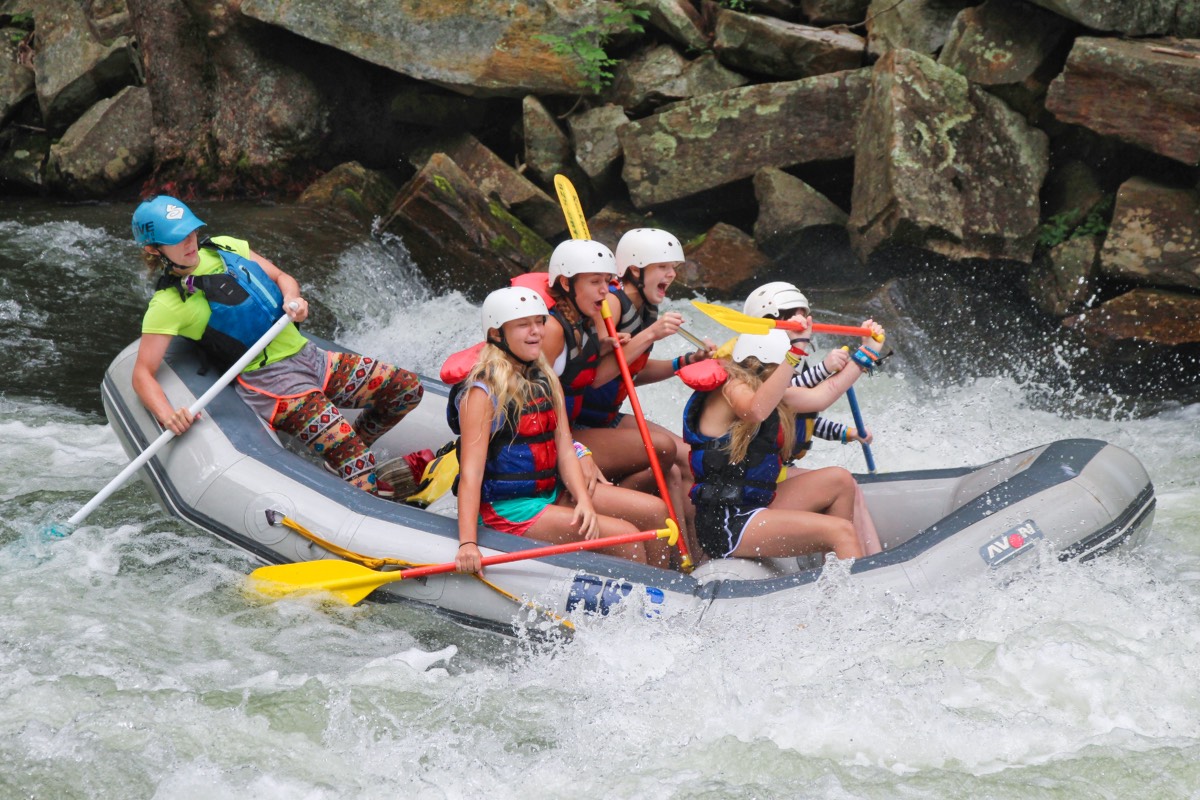
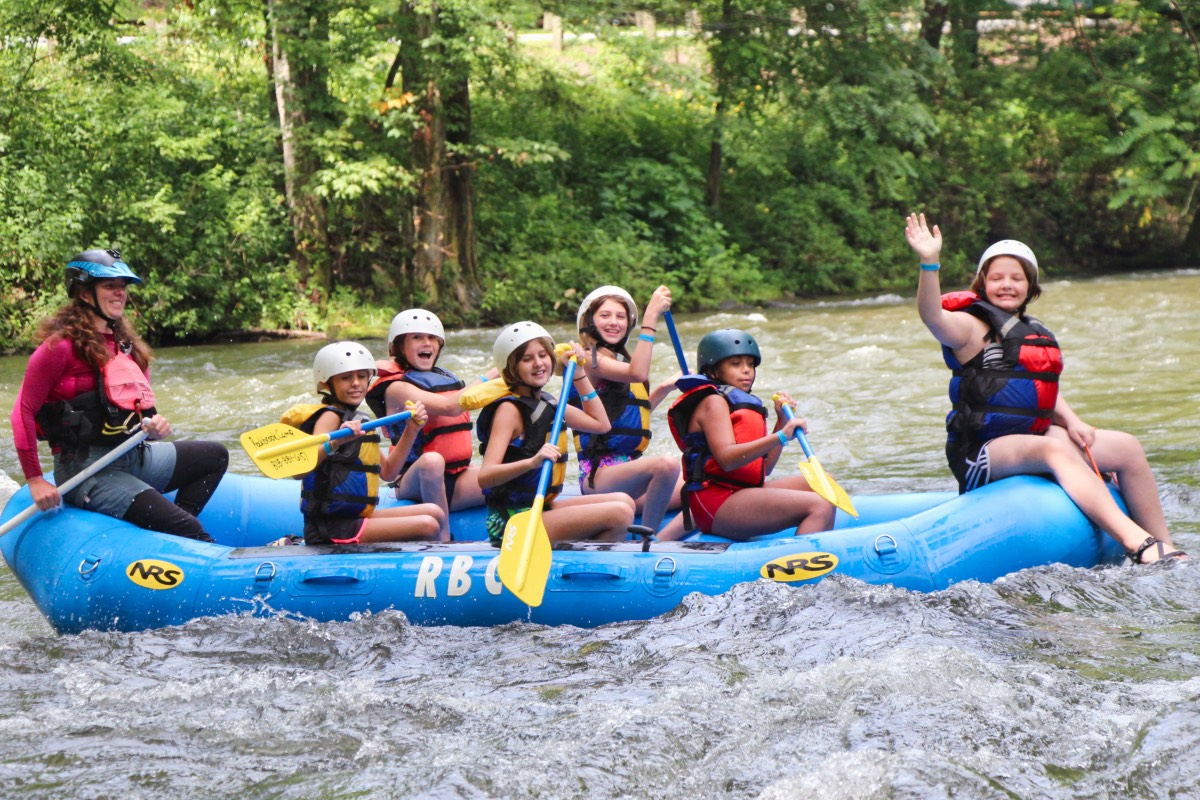
About half the camp went whitewater rafting today on the Nantahala river. One group drove over on Monday to spend the night at our outpost campsite before rafting the next morning. This group had a great time roasting marshmallows over a campfire, listening to the whippoorwills out at night, and battling at least one wolf spider hiding in the rafters of the tent platforms. The second group arrived in time for lunch before their trip down the river.  For each trip, six girls, each outfitted with a PFD, paddle and helmet, piled into one of our rafts and with one of the RBC guides steering in the back, bumped and splashed down the 9 mile section of river. The predicted afternoon thundershowers held off until we were on our way back to camp, adding to everyone’s enjoyment of their time on the water.

Sports-Themed Birthday Night

Back at camp in time for dinner, the girls were excite to find out that it was “Birthday Night,” a fun special event where the dining hall is rearranged to allow everyone to sit at a table according to their birth month.

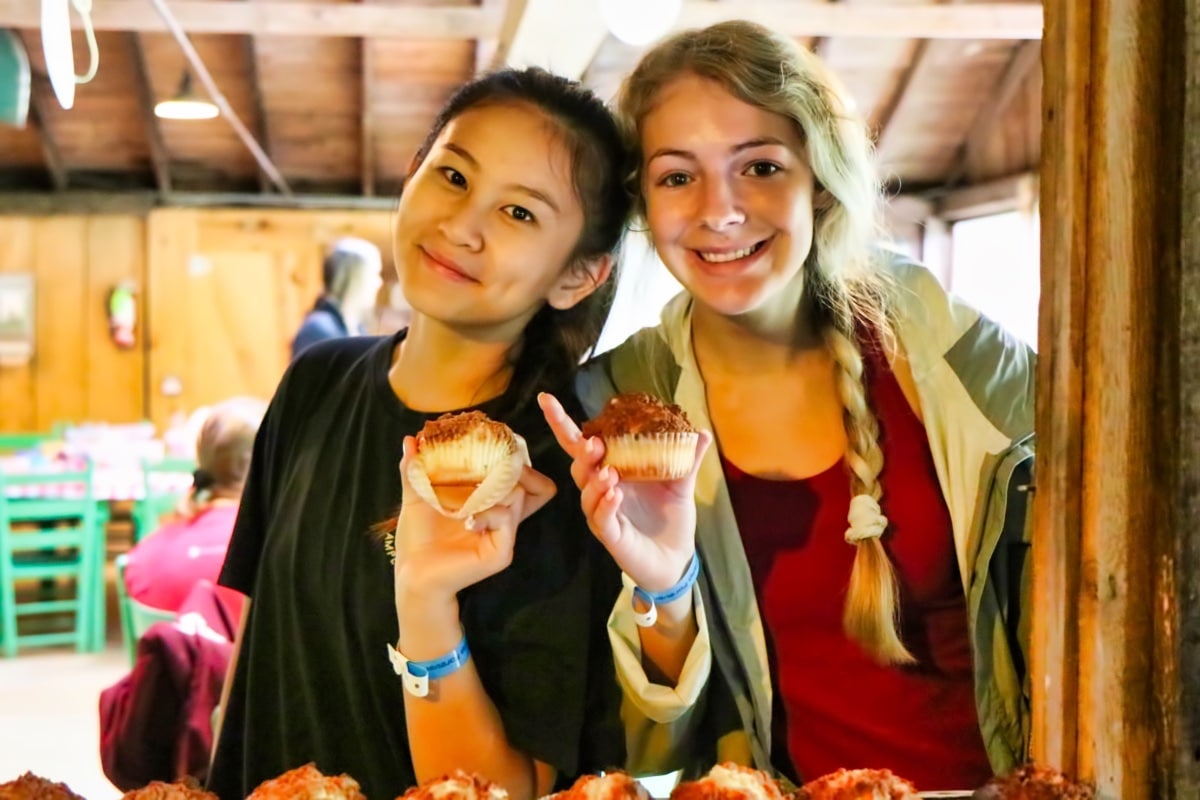
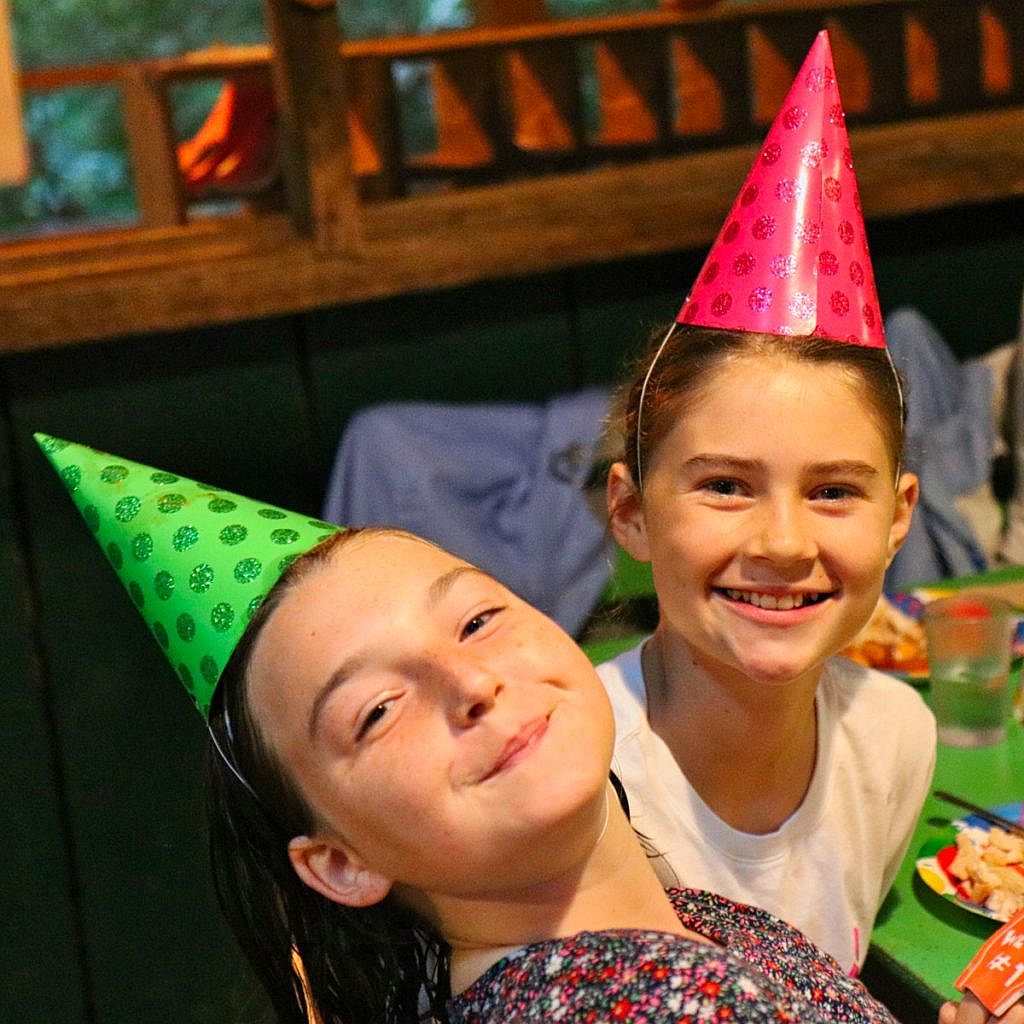
This is always a popular event because it means sitting with different people, staff and campers alike. It’s one big birthday party for everyone at camp, and since there are 12 months, we had 12 cakes, each decorated by the Hi-Ups with colorful frosting and candy designs. Never missing an opportunity to dress up, we also made this party even more fun by giving it a “sports” theme with decorations and costumes based on different sports teams and uniforms. It was a colorful party of good silly fun for the whole camp.

Nantahala falls rafting splash

A Magical Quality

Camp friends thumbs up

“Magical” is one of the best ways to describe camp. You hear it a lot, in fact, when campers and counselors try to convey what makes their camp time extraordinary, what’s so special about camp activities, and why their camp friends are so close. “Magical” applies because camp is essentially a different world, one filled with daily surprises, wonderful discoveries, remarkable flashes of natural beauty, amazing people, exhilaration and often the deepest feelings of happiness —all rare qualities of the mundane world left behind. Everything at camp seems to have this extra quality, this power or spirit of sorts, that makes it uniquely Rockbrook. For this reason, a pumpkin chocolate chip muffin at camp will always be better than one eaten somewhere else, camp sunsets more beautiful, wearing a costume more hilarious, and feelings of belonging more genuine.

Bella's Spirit Fire Speech

And like all things magical, camp is hard to explain. It simply stands out in very real, but ineffable ways. During the last Spirit Fire, counselor Bella Swaak spoke about her experience at Rockbrook, doing her best to relate its magical quality.  Here’s an excerpt of what she said:

“Rockbrook has a special magical quality about it. Not only can you be who you want to, but you are able to grow and that magic is what brought me back to camp. Though the magic of Rockbrook is hard to describe— almost as hard as describing why a camp friend is much different than a friend from home. I like to use Sarah’s analogy of a chocolate chip cookie friend. A chocolate chip cookie friend is someone who makes you feel warm and gooey inside. They make you feel special, just like a chocolate chip cookie does. Throughout this summer, you have all become my chocolate chip cookie friends. You make me feel warm and gooey and good inside, you make me laugh until I cry, you push me to step out of my comfort zone, and you accept me for being me. You guys are the ones who I turn to in times of happiness or sadness. I come to y’all and camp as a reminder of all that is good in the world.

Camp Girls Hug

Rockbrook magic is also about relationships and as Wendy said, “relationships are the key to life.” Here is where my friendships have turned into sisterhood. You are the ones who I will think of when I feel like everything is wrong and you are the ones who help me see the bright in everything and my wish for campers is that you all find your own chocolate chip cookie friends, to find the ones who let you be who you want to be and support your wildest dreams, just like mine did.

Looking back at my camper years, I see how much this place has made me grow. Not only am I now able to catch a spricket or two, but the women around me have turned me into a strong independent woman. I had amazing counselors and directors to look up to, even now, as a counselor, I can say the same.

One of my favorite memories from this summer is the day that Theresa and I finished our Mermaid laps. As we walked out of the lake, we stopped by the rock and looked back onto the lake. Girls were swimming and paddling, and the counselors were cheering on everyone and the sun was shining perfectly onto the lake. As we were standing there, admiring the view, I turned to her and told her to take a mental picture, and that’s what I challenge y’all to do. Stop and enjoy the moment. Don’t rush through your years as a camper hoping to be a CA, HUP, or a Counselor. Don’t be counting down the days until banquet. Stop and acknowledge the small things because it’s easy to forget as a camper.

Though a lot of things might change about you since your first year, Rockbrook won’t. It will always be a place where girls come to play, learn, and grow. Rockbrook allows you to be who you want and it is one of the best qualities of the RBC magic.

And now as I make my journey back to the city, I will remember all I have learned from this summer. The Juniors have taught me to sing my heart out, even if the song is as silly as Copacabana, the Middlers taught me every day to not take my self as seriously and wear a silly costume here and there, and the seniors will always remind me that it is okay to be your weird, complete self.

Enjoy your last night with your friends. Tell them if they are your chocolate chip cookie friend and let them know you appreciate them because I am so unbelievably thankful to have all of you in my life. Thanks for being my chocolate chip cookie friends.

Girl Camp buddies

Better Together

Every Sunday, we attend chapel, which is not religious, but is more a conversation about a theme that relates to camp. This week, the camp mom Marie Brown wrote an incredible piece about community that was read aloud at chapel. It really captured the spirit of community at our camps. Here it is:

Camp Community

We live in a country, that loves to celebrate the individual. Its fun to idealize the greatness of the one. The wonder of their singular feats to seduces us. It’s exciting to see a human be remarkable. Serena Williams and her consistent prowess as a tennis giant is already amazing, and seeing her coming back to make it to the Wimbledon finals after a 13 month maternity leave…that is worthy of our attention. Simone Biles developing a gymnastics skill that no one had ever competed before and few fellow Olympic gymnasts can even do.  Of course she won a gold metal for that. Of course that’s incredible. In pop culture, we pay attention to the newest star, and the biggest star, we listen to the news on Justin Bieber or Beyoncé because they have talent, and fame and fortune enough to make them seriously stand above the crowd. There is something authentically compelling about these individuals and their successes that earns them the attention.

The Hidden Cost of Celebrating the Individual

But the trouble is, it is easy to forget that not a single one of those winners, stars, or firsts got there on their own. And it’s easy to overlook that the amount of attention we love to give them is actually really hard for them to tolerate. Humans didn’t evolve to be the soaring eagle, rising and flying alone in the glaring sun of that much attention. It takes even more strength in some ways to live a healthy full life when you are watched that closely. But we ignore that. We love the symbolism of the bald eagle all alone. But in our poetic use of that image as our ideal, we really fail to tell the whole story. We are pack animals. And like Wendy shared with us last week, we need touch, and hugs. We can not survive without them. And when we paint the picture as if we can, we not only set ourselves up for intense disappointment, we also fail to acknowledge that for every individual phenomenal success we adore, there is a whole network of phenomenal successes making up the community that played a part in growing these stars into the stunning athletes, or artists, or astronauts they become. In our hunger to put the Neil Armstrong’s on a pedestal for being the first human to walk on the moon, we often fail to honor the teams of exceptionally brilliant, hardworking men…and women, who’s stunning demonstration of collaboration and idea sharing, knowledge and innovation, mentorship and support, care-giving and service it took to make that kind of impossible dream a reality.

water puring on heads skit

And so in our own lives and dreams, it is easy to feel like we must strive to be the One in order to be valued. And while that is wonderful to aspire to, it is good to remember to recognize even those idealized heroes are members of a community. The most astonishing of whom take their place in the spot-light to look back on their communities and give back, to lift up others, to serve one another, to collaborate and create more than any one alone could ever devise, to listen and empathize, to laugh, and to hug. My heroes are those who have the will to give, and the grace to receive love from a community that they both support and are supported by.

What Makes Community Spirit Easy at Camp

That is what is so refreshing about being here at Rockbrook. Lets take a moment to stop and recognize that we all are so privileged to share a brief time together in this magical place on the planet where being a part of the community is so easy. Where being a good community member is encouraged and celebrated. Where it is an honor to be given a task to give back to the group, or tasked with sometimes even really hard work. For example, the CA’s, High-Up, CIT, and counselors. I remember being a young camper how much we wanted nothing more than to get to be all of these respected roles. When what do they do? They work exceptionally hard to take care of their community. These are our Rockbrook heroes.

camp girls smile

So when I say it is so easy to be part of a community here it doesn’t mean it is always easy here. Do not let me take away the sense of real struggle we all can feel at times when we are trying to be our best here. But do remember that the habits of community spirit we practice here at Rockbrook are so much easier to build where we all live, eat, and play together, where we struggle up the mountainside together, and stifle our cries of fear together at the sight of a skunk, or tolerate cold showers after a long line, and laugh, and laugh, and laugh together. Here we are interconnected on everything. So being a part of a community is a natural state.

But that is not often true in our worlds back home where all the screens, and cars, and modern conveniences distract and diminish our natural skills to interconnect as living, breathing human beings. So take this time here to build the muscles of your community spirit–your Rockbrook spirit–so you can feel them and find them when you are a Rockbrook girl alone out the “real” world. So you can demonstrate them to the rest of the world, and can always remember that striving to be your best includes being a community hero who gives as much as she receives, and (perhaps can still feel the faint memory of a string of well-earned Bend-a-Back Spirit beads proudly displayed around her neck.)

camp girls together

Phenomenal First-Day Vibe

girls campers

Sometimes writing these blog posts about Rockbrook, I feel like I’m preaching to the choir, like most of the folks reading already believe. They already know there’s something special that happens at camp, that girls love it for all kinds of reasons, and that the social-emotional learning embedded in camp life is priceless for growing children.  But still, for the sake of those unfamiliar, let me preach a minute.

Today, as we opened our second session of camp, it was clear that this group of girls was already on their way to having a great time. There was certainly plenty of excitement and bubbling anticipation for their camp session to finally begin, but there was also a surprisingly immediate comfort, even contentment apparent when the cabin groups found each other. Maybe the amazing weather had something to do with it— sunny, breezy and warm —or perhaps the easy, relaxed pace of the opening day process, but right away everyone seemed to have a set of friends to run off with.  They were off for a quick tetherball game, the scavenger hunt around camp, adding beads to their name tags, and exploring the creek by Curosty. The cabin groupings, which are carefully assigned by Sarah, encourage that too, making sure new and returning campers alike felt included and welcomed by the grouping. Everyone will tell you that camp is mostly about the people, the friendships and positive relationships fostered between everyone here, so it was very gratifying to see how quickly the campers were bonding.

girl camp kids

The first all-camp event provided more opportunities for this. Just before lunch, we gathered under the big walnut tree on the hill (which provides a beautiful, long-distance view of the Blue Ridge Mountains) to meet some of the key people at camp, to learn and sing a few camp songs, and to be welcomed to Rockbrook by Sarah. The girls sat in their Crazy Creek chairs, sometimes laying them flat to share the seat, while the Hi-Ups led songs. One celebrity made his first appearance too, Felix the camp dog. You’re bound to see photos of him in the online gallery now and then, but he’s an abstract caramel/cream colored, one-year-old Australian Labradoodle with a very sweet disposition. He’s always happy to have a quick scratch on the back, even by six or eight hands at the same time!

The swimming demonstrations where the lifeguards assigned swim tags to everyone, the camp tours where the girls found the location of each activity (for example, the Alpine Climbing Tower and the Nature Nook, which are both hidden in the woods on opposite sides of camp), the activity skits where the instructors staged silly “commercials” about their plans for the session, the cabin meetings where the girls learned a few important safety rules for camp, and the evening program of name games and signing up for activities —filled the remainder of our day, all contributing to that phenomenal first-day vibe.

Tomorrow we’ll launch into all the activities, get out of camp for some adventure trips, clap and sing over some fantastic scratch-made meals, and continue banking experiences that define this unique community.  It really is true; “There’s no place like camp.”  We’re all excited to dig in, and show what that means!

teen campers

Fighting that Familiar Flicker

Backwards Day Campers

Backwards Day Creativity

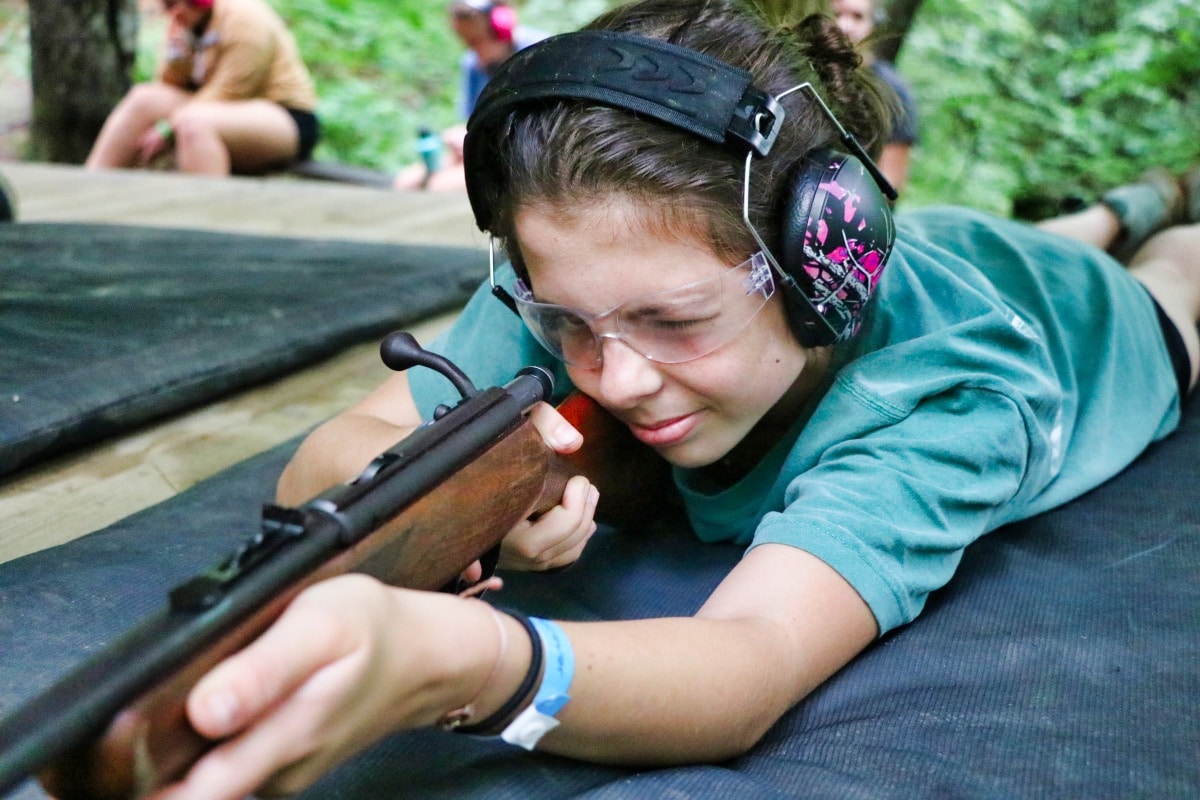
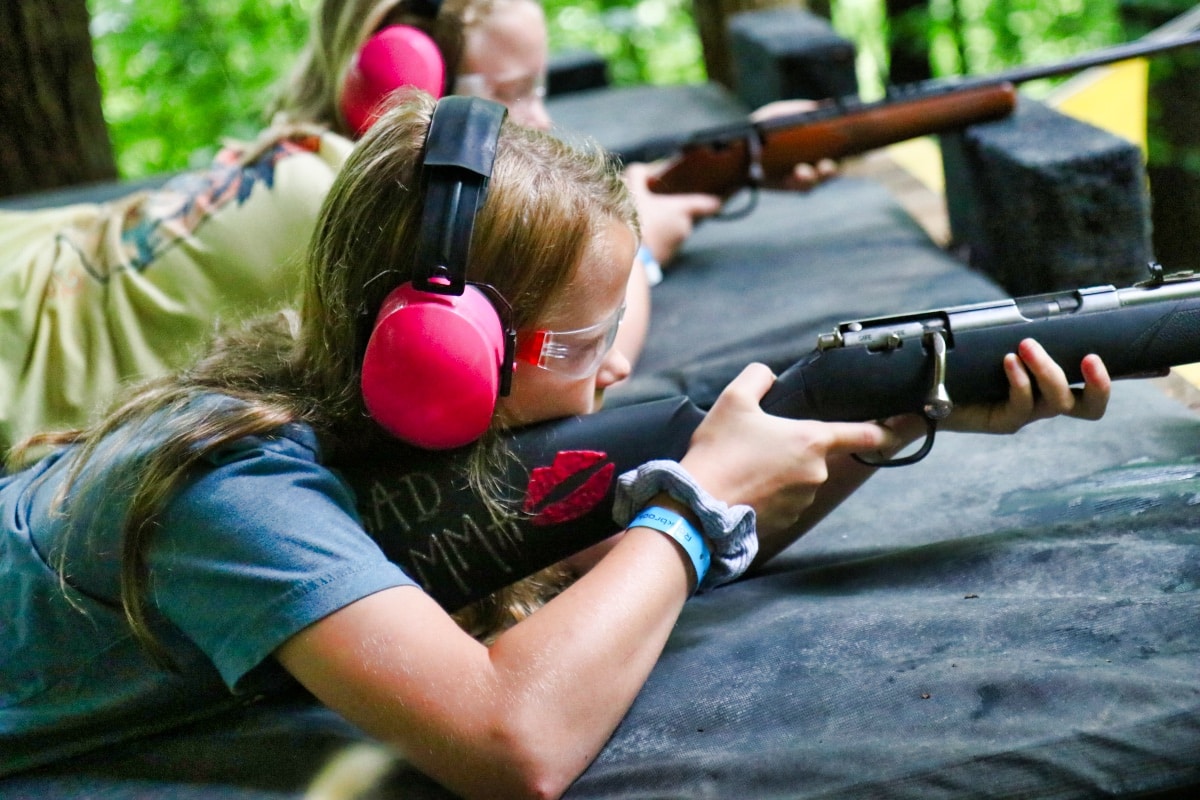
It’s Backwards Day! After dinner last night, during the regular time of announcements in the dining hall, Chase our program director surprised the girls by describing the creative challenge of being “backwards” the next day. Right away at breakfast this morning we saw the silly confusion of girls dressing backwards— t-shirts, shorts and hats worn in reverse… hairstyles too —braids running down foreheads, pony tails covering girls’ faces. The kitchen meals were reversed with burritos for the morning meal and breakfast foods (hash browns, bacon, eggs and fruit) for dinner. All around the camp, campers would suddenly walk backwards. Down at the rifle range, the instructor commanded, “Line the on ready,” and so forth. Back strokes at free swim, left-handed tetherball, and down-climbing at the Alpine Tower— there were small, inventive examples of being backwards all day long.

Tie-Dye in Hodge Podge

Meanwhile, the Hodge Podge craft activity was focusing on making tie-dye t-shirts in its classes. With squeeze bottles of brightly colored dye ready, the girls first folded and tied a white t-shirt into a chevron, bullseye, spiral or other pattern using rubber bands. Red, blue and yellow dyes, making shades of purple, orange and green, came next, the girls making decisions about how (which colors, where and how much) to apply them. In a few days, after the dye has time to set, it will be fun to unfurl the shirts, rinse them, and admire the colorful patterns created.

Archery pull girl

At the archery range, the girls were concerned with accuracy and precision rather than creativity. Like the target shooting at Riflery, the goal here is to remove variation and shoot the center of the target with each arrow. Practice, repetition, steady technique, and adherence to recognized protocols help focus the outcome (bullseye!). The most skilled archers are not creative when shooting; they are consistent.

Naomi, the head of our fiber arts program, tells me she has observed this contrast between creativity and consistency in the way campers approach craft projects. Some children want clearly defined steps, a recipe of sorts, to guide them through a project, while others want more open access to the materials and techniques, eager to play with options, make unexpected combinations, and literally venture outside the lines. She seemed to observe some campers being more immediately creative, while others more concerned with “getting it right.” At the same time, we both thought that everyone inherently has the ability to create. But like some muscles, some us are stronger at first and have developed that ability more effectively. There’s the notion that creativity is a force within all of us that we need only set free. And it’s a personal skill worth developing because it can serve us well when faced with new problems or other obstacles in the future.

There’s lots to say about the benefits of developing one’s creativity, and likewise how we might encourage our children to exercise their “creativity muscle,” but it’s worth noting that camp is the perfect place to do that. Everyday there are opportunities to create at camp. “What would you like to do?” is the question. All manner of practical and aesthetic decisions are made throughout the day. There’s time for exploring, and friends to accompany every new journey. Crucially, at Rockbrook there’s constant support and encouragement for trying new things, dressing up, and bold expressions, always without judgment or embarrassment. From acting in the play to evening cabin skits, and for so many more examples, there’s a freedom here to create, to give it a go “just for the fun of it.”

Camp as a Screen-Free Creative Space

Also though, and this might be the most important factor, at camp there’s no electronic, passive entertainment. We put aside our screens, and thereby open up time to create. Without the seduction of that familiar flicker, camp provides kids the time, space and culture to encourage their creativity to burst out. In this screen-free environment, they can face a blank canvas and dive right in with paint, choose their own colors, and go boldly forward. They can feel more confident to explore what’s unfamiliar, and learn from the process no matter what the outcome.

Celebrating creativity… It’s a pretty fun habit! And good for us too!

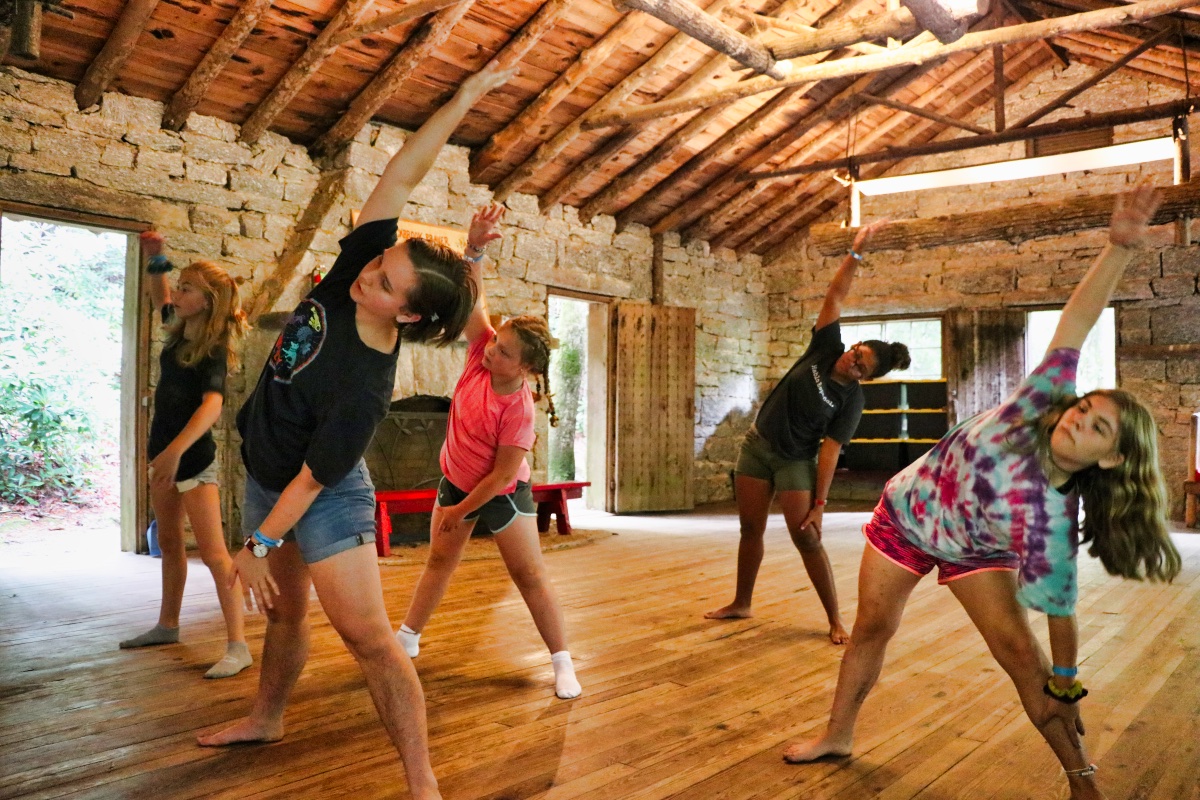
Yoga pose kids