
Beginning Weaving
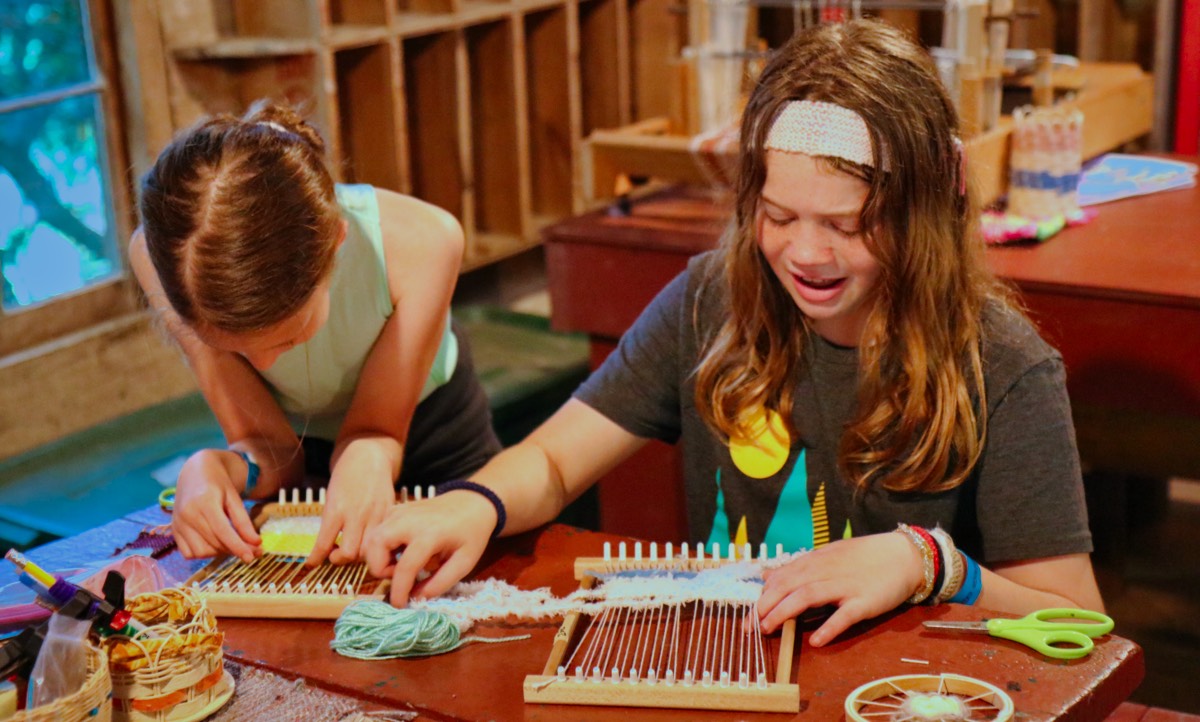
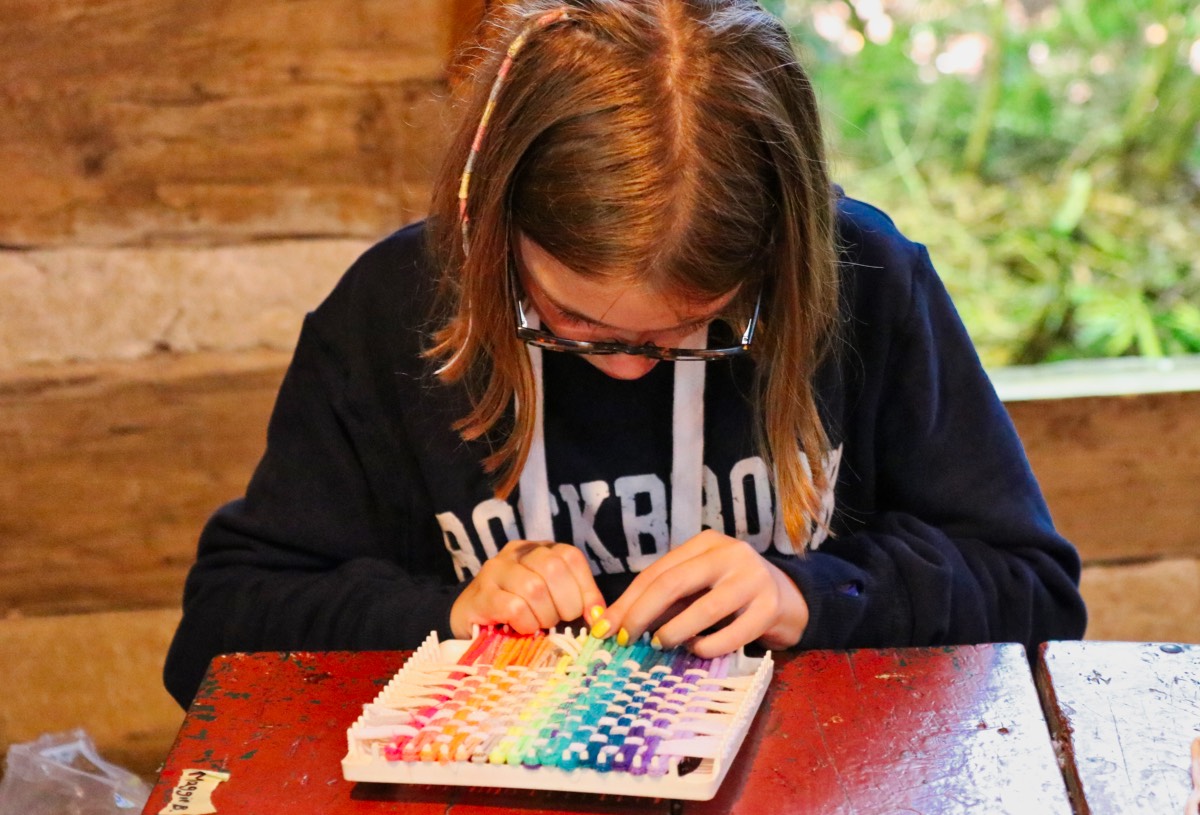
What better way to learn weaving than making a woven potholder at summer camp!? You take simple tools– a square weaving frame and crochet hook –and a bag of colorful cotton or wool “loopers.” After a short time learning the basic idea, you’ll be weaving.
And the technique is easy too! First you select colors of loopers and stretch them across the frame to form the “warp” of the project. In this photo the warp is the different colored vertical strands. Then you weave another looper, alternating over and under each strand of the warp to form the weft. Adding one (in this example, white) looper at a time, and alternating which strands go over and under, a dense colorful pattern begins to form. As you add more and more loopers, you’ll probably need a long crochet hook or other wire hook to pull the last couple of loopers into place.
This is real weaving. Sure it’s a simple example, but that’s good when you are just beginning to learn. The next step is varying the colors and weaving pattern of the strands. There are even different shaped frames to make things even more interesting. We also like starting with these potholder weaving projects because they don’t take too long to finish.
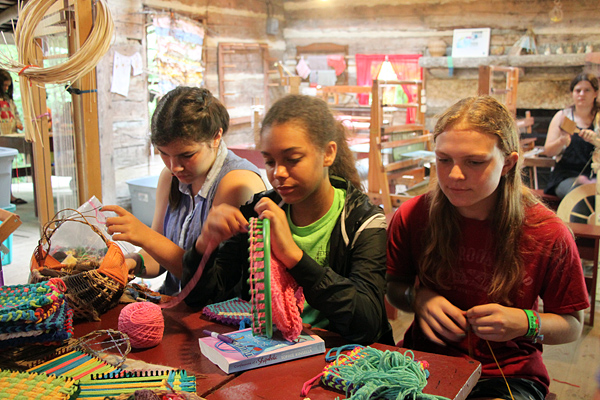
With the basic concept of weaving understood and practiced, campers can move on to one of the tabletop looms or even the wide floor-standing looms for their next, larger and more complicated, weaving projects. Down at Curosty, the fiber arts activity cabin at camp, Rockbrook girls are learning to weave!
Scoubidou, Boondoggle, Gimp
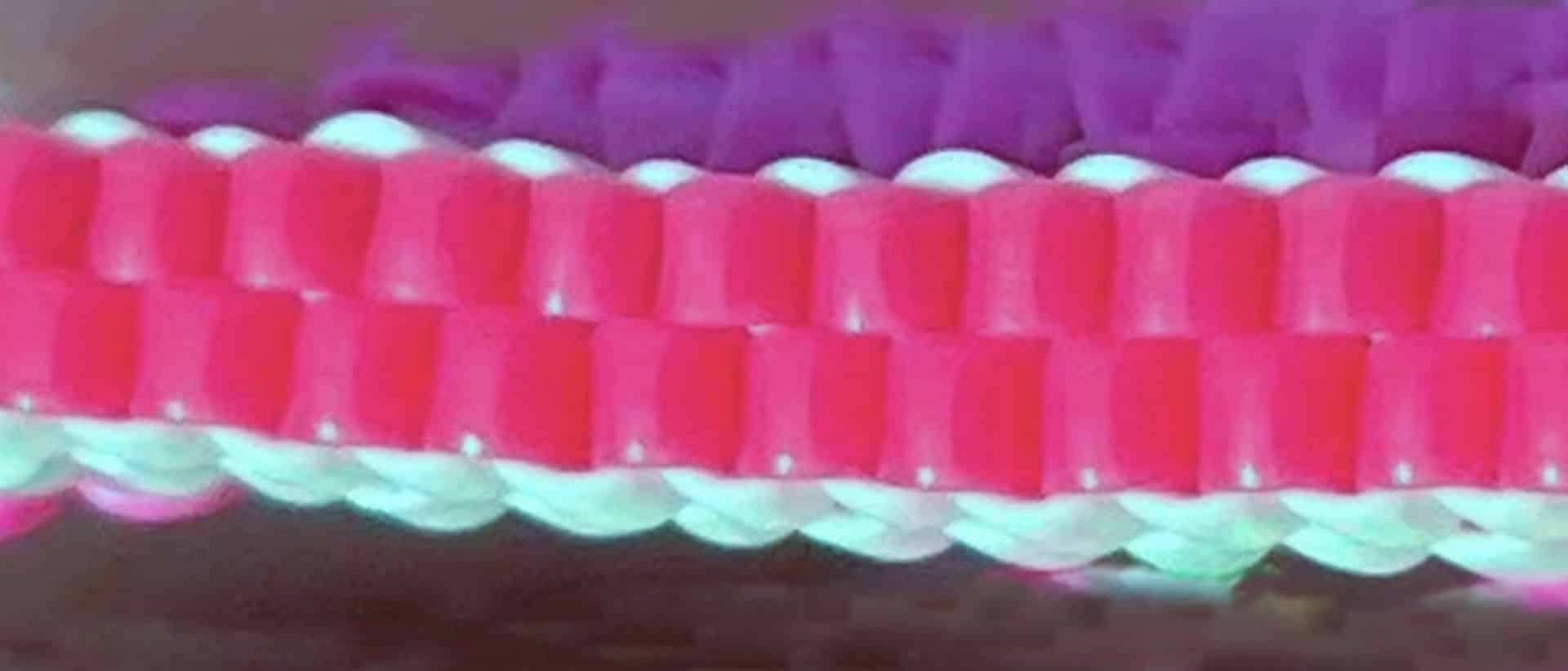
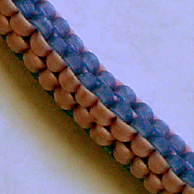
Originating in France and popular even today at summer camps worldwide, it’s what we call a lanyard. Did you know that “Scoubidou” (pronounced in your best french accent) is its original name? They’re called “Scoubies” for short, and can refer to either the colorful plastic strands used or the final project of repeated knots. Sometimes, when the material is braided, it is called a “Boondoggle,” a name that appears to have come from the boy scouts and their tradition of braiding a ring of leather straps to hold a neckerchief. This lanyard material is also referred to as “Gimp,” following the name for twisted treads (usually silk, cotton or wool) used as decorative trimming on dresses. Our familiar lanyards have quite a history!
The world record for the longest Scoubidou (Boondoggle, Gimp, Lanyard) is held by Manuela Dos Santos of Brancourt, France. On November 11, 2008, she finished her Scoubi— 1,673 feet and 2 inches! An amazing project. It makes us wonder if the strands she used were single long pieces or sections tied together.
Want to learn more? Check out these links:
Basic Lanyard patterns
Fun Scoubidou projects
Cool Boondoggle videos
Kids Love to Weave
Just about every day at Rockbrook you’ll find kids weaving down in Curosty, one of the nineteenth century log cabins at camp. And there are all kinds of looms in action and weaving techniques going on. You might see rope or finger weaving, for example. Girls could be using a flat lap loom. There are several sizes of tabletop looms, and for the more advanced weavers, kids could be weaving on large floor looms.
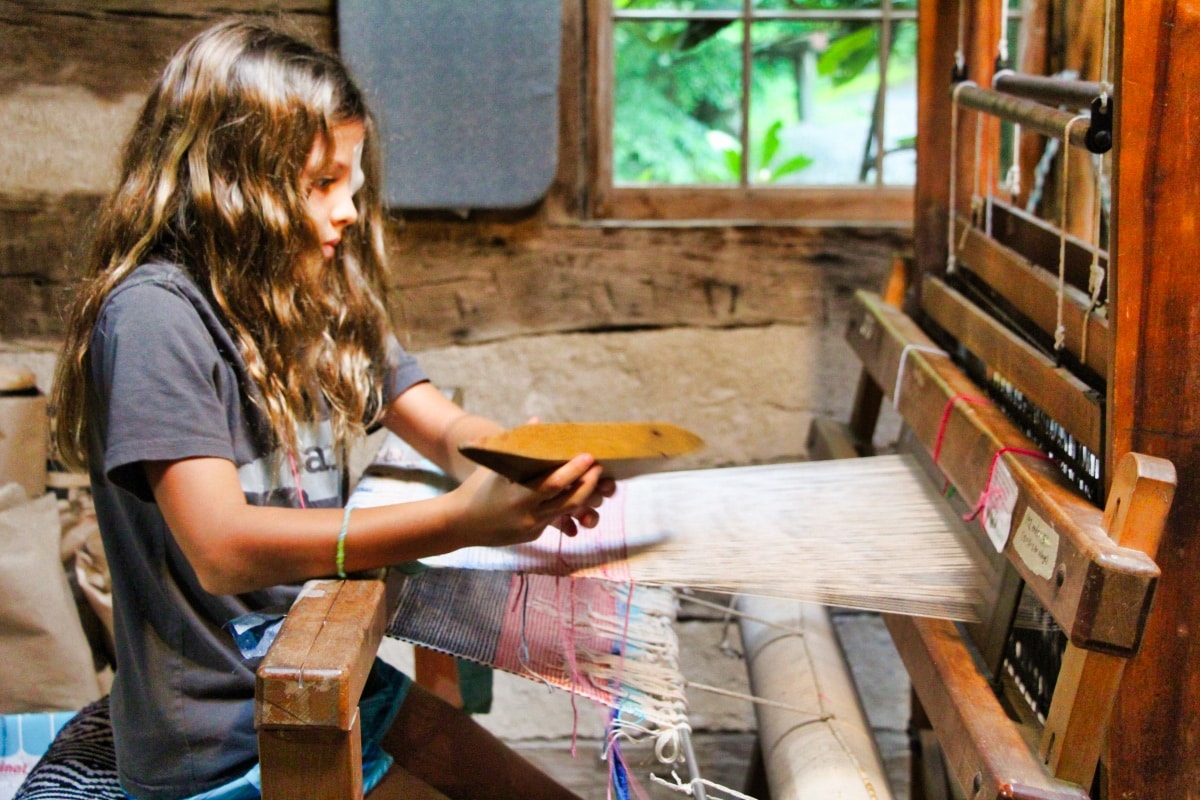
This photo shows Emma working on one of our great classic Leclerc floor looms. One of the fiber arts staff members set up the loom (something that takes a lot of time!) and then helped Emma design a pattern for her piece. If you look closely, those green tags are “cheat sheets” for the treadle pattern.
These floor looms take some time to learn how to operate, but with them, kids can weave nice wide fabrics in all sorts of cool designs. It’s a lot of fun, so come on! Let’s weave!
A Square Dance Saturday Night
One of Rockbrook’s original camp songs, in fact our official “Camp Song,” begins with the line, “In the heart of a wooded mountain, circled by silvery streams.” It so nicely conveys the character of camp, Rockbrook’s woodsy feel, being tucked in a hillside valley between two rock mountains and waterfalls. Every session for generations, girls have sung this song. So much so, “In the heart of a wooded mountain” has become a shorthand phrase to refer to camp. Here’s the rest of the first verse.
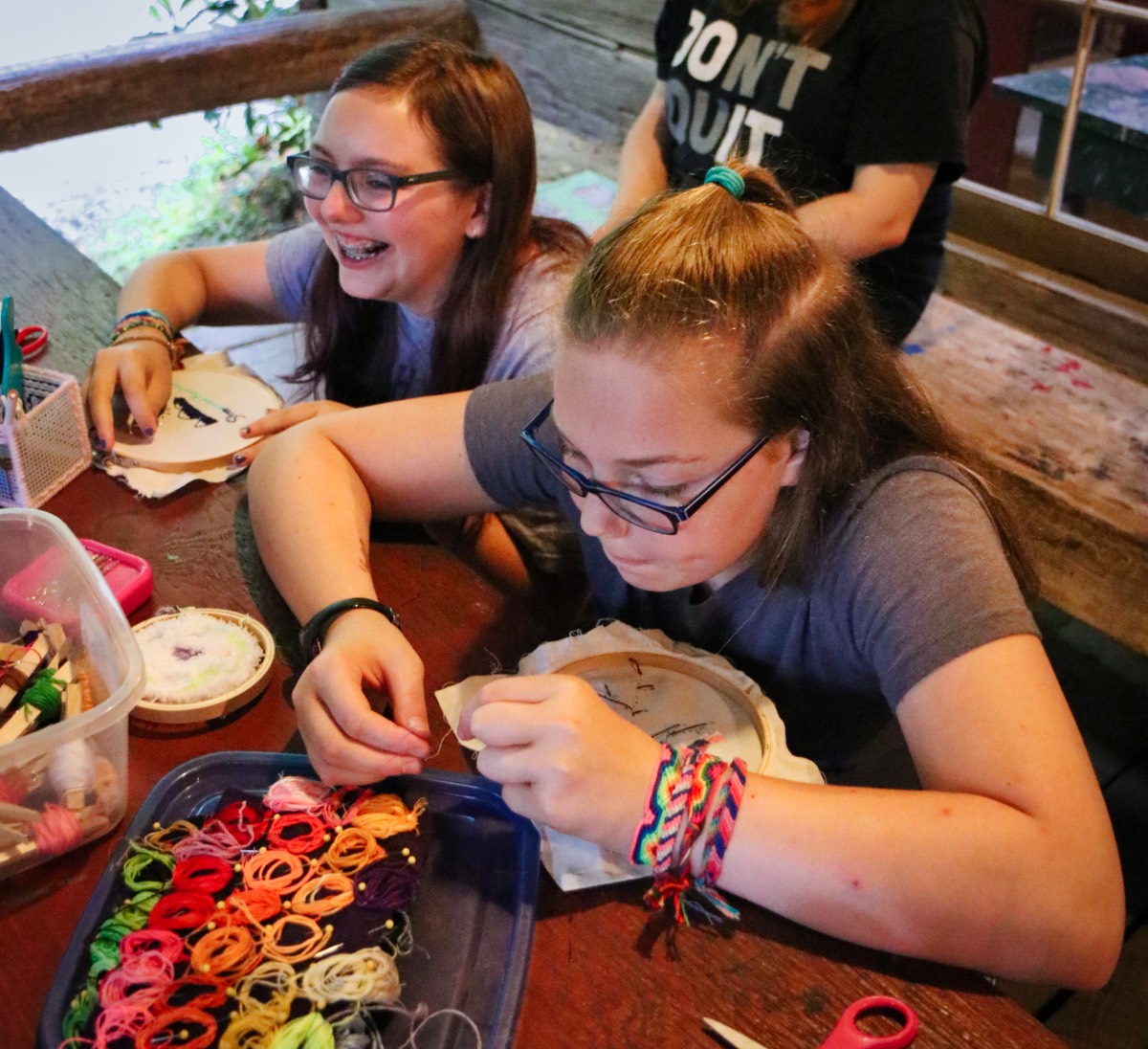
Today the girls woke up to a big breakfast of eggs, grits, sausage and OJ, along with the usual fruit, cereal and yogurt options. It’s been a little cooler than usual these past few days, so it’s nice to start the day with a good warm breakfast. After a few energetic songs in each line’s Lodge, our “Morning Assembly,” everyone launched into their morning activities. Down in Curosty, Kimberly has been teaching the girls how to weave on flat looms, a simple traditional hand weaving technique. With so many colors of yarn and strips of cloth, there are really cool things being made… hand-woven fabrics soon to become place mats, or sewn into pouches or bags. We’ve also seen really complex friendship bracelets being made in Curosty. That place is buzzin’!
The rest of the day was filled with more regular camp activities… painting and drawing, practicing for the play, riding horses, learning to kayak, learning to do a flip in gymnastics, or to throw a clay pot on the wheel. There’s also a nice amount of free time for the girls to just hang out, play in the creek, or head down to the lake for a swim or for some sunbathing.
The big surprise for the day, though, was our dance with Camp High Rocks, the boys camp just up the mountain from Rockbrook. We announced the dance right before dinner, giving the girls only about a hour (!) to get “ready.” After dinner (baked ziti, garlic bread, salad, and a shortbread with fruit for dessert), with hair brushed and dressed in clean clothes, we loaded up the buses and drove the whole camp up to High Rocks.
![]() | ![]() | ![]() |
The dance was held outside on three tennis courts. This allowed us to spread out and divide everyone into three general age groups for the dancing. It took a while for a few jitters to subside, but soon just about everyone was smiling and having fun. Of course, part of the fun is making mistakes and laughing when you turn the wrong way or grab the wrong arm. The whole event is lighthearted, a little silly, and surprisingly enjoyable for the girls, even though most of them have never tried square dancing before. The counselors are right in their too, so this also encourages everyone to relax and enjoy themselves. We all took a short break for lemonade and cookies, only to recharge and dance for another hour or so. As it began to get dark, we said goodbye and thank you, gathered all the girls back into the buses, and made our way back to RBC for the night. It was a wonderful evening.
Traditional Camp Basketry
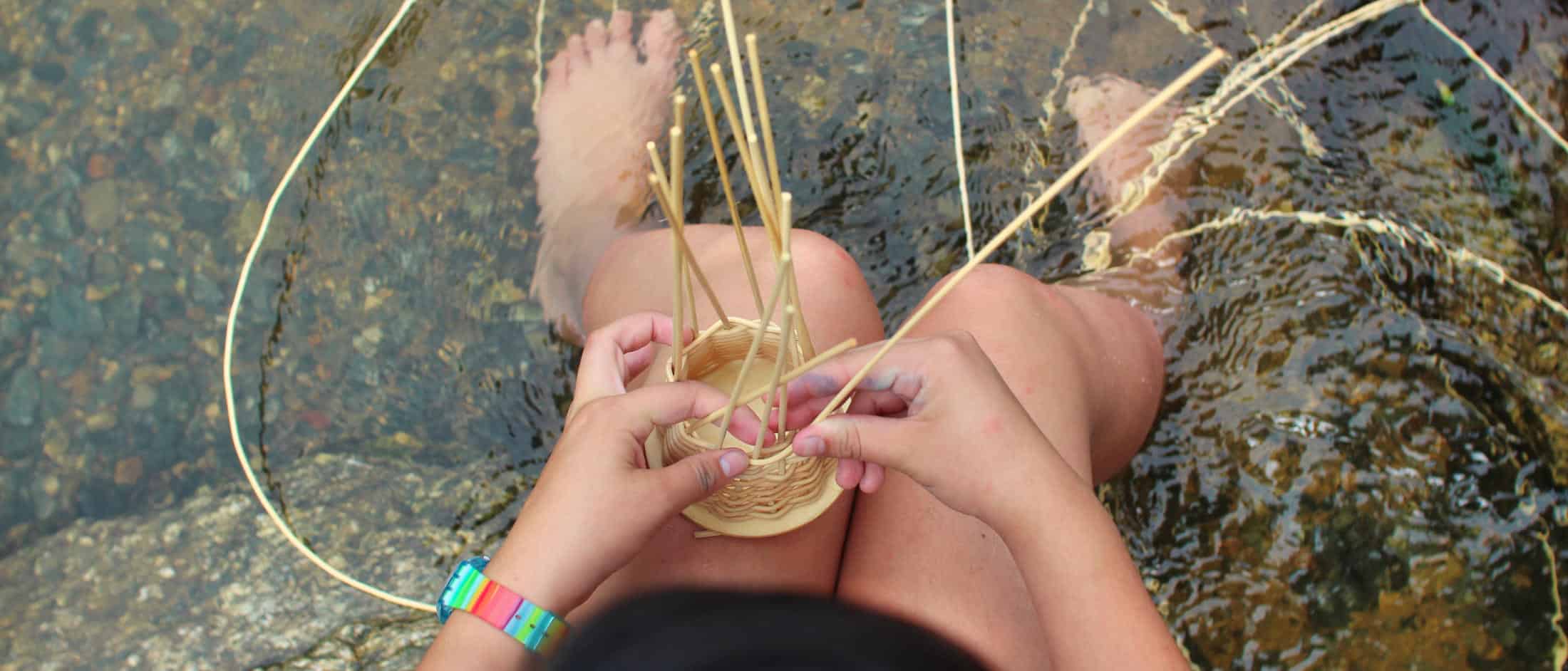
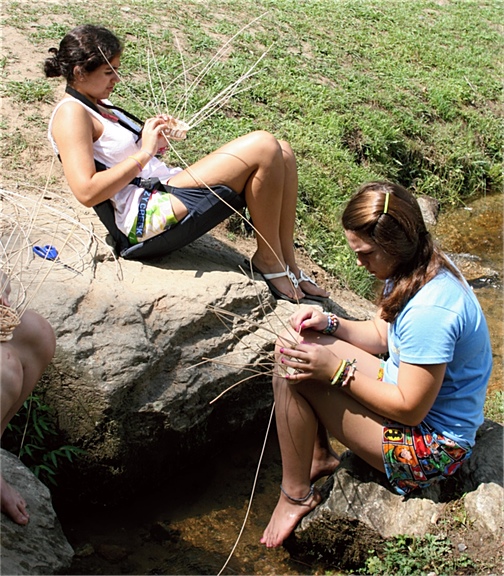
Making camp baskets is an arts and crafts activity just about everyone enjoys at Rockbrook. Over near the fiber arts cabin we call “Curosty,” there’s a nice stream flowing by, and it’s there that girls often work on their baskets. It’s a really nice spot to sit and soak your feet on a summer afternoon, but also, the water is important for the basket weaving. To bend and weave the wicker (cane, reed, or grass) fibers, it helps to soak them in water for a while. This softens the fibers.
Basketry is a truly ancient art. Native people around the world have been making baskets for as long as anyone can remember. Near us at camp, the Cherokee split oak baskets come to mind as a good example. Our camp baskets may not be as elaborate as these, but the girls at Rockbrook are continuing this long tradition of basket making in the mountains.